Nope, it's your hypothetical and I've done enough work for you.Okay, but only if you do the same.

-
Security incident: ISF was recently accessed by intruders. Please change your password, and change it anywhere else you used it. Read more
You are using an out of date browser. It may not display this or other websites correctly.
You should upgrade or use an alternative browser.
You should upgrade or use an alternative browser.
Transwomen are not Women - Part 15
- Thread starter d4m10n
- Start date
d4m10n
Penultimate Amazing

Okay just one last y/n question, and then we'll be done.Nope, it's your hypothetical and I've done enough work for you.
Do you support the legal reasoning from Ben Cooper?
Last edited:
d4m10n
Penultimate Amazing
Telling passing trans men that they get to use the mixed-sex ponds but not the ponds set aside for men strikes me as legally risky as well.Anyone who is uncomfortable using the sex segregated facility appropriate for their sex could be permitted to use the self contained unisex facility currently designated for the use of the disabled, for example, with more such unisex cubicles being provided as standard going forward.
Rolfe
Adult human female

What does the SC judgement say should happen to the men's and women's ponds at Hampstead Heath, in your view?
I can see just a few possibilities based on different interpretations of what the EA 2010 allows and requires:
1) Single-sex only spaces (trans men like that dude in the speedo are permitted to use the women's pond but not the men's pond) in accordance with the reasoning of Ben Cooper's legal brief (sections 52-59) linked above at #13,079
2) Mixed-sex spaces based on something like gender expression (e.g. my hypothetical which caused @Aber to somehow forget that swimsuits come in only two basic types: ones designed to cover wedding tackle and ones designed to cover nipples)
3) Mixed-sex spaces based on self-i.d. per the reasoning from Stonewall and other trans rights activists about what "sex" means in the EA
We can probably all agree to rule out the third interpretation, although the solicitors advising the CPC have not done so yet.
I had taken you to be arguing for the first interpretation, but now you've corrected my misimpression.
The historical situation where one pond is female, one is male and one is mixed is entirely in line with the SC ruling. In that situation a woman who is sufficiently androgenised that she is likely to cause discomfort among users of the female facility is restricted to using the mixed pond. The judgment specifically covers this. Have you read it?
Rolfe
Adult human female
Telling passing trans men that they get to use the mixed-sex ponds but not the ponds set aside for men strikes me as legally risky as well.
Don't be ridiculous. The SC can't possibly say that any female person has a legal right to use a male facility, because such a right does not exist.
d4m10n
Penultimate Amazing
I don't recall anyone ever announcing this policy or even saying that it was implied from existing norms; this is literally the first time I've seen it in print.In that situation a woman who is sufficiently androgenised that she is likely to cause discomfort among users of the female facility is restricted to using the mixed pond.
Which paragraph of the judgement covers what to do with androgenized females in the context of single-sex services?The judgment specifically covers this.
d4m10n
Penultimate Amazing
Where I come from, the SC can literally make up rights that didn't exist before, e.g. Griswold v. Connecticut.SC can't possibly say that any female person has a legal right to use a male facility, because such a right does not exist.
Presumably your courts are more circumspect?
Rolfe
Adult human female
I don't recall anyone ever announcing this policy or even saying that it was implied from existing norms; this is literally the first time I've seen it in print.
Which paragraph of the judgement covers what to do with androgenized females in the context of single-sex services?
Read it for yourself.
Rolfe
Adult human female
Where I come from, the SC can literally make up rights that didn't exist before, e.g. Griswold v. Connecticut.
Presumably your courts are more circumspect?
You presume correctly. The SC ruling clarified the law, it didn't create it.
smartcooky
Penultimate Amazing

More contrarian games and edge case nitpicking. Ever thought of training as a lawyer... you're a natural!I don't recall anyone ever announcing this policy or even saying that it was implied from existing norms; this is literally the first time I've seen it in print.
Which paragraph of the judgement covers what to do with androgenized females in the context of single-sex services?
d4m10n
Penultimate Amazing
You seem quite confident that upon reading I will discover what the high court says the EA 2010 tells us about how to deal with androgenized females in the context of single-sex services such as the ponds. Care to wager on that? I'm not finding anything in the searchable pdf.Read it for yourself.
Last edited:
d4m10n
Penultimate Amazing
Just out of curiosity, does anyone happen to know when that historical situation was changed to accommodate transgender swimmers?The historical situation where one pond is female, one is male and one is mixed is entirely in line with the SC ruling.
Presumably before 2018.
More importantly the Supreme Court seems to.Do you support the legal reasoning from Ben Cooper?
d4m10n
Penultimate Amazing
It certainly does with respect to the narrow issue of "whether references in the EA 2010 to a person’s “sex” and to “woman” and “female” are to be interpreted in the light of section 9 of the GRA 2004 as including persons who have an acquired gender through the possession of a GRC" or not.More importantly the Supreme Court seems to.
I don't see how you get from there to the legal disposition of Kenwood Ladies’ Pond—or any other services formerly offered to both transgender and cisgender women—but presumably Cooper does and I do appreciate you bringing his legal reasoning to my attention.
Last edited:
d4m10n
Penultimate Amazing
Around a tenth of a percent of Britons identify as transwomen, so yeah, we're talking about edge cases here.More contrarian games and edge case nitpicking.
Rolfe
Adult human female
Why would that pond be any different from any public toilet or toilet in a shop or leisure venue where trans-identifying men were previously allowed to go? Why do you think there must be some way to allow these men to continue to use the pond, whereas they are not permitted to go on using women's toilets? Or do you think that they can go on using women's toilets in the same way?
You think the whole thing was for nothing and women's joy at the ruling was misplaced, because trans-identified men can still go on using facilities designated for women regardless?
You think the whole thing was for nothing and women's joy at the ruling was misplaced, because trans-identified men can still go on using facilities designated for women regardless?
d4m10n
Penultimate Amazing
Because the City of London Corporation is actively pushing back in the case of the ponds, in part by claiming (factually, AFAICT) they have been running them as mixed sex facilities since 2010.Why would that pond be any different from any public toilet or toilet in a shop or leisure venue where trans-identifying men were previously allowed to go?
I do not think that, but I remain skeptical of your claim that the City will lose this case based on specific passages in the recent decision which somehow make it clear in advance what the outcome must be. I've yet to see any passages which make it clear how the court will decide what to do with services provided in a trans-inclusive manner without regard to GRC status.Why do you think there must be some way to allow these men to continue to use the pond...
They are still using the ponds, regardless.You think the whole thing was for nothing and women's joy at the ruling was misplaced, because trans-identified men can still go on using facilities designated for women regardless?
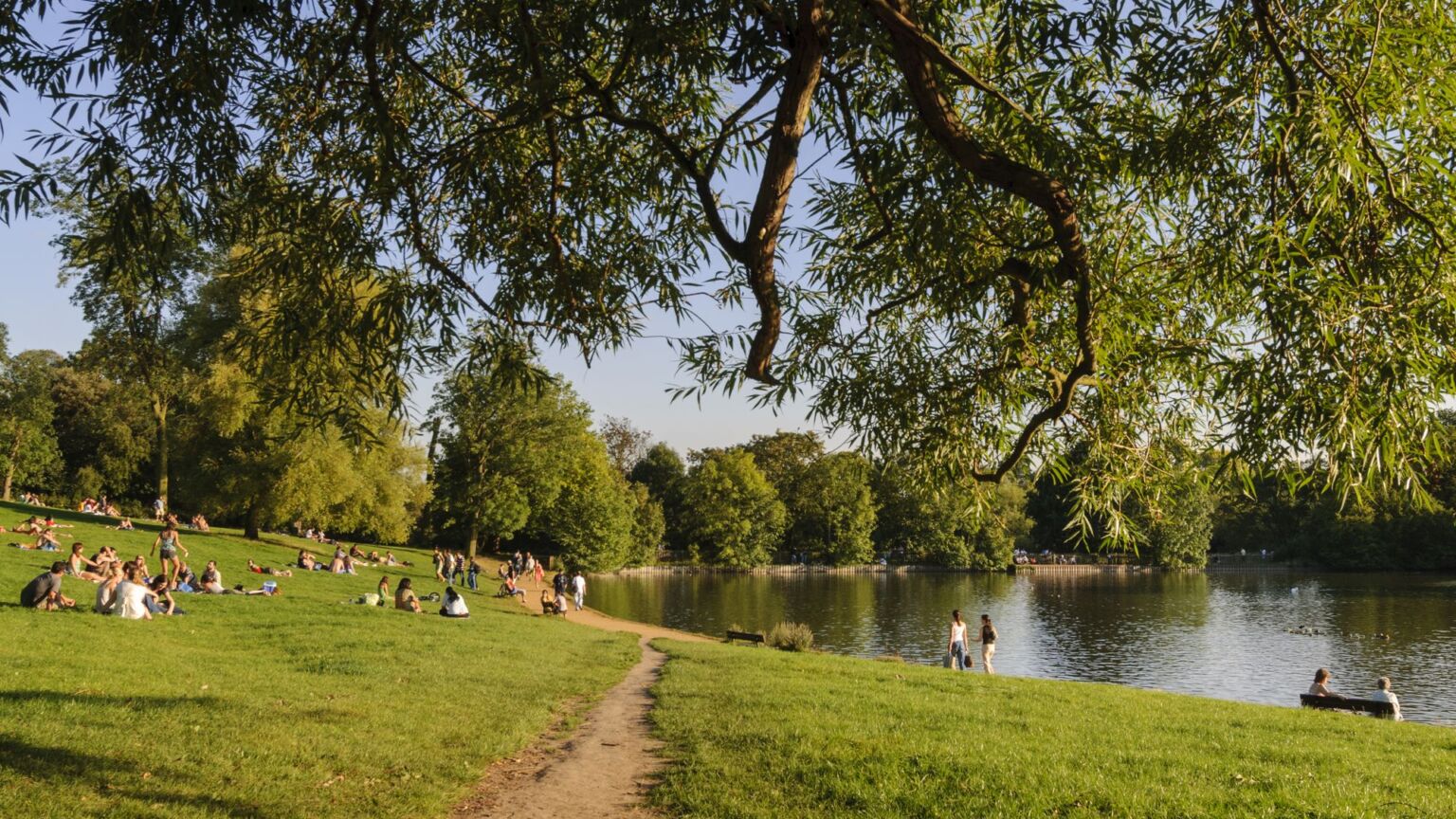
Why is the Hampstead ladies’ pond still open to men?
The fight for women’s spaces is just getting started.
 www.spiked-online.com
Rolfe
Adult human female
And organisations are still allowing men into women's toilets. The push-back is ridiculous, but it's not going to last. There's nothing special about these ponds that doesn't also apply to pretty much every single-sex space where trans-identifying men have been permitted to go for the past 10-15 years.
The City of London has been breaking the law since 2010, either by allowing trans-identifying men into the women's pond, or by excluding non-trans-identifying men. It's going to have to pick one, going forward.
The City of London has been breaking the law since 2010, either by allowing trans-identifying men into the women's pond, or by excluding non-trans-identifying men. It's going to have to pick one, going forward.
Rolfe
Adult human female
You seem quite confident that upon reading I will discover what the high court says the EA 2010 tells us about how to deal with androgenized females in the context of single-sex services such as the ponds. Care to wager on that? I'm not finding anything in the searchable pdf.
Oh, all right, I'll do the work for you.

d4m10n
Penultimate Amazing
Now we are really getting somewhere, thank you.
What the court seems to be saying at §221 is that it would be legally permissible for the ladies ponds to exclude males under the exceptions in Schedule 3 paragraph 28 and legally permissible for them to exclude trans men under the exceptions in Schedule 3 paragraph 29, given that certain conditions are met.
Given that the City of London seems keen on maintaining some level of trans-inclusion, how do we get from "permit the exclusion" and "could also be excluded" to your contention that these exclusions are legally mandated—rather than merely permitted—by the court's new interpretation of the EA 2010?
What the court seems to be saying at §221 is that it would be legally permissible for the ladies ponds to exclude males under the exceptions in Schedule 3 paragraph 28 and legally permissible for them to exclude trans men under the exceptions in Schedule 3 paragraph 29, given that certain conditions are met.
Given that the City of London seems keen on maintaining some level of trans-inclusion, how do we get from "permit the exclusion" and "could also be excluded" to your contention that these exclusions are legally mandated—rather than merely permitted—by the court's new interpretation of the EA 2010?
Last edited: