
You are using an out of date browser. It may not display this or other websites correctly.
You should upgrade or use an alternative browser.
You should upgrade or use an alternative browser.
What book is everyone reading at the moment? Part 2.
- Thread starter alex04
- Start date
The Great Zaganza
Maledictorian

- Joined
- Aug 14, 2016
- Messages
- 29,879
Going to start The Devils by Joe Abercrombie soon.
Okay, here are my thoughts after finishing the book: We are spoiled by the awesomeness that are his books in the world of The First Law.
Compares to them, this one is ... quite good. The need to build an alternative Medieval Europe feels less natural than just building a new world, and the plot feels a little railroaded. The characters do get more interesting the more we learn about them and the more they interact with each other, but they are not on par with the ones we got to know in the setting of Circle of the World.
My suggestion would be to read his other books first.
AmyStrange
Philosopher

The Case of the Bizarre Bouquets by Nancy Springer has a satisfactory ending (at least in my mind anyway), and I don't think it's a spoiler to say Dr. Watson was found (by Enola) and rescued (by Sherlock and Mycroft).
One thing that needs to be explained is that Enola is in hiding from her brothers (Mycroft and Sherlock), because they want to send her off to some lady's academy to learn womanly things, like painting, embroidery, and proper etiquette which are the only acceptable things a lady should know in order to find a husband.
Mycroft is a pain in the jackass, but I get the impression that Sherlock sympathizes with her somewhat, and the last chapter hints at this.
Enola, of course, is a rebel and an independent teen and doesn't want any of those things, and she spends a lot of time wearing disguises so she can do what she wants---and that is to minister to the poor and find missing persons (or things), especially her mother who abandoned her when she was thirteen (I think), but she is now fourteen. Her mother (a suffragist) taught her many unlady like things, like fighting and intellectual pursuits, including codebreaking which is a very prevalent component in the series so far.
Even though Enola is a fictional character (as is the whole Holmes family of course), I still feel like she is a kindred spirit, because finding missing persons is exactly the same theme in my novels too.
Anyway, I give it five thumbs up out of five.
-
One thing that needs to be explained is that Enola is in hiding from her brothers (Mycroft and Sherlock), because they want to send her off to some lady's academy to learn womanly things, like painting, embroidery, and proper etiquette which are the only acceptable things a lady should know in order to find a husband.
Mycroft is a pain in the jackass, but I get the impression that Sherlock sympathizes with her somewhat, and the last chapter hints at this.
Enola, of course, is a rebel and an independent teen and doesn't want any of those things, and she spends a lot of time wearing disguises so she can do what she wants---and that is to minister to the poor and find missing persons (or things), especially her mother who abandoned her when she was thirteen (I think), but she is now fourteen. Her mother (a suffragist) taught her many unlady like things, like fighting and intellectual pursuits, including codebreaking which is a very prevalent component in the series so far.
Even though Enola is a fictional character (as is the whole Holmes family of course), I still feel like she is a kindred spirit, because finding missing persons is exactly the same theme in my novels too.
Anyway, I give it five thumbs up out of five.
-
Spektator
Is that right?

Gah, not The Music Man. Hello, Dolly!The Secret Life of the American Musical: How Broadway Shows Are Built, Jack Viertel
Published in 2016, this is a history of the golden age of the Broadway Musical, which according to Viertel began on March 31, 1943, and ended on June 25, 1975. The first date marked the opening night of Oklahoma! and the second the opening night of A Chorus Line.
Viertel, the owner of five New York theaters at the time the book appeared, dissects the process of creating a Broadway musical by analyzing, scene by scene, the songs as they appear: the Overture, identifying the setting of the show, the “I Want” song in the first act, identifying a character’s needs or desires, followed by the conditional love song (“If I Loved You”), then the Noise song (production number), and so on, through each act.
Viertel uses examples from the era to illustrate. The Music Man’s “Put on Your Sunday Clothes” is a Noise. The Bushwhacking number may introduce a secondary couple, like Ado Annie and Will Parker in Oklahoma! (“I’m Jest a Gal Who Cain’t Say No”) or it may be a villain song (Judge Turpin in Sweeney Todd), or maybe we become aware that it’s a multiplot show, following the arcs of many characters, as in Avenue Q.
So it goes, act to act, with all the ritual songs in the ritual places, as elaborate as a Japanese tea ceremony. Viertel is not exactly resentful, but he is at least bemused, to consider the post-A Chorus Line musicals as somehow disorderly, not following the pattern, and not quite delivering the old thrills. I like musicals myself (our soprano daughter has been in several and in fact is directing one at this moment) and so spent a pleasant time with this slice of show-biz history.

I will shortly be reading Bad Moon, fourth in the Elizabeth Cage supernatural thriller series by Jodi Taylor. It was released today and it seems so long since I read the first three that I am quickly rereading White Silence, Dark Light and Long Shadows to remind myself of the story arcs.
Hercules56
Banned
- Joined
- Aug 4, 2013
- Messages
- 17,176
catsmate
No longer the 1

- Joined
- Apr 9, 2007
- Messages
- 34,767

alfaniner
Penultimate Amazing

Finished Colossus and the Crab, the unfortunately-titled third in the Colossus trilogy. Again, an interesting and fast read, but the story continues the wild turn taken in the previous book. Not to mention that a major character in that book barely even gets a mention in this one. All the while you're wondering what happened and there is only a throwaway mention at the very end.
Spektator
Is that right?
Thunderstruck, Erik Larson
Larson narrates a popular-history version of how Marconi (sort of) invented radio and Dr. Crippen (most probably) murdered his overbearing spouse and how the actions of the first affect the life of the second. Marconi emerges as not very likeable: opinionated, smug, not educated well enough to understand the inventions he keeps fiddling with in his efforts to send a series of "s" Morse signals across the Atlantic; Crippen is surprisingly mild, polite, and civilized, and even Dew from Scotland Yard says he was the meekest and friendliest bloody murderer he ever arrested.
Marconi emerges as an undereducated tinkerer, eager for fame, money, glory, and more money, whom not many who know him actually can stand. He couldn't keep friends or wives for long, and others who contributed to the development of wireless harbored deep grudges against him. Oliver Lodge always maintained that eh could've invented radio, but for his habit of getting distracted by stuff like ghost hunting, and "we hates Marconis forever!" By contrast, the diminutive Crippen is unfailingly civilized and everyone speaks highly of him, including Chief Inspector Walter Dew, who leans that Crippen and is inamorata are fleeing across the Atlantic, uses the Morse wireless to tell the authorities across the pond not to let the good homeopathic doctor (he was only five-four, for crying out loud) off the ship on the North American side, and then gets on a faster ship and arrives in the New World in time to meet and arrest Crippen. Beat that bleedin' Mr. Sherlock-I'm-So Smart Holmes!
As he often does, Larson brings the personalities vividly to life, and now I know why in all those old WWII navy movies I watched the radio operator is called "Sparks."
Recommended.
Larson narrates a popular-history version of how Marconi (sort of) invented radio and Dr. Crippen (most probably) murdered his overbearing spouse and how the actions of the first affect the life of the second. Marconi emerges as not very likeable: opinionated, smug, not educated well enough to understand the inventions he keeps fiddling with in his efforts to send a series of "s" Morse signals across the Atlantic; Crippen is surprisingly mild, polite, and civilized, and even Dew from Scotland Yard says he was the meekest and friendliest bloody murderer he ever arrested.
Marconi emerges as an undereducated tinkerer, eager for fame, money, glory, and more money, whom not many who know him actually can stand. He couldn't keep friends or wives for long, and others who contributed to the development of wireless harbored deep grudges against him. Oliver Lodge always maintained that eh could've invented radio, but for his habit of getting distracted by stuff like ghost hunting, and "we hates Marconis forever!" By contrast, the diminutive Crippen is unfailingly civilized and everyone speaks highly of him, including Chief Inspector Walter Dew, who leans that Crippen and is inamorata are fleeing across the Atlantic, uses the Morse wireless to tell the authorities across the pond not to let the good homeopathic doctor (he was only five-four, for crying out loud) off the ship on the North American side, and then gets on a faster ship and arrives in the New World in time to meet and arrest Crippen. Beat that bleedin' Mr. Sherlock-I'm-So Smart Holmes!
As he often does, Larson brings the personalities vividly to life, and now I know why in all those old WWII navy movies I watched the radio operator is called "Sparks."
Recommended.
alfaniner
Penultimate Amazing
Finished Atomic Accidents: A History of Nuclear Meltdowns and Disasters
A generally easy read that only occasionally gets very technical. Covers a lot of incidents I'd never heard about, concluding with Three Mile Island, Chernobyl, and Fukushima. It goes into a lot of (interesting) detail about the minutiae that led to such disasters, mostly human error. No apparent agenda, just facts as presented.
A generally easy read that only occasionally gets very technical. Covers a lot of incidents I'd never heard about, concluding with Three Mile Island, Chernobyl, and Fukushima. It goes into a lot of (interesting) detail about the minutiae that led to such disasters, mostly human error. No apparent agenda, just facts as presented.
catsmate
No longer the 1
- Joined
- Apr 9, 2007
- Messages
- 34,767
It's a damn good book.Finished Atomic Accidents: A History of Nuclear Meltdowns and Disasters
A generally easy read that only occasionally gets very technical. Covers a lot of incidents I'd never heard about, concluding with Three Mile Island, Chernobyl, and Fukushima. It goes into a lot of (interesting) detail about the minutiae that led to such disasters, mostly human error. No apparent agenda, just facts as presented.
alfaniner
Penultimate Amazing
Steve Holland:The World's Greatest Illustration Art Model
The main model for the Doc Savage series (not to be confused with "Savage" Steve Holland, the movie director and actor) and many other hundreds of illustrations. He has been on hundreds of books, notably the Doc Savage series and many westerns. The book is one of my favorite coffee-table ones about illustrations/illustrators, and that is saying a lot.
I loved seeing all the reference photos and how they were turned into covers and posters by the many contributing artists. Lots of interviews and info about their techniques. I was surprised to find out that many of the artists are ones for which I already have coffee-table collections of their art.
One of my bucket list items was to have a painted book cover of mine published -- that seems like too much work now, but I will continue to paint and am inspired to maybe try some book cover-style images.
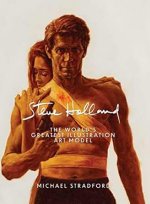
The main model for the Doc Savage series (not to be confused with "Savage" Steve Holland, the movie director and actor) and many other hundreds of illustrations. He has been on hundreds of books, notably the Doc Savage series and many westerns. The book is one of my favorite coffee-table ones about illustrations/illustrators, and that is saying a lot.
I loved seeing all the reference photos and how they were turned into covers and posters by the many contributing artists. Lots of interviews and info about their techniques. I was surprised to find out that many of the artists are ones for which I already have coffee-table collections of their art.
One of my bucket list items was to have a painted book cover of mine published -- that seems like too much work now, but I will continue to paint and am inspired to maybe try some book cover-style images.
Last edited:
Spektator
Is that right?
No Time for Sergeants, Mac Hyman
Will Stockdale is a farm boy from Callville, GA, way out in the pine woods. His hardheaded daddy has been throwing draft notices away, but early on officials show up to make sure he reports for duty. His pa compromises: Will can go, but he can't ride in no government car. He has to walk 27 miles into town. Always good-natured, Will does.
Thus begins Hyman's only novel*, published in 1954 and set in an indeterminate year between WWII and Korea. To call it a comic novel isn't accurate. It's a comedy with some interpolations of plot and is about 98% hilarious. Will's narrative voice invents the persona of Andy Griffith, who later played Stockdale in Broadway, TV, and movie adaptations. If Huckleberry Finn had been drafted....
There are a very few casual, dated racial slurs. Wince and read on. The book remains a gem.
-----------
*If you don't count Take Now Thy Son, a bleak Southern Gothic tragedy, never quite finished and published posthumously.
Will Stockdale is a farm boy from Callville, GA, way out in the pine woods. His hardheaded daddy has been throwing draft notices away, but early on officials show up to make sure he reports for duty. His pa compromises: Will can go, but he can't ride in no government car. He has to walk 27 miles into town. Always good-natured, Will does.
Thus begins Hyman's only novel*, published in 1954 and set in an indeterminate year between WWII and Korea. To call it a comic novel isn't accurate. It's a comedy with some interpolations of plot and is about 98% hilarious. Will's narrative voice invents the persona of Andy Griffith, who later played Stockdale in Broadway, TV, and movie adaptations. If Huckleberry Finn had been drafted....
There are a very few casual, dated racial slurs. Wince and read on. The book remains a gem.
-----------
*If you don't count Take Now Thy Son, a bleak Southern Gothic tragedy, never quite finished and published posthumously.
Last edited:
xterra
So far, so good...

I remember reading No Time for Sergeants at least 50 years ago. I enjoyed it then, but probably didn't notice the slurs
Removed screenshot that looked accidentally included and which had slightly personal information.
Edited by jimbob:
Removed screenshot that looked accidentally included and which had slightly personal information.
Last edited by a moderator:
Spektator
Is that right?
The Brick Foxhole, Richard Brooks
Richard Brooks was a successful screenwriter and film director (The Blackboard Jungle, Elmer Gantry, Cat on a Hot Tin Roof). he wrote this novel during WWII, when as a Marine he was stationed in the U.S. The book deals with U.S. servicemen, mainly Army with a sprinkling of Navy seamen and a Marine or two. The majority have never seen combat, but have qualified for home-front roles.
The central figure is Jeff Mitchell, in civilian life an animator for Walt Disney and in service an animator for training films. Feeling guilty for remaining safe Stateside while his fellow servicemen are risking their lives on the front lines, Jeff becomes increasingly insecure and paranoid, since he is stationed just outside of Washington, DC, while his wife Mary remains back home in California. Jeff torments himself by imagining Mary's infidelities.
We don't get a complete sense of Jeff's personality, because for its first half the novel flits from one discontented and potentially dangerous home-front serviceman to another. Narrated with a mixture of point of view from omniscient to tightly focused third person, It's filled with internal monologues and stream-of-consciousness passages. The general atmosphere is depressing, the Army post a hotbed of ethnic and racial hatred.
Then a little more than halfway through a murder occurs. The victim is a civilian, the suspects four non-coms and privates from the post. A thoughtful, pipe-smoking police captain, Charles Finlay, investigates. Everyone swears that Jeff Mitchell can't possibly be the murderer, because he could never kill anyone. Finlay isn't so sure, and neither is Jeff, because he got blind drunk at the time of the killing and he can't recall anything.
So it's a murder mystery . . . but more a sociological dissection of bigotry, antisemitism, homophobia, and simple unfocused aggressive hatred. It's interesting, but probably became a best-seller based on its sensational content, which also got Brooks scheduled for a court-martial because he had not cleared the manuscript with the brass before submitting it for publication. The court-martial was quietly dropped before it was convened. A couple of years after publication, the book was adapted as a film, Crossfire, directed by Edward Dmytryk. Actor Robert Ryan, a fellow Marine, had read Brooks's novel and intensely wanted to play a role in a possible film. He pushed for it, got a producer and director on board, and the film was made, but it was a bit different from the source material.
Notably, the movie stripped a good number of characters from the story, streamlined the mystery, and changed the victim from a homosexual man to a Jew. The movie is still a taut, though talky, thriller with great performances especially from Ryan (his breakout role) and Robert Young, who is the patient, seen-it-all police captain and underplays the role with gravitas and sincerity. In my opinion, the movie had a better title than the novel.
Saw the movie, sought out the book, and read it. It's more interesting as a social document and a snapshot of the time and place than a detective novel.
Richard Brooks was a successful screenwriter and film director (The Blackboard Jungle, Elmer Gantry, Cat on a Hot Tin Roof). he wrote this novel during WWII, when as a Marine he was stationed in the U.S. The book deals with U.S. servicemen, mainly Army with a sprinkling of Navy seamen and a Marine or two. The majority have never seen combat, but have qualified for home-front roles.
The central figure is Jeff Mitchell, in civilian life an animator for Walt Disney and in service an animator for training films. Feeling guilty for remaining safe Stateside while his fellow servicemen are risking their lives on the front lines, Jeff becomes increasingly insecure and paranoid, since he is stationed just outside of Washington, DC, while his wife Mary remains back home in California. Jeff torments himself by imagining Mary's infidelities.
We don't get a complete sense of Jeff's personality, because for its first half the novel flits from one discontented and potentially dangerous home-front serviceman to another. Narrated with a mixture of point of view from omniscient to tightly focused third person, It's filled with internal monologues and stream-of-consciousness passages. The general atmosphere is depressing, the Army post a hotbed of ethnic and racial hatred.
Then a little more than halfway through a murder occurs. The victim is a civilian, the suspects four non-coms and privates from the post. A thoughtful, pipe-smoking police captain, Charles Finlay, investigates. Everyone swears that Jeff Mitchell can't possibly be the murderer, because he could never kill anyone. Finlay isn't so sure, and neither is Jeff, because he got blind drunk at the time of the killing and he can't recall anything.
So it's a murder mystery . . . but more a sociological dissection of bigotry, antisemitism, homophobia, and simple unfocused aggressive hatred. It's interesting, but probably became a best-seller based on its sensational content, which also got Brooks scheduled for a court-martial because he had not cleared the manuscript with the brass before submitting it for publication. The court-martial was quietly dropped before it was convened. A couple of years after publication, the book was adapted as a film, Crossfire, directed by Edward Dmytryk. Actor Robert Ryan, a fellow Marine, had read Brooks's novel and intensely wanted to play a role in a possible film. He pushed for it, got a producer and director on board, and the film was made, but it was a bit different from the source material.
Notably, the movie stripped a good number of characters from the story, streamlined the mystery, and changed the victim from a homosexual man to a Jew. The movie is still a taut, though talky, thriller with great performances especially from Ryan (his breakout role) and Robert Young, who is the patient, seen-it-all police captain and underplays the role with gravitas and sincerity. In my opinion, the movie had a better title than the novel.
Saw the movie, sought out the book, and read it. It's more interesting as a social document and a snapshot of the time and place than a detective novel.
Last edited:
Real life kept interrupting but I finally managed to finish rereading the first three books in the Elizabeth Cage series, and have now read Bad Moon as well.
Still living in her little house in the sleepy market town of Rushford, Cage learns more about her history and the consequences of choices she made. Jones' injuries (from the attack on their Christmas party in the previous book) means his secret service job is now no more than occasional consultancy, so they decide to set up an agency together to investigate odd happenings rather than just dealing with them for free as they arise.
There are vengeful ghosts, gods, trolls, a feline soldier of the army of Bastet, angry snow, demons, and a very, very big snake. And of course Nigel, the dog of great... dogness.
Still living in her little house in the sleepy market town of Rushford, Cage learns more about her history and the consequences of choices she made. Jones' injuries (from the attack on their Christmas party in the previous book) means his secret service job is now no more than occasional consultancy, so they decide to set up an agency together to investigate odd happenings rather than just dealing with them for free as they arise.
There are vengeful ghosts, gods, trolls, a feline soldier of the army of Bastet, angry snow, demons, and a very, very big snake. And of course Nigel, the dog of great... dogness.
Beerina
Sarcastic Conqueror of Notions

- Joined
- Mar 3, 2004
- Messages
- 34,342
Seems reasonable. Loving brothers clearly care about their sister and setting up for her a secure, if not outright bountiful life.The Case of the Bizarre Bouquets by Nancy Springer has a satisfactory ending (at least in my mind anyway), and I don't think it's a spoiler to say Dr. Watson was found (by Enola) and rescued (by Sherlock and Mycroft).
One thing that needs to be explained is that Enola is in hiding from her brothers (Mycroft and Sherlock), because they want to send her off to some lady's academy to learn womanly things, like painting, embroidery, and proper etiquette which are the only acceptable things a lady should know in order to find a husband.
AmyStrange
Philosopher
Seems reasonable. Loving brothers clearly care about their sister and setting up for her a secure, if not outright bountiful life.
Yup, especially if you think the only thing women are good for is to be barefoot, pregnant, and stupid.
Mycroft doesn't really care about his sister except on how it reflects on him because she is his ward, but Sherlock is beginning to waver on that idea, especially in the movie version.
-
Last edited:
catsmate
No longer the 1
- Joined
- Apr 9, 2007
- Messages
- 34,767
So when does Enola poison Mycroft?Yup, especially if you think the only thing women are good for is to be barefoot, pregnant, and stupid.
Mycroft doesn't really care about his sister except on how it reflects on him because she is his ward, but Sherlock is beginning to waver on that idea, especially in the movie version.
-