Is Jesus's "this generation will certainly not pass" valid grounds for scepticism?

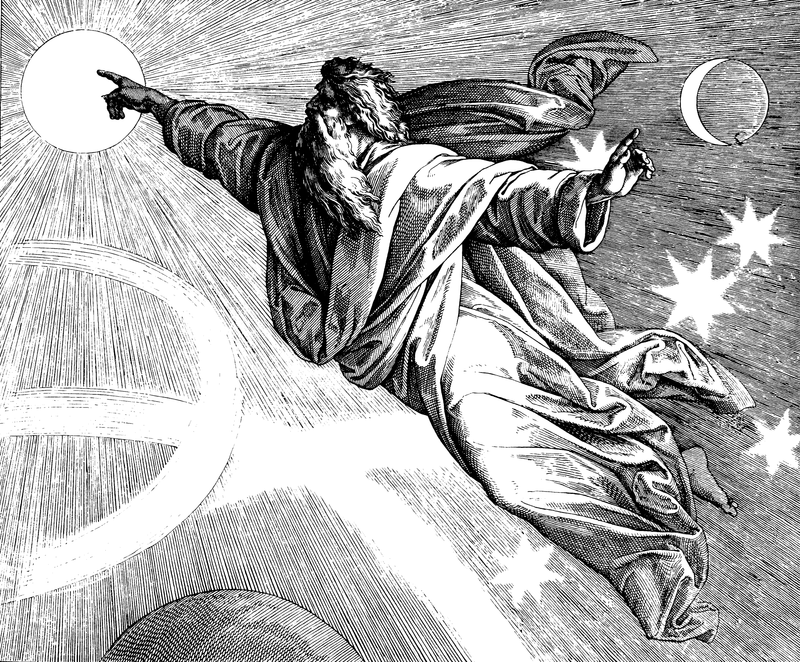
Colossians 1:15,16
The Son is the image of the invisible God, the firstborn over all creation. For in him all things were created: things in heaven and on earth, visible and invisible, whether thrones or powers or rulers or authorities; all things have been created through him and for him.
 
Dude. My man. Friendo. My former church was wrapped up into Hillsong, the biggest evangelical megachurch in the country. The idea that I still harbour sympathy for it is risible. I do have Christian friends, but notably they are not a part of that church but rather a much more progressive one that is still, sadly, very much in a minority among denominations.

No, what I'm doing is different. I'm endeavouring to correct atheists when they lie about what Christians do and do not believe. For example, the idea that there are two covenants, Jesus fulfilled the first covenant, and therefore Christians are not subject to Old Testament Jewish law, is not a dismissive handwave, it is a core part of Christianity - perhaps one of the most important core parts. So when atheists bring up all these Old Testament verses as though it is somehow a fault for Christians to be eating shellfish, or wearing clothes made from two fibres, that is a lie and I don't like it when people tell lies about other people, especially when they do so for political or ideological reasons (in this case in the service of antitheism).

The idea that if someone isn't a rabid frothing intolerant ◊◊◊◊◊◊◊ of a Christian then they're just not doing Christianity "properly" is one of the most egregious lies that antitheists tell. It's a straw argument, deliberately fabricated in order to make Christians look as bad as possible. Sorry, that's not on as far as I'm concerned.

As I say often, there is enough absurdity in the Bible already. You don't need to make ◊◊◊◊ up.

Firstly, I was brought up as a Catholic, as I have said. At no point was I ever told that the OT laws did not apply to me. It is also a fact that Christians have no issues whatsoever with quoting Leviticus if they want to oppose homosexuality, nor with quoting any other part of the OT when it suits them.
Secondly, it is not lie when atheists make these criticisms. The most you can say is that is is an error. Unless you can prove that atheists know that what they are saying is not true, then I don't see how you can make that claim.
Finally, as Darat said, there is considerable disagreement among the various Christian sects about whch parts still apply, and which don't. They divide the laws into ceremonial, hygeinic and moral, and then argue about whether, for example, not eating pork is ceremonial (in which case it doesn't apply), moral (in which case it does) or hygienic (in which case, it depends). The whole thing is a mess, and not anywhere near as clearcut as you portray it to be.
 
Regardless of how the Bible starts, God does refer to himself as "the maker of all things", which seems pretty definitive. Unless you're calling God a liar?
Not disputing that, my point is about Genesis - it doesn't start if you like at year 0 (or 1) he'd been doing other stuff before he got into remodelling the earth.
 
Not disputing that, my point is about Genesis - it doesn't start if you like at year 0 (or 1) he'd been doing other stuff before he got into remodelling the earth.
In the protestant version, Genesis 1:1 says "In the beginning, god created the heavens and the earth." That sounds a bit like Year Zero and making all the stuff, no? I think I said earlier, my pseudo-Baptist interpretation was that heavens and earth meant space and matter, and light was energy, and all that.
 
In the protestant version, Genesis 1:1 says "In the beginning, god created the heavens and the earth." That sounds a bit like Year Zero and making all the stuff, no? I think I said earlier, my pseudo-Baptist interpretation was that heavens and earth meant space and matter, and light was energy, and all that.
Nope - that's a bad translation of the nearest to the original text we have. It's one that has persisted for quite some time.
 
In the original Hebrew it is written: “Bereshit Bara Elohim Et Ha-Shamaim V-Et Ha-Aretz” {בראשית ברא אלוהים את השמים ואת הארץ} – the English translation of the first PART of this verse is very accurate: 'Bereshit Bara Elohim' and in English 'In the beginning God created.

 
"Faith is the assurance of things hoped for, the conviction of things not seen"
Exactly! But I think Skeptical Greg was being rhetorical.

I've never understood how belief could ever be a choice. I know that theists will argue that you can just decide to believe. That doesn't work for me.
 
Exactly! But I think Skeptical Greg was being rhetorical.

I've never understood how belief could ever be a choice. I know that theists will argue that you can just decide to believe. That doesn't work for me.
The alternative might be too horrible to contemplate.

I mean, it worked for me as a child. Kind of. I know I really, really wanted it to be true, because I couldn't stand the "nightmarish" idea of eternal nothingness. I suppose it's not true belief. You're just clinging at the only thing that is keeping you sane, actively supressing the voice at the back of your head that makes you doubt it.

Obviously, I grew out of it.

I don't really know any other way of belief in God. When I was really young, I believed because adults told me, as one does. When I was a little older, I wanted to believe. Then suddenly I didn't. It makes me wonder if all believers feel that way, but it would be useless to ask. No one in that state is ready to admit it.

Point is, I really don't get believers, unless they are all silently clinging to a vain hope that will deliver them from the horrors of existence.
 
Last edited:
Once you learn Santa was a bunch of bull ◊◊◊◊, you start to narrow your eyes at everything mom and dad ever told you.
 
The alternative might be too horrible to contemplate.

I mean, it worked for me as a child. Kind of. I know I really, really wanted it to be true, because I couldn't stand the "nightmarish" idea of eternal nothingness. I suppose it's not true belief. You're just clinging at the only thing that is keeping you sane, actively supressing the voice at the back of your head that makes you doubt it.

Obviously, I grew out of it.

I don't really know any other way of belief in God. When I was really young, I believed because adults told me, as one does. When I was a little older, I wanted to believe. Then suddenly I didn't. It makes me wonder if all believers feel that way, but it would be useless to ask. No one in that state is ready to admit it.

Point is, I really don't get believers, unless they are all silently clinging to a vain hope that will deliver them from the horrors of existence.
I can understand "wanting" to believe, but I think there is a huge difference between that and actually believing. I can wish to be rich and good looking. But that doesn't mean I am. My bank account is still tiny and the reflection in the mirror isn't exactly appealing even to me. If I write a big check or try to pick up a beautiful woman, both will "bounce."

Seems to me that an act of faith is an act of self delusion.
 
Last edited:
Have to disagree with you there - the various Christian religions have a pick 'n' mix approach to what they consider still relevant from the OT i.e. what to follow from the OT, it is not incorrect nor a lie to bring up that point. Especially since one will often find what those Christian religions consider still relevant is in the middle of laws/commandments that they don't follow, that they consider irrelevant. Even the most well-known of Christian laws/commandments (which most if not all Christian religions have a version of) the "Ten Commandments" are found in the OT amidst other commandments/laws. (And the Christian religions cannot agree on which ten commandments are still relevant.)
This is true, but the idea that the Messiah fulfilled the Judaic law is pretty universal, yeah? It's the reason there are Christians in the first place.
Firstly, I was brought up as a Catholic, as I have said. At no point was I ever told that the OT laws did not apply to me. It is also a fact that Christians have no issues whatsoever with quoting Leviticus if they want to oppose homosexuality, nor with quoting any other part of the OT when it suits them.
My church taught that the prohibition against homosexuality still existed because it was reiterated in the New Testament (eg. 1 Corinthians 6:9, Romans 1:26-28, 1 Timothy 1:10). This was something I specifically asked about since they didn't seem to have a problem with shellfish, though it has to be said that I did see quite a few women in the church with their heads uncovered. As for the other parts of the OT, the bits I most heard quoted were Psalms and Proverbs, Ecclesiastes, and because my church was an apocalyptic one, Isaiah and Ezekiel. And because it was also Pentecostal, Joel: "I will pour out my spirit upon all flesh; and your sons and your daughters shall prophesy, your old men shall dream dreams, your young men shall see visions".

Also, though you were Catholic, the old laws didn't apply to you, even if you were never explicitly told that. Your confessor never told you to sacrifice an unblemished bullock, as per Leviticus 4:1-12. He told you to say twelve Hail Marys and perform an act of contrition. The law outlined in Leviticus 24:16 has never been put into practice by the modern Roman Catholic church as far as I know (at least after Vatican 2), but please feel free to point out if it has.
Secondly, it is not lie when atheists make these criticisms. The most you can say is that is is an error. Unless you can prove that atheists know that what they are saying is not true, then I don't see how you can make that claim.
I call it a lie because some antitheists (not all) persist in making these claims even after I have pointed out their error.
Finally, as Darat said, there is considerable disagreement among the various Christian sects about whch parts still apply, and which don't. They divide the laws into ceremonial, hygeinic and moral, and then argue about whether, for example, not eating pork is ceremonial (in which case it doesn't apply), moral (in which case it does) or hygienic (in which case, it depends). The whole thing is a mess, and not anywhere near as clearcut as you portray it to be.
Yes, I was referring mainly to this specific question of the two covenants, hence why it seemed pretty clear. The example of homosexuality above is one of the ways in which it is messy and somewhat inconsistent.
 
This is true, but the idea that the Messiah fulfilled the Judaic law is pretty universal, yeah? It's the reason there are Christians in the first place.

My church taught that the prohibition against homosexuality still existed because it was reiterated in the New Testament (eg. 1 Corinthians 6:9, Romans 1:26-28, 1 Timothy 1:10). This was something I specifically asked about since they didn't seem to have a problem with shellfish, though it has to be said that I did see quite a few women in the church with their heads uncovered. As for the other parts of the OT, the bits I most heard quoted were Psalms and Proverbs, Ecclesiastes, and because my church was an apocalyptic one, Isaiah and Ezekiel. And because it was also Pentecostal, Joel: "I will pour out my spirit upon all flesh; and your sons and your daughters shall prophesy, your old men shall dream dreams, your young men shall see visions".

Also, though you were Catholic, the old laws didn't apply to you, even if you were never explicitly told that. Your confessor never told you to sacrifice an unblemished bullock, as per Leviticus 4:1-12. He told you to say twelve Hail Marys and perform an act of contrition. The law outlined in Leviticus 24:16 has never been put into practice by the modern Roman Catholic church as far as I know (at least after Vatican 2), but please feel free to point out if it has.

I call it a lie because some antitheists (not all) persist in making these claims even after I have pointed out their error.
That doesn't make it a lie. A difference of opinion, yes. But not a lie.
Yes, I was referring mainly to this specific question of the two covenants, hence why it seemed pretty clear. The example of homosexuality above is one of the ways in which it is messy and somewhat inconsistent.
I find the claim that the New Testament provided a new Covenant where all of a sudden the Old Testament laws no longer applied as dishonest. A sort of we don't like those laws so we're not going to follow them. Even more bizarre to me is the capricious changing of the Sabbath to Sunday.
 
I find the claim that the New Testament provided a new Covenant where all of a sudden the Old Testament laws no longer applied as dishonest. A sort of we don't like those laws so we're not going to follow them.
"We're not Jews any more, we're Christians". The Old Testament laws applied to Jews. Jesus fulfilled those laws. Christians have new laws. It's as simple as that. It's what Matthew 5:17-18 is all about.

"I haven't come to destroy the law, I've come to fulfil it." He fulfilled the law by dying on the cross and atoning for everyone's sins, and not one jot or tittle passed from the law until he died. After he died, all the jots and tittles could pass from the law, and most of them did, because they existed in order to bring about the Messiah. After the Messiah had come and done his job by dying, they were no longer necessary.

It's called Supercessionism (I discover today) and it's at the core of many Christian theologies.


Supersessionism, also called replacement theology and fulfillment theology by its proponents, is the Christian doctrine that the Christian Church has superseded the Jewish people, assuming their role as God's covenanted people, thus asserting that the New Covenant through Jesus Christ has superseded or replaced the Mosaic covenant. Supersessionists hold that the universal Church has become God's true Israel and so Christians, whether Jew or gentile, are the people of God.

Often claimed by later Christians to have originated with Paul the Apostle in the New Testament, supersessionism has formed a core tenet of Eastern Orthodox, Roman Catholic and Lutheran churches for the majority of their history. Many early Church Fathers—including Justin Martyr and Augustine of Hippo—were supersessionist.

Even more bizarre to me is the capricious changing of the Sabbath to Sunday.
That one I have no explanation for.
 
"We're not Jews any more, we're Christians". The Old Testament laws applied to Jews. Jesus fulfilled those laws. Christians have new laws. It's as simple as that. It's what Matthew 5:17-18 is all about.

"I haven't come to destroy the law, I've come to fulfil it." He fulfilled the law by dying on the cross and atoning for everyone's sins, and not one jot or tittle passed from the law until he died. After he died, all the jots and tittles could pass from the law, and most of them did, because they existed in order to bring about the Messiah. After the Messiah had come and done his job by dying, they were no longer necessary.

It's called Supercessionism (I discover today) and it's at the core of many Christian theologies.

I understand the theology. I just think it is BS. But of course I think it is all BS.
That one I have no explanation for.
The Roman Church did it to distance Christianity from Judaism is the only explanation I have for it.
 

Back
Top Bottom