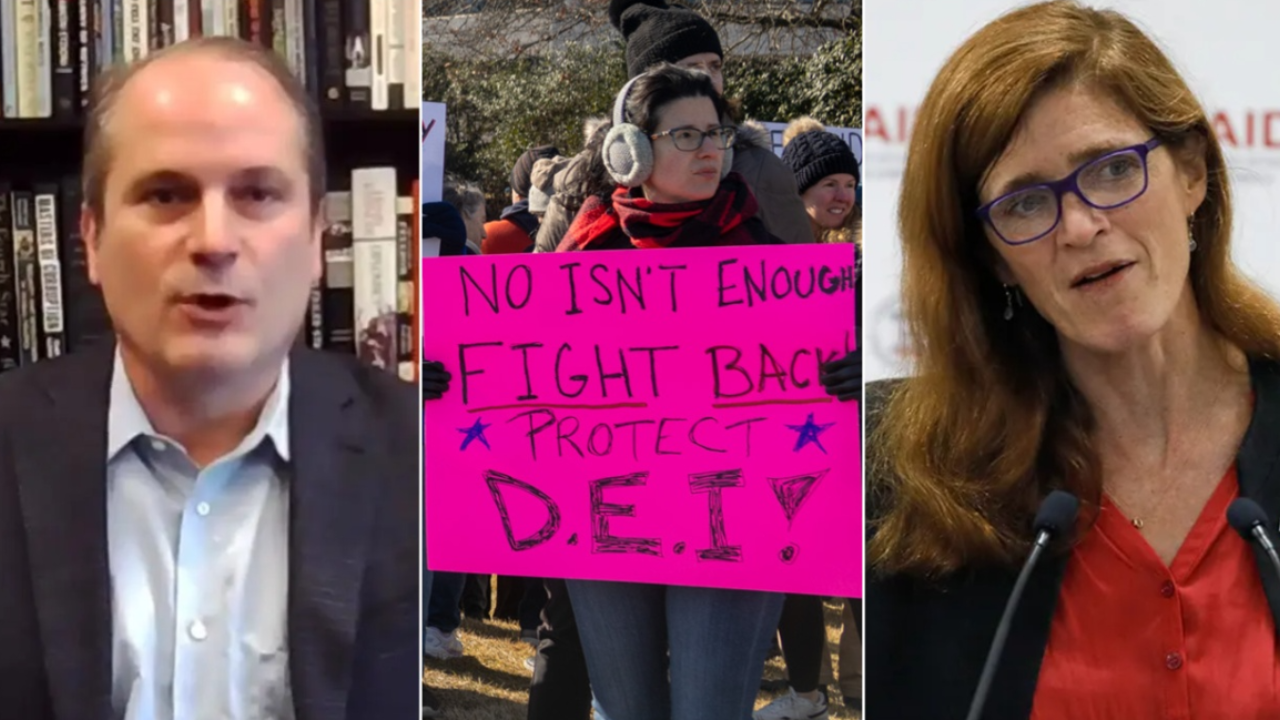
In a perfect world DEI policies would not be necessary, but we are still a long way from that perfect world.
There are plenty of studies that have been done where copies of similar CVs, but with different names indicating different genders and/or ethnicities, are sent out to employers. As long as the chances of being invited for interview remain greater for some CVs than others (and last I heard they still are) measures which are designed to correct that unfairness will regrettably be required. We can argue about what those measures should be, how effective they are etc, but their necessity is surely a given.
And yes, the above applies whichever gender/ethnicity is being unfairly favoured. If the studies ever showed white men were the ones being excluded, that would be equally wrong. They just never seem to. These are the two most recent studies a quick search found me:
Explore the largest study on resume bias, with 12,000+ applications to 4,000+ jobs. Discover insights on name and ethnic discrimination in employment.
www.kcl.ac.uk
A new study revealed that job applicants with Black names receive fewer callbacks than white applicants. This article explores the research and provides guidance for employers.

www.forbes.com
Bias is a real thing. I'm not convinced that DEI (or SDEI to appease arthwollipot) is the solution to that issue though.
I can't get to the second article, because I'm not going to turn off my ad blocker for it. But I read the first one, and it's not really suprising. Where I end up getting skeptical is when it comes to *why* the bias exists. Your first article says:
Due to socialization, cultural values, social norms, and commonly held beliefs in a society, employees develop a shared, implicit understanding about how a leader should look like and behave
A lot of people, including several in this thread, jump from this to "racism" without a pause for thought along the way. What gets overlooked is the impact of cultural values, social norms, and commonly held beliefs. The focus falls to "how a leader should look like" and ignores "how a leader should behave".
My company is in a location with a large Mexican, Guatemalan, and Taiwanese population. We've made sure we have a sufficient number of employees, especially in any customer-facing role, who are spanish or mandarin speaking, and we heavily favor people with similar heritage. It's not "DEI", it's common sense - because being able to communicate well with someone from Taiwan requires not just speaking the same language but also having a cultural understanding. For the same reason, even though someone from Madrid might speak spanish very well, they won't have the cultural competency that someone with a Mexican or Guatemalan heritage would have. We connect better with our customers by being able to grok their
perspective.
So for your article, I suspect there's an assumption involved on the part of people reviewing the resumes that people with foreign sounding names would have a different set of values and norms than the company wants to foster. And that might be a really bad assumption, but it's not an unreasonable assumption.
I would be really interested in seeing a variation on the resume study - I'd love to see those same resumes sent out with photos attached, but essentially randomized. So someone might show up with the name "John Comstock" and have a photo of someone of Indian descent. Or it might say "Chen Li" and have a photo of a red-haired scots looking person. I think it would be a reasonable way to test my current hypothesis that the assumption of cultural divide might be more important than color. Were my hypothesis true, I would expect that they'd see higher positive response rates for both English-sounding names and for English-looking photos. That would suggest that reviewers are looking for cultural assimilation rather than race or ethnicity.
I'd also like to see what the results are if the name are all European names, but from very different cultural backgrounds. Throw in some Jean-Claude Arlanc, and some Dmitri Vasilyev, and some Nils Adelsköld.