Split Thread Diversity Equity and Inclusion and merit in employment etc

Did you somehow miss that companies have been shedding their DEI departments and diversity hiring in the past couple years? No one really wants to pay the Woke tithe.
No I didn't see this, because (unlike you) I actually work in the Real World where diversity is a major and increasingly important matter.
Perhaps you should try visiting the Real World rather than remaining in your right-wing echo chamber?
 
Probably because they've been interpreting and implementing DEI so ◊◊◊◊◊◊◊◊.
Indeed. I've been at two recent events where this was a significant topic, one relating to Talent Acquisition and one to the Future of Work. Some fascinating trends.
 
No I didn't see this, because (unlike you) I actually work in the Real World where diversity is a major and increasingly important matter.
Perhaps you should try visiting the Real World rather than remaining in your right-wing echo chamber?
Yeah, I'm the one in an echo chamber

Why Business Leaders Are Pulling The Plug On DEI

Microsoft reportedly fires DEI team — becoming latest company to ditch ‘woke’ policy

Companies are disproportionately cutting diversity roles—they might soon regret it

'Opportunities not outcomes' | Boeing disbands DEI department to focus on a 'merit-based performance system'

It was fine having these make-work positions when the money was flowing; but when that dried up the bottom line suddenly mattered again. And, really, any company focused on DEI and not merit will probably find itself in bankruptcy.
 
...he says, citing four of the most echo-chambery sites on the internet.
Which are mainly quoting alleged rumours.
Meanwhile I work for a company bigger than any of them and diversity and equality are the way to go.
 
Well, if only obnoxious, unhelpful DEI training is REALLY DEI training
I didn't say that. But DEI isn't anti-discrimination. DEI is very much pro discrimination, it just needs to be the right kind of discrimination. That's the whole point.
 
Meanwhile, back in the Real World, companies and organisations with diverse workforces are happier and more productive. It's a no-brainer really.
The implicit assumption, which you seem to accept, is that diversity in the workplace is only possible if those workplaces pay for training from specialists on how to do diversity the 'right' way.

Meanwhile, back in the real world, the overwhelming majority of companies are already diverse - on both demographic composition and in beliefs and values. And for most of those companies, adding special diversity training is counterproductive and creates a lack of trust and appreciation.

ETA: DEI is responsible for my company having a "Women's Affinity Group" in place, with a discretionary budget for the club to spend... despite the fact that my company is 70% female, including an executive team and a board of directors that is 60% female. I'm pretty sure that my company's female employees don't need a leg up to address discrimination and microaggressions in the workplace. It's a massive waste of time and money. It's using a hammer to pound a screw into an already finished table.
 
Last edited:
Which are mainly quoting alleged rumours.
Meanwhile I work for a company bigger than any of them and diversity and equality are the way to go.

To poke at this statement a little with a quote from a BBC link -

A Morning Consult survey released in January showed 82% of business executives think diversity initiatives are critical to their business strategies, and 67% said they expect these efforts to become more important in the coming years. The survey also showed nearly half of executives said their primary reason for implementing diversity initiatives is to "improve business performance", acquire better talent (43%) and increase creativity (38%). Only 2% of business leaders surveyed said such initiatives aren't important.

Looks like it checks out, as far as can easily be checked.


I didn't say that. But DEI isn't anti-discrimination. DEI is very much pro discrimination, it just needs to be the right kind of discrimination. That's the whole point.

To poke at the earlier link a bit again -

Although the visibility of DEI initiatives reached fever pitch in the past years, the concept of equal opportunity in the workplace isn't new. Lily Zheng, DEI strategist, consultant and author of DEI Deconstructed: Your No-Nonsense Guide to Doing the Work and Doing It Right, traces the emergence of the term back to the creation of the Equal Employment Opportunity Commission (EEOC) in 1965. The EEOC enabled individuals to report companies engaging in workplace discrimination on the basis of gender, race, age, pregnancy and more.
Zheng says growing awareness of discrimination in the workplace – and the increasing threat of legal action – led many businesses and institutions to incorporate policies that centred the rights and advancement of minority and marginalised groups. Zheng dates the adoption and widespread use of the terms 'diversity', 'equity' and 'inclusion' to roughly between the 1990s and early 2020s.

Perhaps some of the disconnect here is how "DEI" has historically been treated as basically being synonymous with anti-discrimination more generally? And that many of those who support and implement DEI are pointedly supporting and implementing it as fundamentally being anti-discrimination policy? I expect that you have noticed that there's not really that much support for the active discrimination version that you're railing against in this thread compared to the anti-discrimination version. With that said, acknowledging that there IS a problem, broadly speaking, in the face of a bunch of legal challenges that demonstrated such, and seeking to address it, at least to the extent as is beneficial to the business, isn't something nefarious by a long shot. Similarly, much of what backing away from the term "DEI" has happened seems to be directly related to a bunch of legal threats and very loud right-wing voices trying to stir up trouble and profit from such.


Perhaps what you seem to be missing is, to poke at the second link and its contents, that the label of "DEI" is being backed away from. By a few. The actual practices? Less so, even by those officially backing away from the label and cutting the DEI positions.

Here, a headline that doesn't actually conflict with the substance in play, but has a rather different spin than you likely like hearing.

No, not all companies are abandoning diversity, equity and inclusion. Here’s why. Amid a high-profile backlash, many businesses are scrutinizing their policies. But the vast majority end up sticking with DEI, in part because it’s key to growth.

Because companies have diverse stakeholders, including employees, customers and shareholders, and because it’s their business to be profitable, it’s not just acceptable but necessary for them to question their DEI programs’ effectiveness and evolve them as necessary, according to Diana Scott, who leads the nonprofit’s U.S. Human Capital Center.


In all, though, some 90% of those working with the Conference Board remain committed to DEI after doing so, Scott said by video call.


“Most organizations are trying to stay the course because they want to create an inclusive, diverse, vibrant culture in the organization,” Scott said. “Because they know that contributes to employee engagement, which contributes to employee productivity, which contributes to bottom-line business results. You don’t do DEI because you’re trying to be ‘woke.’ You do DEI because it’s actually serving your business.”

To poke back at the BBC article, there is cause for said position -

DEI boosts the bottom line for many companies, according to both experts and data. Research shows major firms with women and people of colour at the helm outperform their homogenous peers. A 2020 McKinsey & Company analysis of 1,000 US firms showed companies with more gender diversity within their leadership teams were 25% more likely to have higher profits than their peers who did not. The report also showed companies with the most ethnic and cultural diversity achieved 36% higher profitability than companies with a less diverse C-suite.
As businesses rapidly globalise, DEI is becoming even more important for many firms. US companies that manufacture in America might, for example, have engineers working in Asia, which means employees who can work cross-culturally will be an asset, says Michele Williams, associate professor at the University of Iowa's Tippie College of Business.
And domestically, as the population of the US continues to rapidly diversify, the demographics of American workplaces will change as well, says Gisele Marcus, professor of practice in diversity, equity and inclusion at Washington University in St Louis. Companies that actively engage a diverse pool of talent now will be the most nimble in the future, she says.

 
To poke back at the BBC article, there is cause for said position -
You do a lot of poking! ;) I would point out ('cause I'm a pointer not a poker) that McKinsey just kinda made up the "diversity is good for business" line to sell DEI trainings to businesses. Try to find anyone replicating that. And I don't mean the diversity of experience / skill which is obviously useful. But that diversity of skin color or sexual proclivities clearly has no bearing on merit. If it were true that "DEI boosts the bottom line," how could companies possibly have been profitable before the DEI discrimnation was imposed? How can Samsung or LG make so much $$$ with such a homogenous workforce? And where are all these new billion-dollar startups with DEI owners/founders? DEI is a luxury that already profitable companies engage in for public relations. Once that starts to cut into profit, DEI is on the chopping block.
 
To poke back at the BBC article, there is cause for said position -
They seem to be assuming causation when they observe a correlation. If diversity is a side effect of other factors which make a company successful, then efforts to produce diversity purely for the sake of diversity will not actually help performance.

Are there any studies which show that DEI measures actually improve the performance of a company? I don't think there are.
 
Are there any studies which show that DEI measures actually improve the performance of a company? I don't think there are.
Oh, no problem. I'm sure if you paid enough money a consulting company could give you the report you want. :sneaky:
 
Are there any studies which show that DEI measures actually improve the performance of a company? I don't think there are.
As we have seen, different people and different organisations have vastly different ideas on what DEI is or is supposed to achieve.
 
I think he's just saying that he has no idea if any definition of DEI succeeds at any stated purpose. Sort of a negative space "no true Scotsnonbinaryperson".
I'm saying that some people and organisations have a definition of "DEI" that is so far removed from the ideal that those people and organisations refuting it is not all that surprising.

In other words, ◊◊◊◊ implementation of DEI is ◊◊◊◊.
 
I'm saying that some people and organisations have a definition of "DEI" that is so far removed from the ideal that those people and organisations refuting it is not all that surprising.

In other words, ◊◊◊◊ implementation of DEI is ◊◊◊◊.
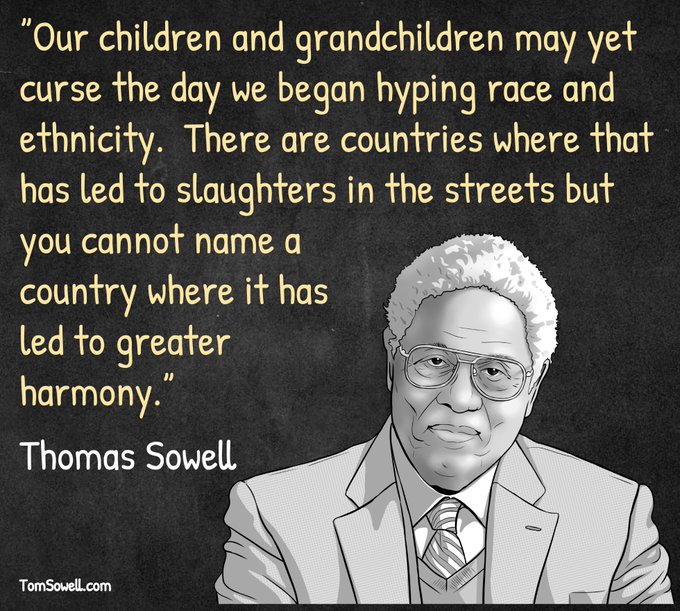
Maybe so. I doubt you'd get an objection in this thread on equal opportunity. But once we start judging people (for good or bad) by their sex, race, sexual orentiation, etc., that's where many of us (I presume) say no.

GePuR4CbEAArxXl
 

Back
Top Bottom