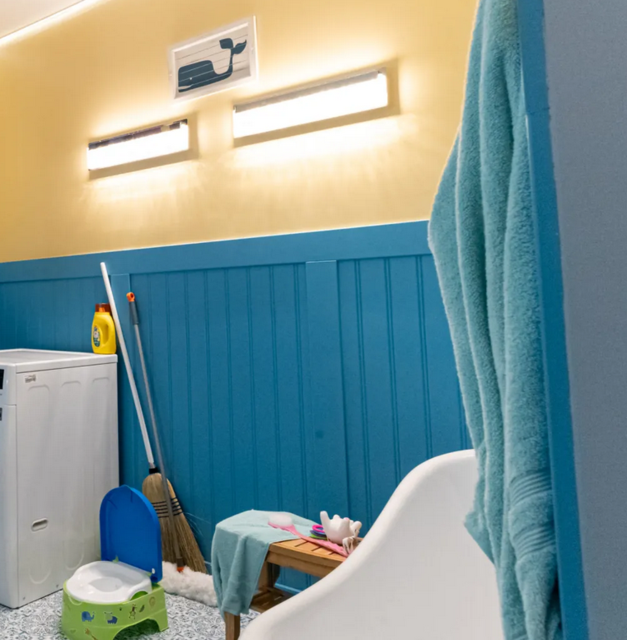
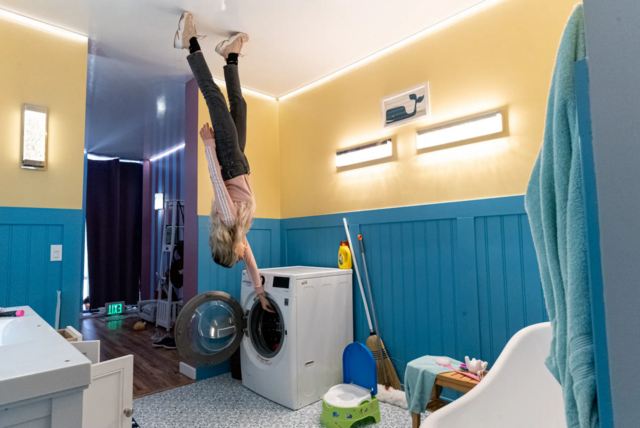
LOL!
Vixen, what do depth of field or light quality have to do with establishing the precise orientation of the camera in order to determine the orientation of the floor in the images being discussed?
Once more, let's say someone shoots a photograph looking down a hallway. The camera is centered down the hallway laterally, but is tilted upward by 5° relative to the floor. What can you determine about the actual slope of the floor relative to true level from that image? The answer is "nothing". The hall could be perfectly level with the camera tilted upward by 5° relative to true level. The hallway could be sloping upward (away from the camera lens) at 5°, with the camera at 10° from true level. The hallway could be sloping downward at 30° with the camera aimed down by 25°. Hell, the hallway could even be a vertical shaft with the camera aimed down by 85°. In any of those scenarios the images shot by the camera would look exactly the same, because there's no reference point to tell you where true level is.
Yet you're looking at the second photo and assuming the floor is sloping down away from the camera because you make the unwarranted assumption that the camera is aligned with true level. The very fact that you've attempted to defend this erroneous assumption with irrelevant appeals to artistic perspective, depth of field setting and lighting conditions proves that you don't know what you're talking about, or at the very least, that you'll never admit to being wrong about this. Your attempts to establish empirical evidence to back up your "deep fake" claims regarding those images have completely failed.