Cont: The sinking of MS Estonia: Case Reopened Part VI

Status
Not open for further replies.
I assume she's talking about helicopter pilot logbooks. Is that the sort of information they would record in a pilot logbook?
Do they have to keep the list of names in their head until they land or should they be working up a vital records registry...

...while flying a helicopter in heavy weather?
 
As Capt. Makela said, it was a normal blustery September storm, wind speed 18 m/s. Around here it often goes up to 24 m/s and that is when a storm warning goes out.
Do Europeans use m/s for wind speed? I assumed knots were more or less universal.

Sent from my SM-G991U using Tapatalk
 
It is a good job I don't believe in 'coincidence' or 'conspiracy theory'.
You don't believe in coincidence? What does that mean?

I lived in the Netherlands for a while. My son and I have fairly uncommon English names. My Dutch neighbors had two dogs with the same two names. These names are not Dutch at all.

That is the most noteworthy coincidence I've ever experienced. But if there are no coincidences, then how should we explain it?

Sent from my SM-G991U using Tapatalk
 
Last edited:
Do Europeans use m/s for wind speed? I assumed knots were more or less universal.

Sent from my SM-G991U using Tapatalk

M/S or Kph are more common in the general public (most people don't even know how fast a knot is...) I have a RA licence here in Australia for light aircraft, and a boat licence , and I can't even tell you without looking it up how fast a knot is (its about 1 mph roughly from memory, but I can't remember if its a bit smaller or a bit bigger), but I'm way past a half century now and I only know how fast mph is in kph, because my first few cars were all still in mph on the speedo...
(40/50/60mph is 'near enough' for 60/80/100kph)

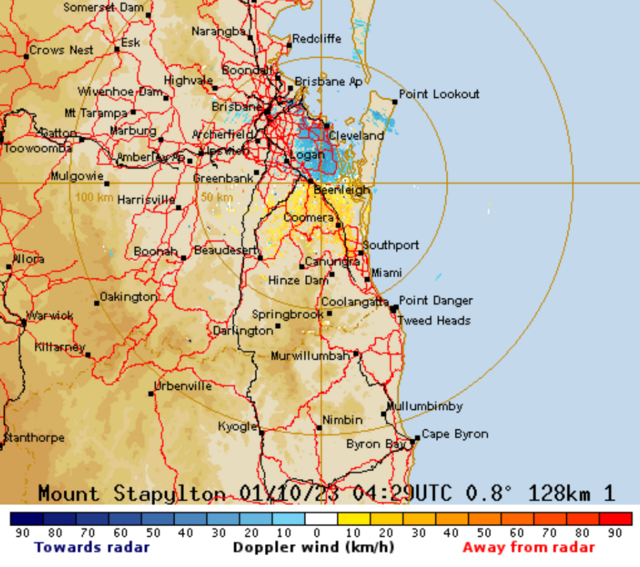
Things like the BOM here (Bureau of Meteorology) use kph...

Screenshot-from-2023-10-01-14-32-16.png


I haven't heard knots being used in years...

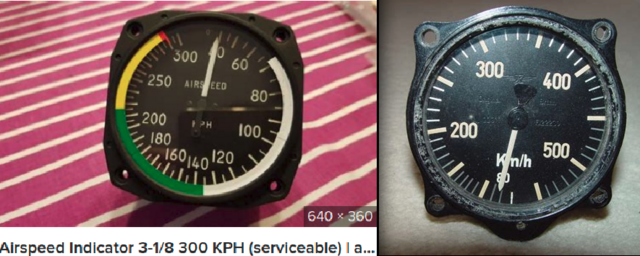
(most of the planes I have flown here in Australia (small Cessnas) are in kph or knots/kph, only one had a knots/mph airspeed gauge and that was a VERY elderly flying school one (it was ten years older than me LOL and I'm well past 50...) that I hired for a recertification flight...

Screenshot-from-2023-10-01-14-48-09.png


Knots would be a major source of confusion as distances here between airports is measured in kilometres, so you would have to convert the distance into miles/nautical miles to get a flight time- where just having the airspeed indicator in kph means it is a simple job indeed...

Most people under 50 would struggle to even know how long a foot is...
A foot??- it depends on your shoe size???

I was one of the last generation to grow up using feet, inches and miles- and I can give you a rough guide as to an inch and foot- but even I would have to look up a mile to pace it out... (or figure it out from my old 40/50/60 speedo days)

:D
 
You don't believe in coincidence? What does that mean?

I lived in the Netherlands for a while. My son and I have fairly uncommon English names. My Dutch neighbors had two dogs with the same two names. These names are not Dutch at all.

That is the most noteworthy coincidence I've ever experienced. But if there are no coincidences, then how should we explain it?

Sent from my SM-G991U using Tapatalk

It's quite a common trait in conspiracy theorists.
 
ydnrc. 43 of the 137 surviving rescuees were crew, 94 passengers. So 31%

Of the total number of people on board:

Of the total 989 people on board, only 137 survived. Of those survivors, only 7 were over the age of 55 and none were below the age of 12. Of the 106 crew members on board, 43 (41%) survived. Conversely, of the 803 passengers on board, only 94 (12%) survived.
Integral Risk

If we include the nine 'missing' Estonians it is 49% of the crew and staff.

In addition, the passengers without tickets, who would include small children travelling with family and staff friends and relatives travelling free, were not included in the passenger lists so for passenger victims, the numbers are almost certainly higher.
 
Clearly not.

He's a lawyer with an agenda. His claim that a ship cannot sink at a certain angle is obviously crap. He run his own simulation after all the others show Estonia sinking - as described.

He's just another conspiracy theorist who, after banging the drum for a new investigation, is now unhappy that the new investigation tells us the same thing. But now we know what kind of damage was caused when the ship impacted the sea floor, and they've surveyed the car deck in full.

We've seen this with every other CT were a second investigation supports the original.


He's wrong.


In 1994, Sweden had far more technical and financial assets at their disposal than the Estonians did. Why wouldn't they take the lead in the investigation? They have been engineers, a better navy, and a quality research apparatus that Estonians likely still do not have today. And since Estonia signed off on MS Estonia for open- ocean transit, why would Sweden trust them to take the lead in the first place?

Wow, just wow. One step away from saying, why shouldn't the CIA have taken over, because after all the USA is bigger and better. Let the policemen of the world take over here, chaps. "It was our operation and cargo after all."
 
Citing a joke site to say you're not joking is very much a joke.
It's the kind of joke you'd expect to hear on Rowan and Martin's Laugh-In, but those guys actually knew they were joking.

No. The Finnish sense of humour is very similar to the British. Hikipedia is like PRIVATE EYE. It may seem to make light of social issues but what it is really poking fun it is the media that reports it and the pompous asses trying to cover their backs spouting nonsense. Americans have never really understood this humour.
 
Let's face it, 55% iirc of those rescued were the crew.

ydnrc. 43 of the 137 surviving rescuees were crew, 94 passengers. So 31%

Of the total number of people on board:

Of the total 989 people on board, only 137 survived. Of those survivors, only 7 were over the age of 55 and none were below the age of 12. Of the 106 crew members on board, 43 (41%) survived. Conversely, of the 803 passengers on board, only 94 (12%) survived.
Integral Risk.


41% of the crew surviving does not mean that 41% of the survivors were crew.
 
You don't believe in coincidence? What does that mean?

I lived in the Netherlands for a while. My son and I have fairly uncommon English names. My Dutch neighbors had two dogs with the same two names. These names are not Dutch at all.

That is the most noteworthy coincidence I've ever experienced. But if there are no coincidences, then how should we explain it?

Sent from my SM-G991U using Tapatalk

I bet I can explain it. You and your son are of that generation who were given traditional names (biblical or celtic-derived), often named after a grandparent, and thus your name and your son's name aren't particularly inventive as is the modern trend. Perhaps even a name popular in Victorian times, such as Edna, Iris, Maud, Rupert, Sebastian, Wilfred, etc. Your Dutch neighbours didn't give their dogs traditional names such as Prince, Spot, Buster or Buddy, but instead, having watched numerous US tv films and shows, gave them names such as 'Teddy and Maggie' or 'Sam and Daisy'. Would I be on the right path? If your name is something like Chardonnay and your son, River, and the Dutch neighbour's dogs' name were the same, then that would be spooky <sfx theme from the Twilight Zone>, I grant you that.

The fact is, most things that people call 'a coincidence' can be explained by simple probability theory. For example, two people in a crowded room with the same birthday is actually a quite common and mundane experience.
 
It's quite a common trait in conspiracy theorists.
Yes, it is. Some devout folk too. Never made any sense to me, since a world without coincidence is monstrously improbable.

Sent from my SM-G991U using Tapatalk
 
I bet I can explain it. You and your son are of that generation who were given traditional names (biblical or celtic-derived), often named after a grandparent, and thus your name and your son's name aren't particularly inventive as is the modern trend. Perhaps even a name popular in Victorian times, such as Edna, Iris, Maud, Rupert, Sebastian, Wilfred, etc. Your Dutch neighbours didn't give their dogs traditional names such as Prince, Spot, Buster or Buddy, but instead, having watched numerous US tv films and shows, gave them names such as 'Teddy and Maggie' or 'Sam and Daisy'. Would I be on the right path?


Who knows? But even if you were, it wouldn't establish any connection.
 
If we include the nine 'missing' Estonians it is 49% of the crew and staff.

If we assume a fantastical conspiracy theory actually happened then we can change the real numbers to make them look a bit more suspicious and support our conspiracy theory.

Circular argument is circular.

However if you wish us to regard it as suspicious that ship's crew disproportionately survived (even excluding the fantasy nine) are you now suggesting the whole crew were 'in on it'?

Are you saying the whole ship's company decided to sink themselves at night in a storm to get revenge on people transporting pinched black market Soviet electronic parts in a Volvo estate car who happened to use their ferry for part of the journey?
 
The fact is, most things that people call 'a coincidence' can be explained by simple probability theory. For example....

Astounding. Do another:

I think it's a bit of a coincidence that the ship's crew disproportionately survived compared to passengers when the only advantage they had was familiarity with the ship and it's alarms and evacuation procedures and lifeboats and being generally young and fit and maybe having survival suits. Can you use your skills to allay my suspicions?
 
It's fairly common generally. We're so good at spotting connections that we can see them even when they don't exist.

I can only think of two occasions in recent years when I was knocked sideways by what appeared to be 'an amazing coincidence'.


However, when a group of people arrange to meet at midday at the V&A, it really is not a coincidence if they all converge at that spot at that time.

If something is preplanned, it may look like a coincidence to those not aware of the preplanning.

In fact, the Estonia sank around 45 miles from the coast line at a position that was roughly equidistant from Stockholm, Helsinki and Tallinn – 3 of the largest cities in the Scandinavian region.
Integral Risk

So, in the case of the MV Estonia, the disaster happened:

  • Swedish midnight
  • Midpoint of its journey, within a 21 nm margin
  • Just 22' past the 59° international waters boundary.
  • Equally equidistant between Helsinki, Tallinn and Stockholm.
  • At the halfway point of its journey to within a quarter of an hour, temporally.
  • There was a communications blackout between 01:00 and 01:58.
  • The Mayday should have come from the bridge and the captain.
  • In the case of electrics being down, a battery-powered system should have kicked in.
  • The Mayday received by MV Mariella at maximum level on their side was not until 01:21.
  • Capn. Thoresson had the impression it was not Ainsalu's (fourth mate) first attempt to Mayday.
  • When Silja Europa took over, Second Capn Seppanen, had the impression Estonia could not hear him.
  • When Ainsalu realised that Mayday convention was to give location, he said 'blackout'.
  • Third mate Tammes then took over in a second Mayday, now taken over by Europa, with the coordinates.
  • But Tammes' coordinates were 8" out meaning it was out by several kilometres, or the Mayday reception was so poor Seppanen could not pick it up.
  • Tammes was cut off at 01:24.
  • Capn Thoresson could not get through to Turku MRCC.
  • Thoresson had to look up Turku MRCC landline number instead of by radio or their NMT.
  • Neither of the two HRU-triggered activated automatic buoys gave off a signal when submerged.
  • Turku MRCC could not make contact with Mariehamn, Ålands, until 01:44.
  • Helsinki Radio and Finland Radio could not get through to MRCC Stockholm until 01:58. It could not get the exact location until 01:44.
  • Complete communications blackout for an hour, from when the bow visor fell off, 01:02 to 01:48, when MV Estonia went off the radar, to when MRCC finally got the Mayday.
  • MV Estonia hit the seabed at 01:54 and there was no detritus or flotsam for Silja Europa Capn Mäkelä to see when he got there.
  • Stockholm MRCC first heard of something happening via a message from a truck driver.

Preplanned operation or 'just an accident with a lot of coincidences'?
 
I can only think of two occasions in recent years when I was knocked sideways by what appeared to be 'an amazing coincidence'.


However, when a group of people arrange to meet at midday at the V&A, it really is not a coincidence if they all converge at that spot at that time.


Not a coincidence at all, because there is a demonstrable connection.

If something is preplanned, it may look like a coincidence to those not aware of the preplanning.

Integral Risk

So, in the case of the MV Estonia, the disaster happened:

  • Swedish midnight
  • Midpoint of its journey, within a 21 nm margin
  • Just 22' past the 59° international waters boundary.
  • Equally equidistant between Helsinki, Tallinn and Stockholm.
  • At the halfway point of its journey to within a quarter of an hour, temporally.
  • There was a communications blackout between 01:00 and 01:58.
  • The Mayday should have come from the bridge and the captain.
  • In the case of electrics being down, a battery-powered system should have kicked in.
  • The Mayday received by MV Mariella at maximum level on their side was not until 01:21.
  • Capn. Thoresson had the impression it was not Ainsalu's (fourth mate) first attempt to Mayday.
  • When Silja Europa took over, Second Capn Seppanen, had the impression Estonia could not hear him.
  • When Ainsalu realised that Mayday convention was to give location, he said 'blackout'.
  • Third mate Tammes then took over in a second Mayday, now taken over by Europa, with the coordinates.
  • But Tammes' coordinates were 8" out meaning it was out by several kilometres, or the Mayday reception was so poor Seppanen could not pick it up.
  • Tammes was cut off at 01:24.
  • Capn Thoresson could not get through to Turku MRCC.
  • Thoresson had to look up Turku MRCC landline number instead of by radio or their NMT.
  • Neither of the two HRU-triggered activated automatic buoys gave off a signal when submerged.
  • Turku MRCC could not make contact with Mariehamn, Ålands, until 01:44.
  • Helsinki Radio and Finland Radio could not get through to MRCC Stockholm until 01:58. It could not get the exact location until 01:44.
  • Complete communications blackout for an hour, from when the bow visor fell off, 01:02 to 01:48, when MV Estonia went off the radar, to when MRCC finally got the Mayday.
  • MV Estonia hit the seabed at 01:54 and there was no detritus or flotsam for Silja Europa Capn Mäkelä to see when he got there.
  • Stockholm MRCC first heard of something happening via a message from a truck driver.

Preplanned operation or 'just an accident with a lot of coincidences'?


Neither: it's a Gish gallop.
 
Status
Not open for further replies.

Back
Top Bottom