https://www.estoniaferrydisaster.net/estonia final report/34.7.htm
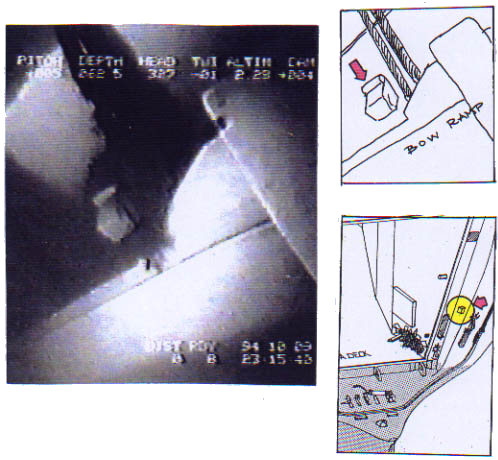
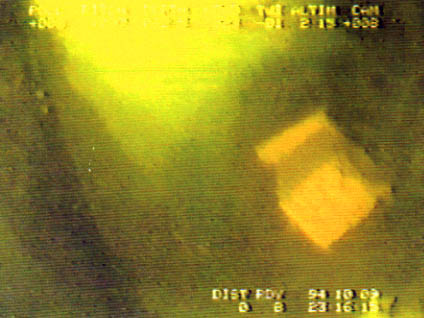
"To sum it up, the following damage has been described and illustrated in the area of the starboard side lock:
- Split and torn metal damaged around the top part of the manual side-lock opening front bulkhead.
- All of this damaged metal has been pushed forward towards the visor.
- Darkening of the visor paintwork at exactly the same level as the damaged metal described.
- The hydraulic side-lock hooks just below the burn marks were pushed down and severely distorted in a manner unlikely to have resulted from any mechanical impact.
On a balance of probabilities Brian Braidwood has concluded that:
- The damage near the starboard visor side locks was caused by an explosion.
- The charge weight was between one and two kilograms of TNT equivalent.
- The explosive device was placed on the forward bulkhead, just above the manual side-lock recess.
- The device could easily have been placed by someone following the route taken by the crewman responsible for operating the manual side lock."
In summary the following circumstances were established:
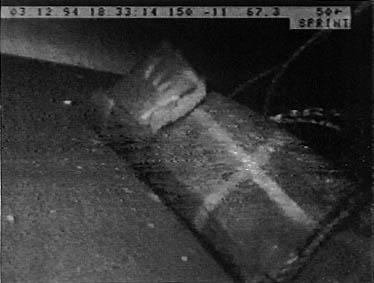
- A fairly round damage hole in the port bulkhead of the car deck adjacent to the bow ramp.
- Split and torn metal petals around the edge of the hole.
- All of the damaged metal pushed away from the bulkhead into the car deck space.
- That any explosive device used could have been dislodged from a higher position and fallen on some bedding in the compartment next to the car deck.
- Any device used would have been surrounded by water when it exploded. These points, taken together, suggest that a small explosion occurred on the far side of the bulkhead with the seat of the explosion being in the centre of the damage hole.
On a balance of probabilities, Brian Braidwood has concluded that:
- The damage in the car deck port side forward was caused by an explosion.
- The charge weight was between one and two kilograms of TNT equivalent.
- The explosive device was placed inside the space used to give access to the visor side locks.
- The device could easily have been placed by someone following the route taken by the crewman responsible for securing the manual side locks.
- The seat of the explosion was just above deck level as if the device had been resting on something, perhaps a pile of blankets, before it went off.
- The device may be have been placed on the forward bulkhead like the one on the starboard side, and been knocked off to fall onto some bedding before it exploded."
Seems to be the claims.
And this link has images of some of the alleged explosion areas.
https://www.estoniaferrydisaster.net/estonia final report/32.2.htm