China and the Houston Consulate kerfuffle

Maybe, but there's always a risk with burning in that if you throw a stack in, it can take a very long time for the fire to reach the center of the inner papers. If you're not paying attention, you can end up with lots of pieces that are still readable.

When I was in college I lived for a while with a bunch of roommates in an old house that had a fire place. Sometimes we would have a fire in the fire place.

One roommate was convinced that if a single piece of paper thrown in the fire flares up and burns really fast, then an old phone book thrown in would REALLY burn fast, it would be AMAZING!!

It wasn't. It took a week of having a fire everyday to finally consume the whole thing, slowly. It burned slower than regular wood. We kept needing to pile wood on top of it, poke at it with the poker, stir it around. Books just don't burn all that well. Severe let down.
 
I suppose it would take a little foresight, but given the fact that any diplomatic office ought to foresee the possibility of having to mince files in a hurry, they'd have a machine to do it right. I envision a shredder feeding into a furnace, a bit like a pellet stove. Shreds fed in at the correct speed ought to burn thoroughly and pretty fast.

It seems a little odd in this day and age when people can do all the crazy clandestine things that they seem able to do, that they can't figure out an efficient way to get rid of files.
 
When I was in college I lived for a while with a bunch of roommates in an old house that had a fire place. Sometimes we would have a fire in the fire place.

One roommate was convinced that if a single piece of paper thrown in the fire flares up and burns really fast, then an old phone book thrown in would REALLY burn fast, it would be AMAZING!!

It wasn't. It took a week of having a fire everyday to finally consume the whole thing, slowly. It burned slower than regular wood. We kept needing to pile wood on top of it, poke at it with the poker, stir it around. Books just don't burn all that well. Severe let down.

Pile the wood under the book and you get better results, but yeah it is surprising how hard it to burn large volumes of tightly packed paper. A rough shred gives a nice fluffy form of paper that burns more easily.

Some off-grid folks take junk mail and make a slurry out of it and then for that slurry into logs that they let dry. The result is supposed to be useful for heating fuel. I just wonder how off-grid you are if you are still getting junk mail.
 
One used to be able to get newspaper rollers, whose specific task was to wind up old newspapers into fake logs, which do indeed take a good long time to burn. I never had one, but did it informally, and they do go a while, but nowadays aside from a few tax files and junk mail in winter, I recycle the paper anyway, and though I no longer have 350 acres of woods, I still have enough to keep me in real firewood. There has to be some good side to elm blight.
 
I suppose it would take a little foresight, but given the fact that any diplomatic office ought to foresee the possibility of having to mince files in a hurry, they'd have a machine to do it right. I envision a shredder feeding into a furnace, a bit like a pellet stove. Shreds fed in at the correct speed ought to burn thoroughly and pretty fast.

It seems a little odd in this day and age when people can do all the crazy clandestine things that they seem able to do, that they can't figure out an efficient way to get rid of files.

I had a Boeing co-worker who left our group to work on the C-40B, a VIP transport version of the 737. After the P3 collision incident which resulted in a forced landing in China, the pentagon learned that the Chinese were successfully reassembling shredded documents from the plane. They developed a new shredder technology, which my co-worker described as "dust".
 
It's 2020. I question why so much classified material exists as physical media, especially at remote locations. Your destruction protocols could begin and end with "Smash that one computer and run a big magnet over all the pieces."
 
Physical media is generally more secure. It's more difficult to steal, because it can't be remotely hacked. And it's easier to permanently destroy (in small-ish quantities anyway) than digital media is. You'd be surprised at how much data can be recovered from a hard drive that's only had a magnet wipe.

ETA: NSA Guidance for destruction of classified materials on magnetic drives is... physical destruction after magnetic degaussing. For solid state drives, the guidance is physical destruction to no more than a 2mm per side size.
 
Last edited:
Physical media is generally more secure. It's more difficult to steal, because it can't be remotely hacked. And it's easier to permanently destroy (in small-ish quantities anyway) than digital media is. You'd be surprised at how much data can be recovered from a hard drive that's only had a magnet wipe.

ETA: NSA Guidance for destruction of classified materials on magnetic drives is... physical destruction after magnetic degaussing. For solid state drives, the guidance is physical destruction to no more than a 2mm per side size.

*Laughs* Okay civilian. If you say so.

Tell you what. Meet me outback. I've give you a small, like 2 or 3 drawer, filing cabinet full of paper. You'll give me a standard desktop computer tower. When I say go we'll both start destroying stuff. I'll be done and have time to have a cigar I can light off of the papers your burning by the time you're halfway finished.

I've literally trained for emergency destruction as a core part of my job. Don't tell me what's harder to destroy.
 
*Laughs* Okay civilian. If you say so.

Tell you what. Meet me outback. I've give you a small, like 2 or 3 drawer, filing cabinet full of paper. You'll give me a standard desktop computer tower. When I say go we'll both start destroying stuff. I'll be done and have time to have a cigar I can light off of the papers your burning by the time you're halfway finished.

I've literally trained for emergency destruction as a core part of my job. Don't tell me what's harder to destroy.

So has my spouse... Perhaps different branches with different functions and different degrees of sensitivity?

Yes, you can smash a desktop in a lot less time than it would take me to shred & burn or pulp paper. On the other end though... unless you've actually fully disintegrated the drives in that desktop, your information can still be recovered where mine cannot.

FYI, I'm a civilian, yes. But my husband is retired and worked with SCI his whole career. So did my dad. And two uncles. And my cousin who is still working at the Pentagon. And my brother in law at the Secret Service. My information is admittedly second hand, but I'm relatively certain that the whole clan hasn't been feeding me a load of crap my whole life.
 
Last edited:
...I just wonder how off-grid you are if you are still getting junk mail.

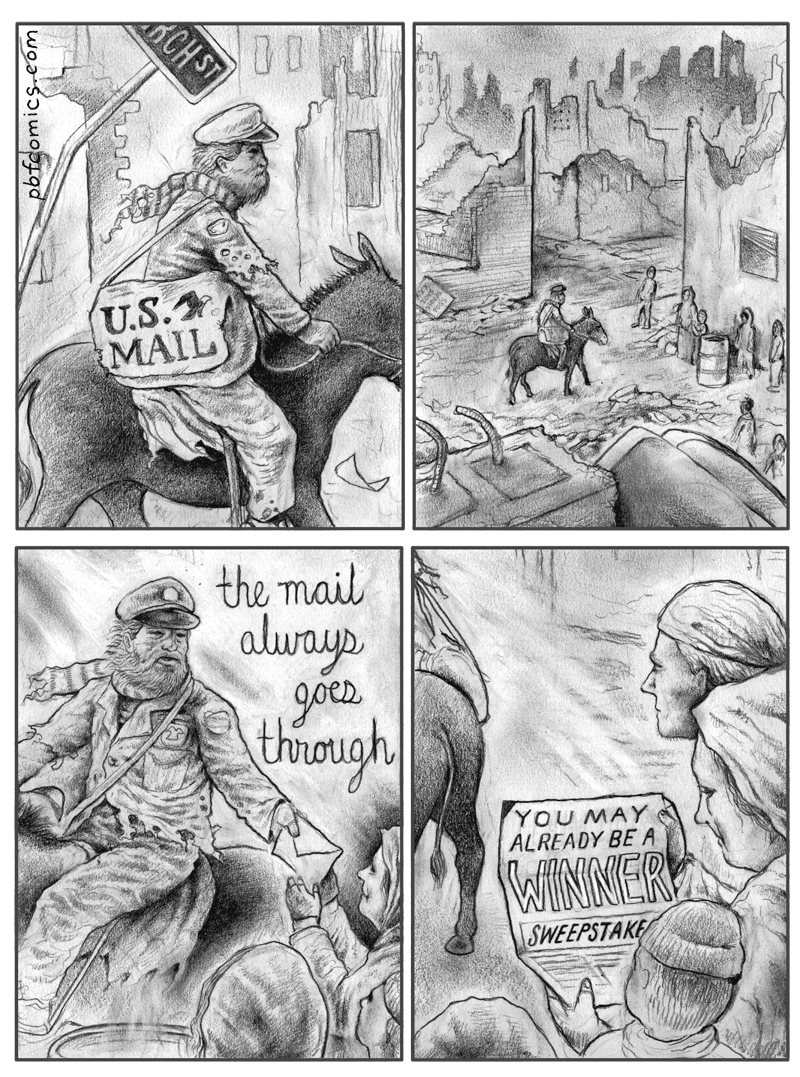
PBF202-Post-Apocalyptic.png
 
So has my spouse... Perhaps different branches with different functions and different degrees of sensitivity?

Yes, you can smash a desktop in a lot less time than it would take me to shred & burn or pulp paper. On the other end though... unless you've actually fully disintegrated the drives in that desktop, your information can still be recovered where mine cannot.

FYI, I'm a civilian, yes. But my husband is retired and worked with SCI his whole career. So did my dad. And two uncles. And my cousin who is still working at the Pentagon. And my brother in law at the Secret Service. My information is admittedly second hand, but I'm relatively certain that the whole clan hasn't been feeding me a load of crap my whole life.

I can see your point, but it seems that if an organization actually anticipated the possibility of having to destroy data in a hurry, easier ways could be found to do it. Yes, you can recover even a fairly heavily wiped hard drive, but hey, they make stuff in China. They could make a hard drive that opens up easily. Or even one built to self destruct. Destroy the disks. Last HD I took apart had metallized glass disks. When a disk broke it turned literally to dust. a couple of weak spots in the case, and a ball peen hammer would explode the disks in moments.

Can you reconstruct a shredded DVD? A smashed thumb drive?

I suspect that any espionage agency that can't destroy al its files in short order is not doing a good job of planning.
 
Pile the wood under the book and you get better results, but yeah it is surprising how hard it to burn large volumes of tightly packed paper. A rough shred gives a nice fluffy form of paper that burns more easily.


Some off-grid folks take junk mail and make a slurry out of it and then for that slurry into logs that they let dry. The result is supposed to be useful for heating fuel. I just wonder how off-grid you are if you are still getting junk mail.
You can disconnect the utilities, but you cannot escape the tax parcel ID and postal address.
 
They might be burning the shreds. Surely they learned from Iran's takeover of our embassy that an army of people can put the shreds back together.

Given the time, sure. Only only IOTUS would consider less than that "destroyed". or, you know, just blab it on a cell phone, or directly to the Russian Ambassador in front of a large window, sparking an international incident that forces a key resource to need to be quickly moved.

*sighs and facepalms*

Mumbles is proposing a complete and total shutdown of white folks entering a voting booth, until they can figure out what the hell is going on.

*lifts his head from his palm*

Anyway, the standard is basically, "destroy the entire medium as soon as you no longer need it" here in America. I suspect it would be the same for China, and whatever it was, may or may not be a vaccine, but would definitely include other information that the US would be very interested in knowing.
 
I'd assume that any information known to people in a consulate is already known by the hosting country. The Chinese just didn't want the US to know they know what we knew they know. It's less about the secrets and more about concealing clues about the information flow that revealed the secrets.
 
That's one good thing about Navy ships, the Pulper. Basically a cross-cut business shredder mixed with a... giant toilet. Shreds it into tiny pieces, mixes it with seawater, agitates it for a few minutes to the point that it's just wet mush, then pumps it over the side. Huge capacity, no mess.

And the best part was it was always how we got rid of normal paper trash, so if you were a Russian or Chinese ship following in our wake hoping to scoop it up and somehow reconstitute it, good luck finding the classified stuff in between the cereal boxes and porn magazines. We even had a policy in place that you could only shred X amount of classified stuff, then you would dump a bag of normal paper trash in, repeat.

https://p2infohouse.org/ref/09/08892.pdf
Ah, the military’s high standard of environmental control. . .

In the oil industry we were obliged to transport all material to shore rather than dump it overboard. Which is fair enough, there are sufficient poor practices in industry without raw material being dumped in the sea.

I found it amusing (bemusing?) that we had to also do it with filtered NaCl 8.7ppg brine though.
 
I'd assume that any information known to people in a consulate is already known by the hosting country. The Chinese just didn't want the US to know they know what we knew they know. It's less about the secrets and more about concealing clues about the information flow that revealed the secrets.

It has now dawned on me that for all we know they burn trash in those barrels all the time. No one noticed until Trump made a campaign issue out of it.
 
There is not monetary gain keeping the vaccine information secret. A Pfizer spokesperson said as much a couple days ago. I'm not finding a good link but it was a spoken fact.

Their goal is to eventually have a very good vaccine to market.

It's not like they are footing the R&D bill. The US government gave them ~2billion.


Can you see the problem with that line of reasoning?
 
Some staff from the Chinese Embassy in the USA have now been in Houston performing the Houston functions.

You never hear the follow-up stories.

There won't be any criminal charges laid. The "spy" was just called in for questioning.

This is all just playing spy games.

In the news last month Australia was accused by China of having spies in China in Wuhan.

Meanwhile Australian farmers were complaining about Australia interfering in their trade relations with China.

If the USA had better relations with Russia, the Belt and Road initiative across China to Europe etc would benefit the world.

Then Australia would have better relations with China and trade and prices would be beneficial to the world and improve relations with the USA.

Just like there are conspiracy theories about what goes on in the USA, there are ones about what China is like.

I have friends in China who also say what I'm saying.

No, China is not perfect. Neither is the USA, nor is any one of us.

But we can stop the mutual fear and cancel out the threats.
 

Back
Top Bottom