How truly skeptical is our skepticism?

Like most things, "real-life"-scepticism is a 80/20 thing:
you can usually spot the flaws in an argument easily, and dismiss it without much effort.

I’m sorry, I didn’t get that. What do mean by “80/20 thing”, in this context? Could you spell that out for me please?


If someone manages to stump you with clever reasoning, it is probably worth dissecting the entire argument, even if false, because we will probably learn something in any case. (...)

But what when those “arguments” comprise whole vast all-encompassing (and ubiquitous) worldviews? All-pervading belief systems that populate every corner of our existence? As it demonstrably did in times past, as it demonstrably does even today in isolated pockets (albeit less formidably, and the pockets are admittedly far fewer and far less isolated than in times past when superstitions were literally all we had)?

When even “dissecting [even one] entire argument” can take a very large portion of one’s time, perhaps years? Especially given that there are large numbers of such arguments floating about, implicitly accepted as “fact”, in every given time and place?


We seriously don't need flawless scepticism today when the President lies so blatantly.

You’re joking, obviously. But if I could take that mock-cynicism of yours literally, then -- without getting into partisan politics -- surely it is precisely when lies and deliberate untruths are more prevalent that flawless skepticism (or as flawless as we can make it) becomes even more important?
 
I have no clue what history you’re referring to here. And I suppose you couldn’t detail that further here without explicit call-outs, so perhaps we’d best avoid all that.

On the other hand, I’ve witnessed behavior on these forums that would, IRL, certainly qualify as borderline psychotic. Although largely skeptical, and therefore presumably saner than the general norm, these forums are still after all part of the Internet, and so the occasional random unprovoked asshattery ought not, really, take one too much by surprise I suppose.


Absolutely!

You’ve presented what I wanted to say in my OP far better, more clearly and much more concisely.


(ETA : I tried to include your concise summing-up, the portion quoted just above, as a TLDR summary to my rather rambling OP. But it seems I’ve crossed the time frame within which I can edit that earlier post.)


That sounds reasonable.

And yet, doesn’t this leave one at the mercy of apparently reasonable ideas and beliefs that are prevalent at some time and place? (I mean, ideas that are “apparently reasonable” largely because they happen to be ubiquitous, as well as all-encompassing, at some particular time and place?)

That larger difficulty is what I was speaking of (or trying to) in my OP.

How truly skeptical, then, at the individual level, is our skepticism? How capable of cutting through ubiquitous and universally accepted superstitions of the day (that are not, at this time and place, recognized as superstitions but are accepted as truth)?


It seems our skepticism is focused only on details and on egregious differences from the accepted norm. But how equipped is our skepticism, at the level of the individual, to be skeptical of the whole superstructure of belief that is all around us? (Question, not rhetoric.)

Every (can there be anything that is every?) morning (relative to what universal objective measure of time ?) when you (apparently, do you even know if you exist, are you a brain in a vat or software running in a simulation, how can you make the determination) wake up (what does that even mean) check that you still have the same number of toes that you had before you went to sleep, and check that they are the same toes and that you haven't been subject to a toe transplant and in fact have just woken up from a medically induced coma and more than a single night has passed since you went to sleep.... ;)

Skepticism in the modern sense does not mean you doubt everything and have to start from first principles every single day/hour/minute/second. It's simply a handy heuristic to ensure you keep in mind everything is provisional and you should follow the evidence.

And yes a "good" skeptic many years ago might have believed that spontaneous generation explained how and why flies are born from rotting meat, being wrong does not mean you aren't being skeptical.

Having a skeptical mindset helps one to change one's beliefs based on evidence, nothing more nothing less.
 
Last edited:
Tommy Jeppesen, thank you for that detailed post of yours!

I lack your easy familiarity with all those terms and systems you discuss here! I think I need to take the time and effort to better familiarize myself with what all of those words and systems actually mean! Meantime, though, I’d like to revisit with you some of the things you’ve said here, if I may.


You need to differentiate between skepticism as a way of living versus scientific skepticism.


I know you’ve taken much of your post to build on that sentence, but I’d still like to ask : Are you saying that “skepticism as a way of life” is a whole different thing from “scientific skepticism”?

I think of skepticism as empiricism combined with rationality, logic, all that. So that bare-bones empiricism is systematically built upon to give us our worldview. And I’d imagined (possibly quite wrongly, in which please point that out to me) that science is one specific way of organizing knowledge, and thus merely an extension of (or perhaps a subset of) skepticism in general.

Is my conception of what is skepticism is at all correct?


Do you need to learn skepticism as a way of living? No, you can still have a good enough life without learning that.


It’s not so much that I need or want to “learn skepticism as a way of living”, as my already thinking and living in a certain way, and thinking (or at least imagining) that that is what skepticism actually is.

As I go through your post, and type this reply, I realize that I may not, perhaps, have been right in so characterizing my way of thinking and living so readily, without first reading up in more detail about all of these concepts. Well, perhaps this thread might help me take a shortcut to finding out some of the basics, then.

As for “good enough life” : are you using the term “good life” in any kind of technical, specialized sense? If you merely mean ‘a good, fulfilled life’, just that, well then, sure, even a life wholly sunk in superstitions and ignorance may well turn out to be extremely “good” ; while even the most rational and skeptically lived life may well turn out to be wholly miserable. So no, I don’t see that there is necessarily a direct correlation between the two, between a “good life” and skepticism.

I’m sorry, do I misread what you meant to convey there?


In practice skepticism amounts to that you are critical about local groups of humans and their claims. For the big picture the following apply: In general broad claims about science holds, e.g. medicine works, but from that doesn't follow that a given drug works.


Sure, the former, that is, being critical/skeptical about local groups of humans etc, that is obvious enough. It is the latter part, the “big picture”, that I was speaking of here.

For instance : sure, as you say, science holds. But specific elements of science that specialists in specific areas of science hold : how right are we to blindly trust them? Isn’t that simply the equivalent of trusting the priesthood in some earlier age?

Shouldn’t we, ideally, be skeptical of generally accepted positions even within science, as well? At the level of the individual, I mean?

For instance, to revisit what you’d said about trusting individual drugs/remedies :


medicine works, but from that doesn't follow that a given drug works.


Sure, “medicine works”. That’s such a general statement that one can accept that without any reservations. But, and as you say, it does not follow that a given protocol works, or that a given course of treatment is effective, or that a particular drug works. Great! That’s exactly what I thought when I read about those studies rigged by big pharma (that I spoke of in the OP). That’s exactly the thought that got me to start this thread.

Now taking this same example forward : What is the skeptic to do, then, when faced with the whole range of treatments and drugs that, well, may not work? Treatments and drugs that, despite their being generally accepted, may turn out less than effective?

Sure, once you read about some particular drug (or some particular hospital, or some particular whole line of treatment) being suspect, you obviously will then get extra skeptical about them. But there could be any number of such suspect treatments that do not make it to the headlines (or at least, that haven’t made it to the headlines thus far).

It seems the ideal approach would be to be skeptical of all drugs and all lines of treatment!

On the other hand, what do you do with this skepticism of yours (skepticism about individual drugs and treatment) in practice?

Of course, one obvious answer is that you become an ‘expert’ yourself. That resolves the issue as far as one narrow area is concerned. But since you can’t go around seeking expertise in each and every thing, what, then, do you do? How do you resolve this skepticism of yours about (to keep it focused on this example) individual drugs and treatments that are available to you?


In short skepticism is critical thinking and that reveals the limitation of reason, logic, truth, proof and evidence.


Skepticism is critical thinking, sure. But wouldn’t it also necessarily involve the whole evidence thing as well, empiricism? I mean, not just scientific skepticism, but just vanilla skepticism itself, the skepticism of the ordinary individual as it applies to their ordinary life? (Question, not rhetoric. I don’t know the answer! I imagine it is a “yes”, but I’m not sure that this so.)

And I’m not sure what you mean when you say that “that reveals the limitation of reason”? You go on to speak of “what do you believe good/bad and right/wrong” -- are you saying that these are wholly outside the purview of rationality and skepticism? I should imagine (although obviously I may be wrong!) that these (skepticism at the individual level, by which I suppose I mean rationality coupled with empiricism) will very much apply here as well, in helping us to subjectively decide what is good and what is bad, what is right/wrong, all that.

 
I have no clue what history you’re referring to here.

The first few responses indicated to me that the prevailing opinion is that your OP was an agenda driven loaded question. Probably due to prior experience with similar questions.

Absolutely!

You’ve presented what I wanted to say in my OP far better, more clearly and much more concisely.

It's a gift.

That sounds reasonable.

......

It seems our skepticism is focused only on details and on egregious differences from the accepted norm. But how equipped is our skepticism, at the level of the individual, to be skeptical of the whole superstructure of belief that is all around us? (Question, not rhetoric.)

At some point, efficiency matters. We make the best decisions / choices we can with the best information available at the time. It's either that, or do nothing and waste your limited time on this earth in fear that any action or inaction you take could be wrong because you just can't be certain.

Me, I'd rather enjoy my time here with family and friends content in the knowledge that I may have paid a little stupid tax along the way, but still managed to avoid the occasional Nigerian Prince.
 
Had we been born five, six centuries before today, perhaps a couple of millennia before today, then could our skepticism (assuming we could have somehow, magically, been equipped with an uncompromisingly skeptical outlook back then) have led us to reject the nonsense that made up the worldview of people back then? We could have read, and ‘researched’, and still gone round and round exploring the minutiae of theology and philosophy. But could we have broken out of the system, into realization that we don’t actually know anything at all? Back five hundred years ago, or a couple millennia ago, I mean?

Rene Descartes wrote this almost 400 years ago:


Accordingly, seeing that our senses sometimes deceive us, I was willing to suppose that there existed nothing really such as they presented to us; And because some men err in reasoning, and fall into Paralogisms, even on the simplest matters of Geometry, I, convinced that I was as open to error as any other, rejected as false all the reasonings I had hitherto taken for Demonstrations; And finally, when I considered that the very same thoughts (presentations) which we experience when awake may also be experienced when we are asleep, while there is at that time not one of them true, I supposed that all the objects (presentations) that had ever entered into my mind when awake, had in them no more truth than the illusions of my dreams. But immediately upon this I observed that, whilst I thus wished to think that all was false, it was absolutely necessary that I, who thus thought, should be something; And as I observed that this truth, I think, therefore I am,[c] was so certain and of such evidence that no ground of doubt, however extravagant, could be alleged by the Sceptics capable of shaking it, I concluded that I might, without scruple, accept it as the first principle of the philosophy of which I was in search.

I'd guess such observations are as old as humankind itself.

"GIGO" (as in the case of pharmaceutical research skewed by various forms of publication bias) will always be a problem, because yes, data input is rarely perfect, and on top of that, our reasoning itself is often flawed.

A lot of things we take as fact are probably anything but.

Regarding this:
My point is, all of our skepticism notwithstanding, it seems to me that we are still, at the individual level, reduced to taking most of the elements of what we know simply on trust.

Yep. Here's in interesting article that sort of breaks down a lot of what you're alluding to.

http://www.psandman.com/col/disagreement.htm

Even more often than experts explicitly disagree on which facts are true, they cherry-pick which facts to showcase. From the universe of available data, each expert selects a subset of facts that support her viewpoint, grounded in her policy preferences and ideological biases. Consensus facts, if there are any, are framed by each expert so they appear to support that expert’s viewpoint. Notwithstanding the aphorism that “you are entitled to your own opinion, but you are not entitled to your own facts,” where possible experts prefer to stick to their own facts and ignore opponents’ facts. If they can’t, they try to make a case that opponents’ facts are less germane to the question under discussion, or that opponents are misinterpreting their own facts, or that the research demonstrating opponents’ facts has methodological flaws and shouldn’t be relied upon.

And from this section:
http://www.psandman.com/col/disagreement.htm#head3

Knowledge – including expert knowledge – is a lot more communal than we normally realize. Each of us knows shockingly little firsthand. Most of what we think we know is actually other people’s knowledge that we take on faith. A March 2017 op-ed in the New York Times, written by two cognitive scientists, put it this way:

You know that the earth revolves around the sun. But can you rehearse the astronomical observations and calculations that led to that conclusion? You know that smoking causes cancer. But can you articulate what smoke does to our cells, how cancers form and why some kinds of smoke are more dangerous than others? We’re guessing no. Most of what you “know” – most of what anyone knows – about any topic is a placeholder for information stored elsewhere, in a long-forgotten textbook or in some expert’s head.
One key point in this op-ed was that we believe falsehoods for pretty much the same reason we believe truths: because sources we trust told us they’re true. In this sense, the false beliefs are no more irrational than the true ones.

I highly recommend reading the entire article.

Twice. :)
 
I’m sorry, I didn’t get that. What do mean by “80/20 thing”, in this context? Could you spell that out for me please?

It's called the Pareto principle: 80% of the effect of anything is created by 20% of the causes: companies make 80% of their profit from 20% of their customers, 20% of your training is sufficient to do 80% of your job.
In other words, it takes little effort to do a job sufficiently well, it takes a monumental effort to do it perfectly.

https://en.wikipedia.org/wiki/Pareto_principle


But what when those “arguments” comprise whole vast all-encompassing (and ubiquitous) worldviews? All-pervading belief systems that populate every corner of our existence? As it demonstrably did in times past, as it demonstrably does even today in isolated pockets (albeit less formidably, and the pockets are admittedly far fewer and far less isolated than in times past when superstitions were literally all we had)?

When even “dissecting [even one] entire argument” can take a very large portion of one’s time, perhaps years? Especially given that there are large numbers of such arguments floating about, implicitly accepted as “fact”, in every given time and place?

You aren't talking about skepticism, you are talking about scientific study. Some mathematical arguments might be really hard to prove or disprove, but those are the rare exception.
If you can't explain your reasoning to others, it is usually not because they can't understand it.


You’re joking, obviously. But if I could take that mock-cynicism of yours literally, then -- without getting into partisan politics -- surely it is precisely when lies and deliberate untruths are more prevalent that flawless skepticism (or as flawless as we can make it) becomes even more important?

No.
There is no reason to analyse which logical flaw Trump or others are making multiple times a day: pure Baesian statistics tells you that whatever Trump says is more likely false than true.
It would be up to Trump and his supporters to prove that in this case he was correct: a task Sander fails at daily.

Only if you are engaging with sophisticated debaters will t become necessary to identify where exactly either their or your reasoning has gone off the rails.
 
Here is an example from the Internet:
Someone: The universe is physical.
Me: No!
Someone: That is wrong!
Me: Then both the "no" and "wrong" are also physical and the universe is physical becomes meaningless.

That points to everyday belief for some people in the western culture, but as a skeptic you are supposed to understand that the claim that the universe is physical is to simple.
As a skeptic you ought to be equally skeptical of metaphysical materialism, dualism and idealism and not just religion per se.
Look up the word "scientism" for a common contemporary belief.

With regards


I'm not very sure I agree with (some of) what I understand you to have said above.

If the material model of the universe can adequately explain reality to us, why would it then be "too simple"?

I agree one needs to be skeptical of science has uncovered thus far for us, in the sense that we recognize that that 'knowledge' is wholly provisional. Is that what you meant? Or did you mean to convey somethng different?


As for scientism : agreed, there is certainly such a thing as over-reach, of fetishizing science.
 
Skepticism in the modern sense does not mean you doubt everything and have to start from first principles every single day/hour/minute/second.

But that definition of skepticism has become the most popular strawman version among people who want skepticism to be an ideal that its proponent can never live up to.
 
Every (can there be anything that is every?) morning (relative to what universal objective measure of time ?) when you (apparently, do you even know if you exist, are you a brain in a vat or software running in a simulation, how can you make the determination) wake up (what does that even mean) check that you still have the same number of toes that you had before you went to sleep, and check that they are the same toes and that you haven't been subject to a toe transplant and in fact have just woken up from a medically induced coma and more than a single night has passed since you went to sleep.... ;)


Heh! :)

True, that kind of attitude (and not just your parody of it) sounds more like a caricature of skepticism than actual skepticism!


Skepticism in the modern sense does not mean you doubt everything and have to start from first principles every single day/hour/minute/second. It's simply a handy heuristic to ensure you keep in mind everything is provisional and you should follow the evidence.


Agreed. But that following-the-evidence part : as long as it is you, personally, that's doing the following, all well and good. It is when you need, necessarily, to leave it to someone else to do the following-of-the-evidence-to-its-conclusion for you that you begin to wonder how skeptical you should be, at the individual level, of this process (that someone else is carrying out, not you).


And yes a "good" skeptic many years ago might have believed that spontaneous generation explained how and why flies are born from rotting meat, being wrong does not mean you aren't being skeptical.


But then a good skeptic even more years ago might have believed that the Bible explained why flies (and men) are born, right?

Or that Zeus ... Thor ... Vishnu ... Mohammed ... those unspeakable Mayan/Incan gods apparently thirsting for human blood ... <<insert whatever absurd belief system>> -------- would a good skeptic, wholly immersed in those cultures, have believed all of that, too, then?

If he had to question all of this nonsense surrounding him, then he'd end up being this crazy conspiracy-theory-mongering lunatic!


Incidentally : No, I'm not actually considering going all skeptical about whether it is actually my typing on my keyboard that is producing those words at that server there! :) Just trying to think this through in some ideal/idealized situation.
 
I know you’ve taken much of your post to build on that sentence, but I’d still like to ask : Are you saying that “skepticism as a way of life” is a whole different thing from “scientific skepticism”?

I think they're one and the same.

And I’d imagined (possibly quite wrongly, in which please point that out to me) that science is one specific way of organizing knowledge, and thus merely an extension of (or perhaps a subset of) skepticism in general.

Is my conception of what is skepticism is at all correct?

I'm with you.


For instance : sure, as you say, science holds. But specific elements of science that specialists in specific areas of science hold : how right are we to blindly trust them?

I think we're generally kind of right, but often not, too.

Isn’t that simply the equivalent of trusting the priesthood in some earlier age?

I'm reminded here of this interesting insight written by Paul Krugman, referring to "the dismal science", economics:

https://krugman.blogs.nytimes.com/2009/01/27/a-dark-age-of-macroeconomics-wonkish/

...we’re living in a Dark Age of macroeconomics. Remember, what defined the Dark Ages wasn’t the fact that they were primitive — the Bronze Age was primitive, too. What made the Dark Ages dark was the fact that so much knowledge had been lost, that so much known to the Greeks and Romans had been forgotten by the barbarian kingdoms that followed.


Shouldn’t we, ideally, be skeptical of generally accepted positions even within science, as well? At the level of the individual, I mean?

Can I get an example of a generally accepted position within "science" (at the level of the individual, or otherwise?)


It seems the ideal approach would be to be skeptical of all drugs and all lines of treatment!

I think that's a perfectly reasonable position to take in non-emergency situations.

How do you resolve this skepticism of yours about (to keep it focused on this example) individual drugs and treatments that are available to you?

Get good at using google scholar, and find some experts you trust, as well. :)


I mean, not just scientific skepticism, but just vanilla skepticism itself, the skepticism of the ordinary individual as it applies to their ordinary life? (Question, not rhetoric. I don’t know the answer! I imagine it is a “yes”, but I’m not sure that this so.)

What's an example of vanilla skepticism? Hasn't science been applied to at least some extent to almost every possible area of human existence?


I should imagine (although obviously I may be wrong!) that these (skepticism at the individual level, by which I suppose I mean rationality coupled with empiricism) will very much apply here as well, in helping us to subjectively decide what is good and what is bad, what is right/wrong, all that.

Yeah, me, too.
 
....As for scientism : agreed, there is certainly such a thing as over-reach, of fetishizing science.

I normally only see the word "scientism" used by somebody whose pet woo has been found wanting.

What do you understand "scientism" to be, and what examples are there of "fetishising science"?
 
How skeptical is my skepticism?

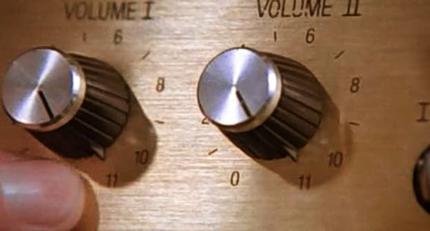
Spinal_Tap_-_Up_to_Eleven.jpg
 
I normally only see the word "scientism" used by somebody whose pet woo has been found wanting.

What do you understand "scientism" to be, and what examples are there of "fetishising science"?

Shouldn't that question be directed at Tommy? He's the one who brought the word up...
 
Shouldn't that question be directed at Tommy? He's the one who brought the word up...

Quite possibly, but I was trying to understand what it was he appeared to be agreeing with, particularly with the addition of fetishes (not that there's anything wrong with that...).
 
Can we really do it now, today? At the individual level?


Yes. Skepticism means refusing to believe something without evidence. When we believe an evidenced claim, we're being skeptical. The trick is to be able to abandon that belief when we find the evidence to be faulty or when better evidence presents itself.

I think there was a time when evidence showed the earth was the center of the universe. Then further experiments showed otherwise. Changing one's mind to fit new evidence is the essence of skepticism.

Do we rely on others to gather and vouch for that evidence? Yes. But we still demand they show it to us, and that other scientists review their work and, best of all, repeat their results.

I don't think that's a bug in skepticism. I think it's a feature of our social nature.
 
The "skepticism" displayed in this subforum is of poor quality. Ignorance of basic philosophical concepts is rampant, and celebrated as a virtue. It's no wonder the people who made this forum vibrant in its heyday are now MIA.
 
Tommy Jeppesen, I’d be very interested in hearing your response to my post #23, which I notice you haven’t responded to.

I’m going out of my way and taking the liberty to personally invite your response, because I realize that your views are somewhat different from what is the mainstream here, and I wanted to tell you that that is just fine with me. I found your original response to my OP, I mean your post #13, to be very interesting (although like I said I may not have fully understood all of the technical terms you used there). I appreciated that post of yours, and should you care to continue with this discussion, I’d be very interested in seeing what you have to say to the follow-up points I raised in my subsequent post #23. Thanks!
 
Darat, I’d put in some follow-up remarks/questions in my response to you, in my post #29.

I’m addressing this post to you now because I think the last part of your post, that I hadn’t commented on, is very apt, and deserves going back to.

I mean this :

Having a skeptical mindset helps one to change one's beliefs based on evidence, nothing more nothing less.


That simple comment of yours is extremely apt. I agree cent per cent with that sentiment. (As would most on these, I expect.)

And yet -- I wanted to point this out here -- the difficulties I’d mentioned in my OP as well as in my original response to you, aren’t really addressed by this simple formulation of yours (extremely apt and ‘right’ thought that formulation is).

My issue was : How do we effectively direct our skepticism, at the individual level, to the whole superstructure of whatever belief structures are currently prevalent, a lot of which we necessarily have to take on trust.

Being open to changing one’s beliefs, which is essential for skepticism, will help one to move on if somehow the superstructure itself crumbles all around us (like the Mayan/Incan superstructure of beliefs did when Cortez and his band of thugs descended on them). But as long as the superstructure itself holds -- which is the case overwhelmingly more often than not -- one has no direct need or incentive to change one’s views, even when one is open to changing one’s belief based on evidence. Unless, that is, one makes it a practice to proactively go around hunting evidence for anything and everything, which is obviously not practicable.

To that extent, and only to that extent, this attribute, this prescription of yours, quoted above (while perfectly apt, and something I agree cent per cent with) is something of a non sequitur. That is, it is a necessary starting point, but no more.

Perhaps, like you suggest, there is indeed no more to this, I don’t know! (That I suppose is the whole point of this thread, to see if there might possibly be anything more.)
 
The first few responses indicated to me that the prevailing opinion is that your OP was an agenda driven loaded question. Probably due to prior experience with similar questions.


I see.

I’m sorry, I’m afraid I’d misunderstood your meaning. I’d imagined that you were referring to some history specific to the poster in question, and I had responded to that portion of your comment basis that (mis-)understanding. My bad!

That “prevailing opinion” that you refer to, initially held by the first two responders to the OP, appears whittled down now, provisionally at any rate, to just one single poster, the one who’d originally raised that issue, and who appears -- in the complete absence of any such history with me personally -- to be insistently both holding on that opinion and going out of their way to express it repeatedly in less than courteous terms. Might they be doing this due to “prior experience with similar questions” elsewhere? Your guess is as good as mine.


At some point, efficiency matters. We make the best decisions / choices we can with the best information available at the time. It's either that, or do nothing and waste your limited time on this earth in fear that any action or inaction you take could be wrong because you just can't be certain.

Me, I'd rather enjoy my time here with family and friends content in the knowledge that I may have paid a little stupid tax along the way, but still managed to avoid the occasional Nigerian Prince.


I agree fully with you, that “efficiency matters”. That is how most of us lead our lives, and rightly too.

And yet, this focus on “efficiency”, this necessary focus on the immediate, can (perhaps) dull our skepticism about the superstructure of the belief system that is so ubiquitous and so all-pervasive that it doesn’t individually stand out.

You could have made this same response, that I quote above -- and what’s more, at a practical level I would still have fully agreed with you -- while buying into all kinds of God-ideas and supernatural explanations, had we been living in some wholly superstition-laden society in some earlier time or in some different, isolated place.

It is this idle thought, this realization of how we implicitly take so many things for granted that we cannot, personally, vouch for -- which thought I felt it would be both interesting and instructive to explore further with the help of the more seasoned skeptics on here, who are better conversant with the principles and applications of skepticism than I am -- that triggered this thread.
 

Back
Top Bottom