
-
Security incident: ISF was recently accessed by intruders. Please change your password, and change it anywhere else you used it. Read more
You are using an out of date browser. It may not display this or other websites correctly.
You should upgrade or use an alternative browser.
You should upgrade or use an alternative browser.
JFK Conspiracy Theories IV: The One With The Whales
- Thread starter Robert Harris
- Start date
- Status
- Not open for further replies.
Let's give three off the top of my head:
1. The evidence for a loud report at around z190, which is over 1 1/2 seconds before the z222-224+ reactions.2. The evidence for a shallow back wound
3. The nature of the small head wound and the damage in that area of the head.
What evidence, did you hear it on the Z film?
Axxman300
Philosopher

Let's give three off the top of my head:
1. The evidence for a loud report at around z190, which is over 1 1/2 seconds before the z222-224+ reactions.
2. The evidence for a shallow back wound
3. The nature of the small head wound and the damage in that area of the head.
There is zero evidence of a shallow back wound.
The entrance wound in the back of the head is consistent with the Carcano round, and the exit wound is almost exclusive to the Carano round.
And you can't argue sonic witness testimony because what someone heard depended on where they stood, all due to the nasty echo of Dealey Plaza.
I keep telling you that if you want to look for a conspiracy it ain't in Dealey Plaza. There was only one shooter and we know it was Lee Oswald. The evidence for his guilt is insurmountable if you look at it honestly.
MicahJava
Illuminator

- Joined
- Jan 26, 2016
- Messages
- 3,041
The little red spot, which I assume is your shallow head wound, could easily have happened post mortem.
Noo, nooo, nooooo, that little red splotch is the bane of my existence. I agree with you. All other evidence points to the real small head wound being low in the head. I think the open-cranium autopsy photos show the true wound.
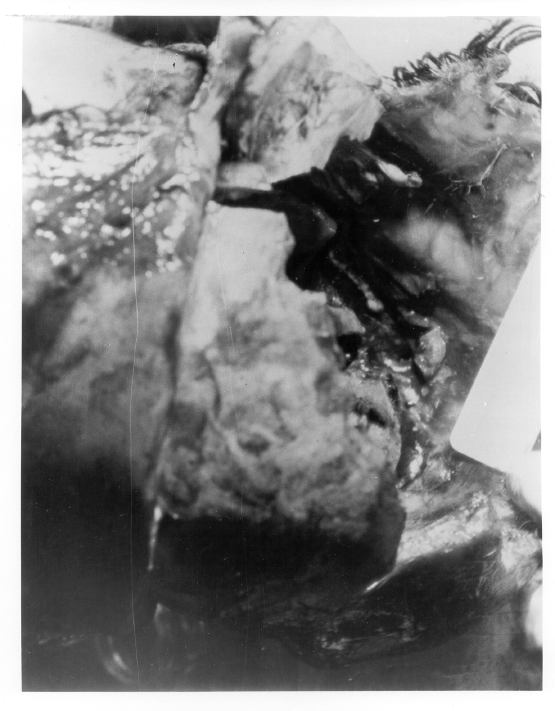
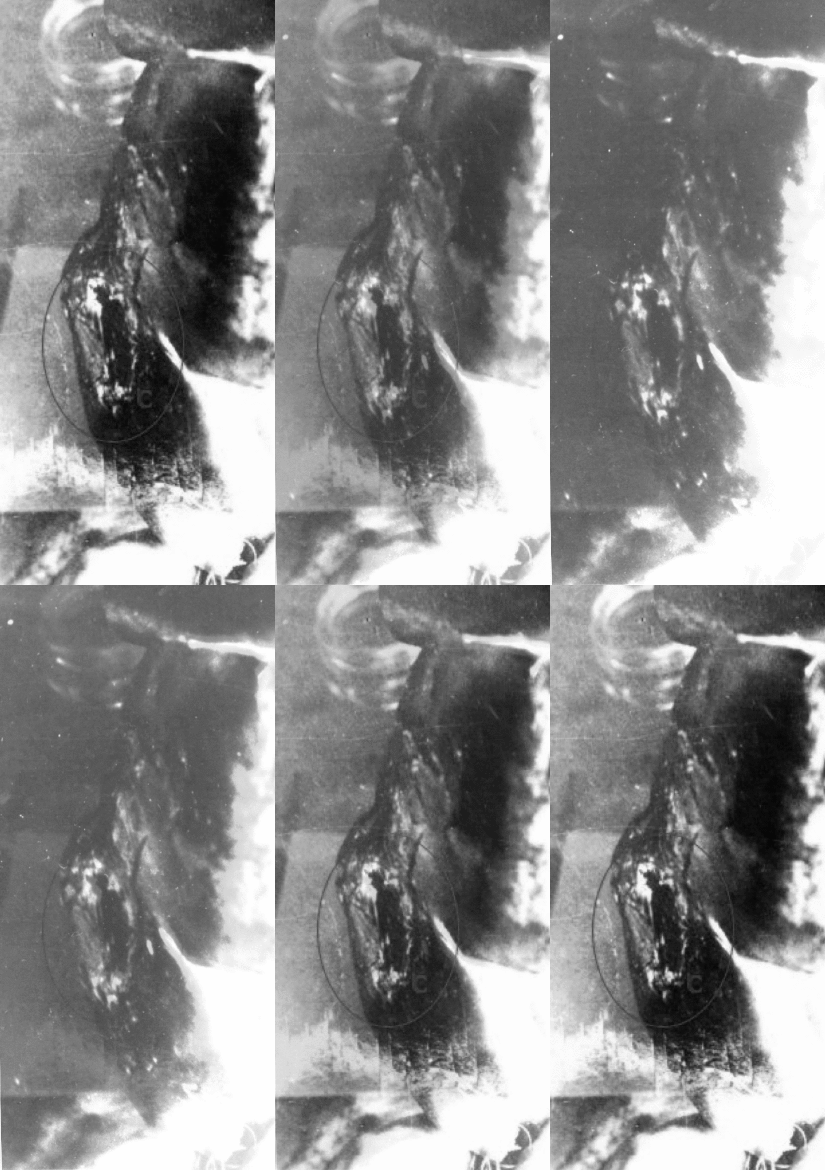
I also got Post 1963... on my 53rd birthday!
Congratulations

Last edited:
MicahJava
Illuminator
- Joined
- Jan 26, 2016
- Messages
- 3,041
What evidence, did you hear it on the Z film?
The photographic evidence for Kennedy reacting to something at ~z190, and the Willis photograph.
Last edited:
Tomtomkent
Philosopher

- Joined
- Jul 5, 2010
- Messages
- 8,607
The photographic evidence for Kennedy reacting to something at ~z190, and the Willis photograph.
So your speculation then, and not actual evidence. Your opinion of what you think mannerisms mean is not evidence.
BStrong
Penultimate Amazing
The photographic evidence for Kennedy reacting to something at ~z190, and the Willis photograph.
Are gunshots the only known source of human reactions?
HSienzant, are there any witnesses that can support anything happening before z190?
John Connally
Rosemary Willis
Both support shots prior to Z190. You'll chose to ignore them of course.
MicahJava
Illuminator
- Joined
- Jan 26, 2016
- Messages
- 3,041
John Connally
Rosemary Willis
Both support shots prior to Z190. You'll chose to ignore them of course.
No, we've demonstrated that John Connally's statements are ambiguous at best. I think it's fairly obvious what he really thinks happened since he marked on a map and marked Zapruder film frames where he thinks the shooting started.
And of course, Rosemary Willis's father Phillip said that he believed Rosemary slowed down because he just called out to her. I think that's better than a 26-year-old trying to remember what happened when she was 10.
You have a gigantic sampling of witnesses to this event. Do you have any better ones to support this theory?
Last edited:
MicahJava
Illuminator
- Joined
- Jan 26, 2016
- Messages
- 3,041
Are gunshots the only known source of human reactions?
Judge for yourself. The untrained eye may think that Kennedy is merely bringing his arm down from waving at z190-224, but apparently that's not what photographic experts think.
HSCA photographic panel's findings: http://jfkassassination.net/russ/infojfk/jfk6/timing.htm
HSCA testimony of Calvin McCamy, spokesman for photographic panel: http://mcadams.posc.mu.edu/russ/jfkinfo/mccamy.htm
Describing Kennedy before he goes behind the Stemmons Freeway sign:
"There is considerable blurring at this point. The President's arm is up in a waving position. His head is still toward the right. At this point there is considerable blur, and by here, it appears as though his head is beginning to turn quite rapidly to the left. His head is now to the left. That is only one-eighteenth of a second from one frame to the next. He continues to look toward the left. One barely sees his right ear toward the camera. It is quite clear he is here now looking directly at his wife. He and his wife can be seen looking at one another in this sequence. He now goes behind the sign, and only a fraction of a second later we see his hands moving upward. He has a gasping expression. His hands are in a classic position of a person who has been startled. He now begins to raise his arms into what I would call a defensive position. He may be clutching at the throat wound."
Paper by Olson and Turner: http://jfk.hood.edu/Collection/Weis... Disk/Journal of Forensic Science/Item 01.pdf
Cecil Kirk, HSCA photographic expert, testimony at mock trial of LHO: https://www.youtube.com/watch?v=vGsD8i3qOgo&t=2m55s
Last edited:
Tomtomkent
Philosopher
- Joined
- Jul 5, 2010
- Messages
- 8,607
Judge for yourself. The untrained eye may think that Kennedy is merely bringing his arm down from waving at z190-224, but apparently that's not what photographic experts think.
You will have to cite some better evidence. I can't see anything that suggests a photographic expert, or any expert, can discern what sort of sound a man is reacting to from those images.
Indeed. I am not entirely sure anybody has the psychic powers required to discern if somebody was reacting to a noise, then to determine it was a gunshot, from the data contained in a photograph or silent film...
MicahJava
Illuminator
- Joined
- Jan 26, 2016
- Messages
- 3,041
You will have to cite some better evidence. I can't see anything that suggests a photographic expert, or any expert, can discern what sort of sound a man is reacting to from those images.
Indeed. I am not entirely sure anybody has the psychic powers required to discern if somebody was reacting to a noise, then to determine it was a gunshot, from the data contained in a photograph or silent film...
What seals the deal for me is Willis slide 5, which Phillip Willis always swore was snapped at the exact moment he reacted to a loud gunshot. His photograph is the Zapruder film equivalent of z202 or z210. Which, by the way, he said was the first shot he heard.
Tomtomkent
Philosopher
- Joined
- Jul 5, 2010
- Messages
- 8,607
What seals the deal for me is Willis slide 5, which Phillip Willis always swore was snapped at the exact moment he reacted to a loud gunshot. His photograph is the Zapruder film equivalent of z202 or z210. Which, by the way, he said was the first shot he heard.
So, to summarise, you have no evidence for a loud report at Z190. Your claim is unsupported.
No, we've demonstrated that John Connally's statements are ambiguous at best. I think it's fairly obvious what he really thinks happened since he marked on a map and marked Zapruder film frames where he thinks the shooting started.
According to every testimony he ever made, the shooting sequence was this:
BANG
(Connally turns to his right to locate the source of the shots. Starts turning back left) - Z160
BANG
(Connally is hit. Turns to his right a second time and shouts out "my god they're going to kill us all".) - Z223
BANG
(Connally and his wife are covered in brain matter as Kennedy is struck) - Z313
And of course, Rosemary Willis's father Phillip said that he believed Rosemary slowed down because he just called out to her. I think that's better than a 26-year-old trying to remember what happened when she was 10.
Who cares why her father thinks she stopped running? She herself says it was a response to a gunshot.
Therefore her statement is evidence of a shot prior to Z190.
MicahJava
Illuminator
- Joined
- Jan 26, 2016
- Messages
- 3,041
So, to summarise, you have no evidence for a loud report at Z190. Your claim is unsupported.
The experts, including a person who was actually there, disagree with you.
Tomtomkent
Philosopher
- Joined
- Jul 5, 2010
- Messages
- 8,607
The experts, including a person who was actually there, disagree with you.
And? Their best interpretation might be termed suggestive, but it is not evidence.
They can point out that JFK appears to be reacting, possibly to a sound, and offer their best guess that it was a report. But at no point is there evidence that a report was heard. How can there be? They do not know what JFK heard, or what he was reacting to, from those photographs. You have no insight to his senses or awareness.
MicahJava
Illuminator
- Joined
- Jan 26, 2016
- Messages
- 3,041
And? Their best interpretation might be termed suggestive, but it is not evidence.
They can point out that JFK appears to be reacting, possibly to a sound, and offer their best guess that it was a report. But at no point is there evidence that a report was heard. How can there be? They do not know what JFK heard, or what he was reacting to, from those photographs. You have no insight to his senses or awareness.
Maybe nothing ever happened ever.
Tomtomkent
Philosopher
- Joined
- Jul 5, 2010
- Messages
- 8,607
Maybe nothing ever happened ever.
Or maybe there is a limit to what can be objectively recorded by a camera. Maybe you can't tell the difference between JFK reacting to a gunshot report, or any of a number of other possibilities.
BStrong
Penultimate Amazing
Judge for yourself. The untrained eye may think that Kennedy is merely bringing his arm down from waving at z190-224, but apparently that's not what photographic experts think.
HSCA photographic panel's findings: http://jfkassassination.net/russ/infojfk/jfk6/timing.htm
HSCA testimony of Calvin McCamy, spokesman for photographic panel: http://mcadams.posc.mu.edu/russ/jfkinfo/mccamy.htm
Describing Kennedy before he goes behind the Stemmons Freeway sign:
"There is considerable blurring at this point. The President's arm is up in a waving position. His head is still toward the right. At this point there is considerable blur, and by here, it appears as though his head is beginning to turn quite rapidly to the left. His head is now to the left. That is only one-eighteenth of a second from one frame to the next. He continues to look toward the left. One barely sees his right ear toward the camera. It is quite clear he is here now looking directly at his wife. He and his wife can be seen looking at one another in this sequence. He now goes behind the sign, and only a fraction of a second later we see his hands moving upward. He has a gasping expression. His hands are in a classic position of a person who has been startled. He now begins to raise his arms into what I would call a defensive position. He may be clutching at the throat wound."
Paper by Olson and Turner: http://jfk.hood.edu/Collection/Weis... Disk/Journal of Forensic Science/Item 01.pdf
Cecil Kirk, HSCA photographic expert, testimony at mock trial of LHO: https://www.youtube.com/watch?v=vGsD8i3qOgo&t=2m55s
I don't recall the point in time where photographic experts were determined to be experts in determining the causation of reaction in the subjects depicted in photos they examine.
- Status
- Not open for further replies.