• Quick note - the problem with Youtube videos not embedding on the forum appears to have been fixed, thanks to ZiprHead. If you do still see problems let me know.

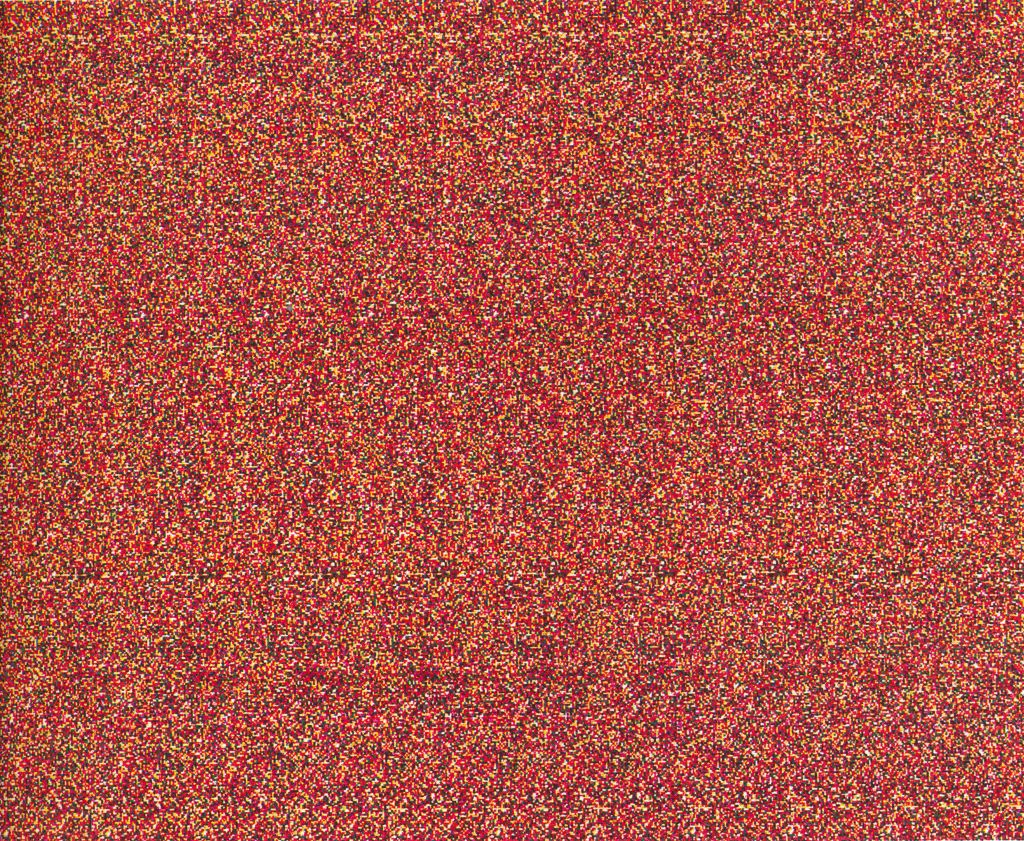
Weirdest optical illusion I've ever seen.

The checker shadow illusionWP comes to mind and I wonder if there is any relation in that some of those whites and blacks are seen as the same shades when they are not.

ETA or the Chubb illusion on the same Wiki page.
 
Last edited:
The checker shadow illusionWP comes to mind and I wonder if there is any relation in that some of those whites and blacks are seen as the same shades when they are not.

Yup - I'm pretty sure that exactly the illusion at play. But, the curious part is how to defeat it and see the hidden image - scrolling works for me. It'd be interesting to know why.

I've seen this same thing quite a bit on facebook posts for the past year or so. Usually the hidden image is a number, and not nearly as complex as in the OP. But, same scrolling up and down works to reveal it.
 
The checker shadow illusionWP comes to mind and I wonder if there is any relation in that some of those whites and blacks are seen as the same shades when they are not.

ETA or the Chubb illusion on the same Wiki page.

I am familiar with those illusions but this one looks different to me. But I can't say I know yet what is going on.
 
The black isn't black, and the white isn't white. The pictures with the 'white' replaced by black, and the 'black' replaced by white, shows clearly the image.

[eta] The close proximity of dark and light causes your brain to not pay attention to the small fluctuations in each, only the large contrast 'grid'. But your eye can still see the low-contrast parts in some circumstances, like when 'blurring' the image with motion, which causes the high-contrast parts to get smeared into low contrast.

NoWhite.png
NoBlack.png
 
Last edited:
I see the solution there, but I need to ponder it a bit more. Thanks though for the explanation.
 
How though?

Try this - download the image to your desktop. You'll see it as an icon there. Can you see the face? I can, and I suspect its because of the relative size of the checkerboard. In a pic editor I can zoom in and out with the wheel of my mouse, and there is a definite range where the face is pretty clear.

Zoom in, of course, so the squares of the checkerboard are large on your screen and you can see the white squares are subtly not white, each a bit different from the other. Ditto for the black squares. What it appears to be is two images in separate layers: one a checkerboard, one the face. The face layer has very low saturation and contrast and at some relevant range of image size our brains seize on the checkerboard pattern and ignore the other, low saturation data.

Until we move the image by scrolling. Its still weird to me that this cuts through the illusion.
 
Try this - download the image to your desktop. You'll see it as an icon there. Can you see the face? I can, and I suspect its because of the relative size of the checkerboard. In a pic editor I can zoom in and out with the wheel of my mouse, and there is a definite range where the face is pretty clear.

Zoom in, of course, so the squares of the checkerboard are large on your screen and you can see the white squares are subtly not white, each a bit different from the other. Ditto for the black squares. What it appears to be is two images in separate layers: one a checkerboard, one the face. The face layer has very low saturation and contrast and at some relevant range of image size our brains seize on the checkerboard pattern and ignore the other, low saturation data.

Until we move the image by scrolling. Its still weird to me that this cuts through the illusion.
That increases my fascination about this illusion.

Getting back to the checker shadow illusion, even though you know how it works and that certain squares are the same color/tone, you can't get your brain to see it unless you eliminate the surrounding squares. With other illusions you can get your brain to switch back and forth.

My fascination with perception has just become more fascinated. :D
 
Last edited:
How though?
Dark squares break up the faint image of the face?

As far as I can tell from the story, all this uses is making the face image 10% then superimposing a high contrast image on top of it. How is that different than a tiger with base coloration close to "amber waves of grain" ie yellowing grasses, and a pattern of high contrast stripes to break up the cat's image?
 
The black squares are all uniformly black. The white squares, however, aren't uniformly white. It is those that contain the image. The guy who made the illusion simply positioned a black chequer-pattern over a washed-out image. I can see it by viewing the computer screen from across the room.
 
I've tried scrolling, viewing at an angle, and viewing from a distance. No matter what I do, the guy still looks Japanese.
 
The black squares are all uniformly black. The white squares, however, aren't uniformly white.
No, neither the black or the white are uniformly black or white. The image is embedded in both the black and white squares. You can extract the face from either the black squares or the white squares in an image processing programme.

The left side of the below image represents what's hidden in the white squares, and the right side represents what's hidden in the black squares (I played around the brightness and contrast in Photoshop to get these images)
EoU4zvA.jpg


And with some digital jiggery pokery, you can combined the processed black squares and white squares to get a decent quality image of the original face:

GLcH4YU.jpg
 
Last edited:
Can't see **** in that one (just kind of a transient vague silhouette after following RussDill's advice).

And this although I've trained myself since decades to discern things like the rider in the following image, that I can see almost instantly (as an ad hoc personally scanned image, I surmise it is compliant with fair-use, as it is excerpted as illustration from a ~250 p. image book):


Back
Top Bottom