• Quick note - the problem with Youtube videos not embedding on the forum appears to have been fixed, thanks to ZiprHead. If you do still see problems let me know.

U.S. Rice is poison?

alfaniner

Penultimate Amazing
Joined
Aug 27, 2001
Messages
33,518
Location
Sorth Dakonsin
HIgh levels of arsenic and cadmium in rice
My nephew mentioned this on a visit a few days ago. I hadn't heard anything about it so I assumed it was one of those "Food Babe" pseudoscience things. Then I saw this article. Although it doesn't seem restricted to the US-grown varieties, we have two of the biggest culprits. My take -- if it was really a problem we'd be seeing a lot more people dropping dead.
Some words are trigger panic words. I just found out I can't buy cadmium HUE acrylic paint through the mail because my state won't allow it to be transported that way. But the HUE selection is cadmium-free (non-toxic).
 
HIgh levels of arsenic and cadmium in rice
My nephew mentioned this on a visit a few days ago. I hadn't heard anything about it so I assumed it was one of those "Food Babe" pseudoscience things. Then I saw this article. Although it doesn't seem restricted to the US-grown varieties, we have two of the biggest culprits. My take -- if it was really a problem we'd be seeing a lot more people dropping dead.
Some words are trigger panic words. I just found out I can't buy cadmium HUE acrylic paint through the mail because my state won't allow it to be transported that way. But the HUE selection is cadmium-free (non-toxic).
US rice has, surprisingly, been selling a lot more in Japan, recently. Previously (and maybe even now) all imported rice was subject to huge tariffs, but in the last year or so rice production has fallen, and the price has increased to the point where even heavily tariffed rice (up to 700%) is competitive now.
 
I wonder what the source is?

Contamination of fertilizers maybe?

In Australia, it is recommended that fruit and vegetables not be grown in 'potting soil' because compost is a significant component of potting soils.

Apparently composting tends to concentrate heavy metals, and Cadmium is the main issue here.
 
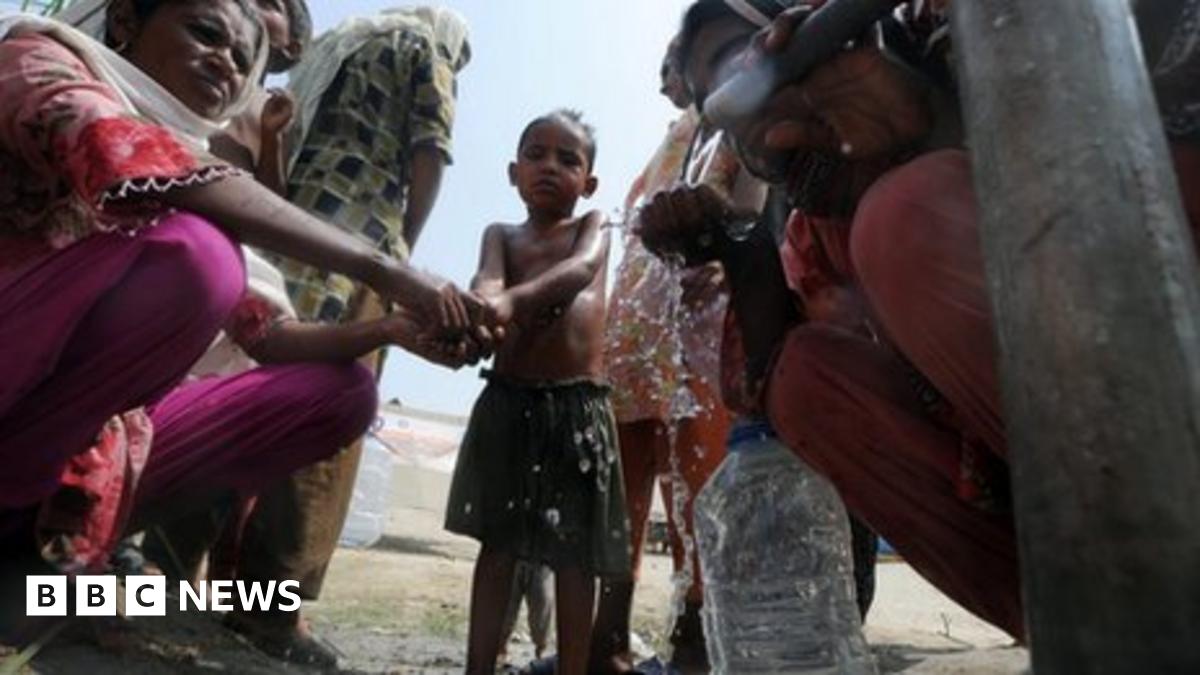
Arsenic and rice is a big global issue. Arsenic contamination of groundwater is an important issue in some places, mostly this is natural, but industrial contamination (particularly from old mine workings) contributes. Rice appears to concentrate arsenic from water, so can build up reltively high levels. One of the consequences of chronic exposure is a significant increase in skin bladder and lung cancer. Even relatively mild increased levels significantly increase cancer risk. This is further increased in apprts of the world with high rice diets, eg. Pakistan.

 
How many orders of magnitude below the safe limit is it?
This, how often do these sorts of headlines end up just reporting that there are just detectable levels well below the threshold that matters.

Consumer reports tends to be a bit alarmist on food, they have also been on the organic food bandwagon for decades on account of stuff like this.
 
Arsenic and rice is a big global issue. Arsenic contamination of groundwater is an important issue in some places, mostly this is natural, but industrial contamination (particularly from old mine workings) contributes. Rice appears to concentrate arsenic from water, so can build up reltively high levels. One of the consequences of chronic exposure is a significant increase in skin bladder and lung cancer. Even relatively mild increased levels significantly increase cancer risk. This is further increased in apprts of the world with high rice diets, eg. Pakistan.

I was blissfully unaware of arsenic in rice until just now. From the study:
individuals exposed to low to moderate levels of arsenic (<150 μg/L) were at an elevated risk of developing or dying from lung cancer. Given the widespread exposure to lower levels of arsenic, there is an urgent need for vigilance and potential revisions to regulatory guidelines to protect people from the cancer risks associated with arsenic exposure.

Perhaps Arth and ahhell will reconsider their posts.
 
I won't. Article in the OP is about arsenic in US rice, the articles posted by plan are about Pakistan and arsenic in drinking water.

The OP in the post never established that the levels detected in US rice are actually dangerous. I'm pretty sure that Arth and I are correct.

I will add that I will go further, there is likely no reason to think that the levels found in US rice are a significant health risk. I could easily be wrong but nothing posted here supports the notion that there are dangerous levels of arsenic in US rice. Its not even the biggest source of arsenic in food.
 
Always my first thought.

My second thought is usually,
"but if it's recently been increasing, we should probably look into it before it approaches the safe limit."
Doesn't seem to be any reasons to believe that either. As far as I can tell, all that was done is testing rice from various place in the US for Arsenic, Cadmium, Lead, and Mercury. They found it, between 60 and 150 parts per billion depending on the rice.

How much is dangerous, don't know, the don't say. Its just assumed that any is bad. What do they recommend? Eat less rice and if you must buy rice from CA and cook it like you would pasta or you are an English lady that doesn't know who to pronounce microwave.

ETA: Source of the studyL https://hbbf.org/sites/default/files/2025-05/Arsenic-in-Rice-Report_May2025_R5_SECURED.pdf
Arsenic in rice has been known about for decades. They went looking for something they knew was there and found it.
 
Last edited:
I wonder what the source is?

Contamination of fertilizers maybe?

In Australia, it is recommended that fruit and vegetables not be grown in 'potting soil' because compost is a significant component of potting soils.

Apparently composting tends to concentrate heavy metals, and Cadmium is the main issue here.
The USA still allows arsenical pesticides.
 
SInce I live near one of the biggest rice producing aread in the US (the Northern Sacramento Valley) this is of some initerst.
 
SInce I live near one of the biggest rice producing aread in the US (the Northern Sacramento Valley) this is of some initerst.
A relevant joke from the northern Sacramento valley.

What do you call a conservative on welfare?
A Farmer

What do they call conservatives on welfare?
Rice farmers


According to the study, CA rice has the least arsenic.
The USA still allows arsenical pesticides.
Seems as though they were banned in the 80s. Could be left over contamination, could be naturally occurring.

Keep in mind, this was a study of rice in supermarkets, it includes rice grown around the world.
 
Oh I remember the good old days when the rice farmers used to burn the stubble in the fall giving a sort of burning leaves smell to Sacramento. That was finally banned in the early 80's.
 
2013. And there's still an exemption for cotton farming.
You and the internet are clearly gaslighting me. I swear when I googled it earlier, the internet said the 80s now it says 2013? Must have been that other universe with the Berentain Bears instead of the Bernstien Bonobos.
 
You and the internet are clearly gaslighting me. I swear when I googled it earlier, the internet said the 80s now it says 2013? Must have been that other universe with the Berentain Bears instead of the Bernstien Bonobos.
:D
As with most things, it depends.....
Organic arsenides versus inorganic, exemptions, et cetera.
 

Back
Top Bottom