• Quick note - the problem with Youtube videos not embedding on the forum appears to have been fixed, thanks to ZiprHead. If you do still see problems let me know.

The troubles of the ghost hunters: technology or fiction?

M. Bautz

New Blood
Joined
Nov 1, 2024
Messages
3
Location
Hamburg
Hello everyone,

this may be a somewhat awkward question, but it comes up again and again when dealing with our topics in the field of (debunking the unbelievable).

One group that is dedicated to investigating paranormal phenomena is known as ghost hunters.

They use film and video cameras, as well as cameras, audio recorders and measuring devices such as magnetometers, Geiger counters and thermometers – all in all techniques that subordinate the phenomena to be investigated to the sphere of recording and measuring procedures and which, in their opinion, are thus potentially ‘documentable’ and therefore proof enough.

The question that arises from this is: does this understanding of at least the (film) technology used, does this not all the more promote the irrational belief in the paranormal and extends the fiction therefore far into reality? In other words, people still believe in the paranormal ‘because’ there are such representations in film (eg Super8 by Spielberg, blair which project, paranormal activity)?

I would be happy to hear about your views on this topic.
 
I don't know whether it is an art or not but it might be better viewable in the paranormal section..? Because we look at, say, an insect for example, and note it doesn't have sufficient faculties by which to perceive or understand, say, Newton's Law of Gravity, thus, leading to the reasoning that perhaps we, as Homo sapiens, aren't sufficiently imbued with the faculties to detect 'higher powers' such as life after death, the dead trying to communicate with us or the presence of ethereal beings who died tens, hundreds or thousands of years ago (ghosts), so we reason, 'What if we set up ultra hi-frequency recording systems in, say, a graveyard or a haunted house, or set up ultra violet or infra red film to capture changes in the atmosphere not normally visible..?'

The other angle is that of uncertainty, i.e., the mystery of the future, which hides its face. People thus consult fortune tellers or oracles, or look for signs and omens, such as in astrology or crystal ball gazing. Death is an aspect of this uncertainty. People want to know if there is perhaps an afterlife after all, and if so, can the dead see us but we not them?

As for Stephen Spielberg or Stephen King (or Philip K Dick, Alistair Crowley, John Dee, et al) this shows the fascination we have with the supernatural. There is something compelling about the 'Shining' and the power of divinity or sensing the dead.

We have imagination so I am not sure you can stop people from using it.

What would be your solution?
 
Hello everyone,

this may be a somewhat awkward question, but it comes up again and again when dealing with our topics in the field of (debunking the unbelievable).

One group that is dedicated to investigating paranormal phenomena is known as ghost hunters.

They use film and video cameras, as well as cameras, audio recorders and measuring devices such as magnetometers, Geiger counters and thermometers – all in all techniques that subordinate the phenomena to be investigated to the sphere of recording and measuring procedures and which, in their opinion, are thus potentially ‘documentable’ and therefore proof enough.

The question that arises from this is: does this understanding of at least the (film) technology used, does this not all the more promote the irrational belief in the paranormal and extends the fiction therefore far into reality? In other words, people still believe in the paranormal ‘because’ there are such representations in film (eg Super8 by Spielberg, blair which project, paranormal activity)?

I would be happy to hear about your views on this topic.
People play act a lotand we love to be thrilled and being a social animal we love to be thrilled as a pack, that's what the like of movies do. If you are in a country like Iran or the USA your primary source of belief of the supernatural will be religion you will more than likely be brought up to believe in supernatural beings and the likes of miracles.
 
Speaking as a ghost hunter, a good 35mm digital is good enough with the still and video options built-in. A tri-field meter is handy, assuming you know how to use it, and what you're measuring, and why that energy field is there (bad wiring, cell phones, microwaves, radio, static electricity, etc). Geiger counter is a little extravagant, but if you can afford one, why not if for no other reason than to rule out that kind of radiation. A good ghost hunter will carry a quality CO2 detector since many "hauntings" are nothing more than poorly maintained furnaces poisoning the air enough to cause people to see and hear things. Another under-used item is a stethoscope, which can be used to listen for rodents within the walls, and under floorboards. Other equipment items they should carry are quality motion detectors, and decent thermometers with Blue Tooth to record temperature variations in real-time throughout as much of the location as possible. I'd add a quality microphone to attach to a quality digital recorder as the ones on your cell phones, and the built-ins on most cameras are minimum quality.

See, before you can rule in a ghost, you have to rule out a long list of esoteric architectural, atmospheric, electrical, chemical, and radiological conditions first. And that takes time, and an honest effort. I must point out that none of that gear will provide evidence of a ghost since they've never been tested WITH a confirmed ghostly presence. In short, you need a ghost to see how, and if any of those devices respond. And since nobody has a proven, authenticated ghost available for testing no one can rightfully claim these devices can detect one.

Oh, and in 35+ years of ghost hunting, I have zero proof. But I can show you how airflow can creep you when the barometer shifts. The human body can be a lot of fun.
 
Any time you bring the costumes and jewelry of science into a process, you convey the impression that your study has some degree of scientific merit. Ninety percent of science—including that used in investigations—happens between your ears. No amount of equipment or sciency-looking stuff compensates for bad reasoning. Unfortunately it makes good television.

I'm an engineer. I'm part owner of an engineering company, and I've been practicing for about 30 years. Occasionally my firm gets tapped to do forensic engineering investigations. And that means we have a lot of real-world experience in figuring out what happened. The same mindset applies to happenstance observations that get attributed to paranormal or supernatural causes—with one important exception that I'll get to. You're trying to find things you can observe or measure that are the consequences of various possible hypotheses and thus an indicator that some hypothesis operated. In medicine this is known as "differential diagnosis," but it's all just a variation on the hypothetico-deductive methods devised by Popper and Kuhn.

I'll endorse everything that Axxman300 says. You have a set of hypotheses that might explain some observation, and you want to apply a series of tests to rule in or out those various possible causes. Hence the equipment like CO2 detectors. UFO sightings are harder to deal with because they're one-time events; there's a limit to how much you can measure things and say that they apply to the sighting. Hauntings are more promising because they're usually postured as ongoing events. You can measure things at the site and be reasonably sure they apply to the conditions surrounding the sightings.

The a priori probability of each hypothesis is part of the exercise. This is the part of science that needs a brain. Prosaic causes are the most probable because (duh!) they are the ones that most commonly occur. All the measurement in the world may fail to falsify prosaic causes. But that doesn't let you conclude a supernatural explanation by default. Trying to hold out an improbable explanation by default is a common fringe technique—very bad science. Failing to measure a strong magnetic field or toxic gases or rodents in the wainscoting doesn't mean some mundane cause is still not the most likely. But people who want to believe in ghosts will tell you that the demonstration with all the measurement has "ruled out" ordinary causes, therefore the cause "must" be supernatural. Of course no, the most probable explanation is still a natural explanation you haven't yet thought of or figured out how to test.

Axxman300 has touched upon the converse problem, the exception I mentioned above. In a forensic engineering or legal investigation, you're testing among natural causes that have deducible consequences that can be measured. This gives science a toehold not only in ruling out but in ruing in various possibilities. For example, if we suspect an explosion occurred, we can deduce that chemical products of the explosive reaction will be present and test for them. If found, this lets us infer that the explosion hypothesis is favored.

But because we have have never had a real ghost to inspect, we can't say what physical, measurable properties are associated with their presence. This means we can't falsify the ghost hypothesis. We have a lot of speculation and supposition regarding ghosts, but these are not facts that inform science. Yes, we can test for some of them. "Ghosts create cold spots," is a speculative proposition. We can measure heat fields with reasonably inexpensive equipment. I have a bunch of highly-accurate, calibrate IR viewers at work, but $200 gets you a sidecar camera for your smart phone that works pretty well. What does it mean if we point it at something and discover that it's cold, and we can't immediately understand why? Do we get to conclude it must be a ghost only because we imagine that ghosts are cold? No, that would be circular reasoning.

That leads to the contrapositive error in hunting supernatural activity. You apply a lot of sciency observation to a suspect circumstance and you come up with measurements and observations that defy your intuition. You find there's a magnetic field in your kitchen and a cold spot in your bathroom, and you can't easily figure out why. People who want to believe in ghosts will just attribute those physical factors to ghosts and suppose that magnetic fields and thermal variance are properties of ghosts and therefore—barring an evident prosaic explanation—evidence of ghosts where observed. This indeed misuses the props of science to wrongly convey the notion that ghosts can be measured. We have no idea whether ghosts generate magnetic fields. (But we do have some idea that strong magnetic fields have a subtle effect on the human brain, hm...)

The misuse of scientific tooling by ghost-hunters relies on the audience not understanding the underlying science of measurement. Even something as unremarkable as a camera can create observations that are hard to explain. Instinctively we believe that cameras are substitutes for human eyes, because that's what camera manufacturers are aiming for. But cameras do not record images the same way human eyes do, and are thus susceptible to measurement artifacts that have a powerful effect on viewers because they combine familiar images with things that are created by the operation of the camera. Paradoxically, ghost-hunting treats the camera as some kind of magical instrument that can see things humans can't, and therefore can see otherwise invisible evidence of ghosts. Again, it's not falsifiable.

For a few years I worked with noted ghost hunter Joshua Warren. He sent me photographs that people had sent him, asking if I could explain what was going on. Luckily photographic interpretation is within my professional (and published) expertise, and it's been a sporadic side hustle for me, for television and so forth. Joshua never sent me anything I couldn't explain, and Joshua was very forthright about that. He was happy to learn things about cameras and film that he didn't previously know, because it made him a better ghost hunter.

The falsifiability trap is best illustrated by a thought experiment regarding the top three paranormal suspects: ghosts, angels, and aliens. Imagine some well-known occurrence like the Enfield haunting. Now the prevailing skeptical view is that the Enfield haunting was just the kids having a lark and fooling the grown-ups. But set that aside for a moment and imagine that your job is to scientifically falsify two of the Top Three and prove that the cause was, say, angels and not ghosts or aliens. You can't do it, because the sine qua non of all those is that they are open-ended hypotheses. Whatever fantastical thing is alleged, and for which you say, "Well, aliens can't do that," there will be some alien-visitation enthusiast who points out, "You can't say that's beyond the capability of aliens." That's when the primary scientific instrument (the brain) kicks in and surmises properly that the hypothesization is based entirely on preconceptions brought to the table. No matter how much you paid for your IR imager, it won't fix what's wrong in your brain.

This is why skeptics emphasize critical thinking. Once you adopt a critical approach to claims, you won't be as easily fooled by junk science no matter how starched the lab coats or how impressive the proton pack.

 
The question that arises from this is: does this understanding of at least the (film) technology used, does this not all the more promote the irrational belief in the paranormal and extends the fiction therefore far into reality? In other words, people still believe in the paranormal ‘because’ there are such representations in film (eg Super8 by Spielberg, blair which project, paranormal activity)?
The short answer to this question is ghost stories have been around since the invention of language. Originally ghost stories served as a way to warn people about dangerous things such as going into the woods alone, not getting home before dark, unsafe behavior, and in general staying out of trouble. They also served as a way to preserve history, and keeping certain local personalities as part of the landscape long after they've gone. This is why many castles get their haunted reputations, the misdeeds of their former owners live on through late evening story-telling. Movies are just entertainment, and horror movies are low-grade carnival rides.

Today the problem, as I see it, is Youtube, Tik-Tok, and social media creating an environment where people feel they can advance their beliefs in the subject without having to meets any standards of proof. The BS has been there since the late 19th Century as people who should have known better tried to apply science to proving ghosts, and ESP were real (looking at you, Sir Arthur Conan Doyle), and their erroneous presumptions have become the basis for the model parapsychology bases their work upon today. And this is the other huge problem - parapsychology never had a solid foundation on which to build a body of research to begin with. This is why that science has failed in the face regular science, which continues to evolve. Meanwhile the ghost hunting/paranormal research community simply feeds of one another. The only time anything is skeptically questioned is when one group out does another group by using the latest gadget to get spectacular "interactions" that contradicts the work (i.e. made up ghost story) of another research group. What we have today is a small army of Youtube and Tik-Tok creators claiming to record evidence of ghosts, and demons on a daily basis. They all use the same worthless gadgets, their episodes are all alike, and they make money.

The good news is there is a growing skeptics and debunker community on Youtube now. My favorites are The Shape, Beardo Gets Scared, and The Side-Eye Guy because they are like me, ghost hunters who are sick of the BS being presented as real research.
 
Speaking as a ghost hunter, a good 35mm digital is good enough with the still and video options built-in. A tri-field meter is handy, assuming you know how to use it, and what you're measuring, and why that energy field is there (bad wiring, cell phones, microwaves, radio, static electricity, etc). Geiger counter is a little extravagant, but if you can afford one, why not if for no other reason than to rule out that kind of radiation. A good ghost hunter will carry a quality CO2 detector since many "hauntings" are nothing more than poorly maintained furnaces poisoning the air enough to cause people to see and hear things. Another under-used item is a stethoscope, which can be used to listen for rodents within the walls, and under floorboards. Other equipment items they should carry are quality motion detectors, and decent thermometers with Blue Tooth to record temperature variations in real-time throughout as much of the location as possible. I'd add a quality microphone to attach to a quality digital recorder as the ones on your cell phones, and the built-ins on most cameras are minimum quality.

See, before you can rule in a ghost, you have to rule out a long list of esoteric architectural, atmospheric, electrical, chemical, and radiological conditions first. And that takes time, and an honest effort. I must point out that none of that gear will provide evidence of a ghost since they've never been tested WITH a confirmed ghostly presence. In short, you need a ghost to see how, and if any of those devices respond. And since nobody has a proven, authenticated ghost available for testing no one can rightfully claim these devices can detect one.

Oh, and in 35+ years of ghost hunting, I have zero proof. But I can show you how airflow can creep you when the barometer shifts. The human body can be a lot of fun.
Curiously, I was talking to some people about fluid dynamics and modelling air flow in rack floors.
 
Any time you bring the costumes and jewelry of science into a process, you convey the impression that your study has some degree of scientific merit. Ninety percent of science—including that used in investigations—happens between your ears. No amount of equipment or sciency-looking stuff compensates for bad reasoning. Unfortunately it makes good television.

I'm an engineer. I'm part owner of an engineering company, and I've been practicing for about 30 years. Occasionally my firm gets tapped to do forensic engineering investigations. And that means we have a lot of real-world experience in figuring out what happened. The same mindset applies to happenstance observations that get attributed to paranormal or supernatural causes—with one important exception that I'll get to. You're trying to find things you can observe or measure that are the consequences of various possible hypotheses and thus an indicator that some hypothesis operated. In medicine this is known as "differential diagnosis," but it's all just a variation on the hypothetico-deductive methods devised by Popper and Kuhn.

I'll endorse everything that Axxman300 says. You have a set of hypotheses that might explain some observation, and you want to apply a series of tests to rule in or out those various possible causes. Hence the equipment like CO2 detectors. UFO sightings are harder to deal with because they're one-time events; there's a limit to how much you can measure things and say that they apply to the sighting. Hauntings are more promising because they're usually postured as ongoing events. You can measure things at the site and be reasonably sure they apply to the conditions surrounding the sightings.

The a priori probability of each hypothesis is part of the exercise. This is the part of science that needs a brain. Prosaic causes are the most probable because (duh!) they are the ones that most commonly occur. All the measurement in the world may fail to falsify prosaic causes. But that doesn't let you conclude a supernatural explanation by default. Trying to hold out an improbable explanation by default is a common fringe technique—very bad science. Failing to measure a strong magnetic field or toxic gases or rodents in the wainscoting doesn't mean some mundane cause is still not the most likely.
But people who want to believe in ghosts will tell you that the demonstration with all the measurement has "ruled out" ordinary causes, therefore the cause "must" be supernatural. Of course no, the most probable explanation is still a natural explanation you haven't yet thought of or figured out how to test.

Axxman300 has touched upon the converse problem, the exception I mentioned above. In a forensic engineering or legal investigation, you're testing among natural causes that have deducible consequences that can be measured. This gives science a toehold not only in ruling out but in ruing in various possibilities. For example, if we suspect an explosion occurred, we can deduce that chemical products of the explosive reaction will be present and test for them. If found, this lets us infer that the explosion hypothesis is favored.

But because we have have never had a real ghost to inspect, we can't say what physical, measurable properties are associated with their presence. This means we can't falsify the ghost hypothesis. We have a lot of speculation and supposition regarding ghosts, but these are not facts that inform science. Yes, we can test for some of them. "Ghosts create cold spots," is a speculative proposition. We can measure heat fields with reasonably inexpensive equipment. I have a bunch of highly-accurate, calibrate IR viewers at work, but $200 gets you a sidecar camera for your smart phone that works pretty well. What does it mean if we point it at something and discover that it's cold, and we can't immediately understand why? Do we get to conclude it must be a ghost only because we imagine that ghosts are cold? No, that would be circular reasoning.

That leads to the contrapositive error in hunting supernatural activity. You apply a lot of sciency observation to a suspect circumstance and you come up with measurements and observations that defy your intuition. You find there's a magnetic field in your kitchen and a cold spot in your bathroom, and you can't easily figure out why. People who want to believe in ghosts will just attribute those physical factors to ghosts and suppose that magnetic fields and thermal variance are properties of ghosts and therefore—barring an evident prosaic explanation—evidence of ghosts where observed. This indeed misuses the props of science to wrongly convey the notion that ghosts can be measured. We have no idea whether ghosts generate magnetic fields. (But we do have some idea that strong magnetic fields have a subtle effect on the human brain, hm...)

The misuse of scientific tooling by ghost-hunters relies on the audience not understanding the underlying science of measurement. Even something as unremarkable as a camera can create observations that are hard to explain. Instinctively we believe that cameras are substitutes for human eyes, because that's what camera manufacturers are aiming for. But cameras do not record images the same way human eyes do, and are thus susceptible to measurement artifacts that have a powerful effect on viewers because they combine familiar images with things that are created by the operation of the camera. Paradoxically, ghost-hunting treats the camera as some kind of magical instrument that can see things humans can't, and therefore can see otherwise invisible evidence of ghosts. Again, it's not falsifiable.

For a few years I worked with noted ghost hunter Joshua Warren. He sent me photographs that people had sent him, asking if I could explain what was going on. Luckily photographic interpretation is within my professional (and published) expertise, and it's been a sporadic side hustle for me, for television and so forth. Joshua never sent me anything I couldn't explain, and Joshua was very forthright about that. He was happy to learn things about cameras and film that he didn't previously know, because it made him a better ghost hunter.

The falsifiability trap is best illustrated by a thought experiment regarding the top three paranormal suspects: ghosts, angels, and aliens. Imagine some well-known occurrence like the Enfield haunting. Now the prevailing skeptical view is that the Enfield haunting was just the kids having a lark and fooling the grown-ups. But set that aside for a moment and imagine that your job is to scientifically falsify two of the Top Three and prove that the cause was, say, angels and not ghosts or aliens. You can't do it, because the sine qua non of all those is that they are open-ended hypotheses. Whatever fantastical thing is alleged, and for which you say, "Well, aliens can't do that," there will be some alien-visitation enthusiast who points out, "You can't say that's beyond the capability of aliens." That's when the primary scientific instrument (the brain) kicks in and surmises properly that the hypothesization is based entirely on preconceptions brought to the table. No matter how much you paid for your IR imager, it won't fix what's wrong in your brain.

This is why skeptics emphasize critical thinking. Once you adopt a critical approach to claims, you won't be as easily fooled by junk science no matter how starched the lab coats or how impressive the proton pack.
On the highlighted there is another possibility that believers incorrectly rule out, that the incident never happened. I'm not accusing anybody of lying*, it's very easy to hold an honest belief that you've witnessed an event that never occurred, or one that happened in a significantly different way than you remember it. I know because I've had personal dxperience of doing both.

*Though undoubtedly some of these cases are flat out lies perpetuated for money making reasons.
 
On the highlighted there is another possibility that believers incorrectly rule out, that the incident never happened. I'm not accusing anybody of lying*, it's very easy to hold an honest belief that you've witnessed an event that never occurred, or one that happened in a significantly different way than you remember it. I know because I've had personal dxperience of doing both.

*Though undoubtedly some of these cases are flat out lies perpetuated for money making reasons.
There's a famous legal case in New York that requires the seller of a house reputed to be haunted to notify the buyer of its notoriety in that respect. It is often cited incorrectly to support the claim that New York officially recognizes the existence of ghosts. (Who you gonna call?) At best, it recognizes that claims of haunting may have an effect on perceived market value for real property. The case doesn't rely on the claim being true or evident—just on the claim having been made to a third party.

But yes, in all paranormal or supernatural fields we have to consider that the claimants have just made it up or have embellished their claim. It's almost never possible to prove that the claimant is lying or has improper motives, so why bother? Failure to support a claim with evidence leaves the claim unsupported. Failure to falsify a claim leaves the claim unsupported. As long as the claim doesn't rise to fraud or similar harm, then we have little business intruding on what unsupported nonsense others choose to claim or believe.
 
I love ghost stories and scary movies. I'm just as affected by the adrenaline rush as any other person, and I'm willing to suspend disbelief for a while to enjoy it. What we do for entertainment isn't necessarily what we have to do as skeptics.

Commensurately I don't think supernatural tales like Super 8 or Insidious or Constantine materially or wrongly improve the credibility of ghost claims. Those are pure fiction, and probably reckoned as such by all. But then you have hybrid scenarios like the Conjuring series, which purport to describe real-life occurrences. No, I don't think Ed and Lorraine Warren were legitimately hunting ghosts, but I'm still a Vera Farmiga fan and I love the stories. I think James Wan has an incredible talent for scaring the pants off people. When you use the medium of fiction to tell a story you purport to be true, the natural embellishments and storytelling gimmicks can seem to make the claims more true. But again, we've been telling ghost stories in documentary or fictionalized formats for hundreds if not thousands of years. If these give rise to undeserved credibiliy, it's not a new thing.

But I agree that the new things such as almost effortless access to a mass audience through social media and content-hosting technology has the effect of lowering the skeptical bar. Especially when algorithms feed you siloed content, it's easy to steep yourself in unchallenged claims of the paranormal and supernatural that will over time erode your critical thinking.
 
I don't trust people who don't like a good ghost story. I sure as hell don't trust people who believe in ghosts without the need or requirement of some kind of evidence. My go-to scientific research into hauntings is from the University of Glasgow, and this paper outlining experiments using a control group placed into "haunted" locations, Hampton Courts Palace (Surrey), and the South Bridge Vaults( Glasgow). 40 people re divided into two groups, one gets the full ghost-story treatment of the site, while the other does not. Surprise! The folks who got the ghost story reported all kinds of predictable sights, sounds, smells, and feelings of dread while the second group did not.

You can read it here: https://www.researchgate.net/publication/10710505_An_investigation_into_alleged_'hauntings'

This is from the University of Glasgow's book-of-the-month club where the first well thought out skeptical approach to ghosts and hauntings took shape in the book, Ghost Stories, Collected with a Particular View to Counteract the Vulgar Belief in Ghost and Apparitions, and to Promote a Rational Estimate of the Nature of Phenomena commonly considered as Supernatural.

The book was written in 1823, and has been forgotten thanks to the rise in spiritualism that began to take shape ten years later, and ran amok for almost seventy years leaving us with much of the woo we deal with today.

And the University of Glasgow is home to the Center for the Study of Perceptual Experience


As a lay person I find ton of useful information about how and why people think they've seen, or experienced a ghost. I point to the work of Professor Christopher French, of Anomalistic Psychology Research Unit at the Psychology Department at Goldsmiths, University of London. As a ghost hunter, French is my Yoda: https://www.gold.ac.uk/psychology/staff/french/

I post this mostly because the superstitious and hardcore believers love to loudly claim that, "Science never looks into paranormal things", and fact is science has, does, and will continue to investigate. The most important paper to explore atmospheric influence on people is "A Ghost in the Machine": https://www.researchgate.net/publication/24236415_A_Ghost_in_the_Machine
This paper was the first to suggest how infrasound can effect the brain in a way where a person will see things, and feeling as if someone is in the room, unseen.

For me, the big change has been asking the right questions. I no longer set out to prove ghosts exist, but try to understand why reasonable people claim to see them. The difference now is I get more answers that are just as amazing as anything paranormal. It's more rewarding to learn new things than to slant research to prove a point of view.
 
I wish Bautz would come back and engage in conversation about his thesis. Which I guess is that maybe depictions of ghosts and "scientific" ghost hunting in popular entertainment gives aid and comfort to ghost believers.
 
There's a famous legal case in New York that requires the seller of a house reputed to be haunted to notify the buyer of its notoriety in that respect. It is often cited incorrectly to support the claim that New York officially recognizes the existence of ghosts. (Who you gonna call?) At best, it recognizes that claims of haunting may have an effect on perceived market value for real property. The case doesn't rely on the claim being true or evident—just on the claim having been made to a third party.
I never understood why claims of haunting would potentially lower the valuation of a property; wouldn't people pay more for a purportedly-haunted house?
 
I think the main issue with reporting the house - might - be haunted is mostly due to ongoing traffic issues as people slow down, or stop at the house to gawk, and take pictures. Those poor people who live in the Amityville house must have nerves of steel. I don't have an accurate percentage, but most people who move into a house that is allegedly haunted report the house is not haunted. This is a great indicator that the source of the haunting is people, not the undead. I'm waiting for the lawsuit from a buyer suing because their new house ISN'T haunted.

The latest trend on Youtube is creators buying allegedly haunted locations (farms, mental hospitals, schools), and then renting them out to other Youtubers to "investigate". And buying derelict buildings to serve as low-key haunted houses for those seeing an easy buck to be made off "ghost hunters" who pay to spend the night has been a cottage industry for almost a decade.

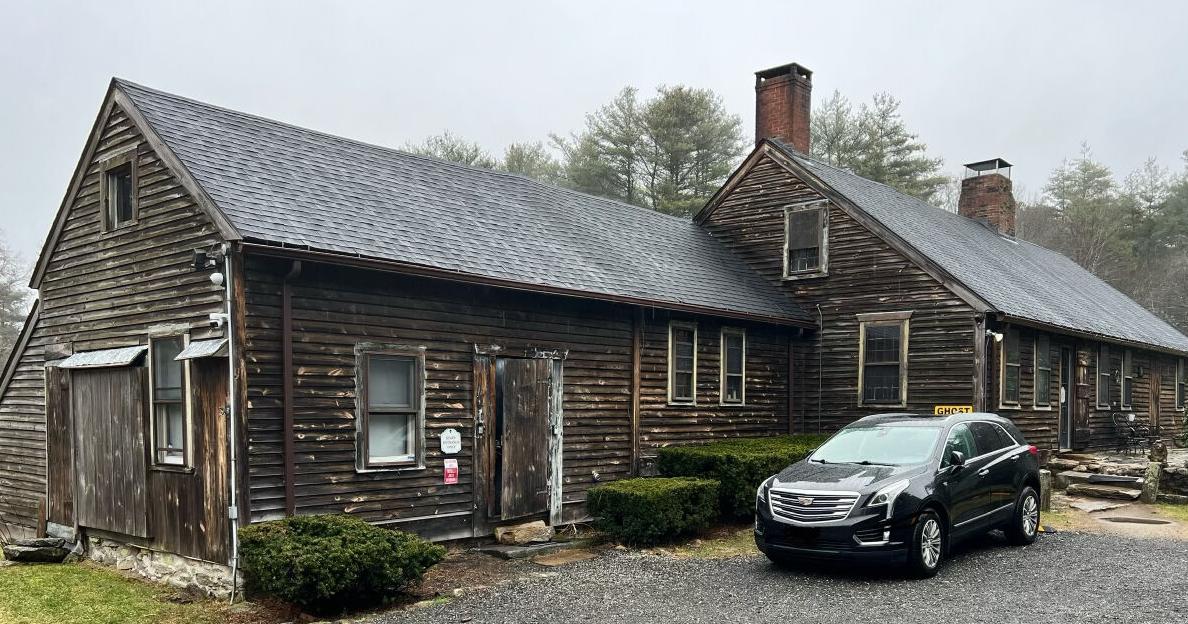
The "Conjuring House" has run into trouble under the current owner:

And the hilarious thing about that house is it was never haunted. Nobody died there, or on the grounds, and it was never cursed. The longtime owners thought it would be funny to invite the crew from the TV show, Ghost Hunters to come up and investigate. To their amusement, they recorded a closet door opening by itself, and declared the place haunted. The people who bought the house a few years later turned it into a haunted attraction, and now the location has been the source of books, and at least two movies. Never underestimate the power of BS.
 
Do you guys actually mean Carbon Monoxide detectors?
Carbon dioxide is more common and has unpleasant effects on the human mind.
Yes, CO too, but they're marketed as CO2 detectors, and the decent ones detect both.
In general carbon monoxide sensors for home use do not detect elevated carbon dioxide, CO is far more toxic.
There's actually a carbon trioxide as well, but it lasts less than a minute so nobody seems to worry about it.
I'd worry more about the ozone.
 
I never understood why claims of haunting would potentially lower the valuation of a property; wouldn't people pay more for a purportedly-haunted house?
The opinion in Stambovsy v. Ackley doesn't presume that the value will be lowered. The point is that it would be up to the buyer to determine whether the agreed-up sale price properly reflects what he thinks of the haunting—favorable or unfavorable. Therefore the seller must disclose whether the house is reputed to be haunted. Of course it's in the buyer's interest to pay as low a price as the seller will accept. Therefore it's not out of the question to think that someone trying to back out of a contract of sale is doing so because he has discovered something that suggests he would be overpaying.

Normally caveat emptor would apply, but the court found that no amount of diligent inspection by the prospective buyer would reasonably ascertain whether any particular house is haunted, or even necessarily reputed to be haunted. Thus it is the seller's duty to disclose it. This was especially true since the seller had previously promoted the property as haunted. The fine point of law is that if a seller has previously affirmatively claimed something intangible about a property that would be difficult for a prospective buyer to discover, the seller cannot selectively withhold that information at sale.

As some have noted, living in a noteworthy house requires you to cope with the attention it receives—usually as a matter of choice. Maybe you can put a dollar figure on that, but also maybe you don't want the house at all, at any price. Even if you don't believe in ghosts and don't believe the house is haunted, the seller having promoted the property as something worth attention from the general public is something New York says a buyer is entitled to be told. The buyer can then act accordingly.

The Sandlot was filmed in my city and parts nearby. The lot still exists and is vacant, but the houses surrounding it have No Trespassing signs all around it. The only way to get to the sandlot is to traipse through private property. Similarly, the Bradys' house from The Brady Bunch is the subject of much attention. The producers simply photographed a random family home in the Los Angeles area and used it as the establishment shot. The show itself was shot on soundstages. It didn't take long for the identity of the house to be made public and for the occupants' lives to become a living hell.

Stambovsy v. Ackley is a fun read, because the clerks who wrote it knew exactly what they were writing and how it would be received. You can't acknowledge the haunting of a house as a matter of law without having some fun with it. Among the many references to Ghostbusters and other works, the court granted the buyer a rescission of the sale contract partly on the grounds that if the house really did contain poltergeists, as the seller had elsewhere represented, then the property was not being delivered in a vacant condition as required by the contract.
 

Back
Top Bottom