Question for star gazers re:telescope

This Guy

Master Poster
Joined
Mar 24, 2006
Messages
2,140
Having recently acquired an interest in looking skyward, I'm giving serious thought to buying a telescope. I mentioned this in an earlier thread, but at the time, I thought maybe a good binocular set would be a more practical choice. Since then, I've decided I don't want to be practical ;)

A local department store has the Tasco 402x for $60. I've looked around the WWW a bit, and the few reviews I've found are mostly positive.

Just wondering what those of you with some experience think about the basic stats on the thing. Is it a good choice to start with?

Sounds like it serves well for planet looking, which I think would be cool as heck. And that it would do fair for looking at things a bit further out.

The price sits well with my wallet, but I don't want to be tossing the money out the window, on something that's going to be worthless.

Your input would be greatly appreciated!
 
Personally, I would take the money and invest it in a pair of binoculars. Much more versatile and much higher quality for the price. Also personally, I would avoid Tasco, but that is just me. I feel the quality is nowhere near the price they ask... If you want a telescope and can double the price, you can get a decent entry-level Meade that will blow the Tasco out of the water.

Another tip. If a Telescope refers to its "Power", like "402X" That's a warning that this was not made for serious use. Real telescopes are measured by the size of the main or "primary" mirror or lens. The eyepiece should be interchangeable to change the magnification...

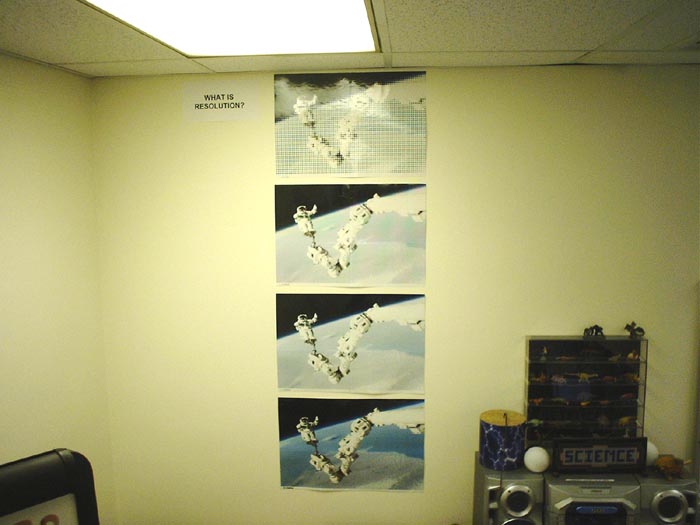
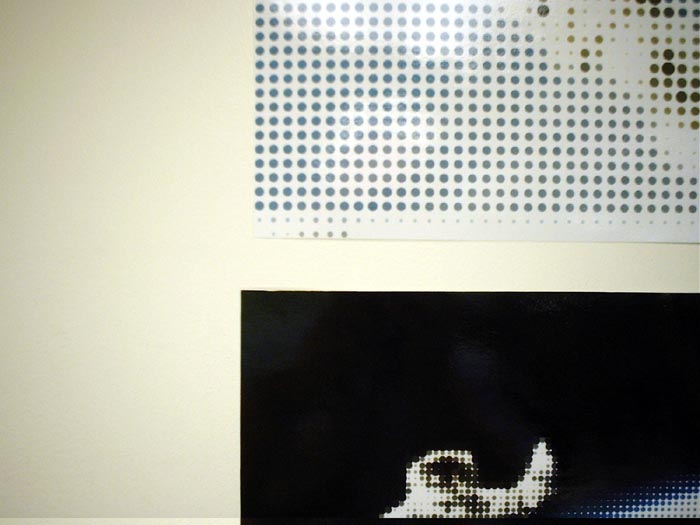
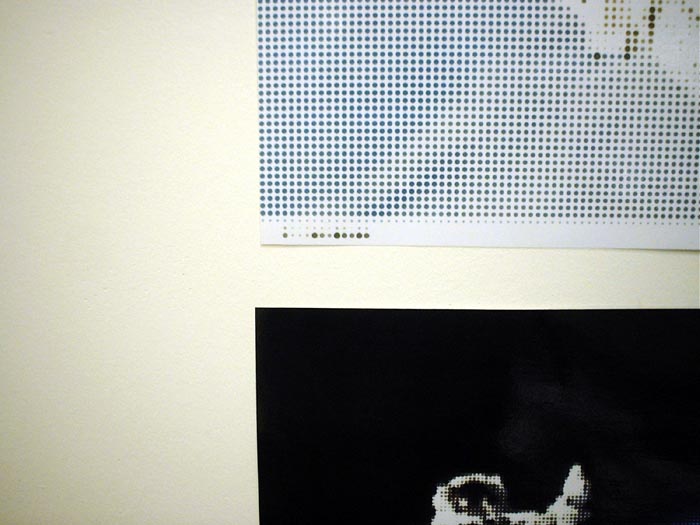
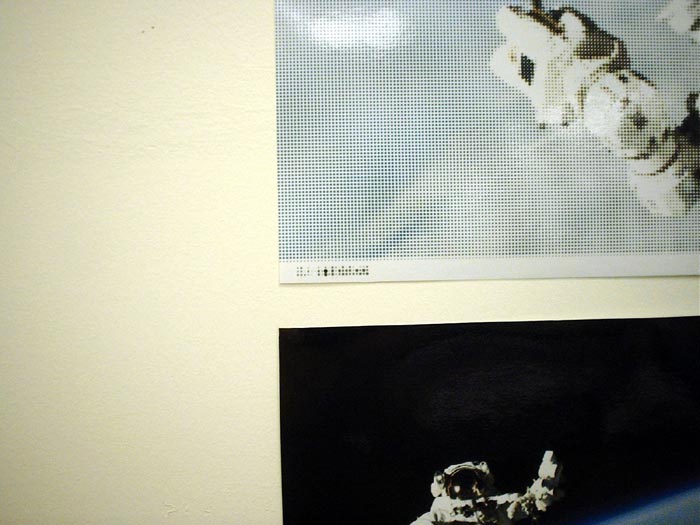
Another thing is resolving power or resolution. This is the ability to pick out fine detail. The higher the resolution, the greater the level of detail. My students have a problem with this so I made these posters to help illustrate the concept of resolution:

resolution01.jpg


resolution02.jpg


resolution03.jpg


resolution04.jpg


resolution05.jpg
 
Personally, I would take the money and invest it in a pair of binoculars. Much more versatile and much higher quality for the price.

SNIP

Thanks for the input!

In your opinion, what numbers should I look for in a pair of binoculars?

The same store has several pairs to choose from, but at the moment I forget how they list their magnification power. I'm really a novice in this area, and have no real understanding of what to look for/avoid.

Again, any input will be appreciated.

BTW:That Tasco does come with 3 eyepieces (1.25 inch-25mm, 12.5mm, 4mm eyepieces) , and a moon filter. For what that's worth :)
 
Hey everyone,
I'm kinda interested in astronomy too, but I live in an area with a pretty good amount of light pollution. What types of things could I do to see some cool things without having to find a really dark place, or spend a whole lot of money?

Thanks.
 
The 402X number (magnification power) is pretty meaningless. You can't magnify light that isn't there. The general rule for the limit of magnification is 2 times the aperture (diagonal measure of the primary mirror or lens) in millimeters. So a 60mm refractor--even with very good optics--won't go beyond about 120X. You can put in eyepieces that will give you higher magnification, but all you'll get is black.

You can do a lot with a pair of binoculars--more if you get a tripod for them. Otherwise, look for as much light gathering power as you can afford. There are some relatively inexpensive options.

Be careful of overall quality, though. I got an 8" reflector on an equatorial mount about a year ago, and it's been a struggle. Shakey mount, really sloppy focuser, etc. etc. If I had to make that purchase again, I'd have gotten a Dobsonian (a very simple alt-azimuth mount).

I'm pretty impressed with the "goto" technology--or whatever name they go by. That'll probably be my next investment. Rather than messing with an equatorial mount and polar alignment, you just identify a couple of stars in the sky, and the computer does the rest. You can then punch in either RA and Dec coordinates or Messier catalog numbers, and you hear the motors whirr then "beep beep"--voila, there is the object perfectly centered in your eyepiece!


Starseeka: in urban areas, you can still see bright objects just fine. That'd been the moon and planets and some brighter deep sky objects. (Also the ISS and other manmade satellites.) Usually, it doesn't take too long a drive to get to dark enough skies for at least some deep sky stuff.
 
I used to work in a planetarium gift shop (which was also a telescope dealer). We sold these little plastic souvenir telescopes, and people would constantly ask, "How far can you see with one of these?"

I usually told them that it depended on what they were looking at. If you were in a cave in absolute darkness and pointed it at a rock immediately in front of you, you couldn't see it. No light--nothing to magnify. If you pointed it at the Sun, I guarantee you'd be able to see about 93 million miles with it (but not for long).

Better to ask about the size of the aperture, the quality of the optics and so on.

Oh yeah, This Guy, another bit of advice: hook up with your local astronomical society or telescope club. Our club actually owns a couple telescopes that they lend out to members.
 
Thanks for the input!

In your opinion, what numbers should I look for in a pair of binoculars?

The same store has several pairs to choose from, but at the moment I forget how they list their magnification power. I'm really a novice in this area, and have no real understanding of what to look for/avoid.

Again, any input will be appreciated.

BTW:That Tasco does come with 3 eyepieces (1.25 inch-25mm, 12.5mm, 4mm eyepieces) , and a moon filter. For what that's worth :)


One thing I have learned over the years is you want a nice, large aperture. There will be two numbers on Binocs, the first is the magnification (good on binocs, bad on telescopes) The second is the size of the front lens in mm. So you will see things like 8X20 or 10X50. As stated earlier, high magnification is pretty much meaningless with a small lens. If you have a choice of 10X20 or 10X50, the 50's will collect far more light, thus providing a far better image.

Another trick of the trade, when trying out binoculars is to listen to them. Roll the focus knob and listen carefully. A clicking or popping sound may indicate the use of heavy grease to compensate for poorly-machined parts... I have heard some binocs (Albeit fairly cheap binocs) that clicked and popped horribly. It was so obvious that the machining had to be crap.


Optics are one of those cases of "You get what you pay for".
 
Oh yeah, This Guy, another bit of advice: hook up with your local astronomical society or telescope club. Our club actually owns a couple telescopes that they lend out to members.

This is the best advice. Not only do they know their stuff, but you can get experience with the scopes and see what works for you.
 
If you go with binoculars, get those fancy image-stabilizing ones. I've picked out sunspots and the moons of the Jupiter with them. But the best advice is hook up with your local astronomy club.
 
Regarding magnification. I bought a reflector a couple of years ago and as a reference I can tell you that I basically never go beyond 100X when watching deep sky objects like galaxies, star clusters etc. Most usually I will use <=50X. Many of these objcts are dim but large and to see them, light gathering power is the important consideration. Using a binocular, say 10x50, you will be able to study all Messier objects and much much more. A tripod to put it on can be helpful since it tends to put a lot of strain on your shoulders when handheld.

The only time you really want to use higher magnifications is when watching the bodies in our solar system which, unlike stars, can be made to look bigger with magnification. You won't be able to see detail on the planets using a binocular.

Regarding ligh pollution, it's astonishing how much you can see from your back yard even if the sky is bright. Many of the fainter objects like most galaxies will still be hard but f.ex. is there a number of very nice open star clusters to watch. There are also filters you can use that block the wavelenghts of suburban light to a degree and that can be a worthwhile investment if you mainly use your scope in those kinds of areas.
 
Thanks to all for the input!

In answer to those that suggested me contacting my local club, I have checked that out already. There is one near by. They meet the 3rd Thursday of each month, and the meetings are open to the public. Unfortunately, the next meeting isn't for a few weeks, but I am going to try and be there.

I think that was the same club that has open star gazing nights also (I found several clubs in the state, and the details between them are getting fuzzy).

My thoughts on what I need is just something to wet my feet with so to speak. I don't want to spend a lot of money, until I'm sure I want to. In other words, I want to play around a bit, get a taste for what can be done, and see if my interest goes up or down, before I shell out several hundred dollars on something that I might use a few times, and stick in a closet.

I checked around the Web a bit on Binocs, and there is a pair of 20x80, Zhumell, Binocs listed for about $140. That sounds like something that might fit the bill. I found some reviews that indicate other than needing a tripod (they have a tripod mount on them) they are pretty good. I'm thinking I'll see if I can find a local shop that carries them, and go check a pair out. Check for the "click" that genesplicer warned about. If not, I may take a chance on them anyway.

Thanks again for all the great input!
 
In the US, where do they sell telescopes and astronomy-grade binoculars? I realize you can find a wide variety on the internet, but I want to go to a store so I can get a better feel for the quality.

I have a telescope with a 3" lens. It's better than nothing. I was able to view Jupiter and 4 of the moons the other night, so that was pretty exciting. I was disappointed that I couldn't see the great red spot though. I tried higher magnifications, but all I could see was black. Now I know why.
 
Try camera shops, perhaps in Malls.

Wolf Camera, I think is nation wide. I found them on the Web, and I'm pretty sure they have a local shop in one of our malls. They have a store locater on their site.

I have also seen scopes in science stores. Been a few years and I forget the name, but might have been Discovery Science, or something like that. They were also in one of the shopping malls.
 
Thanks This Guy!

With Mars as near as it is, will I be able to see craters on Mars with a decent pair of mounted binoculars? Will I be able to see the rings of Saturn?
 
Well, no, nobody will see craters on mars with any earthbound telescope.

When mars was at its closest opposition a few years ago, what I could see with my Meade ETX-90 (the old non-computerized one) was a small pink ball with a white spot on one side. The white spot was the polar cap.

With 10x60 binoculars you would see a small, small pink dot that visibly has some size when the stars are just points.

A 10x60 binocular is good for the moon (you might want a filter) the sun (YOU NEED GOOD FILTERS DESIGNED FOR A BINOCULAR as this is a safety issue) Jupiter's four big moons, and sometimes Saturn's moon Titan. Saturn will, depending on the ring orientation look like a small spot or a small oval spot. Binoculars are great for looking at comets, and also at some extended deep sky objects, and for taking in star fields.

I strongly suggest going to one of those viewing parties!

But buy the binoculars anyway because everybody needs a good set.
 
In the US, where do they sell telescopes and astronomy-grade binoculars? I realize you can find a wide variety on the internet, but I want to go to a store so I can get a better feel for the quality.

I have a telescope with a 3" lens. It's better than nothing. I was able to view Jupiter and 4 of the moons the other night, so that was pretty exciting. I was disappointed that I couldn't see the great red spot though. I tried higher magnifications, but all I could see was black. Now I know why.

A 3" refractor can be a fine telescope, but you won't be able to magnify more than about 150X (probably less than that, depending on the optics and seeing conditions).

What part of the country are you in?

Again, I'd recommend checking into your local astronomy club. You can see and try out a plethora of telescope brands and models, get personal recommendations and so on, and then shop for price on the internet.

Planetarium stores sometimes have a telescope inventory (so you can try before you buy).
 
A 3" refractor can be a fine telescope, but you won't be able to magnify more than about 150X (probably less than that, depending on the optics and seeing conditions).

What part of the country are you in?

Again, I'd recommend checking into your local astronomy club. You can see and try out a plethora of telescope brands and models, get personal recommendations and so on, and then shop for price on the internet.

Planetarium stores sometimes have a telescope inventory (so you can try before you buy).

Thanks for the tips.

I live in Kansas City, MO, close to the airport.
 
Another tip. If a Telescope refers to its "Power", like "402X" That's a warning that this was not made for serious use. Real telescopes are measured by the size of the main or "primary" mirror or lens. The eyepiece should be interchangeable to change the magnification...

The 402X number (magnification power) is pretty meaningless. You can't magnify light that isn't there. The general rule for the limit of magnification is 2 times the aperture (diagonal measure of the primary mirror or lens) in millimeters. So a 60mm refractor--even with very good optics--won't go beyond about 120X. You can put in eyepieces that will give you higher magnification, but all you'll get is black.

Just to clear up some confusion, the 402x is simply the model number of the telescope, not any reference to the magnification. From the spec sheet:

Tasco Novice 402x 60mm telescope said:
Interchangeable Eyepieces:|(1.25") H25MM (25X), H12.5MM (50X), SR4MM (175X)

So they only try to get to 175X magnification (which, as JoeTheJuggler showed, probably only has enough brightness for looking at the moon anyway).
 
Varied and sundry answers...

This Guy said:
The price sits well with my wallet, but I don't want to be tossing the money out the window, on something that's going to be worthless.
Wise attitude...most "Christmas Telescopes" (those such as you refer to, given as Xmas gifts, and consigned forevermore to the attic in a month or two) aren't worth the Rule8/10 it would take to bury them. The magnifications are vastly overstated, the apertures (the real critical element) are ignored, the mounts are flimsy and wobbly. As stated a tad further on, until you learn the sky, you're much better off with a good pair of binoculars, an instructional book, a planisphere, and six months to learn what's where when. (NOTE -- I've been doing the stargazing bit for seven years now. I have more enthusiasm than ever, and I still don't know the complete sky. Learning is fun. Stargazing is relaxing. Life is good.)

This Guy and starseeka asked about what numbers to look for in a pair of binoculars, and what might be seen without a really dark place and/or outrageous amounts of money:
What to look for are fully multi coated optics (optimizes light transfer between lens elements -- there are more than a dozen separate pieces of glass in each side of a decent pair of binoculars); good sturdy construction; Porro prisms (has fewer internal reflections -- this is the standard setup in binos; you can see where the light turns by the configuration of the tubes); for handheld, magnifications between 7x and 10x, and apertures between 40 and 50 millimeters.
A pair of 7x35's are ok if you've already got 'em...if you're starting out and are buying mostly for astronomical use, my personal choices in order of preference would be -- 7x50 8x56 8x42 10x50 9x63 -- these are standard sizes, with preferences being wide field, large aperture, weight.
As far as what to see, you'd be amazed at what will pop out even in light polluted urban skies with binos. The Moon's a natural. The planets can mostly be seen with binos (Mercury, Venus, Mars, Jupiter, Saturn are naked eye if you know where to look, and Uranus and Neptune [not to mention numerous asteroids] are relatively easy bino targets -- Pluto and Eris are just too small/dim/far away), along with numerous nebulas (The Orion Nebula) and other galaxies (The Andromeda Galaxy). This is where you start going for books to advise -- may I suggest Touring the Universe with Binoculars by Phil Harrington.

The tip about checking with your local astronomical society is dead on.

Image stabilizing (IS) binoculars by their nature are of smaller aperture (10x30, for example), and they range from rather to hideously expensive. But the stable image they give prevents eyestrain and headaches. There ARE other options, though...

Here's a nice little gizmo that steadies the image and keeps your arms from getting tired.

Here's an excellent article by Ed Ting that covers just about every question asked in this thread...and besides, I like the broomstick mount picture on page 2...

Prices and who sells what?
www.telescope.com for Orion Telescopes...they have some very nice starter sets for under $100. I'm an Orion customer for telescopes and tripods, and they'll do ya good.
www.bigbinoculars.com for Oberwerk. Follow the menu -- they have numerous quality starter sets for $125 and down. I'm an Oberwerk customer (I have one of these... -- the binos, not her...), and I must say, they are the best $20 in raffle tickets I ever spent...would I have bought a set? Eventually...takes awhile to save up. Wanna drool excessively? Mommy, they followed me home...can I keep them?

The key to all of beginning astronomy is -- LEARN THE SKY!!!!! Make yourself a planisphere (Google it -- there's half a dozen places out there to download some .pdf files -- a half hour with some printouts, an old manila folder, a stapler, a glue stick, and a pair of scissors will save you some money, and they're good enough for a start). Buy a small flashlight with a RED lens -- saves your night vision looking at books./planispheres in the dark. Buy a decent book for beginner stargazers -- there are squillions of 'em out there. But most of all, GET OUTSIDE and LOOK UP!!!

Enjoy yourself...this hobby can be shared or solo. Me? I've sorta given up telescopes for my main viewing and stick with binos. I have 'em all the way from tinydinky 6x30's that hide in the glove box to 8x40WideAngles that sit on the table next to the front door to 7x50/9x63/10x50/12x60 that stay in the Box'O'Binocs that go to stargazes with me to The Monsters (Oberwerk BT80-45's noted above). I do youth and public outreach about beginning stargazing with binoculars just as we've been doing here -- indeed, I've been invited to speak at the Warren Rupp Observatory in Mansfield OH this weekend on this very subject. We shall see whether I come across as the reincarnation of Carl Sagan, or just the missing half of Pegasus...

And just for grins... www.heavens-above.com ...plug in your location, and it'll tell ya when and where to go outside and see satellites go by...naked eye, no optics needed...it's a cheap thrill to look up and realize that the light you see moving among the stars is the International Space Station...

 

Back
Top Bottom