• Quick note - the problem with Youtube videos not embedding on the forum appears to have been fixed, thanks to ZiprHead. If you do still see problems let me know.

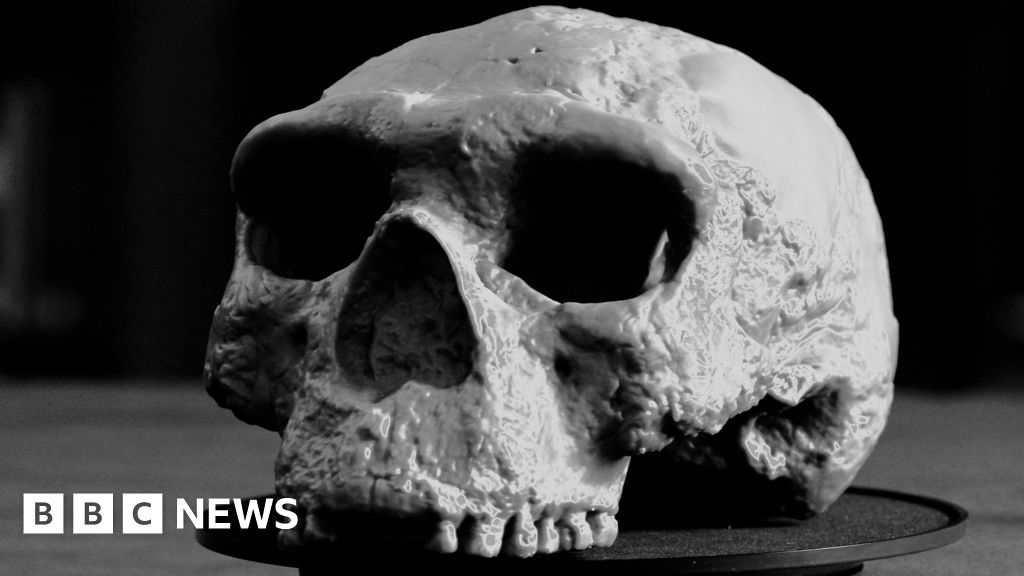
Million year old human skull?

Orphia Nay

Penguilicious Spodmaster
Tagger
Joined
May 2, 2005
Messages
52,485
Location
Australia
I'm going to bet that they're going to find their estimate is off. A million years pushes the date for human evolution back an awfully long way.
 
The method appears sound. It's been developed in peer-reviewed work for more than 20 years, published in journals of high reputation. What I learned from physical anthropology was that it's hard to generalize lineage and overall morphology from so few specimens. Even today, the little model skulls I see at the museum are no longer labeled according to the taxonomy of australopithecines I learned back in college. So my take is that the reconstruction is probably accurate, but the picture it paints may change significantly as we think more about it.
 
I wonder if it's possible, not having much great anthropological knowledge, if it's a nationalistic push by China to set the "origin" of man in China.
 
I skimmed the paper, and I didn't see where they had dated the skull. It only studied the morphological relationship of this skull to other skulls. Everything I can find about it takes the date of 1 million years as a given.
 
I skimmed the paper, and I didn't see where they had dated the skull. It only studied the morphological relationship of this skull to other skulls. Everything I can find about it takes the date of 1 million years as a given.
You mean a headline in the media about a scientific study was exaggerated?! :D
 
They didn’t date it. It was dated in reference 5.
They used electron spin resonance, on teeth. The problem can be contamination, with minerals from the environment and accurately assessing local radiation.

An English language discussion of the methodology.
 
It's hard to define exactly what counts as a "human". Anything of the genus "homo"? The farther back we go, the more monkey-like, and less "human" presumably it would be. Obviously our most recent common ancestor with other great apes can't be "human" unless we count other species of apes as fellow humans. The estimates for that vary by millions of years, but the most recent end of the range of estimates is about 5 million years ago. So 1 million years is clearly millions of years after that split, and much closer to "human" than to a chimpanzee.
 
It's hard to define exactly what counts as a "human". Anything of the genus "homo"? The farther back we go, the more monkey-like, and less "human" presumably it would be. Obviously our most recent common ancestor with other great apes can't be "human" unless we count other species of apes as fellow humans. The estimates for that vary by millions of years, but the most recent end of the range of estimates is about 5 million years ago. So 1 million years is clearly millions of years after that split, and much closer to "human" than to a chimpanzee.
Anything that could interbreed with modern humans seems like a sensible line to draw. This would include both neanderthals and the Homo Longi the article is about.
 
Well, I'm skeptical that any human, hominid, or monkey managed to live to be a million years old. (No matter how tragic they might have been.)
 
Anything that could interbreed with modern humans seems like a sensible line to draw. This would include both neanderthals and the Homo Longi the article is about.
How would you even know? I know there is some neanderthal DNA in modern humans, but I don't know about Homo Longi and more importantly it has been a long time. One line is now extinct and the other has presumably evolved to some extent since that happened.
 
Every ten years new fossil finds and new ways of looking at the geographic spread change the thinking on human origin.

It was simple when I was in gradeschool. We "knew" then how it was.
But now we have several theories in consideration and many more fossils to confuse the subject.

What we can get is there are several possible lines that merged and split over time.
 

Back
Top Bottom