
• Quick note - the problem with Youtube videos not embedding on the forum appears to have been fixed, thanks to ZiprHead. If you do still see problems let me know.

Hubble Space Telescope picture question?

Kuko 4000

Graduate Poster
Joined
Mar 2, 2008
Messages
1,586
I know next to nothing about astronomy, although everything I read about it is extremely fascinating. My question concerns the absolutely incredible pictures of planets, stars, galaxies, etc. that I've seen throughout my life in various books, internet sites, tv programs and the like.

I have problems in understanding how much of the pictures are artists renditions of the actual planets, stars, galaxies, etc. and how close are they to the actual pictures that the Hubble Telescope takes. And, how much of the pictures are what they would actually look like to me, floating in space, and having incredible zoom lense goggles?

Let's say I'm talking about pics in this page:

http://www.boston.com/bigpicture/2008/12/hubble_space_telescope_advent.html?status=complete

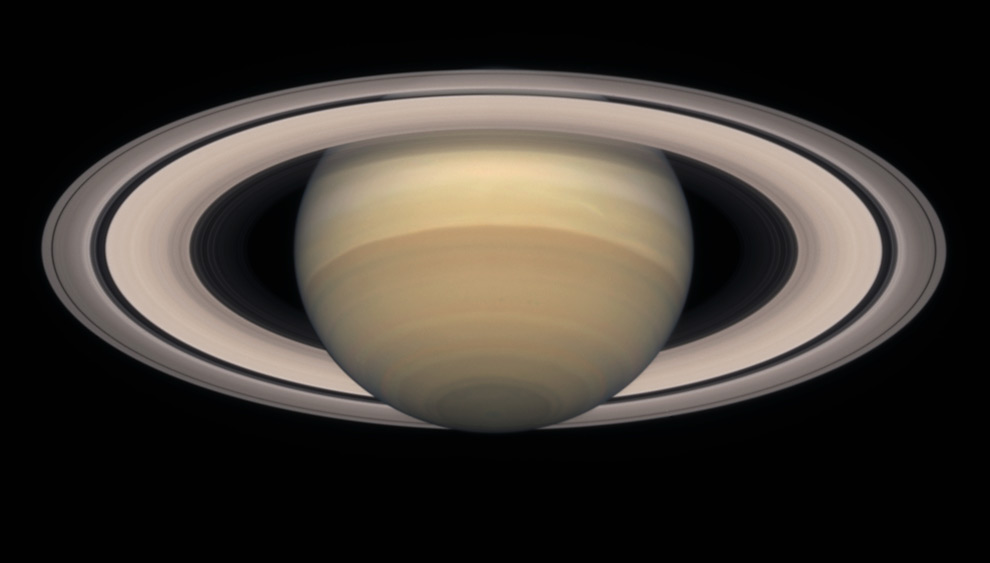
I bumped into that link in some other thread here and once again felt like I'm not really sure what I'm actually looking at, it all looks almost too incredible to be true (in the sense of not being heavily manipulated)! I started writing this post when looking at this picture of Saturn:
15_200115.jpg
 
No, the pictures do not appear like this in the original. The Hubble takes monochromatic images in different wavelength ranges, and these are then added together, with false colours for each range, to produce the images you see.

The Hubble is, first and foremost, a scientific instrument, and as pretty as they are to look at, the multiple colour images they release to the press and general public aren't much use from a scientific perspective.

ETA. in answer to your other query, the wavelength sensitivities are very well understood, so the summed, false colour images are actually very close to what you would see if you were looking from the right distance.
 
Last edited:
You mean I couldn't just float around in space, holding my breath and get a decent shot of Saturn with my 50 € camera? :D

Can somebody explain something to my ignorant ass, just for the fun of it. IF I really would be able to get in range to take a picture of Saturn with the best (common) photographic equipment available, how would it differ from the picture Kuko posted?
 
You mean I couldn't just float around in space, holding my breath and get a decent shot of Saturn with my 50 € camera? :D
Apart from the breath holding bit, yes, you could.

Can somebody explain something to my ignorant ass, just for the fun of it. IF I really would be able to get in range to take a picture of Saturn with the best (common) photographic equipment available, how would it differ from the picture Kuko posted?
Very little, although the colour gradients would probably be a bit smoother.
 
The OP should be posted with a warning. "If you click the link, be prepared to fritter away a good hour or two gawking at the images."

The shot of Saturn is a great example; just gorgeous! But the Pillars of Creation.... Wow! (Bet that pi**es off some fundies!)
 
The OP should be posted with a warning. "If you click the link, be prepared to fritter away a good hour or two gawking at the images."

The shot of Saturn is a great example; just gorgeous! But the Pillars of Creation.... Wow! (Bet that pi**es off some fundies!)

thx for the warning :)
 
Thanks Wollery, I am constantly amazed by space exploration :)

I did some quick digging:

http://hubblesite.org/gallery/behind_the_pictures/

Taking color pictures with the Hubble Space Telescope is much more complex than taking color pictures with a traditional camera. For one thing, Hubble doesn't use color film — in fact, it doesn't use film at all. Rather, its cameras record light from the universe with special electronic detectors. These detectors produce images of the cosmos not in color, but in shades of black and white.

Finished color images are actually combinations of two or more black-and-white exposures to which color has been added during image processing.

The colors in Hubble images, which are assigned for various reasons, aren't always what we'd see if we were able to visit the imaged objects in a spacecraft. We often use color as a tool, whether it is to enhance an object's detail or to visualize what ordinarily could never be seen by the human eye.

...
 
You mean I couldn't just float around in space, holding my breath and get a decent shot of Saturn with my 50 € camera? :D


We should start a company that sells "space floats", and incredible zooming lenses equipped w/ state of the art cameras. I can already see people swimming freely in space, zooming their cameras to distant stars and being controlled from ISS by future tech ultra high range individualised magnets!

You in or out, man?

Best,

Kuko, the space monkey
 
In addition to that little passage I'd like to add that the Hubble instruments are sensitive over a very wide range of wavelengths, but it isn't much use to astronomers to take images over too large a range, as it doesn't tell us much. Instead the light is passed through a filter, which limits the wavelength range. There are two main types of filter - broad band and narrow band.

The broad band filters allow a relatively wide range of wavelengths through, to let a reasonable amount of light on to the detector (in a standard broad band filter set 5 filters will cover the entire visible wavelength range). These are the filters that are usually used when making the majority of images that NASA release to the press and public, and those images are generally close to real colour.

The narrow band filters, however, allow only a very small range of wavelengths on to the detector. They are usually tuned to the wavelength emitted by a specific atomic or molecular species (e.g. atomic hydrogen, singly ionized oxygen or carbon monoxide). Using images made with these filters results in a final colour image which does not match what you'd see in reality, since the amount of light from that particular wavelength range would not normally be noticeable on its own, and they are often assigned bright colours that stand out from the other (usually broad band) colours in the image.

Also, they will often use infrared or ultraviolet images, and assign them optical colours so they can be visualised.
 

Back
Top Bottom