• Quick note - the problem with Youtube videos not embedding on the forum appears to have been fixed, thanks to ZiprHead. If you do still see problems let me know.

Black Smoke=Incomplete Combustion?

Joined
Sep 28, 2007
Messages
679
Some Truther on YouTube (The reliable information clearinghouse) sent me a message on "Fire Facts"

Dear Overlord,

It is a fact that black smoke is the result of incomplete combustion of class A fires and Class B fires. For example, when an internal engine runs to rich, that is too much fuel for the amount of oxygen, black smoke appears coming out the exhaust pipe. Note: During normal operation very little black smoke comes out of a jet engine, but if there is something wrong with the engine's ability to mix the fuel with the oxygen within the air
it will leave a trail of black smoke.

Because many of the fuel molecules are deprived of a chemical reaction with oxygen less heat is given off. Less heat is given off in comparison with a cleaner reaction that produces little or no black smoke.

In the case of 9/11, initially, we see in the videos black smoke pluming up as the jet fuel burns off. Later most of the smoke is lighter in color and lazily wisps from the sides. Because the smoke is not under a lot of pressure, pumping with force out the windows, it is likely that the temperatures are far from that required to weaken the floors so that they fall off of the center core, and collapse!
Respectfully,
Lizard

[emphasis added]

Can someone more knowledgeable in fire facts help me sort this gobbledigook out?
 
When I was in the Army, I spent a lot of time working with various field kitchen equipment, including an immersion heater used to heat water for sanitation purposes. (Nearly any soldier can tell you some funny and embarrasing or frightening stories about what happens when you operate them incorrectly.)

Designed to run on MOGAS, they will quickly bring 32 gallons of water to a boil without any appreciable smoke. You just have to adjust the carburation very carefully.

On one field problem in Korea, our MOGAS got contaminated with diesel. Even with the fuel flow turned to the lowest level at which it would sustain combustion, it smoked. Oy, did it smoke!

It also produced an impressive amount of heat. Boil a 32 gallon can in about half the time that MOGAS would.

Black smoke =/= cool flame.
 
yes black smoke does mean incomplete combustion (it means carbon is not being reacted into CO2 usually due to an excess of fuel in the presense of limited oxygen)

however as pointed out, this does not give any indication of the temperature of the fire, or how long it will burn, it simply inidcates there is more fuel than oxygen
 
When we roll up on a scene and see black smoke coming out of a building, that typically tells us the fire is really going. You will not be surprised to learn that most of the residences and businesses around here do not store large amounts of Jet A. The smoke comes mostly from the burning contents, plus wooden framing.

See the NIST dry Christmas tree fire video for an example of ordinary room contents generating thick dark smoke and getting mighty hot. Flashover (when basically everything in the room, including fire gases like carbon monoxide (ignition temp ~ 1100F), all burn at once) occurs around 40 seconds elapsed time. It's scary as heck and very impressive.
 
From http://www.slate.com/id/2145891/ :
In general, a hotter fire will convert more fuel into elemental carbon, which forms into tiny particles that absorb light and appear in the sky as black smoke. A cooler combustion—or one that doesn't work as efficiently—yields less-pure forms of carbon. These tend to reflect light, making the smoke look white.
 
Ron Weick baselessly blames Democrats for not asking questions about not finding Iraqi WMDs:
http://www.internationalskeptics.com/forums/showpost.php...4&postcount=47
"The failure to find significant amounts of prohibited weapons in Iraq raised many questions, all of which were swept under the rug by the Democrats and their media lapdogs"
Your signature, as you know, is dishonest. You refuse to correct it.


Well, the description of the quotation simply looks to be wrong. However, given that the quotation itself is also listed, the discrepancy is apparent.
 
Christmas tree was an inside job! :covereyes
I was waiting for that.

Off-topic, but it seems Blender Head and pomeroo are from opposing ends of the political spectrum... and it also seems they both think the 9/11 CTs are nuts.
 
There is no rule that says “black smoke = oxygen starved fire”. Sure, in some cases (such as a wood fire) this may be the case. However, in the World Trade Center, there was far more than wood burning. There were plastic products (computers), paper, carpet, desks, jet fuel and other items that you would expect to see in an office building, and they were all burning. The equation that "black smoke = oxygen starved fire" is highly simplistic and fails to take into account what was actually be burning in the towers.


Take for example this quote from a Health and Saftey paper.
Large fires involving plastics produce copious quantities of black smoke, such smoke is likely to be more toxic than smoke from a fire involving wood, and would render escape and fire fighting very difficult.


Furthermore, An experienced Fire Investigator John J Lentini tells us that smoke color means absolutely nothing.
While it is true that flammable liquids produce black smoke, so does any petroleum-based product. The color of the initial flame and smoke might have been important in the 1940s and 1950s when our furniture was made of cotton and wood, but most furniture today is made of nylon, polyester, and polyurethane. Even wood fires, deprived of oxygen, will produce black smoke. According to NFPA 921, Paragraph 3.6:
Smoke color is not necessarily an indicator of what is burning. While wood smoke from a well ventilated or fuel controlled wood fire is light colored or gray, the same fuel under low-oxygen conditions, or ventilation-controlled conditions in a post-flashover fire can be quite dark or black. Black smoke can also be produced by the burning of other materials including most plastics or ignitable liquids.
Light smoke may indicate that there are no petroleum products burning. Black smoke indicates nothing meaningful.

So there you have it, smoke color means nothing. In fact, the heat of the fire itself can also determine the smoke color.
The type of fuel and how hot it's burning. In general, a hotter fire will convert more fuel into elemental carbon, which forms into tiny particles that absorb light and appear in the sky as black smoke.


Again, there is no scientific law that “black smoke = oxygen starved fire”. This also applies to “lots of smoke = oxygen starved fire”. Here are some open-air fires that show black smoke in oxygen rich environments.

Image 1
Image 2
 
Here's a little test you can all run, if you feel like it, to determine whether a black, smoking flame can be as hot as a smokeless one. Have someone pour a cubic centimeter of kerosene in your right hand, and alcohol on your left. Have them light it. Observe which produces the most smoke. Observe which one hurts the most.

I'm betting it is the kerosene.

I have had both burning on my skin. Alcohol aint that bad, and it leaves a lot less soot.
 
Off-topic, but it seems Blender Head and pomeroo are from opposing ends of the political spectrum... and it also seems they both think the 9/11 CTs are nuts.


Yes, 'troof' has brought people from both sides of the political spectrum together (although apparently not in this case).

Also OT, I'm still trying to reconcile Mr. Weick's persona on this forum with that calm and collected gent in the Hardfire videos I've watched.


.
 
When I hear this question I always think of the Hemel Hempstead (Buncefield) petrol depot explosion and subsequent blaze a couple of years ago. You had thousands of gallons of petrol burning in the open air yet it was a) burning bloody hot b) you could see the column of thick black smoke it generated about 50 miles away.
 
Here's a little test you can all run, if you feel like it, to determine whether a black, smoking flame can be as hot as a smokeless one. Have someone pour a cubic centimeter of kerosene in your right hand, and alcohol on your left. Have them light it. Observe which produces the most smoke. Observe which one hurts the most.

I'm betting it is the kerosene.

I have had both burning on my skin. Alcohol aint that bad, and it leaves a lot less soot.

Good demonstration*, but won't the amount of heat transferred to your hand be related to volatility of the fuel as well as the temperature of the flame?

Alcohol is very volatile and it is likely that the majority of combustion occurs away from the skin. Whereas kerosene , being less volatile, will burn much closer to the skin transfering more energy => more pain.

* I haven't tried it... I have no intention of giving myself 1st or 2nd degree burns. :D
 
A post I made on a previous thread.

I just wanted to pick up on the smoke colour.

I happened to be reading a guide to the United Kingdom Regulatory Reform (Fire Safety) Order yesterday (don't ask!) The one I was reading was for producing a Fire Risk Assessment for Small And Medium Places Of Entertainment.

Link http://www.communities.gov.uk/pub/426/SmallandMediumPlacesofAssemblyfullguide_id1500426.pdf

At the bottom of page 16 (document page) is this paragraph.

Smoke produced by a fire also contains
toxic gases which are harmful to
people. A fire in a building with modern
fittings and materials generates smoke
that is thick and black, obscures vision,
causes great difficulty in breathing and
can block the escape routes.

This fits with my experience, and it has been mentioned by other posters here, the smoke colour is mainly influenced by what is burning, and is not indicative of oxygen starvation.

Dave
 
I see, thanks. How exactly would "incomplete combustion" affect the fires in the Towers, or in nature in general?
 
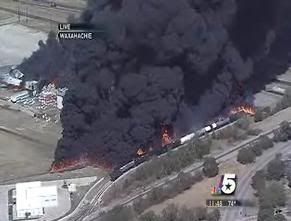
Look at all this black smoke at the chemical fire plant in Texas! looks like its oxygen starved and about to go out !

live feed

5A35AA31E6919F2AE906875D39B81508_292_292.jpg
 
Smoke itself is incomplete combustion. Black smoke has different causes. Heavy black smoke with attendant flames suggests some petroleum product-based (hydrocarbon) fire. Without attendant flames, it suggests that it's either just started or it's struggling or smouldering. Heavy volumes of other-coloured smoke without attendant flames also suggests smouldering.
 

Back
Top Bottom