On Consciousness

Is consciousness physical or metaphysical?


  • Total voters
    94
  • Poll closed .
Status
Not open for further replies.
So when the fire blackens my skin, that's the brain?

I have no horse in this race, but I was about to say that that seems like an excellent point. In fact I was going to put a :popcorn1 , for fun ;)

I'd guess that the response might be "But the painful blackening of your skin is only real in terms of brains. Either yours or an observer's brain"

I'd say it's real externally, as testified by those specialist protozoan "only charred human-skin eating bugs" that we read about.

But then our brains would have to work to observe those bugs eating only charred human skin, or surviving depite zero observation of their feeding, leading us to deduce that they're feeding without direct observation.

At the moment, I can't see Piggy's p.o.v. as having a single grain of utility. It appears to be self-referential, all tied-up and tidy and beyond debate, and essentially no more than "when the tree falls out of any earshot, does it make a sound?" conundrum.
 
Last edited:
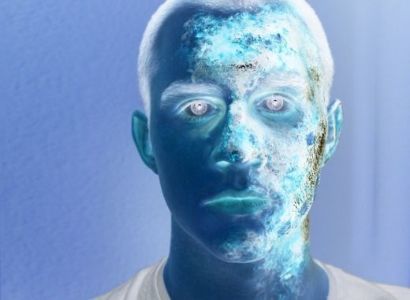
Piggy's point is that we see this:

face_burn.jpg


when we might see this:

nrub_ecaf.jpg


That is: Our brains translate visual information (for color etc: what wavelengths register, how they're represented) in a certain way; other translations are possible (the bottom photo might be a 'normal' translation for the wavelengths from a white burn victim, the top the photoshopped negative, for example); this would, of course, require our brains to be differently 'wired'.
 
Last edited:
So when the fire blackens my skin, that's the brain?

If you put it like that, yes.

The fire burns your skin if you're aware of it or not.

But the pain you feel, the sensation of heat, the brightness and color of light, the sound of fuel burning, the smell of it, and the change in color and texture of your skin… those are bodily functions.
 
At the moment, I can't see Piggy's p.o.v. as having a single grain of utility. It appears to be self-referential, all tied-up and tidy and beyond debate, and essentially no more than "when the tree falls out of any earshot, does it make a sound?" conundrum.

Actually, it's amazingly useful, powerfully so.

Once you come to see things that way, a lot of so-called problems expose themselves as non-problem, and some hopelessly vague questions begin to have concrete answers.

For example, the problem of Descarte's theater, or the homunculus, simply goes away.

Things like truth and meaning and communication and understanding begin to be things you can talk about in terms of physics.

It's quite powerful.
 
Actually, it's amazingly useful, powerfully so.

Once you come to see things that way, a lot of so-called problems expose themselves as non-problem, and some hopelessly vague questions begin to have concrete answers.

For example, the problem of Descarte's theater, or the homunculus, simply goes away.

Things like truth and meaning and communication and understanding begin to be things you can talk about in terms of physics.

It's quite powerful.

How can there be any communication at all since what we perceive of the world is totally contained in our brain?

The very word meaning becomes meaningless since there are no objective phenomenon to discuss, only perceptions in the brain and my perceptions are just as meaningful as yours so if I say a given wavelength of light is green and you say it's blue we're both right.
 
Optical illusions demonstrate that things like colors exist in the brain and not in the world.

One that comes to mind is a disk of black and white patterns that, when spun at the right rate, causes colors to appear (Benham's topWP). Where are the wavelengths of light?

I had a friend who was red/green color blind but saw colors (red and green) in black and pictures. Where were the wavelengths of light?

Or, take tinnitisWP. Where is the vibration of air?

I had a friend who hit her head and lost her sense of smell and one day said she smelled turpentine, though with my normal sense of smell didn't. Where were the turpentine molecules?

Many people who lose an arm feel intense pain in their missing hand. Where is the tissue damage?

How about synesthesiaWP? AfterimageWP?

...and so on, and so forth. Sensations are created in the brain. There's no "blue" in the world. It's in the brain and usually, but not always, caused by more stimulation of the blue sensitive cones than by the red and green ones.

Ah, this is way cool: impossible colorsWP

Also, from Opponent processWP:

Under normal circumstances, there is no hue one could describe as a mixture of opponent hues; that is, as a hue looking "redgreen" or "yellowblue". However, in 1983 Crane and Piantanida[12] carried out an experiment under special viewing conditions in which red and green stripes (or blue and yellow stripes) were placed adjacent to each other and the image held in the same position relative to the viewer's eyes (using an eye tracker to compensate for minor muscle movements). Under such conditions, the borders between the stripes seemed to disappear and the colors flowed into each other, making it apparently possible to override the opponency mechanisms and, for a moment, get some people to perceive novel colors. :
"ome observers indicated that although they were aware that what they were viewing was a color (that is, the field was not achromatic), they were unable to name or describe the color. One of these observers was an artist with a large color vocabulary. Other observers of the novel hues described the first stimulus as a reddish-green."
 
Last edited:
There's no "blue" in the world. It's in the brain and usually, but not always, caused by more stimulation of the blue sensitive cones than by the red and green ones.

So how might a 'brainless' organism specifically react to specific wavelengths such as 'the-spread-of-wavelengths-we-refer-to-as-blue'?

I agree entirely that labelling those wavelengths 'blue' is as arbitrary as labelling a certain big cat 'lion'. But lions certainly exist.
 
How can there be any communication at all since what we perceive of the world is totally contained in our brain?

The very word meaning becomes meaningless since there are no objective phenomenon to discuss, only perceptions in the brain and my perceptions are just as meaningful as yours so if I say a given wavelength of light is green and you say it's blue we're both right.

You're actually conflating things on several levels here.

First of all, we're not talking about the names of things. What we're after is determining what the phenomenology is, which can be done... for example, we can determine various types of color blindness, synesthesia, etc.

But like it or not, it's 100% true that "what we perceive of the world is totally contained in our brain". How could it be otherwise? Neural activity takes time, so by the time you're consciously aware of anything, it's over, done.

Besides, neural activity is not the same thing as light, pressure, temperature, air motion, chemicals, and so forth.

And the phenomenology -- color, sound, pain, the sense of heat, etc. -- is not the same thing as neural activity.

So your conscious experience is already twice removed from "what's out there" -- a translation of a translation.

But because we're of the same species, with brains built the same way, we can be confident that we by and large share the same phenomenal palette, just as we share similar digestive processes and cardiovascular processes.

That's how communication happens.

We now know that imagination and experience use the same real estate in the brain. To think about, say, what you're going to do this afternoon, your brain uses the same processes that are active when you're actually doing those things, just more weakly.

Meaning in the brain is activation of associations.

That's why you can't explain color to someone who's been blind from birth because of damage to the visual cortex. Their brains don't produce color, so no matter what you say, their brain isn't going to make an association by activating the bits of their brain that produce color, because they have no such bits.

But you can tell me "It's a sort of light peach shade, kind of like an orange creamcicle" and I'll know what you're talking about because those words light up areas of my brain that I use when I actually experience color, but not enough and not in the same way that would actually cause me to think that the color is really in front of me.

Truth boils down to what works, at least in its simplest form. My perception of a tree in front of me is true if that perception allows me to climb the tree or cut it down or hang a birdfeeder off it or pull fruit from it or whatever.

And it's just part of the human condition that, if I'm hallucinating, others will know there's no tree, but I won't.

When my stepfather had brain cancer, I recall he saw a dog in the back yard, which was fully real to him, even though it wasn't there. Tragic, but real. That's just how it is, like it or not.

 
So how might a 'brainless' organism specifically react to specific wavelengths such as 'the-spread-of-wavelengths-we-refer-to-as-blue'?

I agree entirely that labelling those wavelengths 'blue' is as arbitrary as labelling a certain big cat 'lion'. But lions certainly exist.

It doesn't matter how a brainless organism responds to light that makes our brains create blue.

That's like asking how a machine with no digestive system would respond to having food put into it.

And your analogy is off.

The lion exists out in the world. So do photons.

If we label a lion a "lion", we're creating a word for something out there.

Same when we label photons as "light".

But we don't call a lion "fear" -- we don't say that our bodily response to the lion IS the lion.

Similarly, when we're thinking clearly, we can't say that the light is "blue" because that's simply our body's response to it.

The lion is not fear, the light is not blue.

Of course, in common parlance, it's easier to talk about blue light than about light which makes our brains perform blue.

But we can't use common parlance here. We have to be more rigorous.
 
So colours and other perceptions are representations in the brain. Any consciousness, artificial or otherwise, will have representations of reality. Representations of light waves can safely be called colours no matter how exactly they are produced, and the same goes for air waves and sound, and all other perceptions. Why do some people claim that AI cannot experience colours?
 
Why do some people claim that AI cannot experience colours?

I'd like to hear again from those who claim it, but I'm sure it's in part wishful thinking. If AI can have subjective experiences like us, it makes some feel less special. Somewhere in this thread someone has indeed said they find the suggestion that we are data processing machines to be offensive, or something to that effect. It's the old "I am not a robot!" appeal to emotion. It's pretty much DOA as an argument against strong AIWP, but it does expose their wishful thinking bias.
 
So colours and other perceptions are representations in the brain. Any consciousness, artificial or otherwise, will have representations of reality. Representations of light waves can safely be called colours no matter how exactly they are produced, and the same goes for air waves and sound, and all other perceptions. Why do some people claim that AI cannot experience colours?

Well, it can get you into trouble even calling them "representations" -- what's anger a representation of, or dreams, or hallucinations? -- but we'll skip that for now.

The reason our consciousness forms such things is because of our evolutionary history.

But an artificial brain would have no such history, so you could build one (in theory) that simply produced moving scapes of sound, color, odor, pain, and pleasure.

Now, there's another distinction that we DO need to make, and make clearly.

Intelligence and consciousness are NOT the same thing. So discussing "AI" isn't the same thing as discussing machine consciousness.

Right now, no machine can generate phenomenology because nobody knows how the brain does it, so we can't design a machine to do it, much less build one.

You can build a machine that reacts to light, and reacts differently to different types of light, but that machine isn't producing colors because it hasn't been built to do that.

Similarly, flies don't have a robust enough mental hardware to produce consciousness, so although a fly can respond to light, we know it doesn't perform color as a response.

And if you want to say that color is somehow associated with light in some intrinsic way, then you have to explain (1) which color, because different brains can respond with different colors, or no color, or in certain people with other events such as sounds or flavors, and (2) how the event can possibly be connected with the light that caused it, when that light is now far away.

Brains perform colors because they're built to do that.

To make a machine do the same, it also has to be built to do that.

Just making a machine respond to light, even in a way that distinguishes among various wavelengths, frequencies, and amplitudes, doesn't magically cause it to also perform functions -- such as colors -- that it hasn't been designed and built to perform.
 
flies don't have a robust enough mental hardware to produce consciousness, so although a fly can respond to light, we know it doesn't perform color as a response.

How, precisely, do we know that?
 
How, precisely, do we know that?
Indeed. I hope Piggy will answer both halves of the question: how do we know that flies are not conscious (which is the same as asking how do we know what mental hardware is necessary), and how do we know that flies do not have colour representations in their brains?

ETA: And I hope that the answer will not be a variation of "because they do not have human brains".
 
Last edited:
How, precisely, do we know that?

Because of the structures involved in consciousness and their evolutionary history.

There's nothing in a fly that is anywhere close to the hardware that's involved in consciousness.
 
Indeed. I hope Piggy will answer both halves of the question: how do we know that flies are not conscious (which is the same as asking how do we know what mental hardware is necessary), and how do we know that flies do not have colour representations in their brains?

ETA: And I hope that the answer will not be a variation of "because they do not have human brains".

Consciousness is characterized by the simultaneous integration of brain activity which produces a unitary phenomenal experience. (You can't decide to just see the cloud's shape or just its color, for example.)

The signatures of consciousness are activity in certain areas of the brain stem, synchronous pulses of neural activity across the more highly evolved areas of cortex, and the presence and coherence of 3 deep brain waves.

How that produces events such as colors and smells and sounds, nobody knows. We're not even sure how to think about it yet.

But when you look at a fly, it's pretty easy to see that nothing at all similar is going on, or could go on.

If it turns out flies are conscious, it will be a big surprise.
 
Indeed. I hope Piggy will answer both halves of the question: how do we know that flies are not conscious (which is the same as asking how do we know what mental hardware is necessary), and how do we know that flies do not have colour representations in their brains?

ETA: And I hope that the answer will not be a variation of "because they do not have human brains".

Because of the structures involved in consciousness and their evolutionary history.

There's nothing in a fly that is anywhere close to the hardware that's involved in consciousness.

You called it.:D
 
Status
Not open for further replies.

Back
Top Bottom