Apple vs Samsung let the fun begin.

That you are, supposedly, an expert on patents seems to be the very reason you are blind to several of the multitude of reasons why the system is horribly broken.

This really smacks of the typically woo argument of "All the experts are sheep! Only us outsiders who have never actually bothered to learn anything about this subject area can be trusted to know the truth!"

It just doesn't hold up to basic scrutiny. Everything else equal, the patent attorney, patent examiner, and experienced patent applicant in this thread deserve more deference regarding the proper assessment of facts than the other members of the thread with little to no experience or education in this area.
 
No, but I deal with real patent issues in a real workplace.

I know that my opinion matters not at all in whether a patent gets issued and whether a patent survives a challenge.

Guys go to school for YEARS to become patent attorneys - along with Admiralty law, Patent law is one of only two recognized specializations in the legal profession. There are literally TONS of TOMES on patent law.

So the chance that I know the answer to a question like that is small, and unless you also have 35 years of an engineering career behind you, the chances you know the answer is approximately nil.

So are you also opinion-less with regards to Apple vs Samsung? Or is it just when Apple may have ripped off ideas (as Steve Jobs himself said they were shameless about) that you reserve judgement?

I admit that I don't know if is enough for a patent violation. But it was very clearly borrowed from Android. My point is that that it is that everybody borrows ideas from each other. It is not just Apple coming up with ideas and those ideas being stolen. And Apple looks like the bad guy for declaring "thermonuclear war" on Android when they are perfectly willing to use ideas from Android that they like.
 
Last edited:
At this point, ridicule is entirely appropriate.

We don't accept that sort of willfully ignorant nonsense from woos, why should I accept it here?

Well, just as long as you understand that being uncivil is a breach of the MA.
 
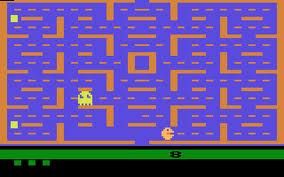
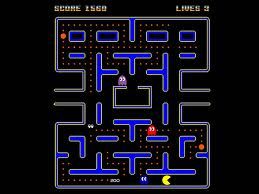
...in a maze, while being chased by ghosts, looking like a pie with a piece missing, and making "waka waka waka" sounds.

But then, I've given up hope that you'll ever understand that.

Pacman ATARI and Pacman arcade :

pacmanatari.jpg


pacmanarcade.jpg
 
No, that fee is not out of line at all, Tyr 13.

Nobody HAS to license any patents at all. A patent is an exclusive right for 14 years.

If Apple wanted to, it could simply deny Samsung the patents. To license them at all is a gesture of goodwill.

Depends on the territory and how the patents are viewed in that territory. Given the breadth of Apple's claims if it was successful it would probably end up being legally forced to licence at least some of those patents for a low fee.
 
Because this field, phone software, is the one being horribly abused. Compare it to the previous 40 years of video game software to see how the system should actually work.

I do think video games is a very good example, if the patent legislation had been the same back in the 80s (and we had the same type of patent-trigger happy companies) the industry would have been strangled at birth.
 
...snip...

So the chance that I know the answer to a question like that is small, and unless you also have 35 years of an engineering career behind you, the chances you know the answer is approximately nil.

Think you've rather forgotten that this case will be decided by a jury, all of which I am 100% certain are not patent lawyers.
 
Pacman ATARI and Pacman arcade :

[qimg]http://i482.photobucket.com/albums/rr188/VERONICA5555_album/pacmanatari.jpg[/qimg]

[qimg]http://i482.photobucket.com/albums/rr188/VERONICA5555_album/pacmanarcade.jpg[/qimg]

Pac-Man's copyright was successfully defended quite a few times, it was one of the key IPs that lead to the licensing model (of IP) in the computer games field. I'll try to find some links but this was pre-internet so not sure what will be on-line.

ETA: Should have known, everything is on the internet! :)

1982 http://www.patentarcade.com/2005/04/case-atari-v-north-american-phillips.html
1983: http://www.davis.ca/en/entry/video-...-copyright-trademark-of-pac-man-case-summary/
And still being defended in 2010: http://www.techdirt.com/articles/20100730/17081510430.shtml
 
Last edited:
So the chance that I know the answer to a question like that is small, and unless you also have 35 years of an engineering career behind you, the chances you know the answer is approximately nil.
How many years of an engineering career does Judge Koh have? The jury?
 
How many years of an engineering career does Judge Koh have? The jury?

The judge has years and years of practice in this sort of law.

The jury, like all juries, can be assumed to know nothing at all, and the trial educates them in both the law and the facts, and the judge gives them instructions on how they should resolve the case.

And this is how patent cases have been decided in the USA for 222 years.

From the Audion tube to the Zamboni.
 
The judge has years and years of practice in this sort of law.
As far as I can tell her experience in patent law goes only from 2002-2008. She began her career as a "Women's Law and Public Policy Fellow".

The jury, like all juries, can be assumed to know nothing at all, and the trial educates them in both the law and the facts, and the judge gives them instructions on how they should resolve the case.

And this is how patent cases have been decided in the USA for 222 years.

From the Audion tube to the Zamboni.
By your own criteria Koh is completely unqualified to decide this case.

Compare/contrast Koh's career to Richard Posner's career.
 
Think you've rather forgotten that this case will be decided by a jury,

Only some aspects are decided by the jury. Other aspects are decided by the judge.

And, in many cases, the judge rules on a controlling question (like invalidity) and it will never reach a jury.
 
Only some aspects are decided by the jury. Other aspects are decided by the judge.

And, in many cases, the judge rules on a controlling question (like invalidity) and it will never reach a jury.

How is that meant to add anything to the snippet you quoted, the jury decides on the verdict and I am 100% sure that none of the jury are legal patent lawyers with decades of experience behind them. Nothing you stated contradicts what I said nor even expands on it.
 
How is that meant to add anything to the snippet you quoted, the jury decides on the verdict <snip>

Again, this is an oversimplification and not even always true.

Patent questions are an unusual and delicate mixture of questions of fact and law, and often the outcome will turn entirely on a question of law - which means that the "verdict" isn't decided by the jury at all in those cases. You can't take for granted that the jury is the controlling party in all cases. Often it's the judge.
 
Again, this is an oversimplification and not even always true.

This is called a strawman i.e. you have made up the point that you attribute to me i.e. that I have argued that a jury always makes the decision on a verdict and then you attack the made-up position.

I have been talking about this specific case not all cases and in this case it is the jury that will make the decision regarding the verdict.

Patent questions are an unusual and delicate mixture of questions of fact and law, and often the outcome will turn entirely on a question of law ...snip...

That is hardly unusual it is what most legal trials are about.

- which means that the "verdict" isn't decided by the jury at all in those cases. You can't take for granted that the jury is the controlling party in all cases. Often it's the judge.

You don't seem to understand that this case will be decided by the jury. A jury that will not have one "expert" on patent law or other forms of IP law.
 
That is hardly unusual it is what most legal trials are about.

No, most legal trials are about questions of fact. If you have a jury trial at all, then you are evaluating at least one question of fact in addition to questions of law. Otherwise you don't bother with a jury.

From your response, it appears you don't recognize the legal distinction between a question of law (a matter of legal interpretation determined by an officer of the court and usually subject to de novo review) and a question of fact (a matter of interpretation of the evidence determined by a fact-finder, often a jury, and usually subject only to review for clear error). Both are the subject of legal procedings; both are involved in this case; either can control the outcome (as should be obvious from the fact that Posner's Apple case was decided based on a question of law review that didn't require a jury).

In practice, it looks like this case may be decided by a question of fact infringement ruling by the jury -- but this is not necessarily the case, nor should that make you think the jury makes the only verdict coming down here.
 
No, most legal trials are about questions of fact.

No the two aspects are usually part and parcel of the what a trial is about.
If you have a jury trial at all, then you are evaluating at least one question of fact in addition to questions of law. Otherwise you don't bother with a jury.

So as I have stated in this case a decision will be made by a jury, one that is not composed of IP legal experts. That is a fact about this case.

From your response, it appears you don't recognize the legal distinction between a question of law (a matter of legal interpretation determined by an officer of the court and usually subject to de novo review) and a question of fact (a matter of interpretation of the evidence determined by a fact-finder, often a jury, and usually subject only to review for clear error). Both are the subject of legal procedings; both are involved in this case; either can control the outcome (as should be obvious from the fact that Posner's Apple case was decided based on a question of law review that didn't require a jury).

In practice, it looks like this case may be decided by a question of fact infringement ruling by the jury -- but this is not necessarily the case, nor should that make you think the jury makes the only verdict coming down here.

Again - all of which does not alter, contradict nor expand one iota on what I initially stated that you objected to i.e. that this case will be decided by a jury who will not be experts in matters of IP or IP law.
 
Again - all of which does not alter, contradict nor expand one iota on what I initially stated that you objected to i.e. that this case will be decided by a jury who will not be experts in matters of IP or IP law.

Absolutely it does. You're stating as a certainty that this case will turn on the jury ruling (I assume you mean the jury ruling on infringement). I'm telling you that this is often not the case and may not be the case here.
 

Back
Top Bottom