• Quick note - the problem with Youtube videos not embedding on the forum appears to have been fixed, thanks to ZiprHead. If you do still see problems let me know.

Miracle of the Shroud / Blood on the shroud

Status
Not open for further replies.
- I would start with the blood evidence. The blood evidence appears to require that the Shroud covered an actual crucified body that was crucified in a manner entirely consistent with Roman crucifixions of the first century and, in particular, with the crucifixion of the Biblical Jesus.

Even if you could prove that real blood was on the shroud in the right places, how would that be evidence against a 14C fake which is supposed to simulate the crucifiction of Jesus?
:confused:
 
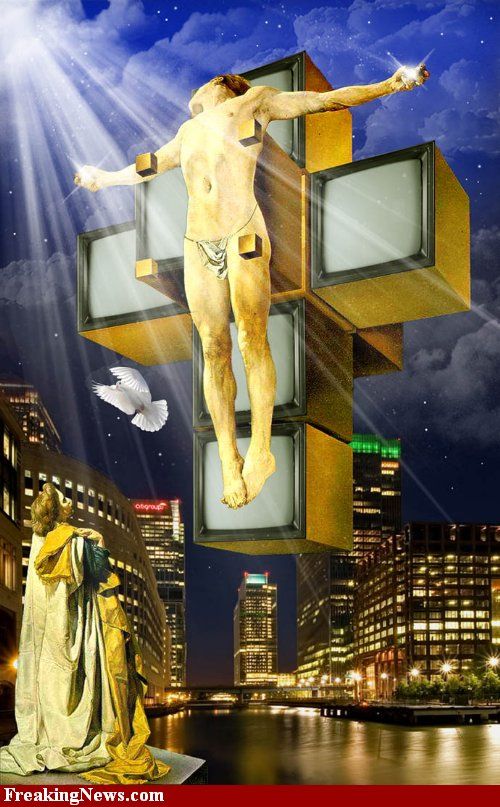
Modern-Crucifixion-in-Boston--41845.jpg


The above image depicts the crucifixion of Christ. Therefore it must have been created in the 1st Century AD.
 
...- Do you have access to what the various experts did (before the cutting, during the dating process and/or during the conservation efforts of 2002) in order to conclude that there was no patch in the carbon dating sample?

All of this information has been linked up in this very thread, IIRC.

- There's a lot of evidence that conflicts with the results of the dating.
- I would start with the blood evidence. The blood evidence appears to require that the Shroud covered an actual crucified body that was crucified in a manner entirely consistent with Roman crucifixions of the first century and, in particular, with the crucifixion of the Biblical Jesus.
- I will try to start presenting the specific evidence as soon as I've done what I can towards explaining how a patch could have gotten past the experts. ..

You really think a patch would have escaped the experts, given the nature of an invisible weave?

For the benefit of newcomers, what evidence is there the blood has been dated to the 1st century?
 
Pakeha,
- There's a lot of evidence that conflicts with the results of the dating.
- I would start with the blood evidence. The blood evidence appears to require that the Shroud covered an actual crucified body that was crucified in a manner entirely consistent with Roman crucifixions of the first century and, in particular, with the crucifixion of the Biblical Jesus.
- I will try to start presenting the specific evidence as soon as I've done what I can towards explaining how a patch could have gotten past the experts.

--- Jabba
Why is it so difficult to understand that a fake being consistent "with Roman crucifixions of the first century and, in particular, with the crucifixion of the Biblical Jesus" is absolutely unremarkable?

Were details of crucifixion unknown in the 14th C?
Was there a shortage of blood in the 14th C?
Was there a shortage of people that had died violently in the 14th C?
Was there a shortage of people who looked something like the Italian-artistic notion of JC's appearance in Italy in the 14th C?

Which doesn't prove it's a fake of course ... It the 14C evidence that proves it's a fake.
 
Marduk said:
Even if you could prove that real blood was on the shroud in the right places, how would that be evidence against a 14C fake which is supposed to simulate the crucifiction of Jesus?
That's my question. Is Jabba REALLY arguing that one of the more recognizable and widely-known execution methods couldn't have been reproduced in the 14th century?

Also, as I recall the shroud's wounds ARE NOT consistent with Roman crucifixions. The nails in the feet go in sideways in real crucifixions, while the shroud shows wounds in the front of the feet.

Besides, blood isn't exactly a rare commodity. The artist could have used their OWN blood--you can give a pint without much in the way of ill effects (dizzyness is the biggest one--Homer Simpson once used it to help himself simulate getting drunk).

Jabba said:
- There's a lot of evidence that conflicts with the results of the dating.
There's a lot of evidence--but in all these pages of thread you've yet to present any. Odd, that.
 
That's my question. Is Jabba REALLY arguing that one of the more recognizable and widely-known execution methods couldn't have been reproduced in the 14th century?

Also, as I recall the shroud's wounds ARE NOT consistent with Roman crucifixions. The nails in the feet go in sideways in real crucifixions, while the shroud shows wounds in the front of the feet.
.

He's probably read Sorensen
■The plethora of artistic depictions of Jesus from the first through the sixteenth centuries showed him as being nailed to the cross through the hands, whereas in the Shroud image he is nailed through the wrists. As indicated above, nailing through the hands would not have supported a man’s weight, and the purported artist would have had to have known this fact and gone against all artistic precedent.
http://www.shroud.com/pdfs/sorensen2.pdf
and hasn't heard of St Francis of Assisi
He wondered anxiously what this vision could mean, and his soul was uneasy as it searched for understanding. And as his understanding sought in vain for an explanation and his heart was filled with perplexity at the great novelty of this vision, the marks of nails began to appear in his hands and feet, just as he had seen them slightly earlier in the crucified man above him. His wrists and feet seemed to be pierced by nails, with the heads of the nails appearing on his wrists and on the upper sides of his feet, the points appearing on the other side
:rolleyes:
 
Last edited:
The Blood

Even if you could prove that real blood was on the shroud in the right places, how would that be evidence against a 14C fake which is supposed to simulate the crucifiction of Jesus?
:confused:
Marduk,

- Not just that the blood is in the right places -- the blood has characteristics, invisible to the naked eye, that essentially prove that it came directly from the wounds on the body represented by the image. In other words, there seems to be no way to avoid the conclusion that the body of a tortured and crucified man was directly responsible for the image and blood stains on the Shroud. In still other words, the image has to be some kind of imprint of a crucified human being.
- Then, we know that if it was somehow forged, and forged within the time frame indicated by the carbon dating, someone had to be deliberately crucified for a piece of art and by an artist that knew how to create such an imprint.
- And finally in other words -- surely, the carbon dating results must have been wrong...

--- Jabba
 
Could you please cite your sources for claiming
the blood has characteristics, invisible to the naked eye, that essentially prove that it came directly from the wounds on the body represented by the image. In other words, there seems to be no way to avoid the conclusion that the body of a tortured and crucified man was directly responsible for the image and blood stains on the Shroud.
 
- Then, we know that if it was somehow forged, and forged within the time frame indicated by the carbon dating, someone had to be deliberately crucified for a piece of art and by an artist that knew how to create such an imprint.
Okay. So what? It's not like this can't happen again. We're not talking about some obscenely rare and difficult-to-reproduce execution style here. We're talking about one of the most widely-known executions IN HISTORY, and it amounts to four nails and two bits of lumber. Besides, in a traditional Roman crucifixion, given all the archaeological data we have (which I've linked to before, and which you've promptly ignored) the wounds on the feet should be about where the big bones stick out on your ankles--meaning it wouldn't show up as a single pool of blood at the feet.

So it's entirely plausible that some pilgrim did something he thought was horrendous, and the monks he went to saw a golden opportunity. "The only way to absolve your sins, my son, is to bring yourself closer to Christ, and like Christ to be put to death on the cross. Oh, this cloth? Nothing special--it's laundry day. This powder? Well, they tortured Christ, right? How do YOU know what tortures they used?!"

- And finally in other words -- surely, the carbon dating results must have been wrong...
Because a cloth that's a few centuries old has blood on it. By that logic my SHIRT is from the 1st century--it has blood on it too!
 
Marduk,

- Not just that the blood is in the right places -- the blood has characteristics, invisible to the naked eye, that essentially prove that it came directly from the wounds on the body represented by the image. In other words, there seems to be no way to avoid the conclusion that the body of a tortured and crucified man was directly responsible for the image and blood stains on the Shroud. In still other words, the image has to be some kind of imprint of a crucified human being.
- Then, we know that if it was somehow forged, and forged within the time frame indicated by the carbon dating, someone had to be deliberately crucified for a piece of art and by an artist that knew how to create such an imprint.
- And finally in other words -- surely, the carbon dating results must have been wrong...

--- Jabba

Oh in that case it must be a miracle, if the body was still bleeding three days after it was taken down
:rolleyes:
You're not listening to what you're saying are you, no error warnings at all, it simply hasn't occurred to you that you don't have a shred of evidence because you have convinced yourself that your faith is dependant on a fake medievil artifact.
Jesus won't be happy
 
Last edited:
Marduk,

- Not just that the blood is in the right places -- the blood has characteristics, invisible to the naked eye, that essentially prove that it came directly from the wounds on the body represented by the image. In other words, there seems to be no way to avoid the conclusion that the body of a tortured and crucified man was directly responsible for the image and blood stains on the Shroud. In still other words, the image has to be some kind of imprint of a crucified human being.
- Then, we know that if it was somehow forged, and forged within the time frame indicated by the carbon dating, someone had to be deliberately crucified for a piece of art and by an artist that knew how to create such an imprint.
- And finally in other words -- surely, the carbon dating results must have been wrong...

--- Jabba

Please explain how point one and two here result in point three. It honestly seems to be a non sequitur to me.
 
Marduk,

- Not just that the blood is in the right places -- the blood has characteristics, invisible to the naked eye, that essentially prove that it came directly from the wounds on the body represented by the image. In other words, there seems to be no way to avoid the conclusion that the body of a tortured and crucified man was directly responsible for the image and blood stains on the Shroud. In still other words, the image has to be some kind of imprint of a crucified human being.
- Then, we know that if it was somehow forged, and forged within the time frame indicated by the carbon dating, someone had to be deliberately crucified for a piece of art and by an artist that knew how to create such an imprint.

None of which is implausible. People let themselves be crucified (non-lethally) every year, even today, for the sake of religious ceromony (and no doubt personal karma).

However, none of the above is necessary. As it is (a fact you consistently ignore) the SoT does not actually fit a human body well, because the front and back of the head are too close. Instead, the imprints could come from some effigy, or have been made carefully, by hand.

Remember, these guys were trying very hard to fool everybody.

Also, stop speaking as if it has been proved to be blood. It hasn't. There is evidence both con and pro, so the issue is at best undecided.

- And finally in other words -- surely, the carbon dating results must have been wrong...

No, that does not follow.

Hans
 
Marduk,

- Not just that the blood is in the right places -- the blood has characteristics, invisible to the naked eye, that essentially prove that it came directly from the wounds on the body represented by the image. In other words, there seems to be no way to avoid the conclusion that the body of a tortured and crucified man was directly responsible for the image and blood stains on the Shroud. In still other words, the image has to be some kind of imprint of a crucified human being.
- Then, we know that if it was somehow forged, and forged within the time frame indicated by the carbon dating, someone had to be deliberately crucified for a piece of art and by an artist that knew how to create such an imprint.
- And finally in other words -- surely, the carbon dating results must have been wrong...


--- Jabba
As others have already begun to tell you, (1) the idea that it is blood is far from proven, (2) the idea that the shape of the "stains" is correct for a crucified body is largely a fit of over-eager imaginations. Combined with the fact that a three day old body would not have flowing blood and combined with the carbon dating, your own blood "evidence"proves that it is not the Burial cloth of Jesus. Most likely, as the Church itself pointed out, it is a fraud. But If you would like to believe it was from a real crucifixion, that is okay by me. It just wasn't Jesus's burial cloth.

Once again: the carbon dating states conclusively it was not the burial cloth of Christ; the "blood" may say what it really is, but cannot negate the carbon dating in any way!
 
Marduk,

- Not just that the blood is in the right places -- the blood has characteristics, invisible to the naked eye, that essentially prove that it came directly from the wounds on the body represented by the image. In other words, there seems to be no way to avoid the conclusion that the body of a tortured and crucified man was directly responsible for the image and blood stains on the Shroud. In still other words, the image has to be some kind of imprint of a crucified human being.
- Then, we know that if it was somehow forged, and forged within the time frame indicated by the carbon dating, someone had to be deliberately crucified for a piece of art and by an artist that knew how to create such an imprint.
- And finally in other words -- surely, the carbon dating results must have been wrong...

--- Jabba


Sorry, but the above is again all 100% total nonsense. You do not know any of those things at all.

What you are claiming above does not come from your own examination of the shroud, does it!

What you are actually saying above is that you believe the above is true because you have read those claims from Christian shroud fanatics on religious shroud websites where they claim the red stains on the shroud are 1st century blood from Jesus Christ ... and where they further claim that the position of the human image is correct for a 1st. cent. crucifixion.

These are claims from Christian shroud fanatics. But they are not supported by any properly published science ... are they?

OK, so tell me this - How do YOU know the red marks are blood? Where did you get that idea from?

- How do YOU know the image "must" have come from a real dead body of a crucified man? Where did you get idea from, who told you that?


In case you again try to duck the answers (as you have for 40 pages now). I'll answer those questions for you -

- you got those ideas entirely and completely from Christian shroud fanatics on the internet. Right?

- you yourself have no idea whether there is any blood on the shroud, right?

- and you yourself actually have no idea whether the image could only come from a real crucified human person, do you?


Claims like that are frankly 100% worthless unless you can show genuine independent scientific testing with published results showing that red marks on the shroud are entirely due to blood which can be dated to the 1st century. But no such tests have ever been done, have they?

What you are trying to do is quite clearly to divert attention away from the fact that you have no answer to the C14 dates, and now you are trying to switch the discussion to the claims of shroud fanatics who believe that the red marks on the shroud are the blood of Jesus Christ!

 
Marduk,

- Not just that the blood is in the right places -- the blood has characteristics, invisible to the naked eye, that essentially prove that it came directly from the wounds on the body represented by the image.
Even if you could actually demonstrate this, which I doubt, it does nothing to discriminate between real and fake.
But let's be indulgent for a moment and ignore the wealth of evidence it's fake. Say it is from a man crucified to death.
So JC was the only person to receive this punishment? Hardly. The Romans crucified who knows how many? It was 6,000 on one occasion alone (Kirk Douglas included :))
Why, according to the biblical story, 2 others were crucified the same day as JC: How do you know your devotion to this thing isn't to one of the thieves? (This is silly of course but totally in keeping with your idea of reasoning)

In other words, there seems to be no way to avoid the conclusion that the body of a tortured and crucified man was directly responsible for the image and blood stains on the Shroud.
In still other words, the image has to be some kind of imprint of a crucified human being.
- Then, we know that if it was somehow forged, and forged within the time frame indicated by the carbon dating, someone had to be deliberately crucified for a piece of art and by an artist that knew how to create such an imprint.
Because no one would go that far?
A news story from 2010
http://www.telegraph.co.uk/news/wor...s-crucify-themselves-to-mark-Good-Friday.html
Devout Catholics in the Philippines had themselves nailed to crosses while others whipped themselves until the blood flowed in a gruesome ritual to mark Good Friday.

crucifix_1609158c.jpg

- And finally in other words -- surely, the carbon dating results must have been wrong...

--- Jabba
You don't prove anything this way let alone disprove the 14C results.
 
Dave,

- I'm still looking around for a better answer to the trace element argument, but so far, I haven't found any...
- So far, the best I can do is the same as you suggested -- i.e., we can't seem to get the figures re the trace elements on the Raes sample, and consequently, don't really know how similar the readings between them and the larger Shroud are. This, then, leaves open the possibility that the similarity isn't all that unexpected -- even if one set is from 1st century Palestine and the other is from 14th century France.
- My next best answer is that a mistake was -- or mistakes were -- made in the trace element measurements.
- My next best answer is that the similarity is simply coincidental...

- I concede that none of these is very likely, but I keep pushing on because I perceive that the overall evidence regarding Shroud authenticity makes a 14th century (or earlier) forgery even more unlikely... I may be stuck behind a rock, but, I'm also stuck behind a harder place from the other direction -- which is why I'm trying to bring in the blood evidence (part of that "harder place").

- I will also be seeking some help as to how a patch wouldn't be recognized -- at least once -- by the various experts examining the Shroud over the last several decades...

--- Jabba


Back on page 59, Davefoc posted the following with a quote from the 1980 report by Schwalbe and Ray Rogers -

Reference 7 is a paper by Schwalbe and Rogers: PHYSICS AND CHEMISTRY OF THE SHROUD OF TURIN A Summary of the 1978 Investigation. This paper is just a summary of the work done by others so even here one can't find the original source for Antonacci's claim. The most relevant part of the Schwalbe/Rogers paper with regard to this issue may be contained in note 6 of their report:

Quote:

6. Morris et al. [9] were concerned that the detected trace elements may not have been uniquely associated with the Shroud. The ambiguity arose because the Holland backing cloth could not be removed from the Shroud for the measurements; technically, their data pertain to the double-cloth system. However, thirteen threads, removed from non-image, non-blood areas of the Shroud in November 1973 [41], were brought to America following the Turin study. X-ray fluorescence measurements were made on these with isotope sources of 55Fe, 109Cd, 145Sm, and 57Co for counting periods of 500-1000 min. These results showed roughly the same relative concentrations of calcium,strontium,and iron that were observed in the original 1978 Turin data. In addition, they showed smaller traces of potassium, chlorine, and possibly lead. The small sizes of the thread samples precluded quantitative estimates for these traces, but the later results suggest that the reported Turin measurements do pertain to the Shroud. It sounds like the purpose of the original X-ray fluorescence testing of the thirteen threads was to establish that the results from the X-ray
.


In that Quote, STURP member Rogers is himself claiming that STURP's own X-ray fluorescence tests were made on both the main shroud itself (inc the backing cloth) AND also on 13 threads from the Raes sample, with the result that the relative concentrations of Calcium, Strontium and Iron were found to be similar for both the Raes threads (without the backing cloth) and the main body of the shroud (with it’s backing cloth).

That’s what STURP themselves were claiming in 1980.

That was ten years before Rogers and STURP knew that C14 results would later show the shroud to date from the 13th-14th century.

So in 1980, Ray Rogers on behalf of STURP was writing to say that their X-ray fluorescence results confirmed that the Raes threads were indistinguishable from the rest of the shroud. But then 25 years later, when Rogers wanted to discredit the C14 dates, he was writing to say that threads claimed to be from the C14 sample, which came from right next to the Raes threads and were therefore expected to be entirely similar to the Raes threads, were now claimed to be so completely different as to indicate an invisible patch from some unknown material that had been added 1500 years after he believed the shroud was made!

And in your above quote, you are now also trying to brush that same STURP X-ray data under your religious carpet, by saying -

" we can't seem to get the figures re the trace elements on the Raes sample, and consequently, don't really know how similar the readings between them and the larger Shroud are "

... but that’s the exact opposite of what Rogers says above in his 1980 report, is it not? Rogers said this -

“ X-ray fluorescence measurements were made on these with isotope sources of 55Fe, 109Cd, 145Sm, and 57Co for counting periods of 500-1000 min. These results showed roughly the same relative concentrations of calcium, strontium, and iron that were observed in the original 1978 Turin data. "
 
Uf, Ian, great catch.
I think that's a new low in Shroudie inconsistency.
 
Status
Not open for further replies.

Back
Top Bottom