• Security incident: ISF was recently accessed by intruders. Please change your password, and change it anywhere else you used it. Read more

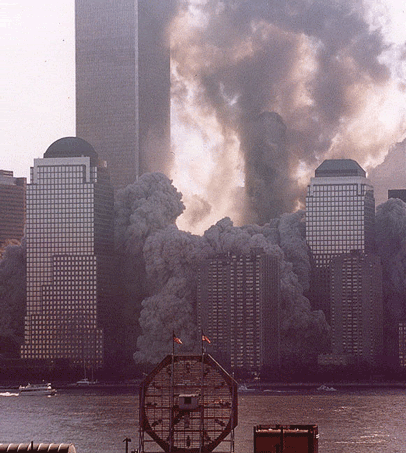
Acceleration of the falling top blocks.

Thing is, I've done thousands of experiments
Is this LITERALLY true? You have at least done 2000 such experiments?

that required consideration and manipulation of temperature.
Did any (if yes, how many?) of these experiments involve structural materials such as steel, and did any of these experiments (and if yes, how many?) measure the change of mechanical properties of such structural materials resulting from temperature change?

I know how hot office fires get,
How hot would that be? Can you give (and source) numbers?

which isn't that hot compared to what it takes to weaken steel significantly.
How hot would that be? Can you give (and source) numbers? Are these numbers now greater than, less than, or about equal to, the number you provided to my previous question?

You could have filled the WTC to the top with jet fuel and lit a match, and you'd end up with a horrible fire, but the steel would remain.
That's not the question if it "remains".

Basically you are claiming that NO hydrocarbon fire at all could ever damage and destroy any steel structure at all - do I understand that correctly?

Steel is a component of jet engines. If jet fuel fires could significantly weaken steel, you couldn't fly a jet engine. The steel parts would get all wonky from the temperatures.
What temperature does the steel in jet engines reach? Sources, please!
Is that the same steel that's used in highrises?

You might move the blocks a bit and say, "Oh, but after ten minutes, any jet fuel would have burned out, so we are talking about an office fire." My response is that office fires don't burn hotter than jet fuel fires,
How hot do jet fuel fires burn? Source?
How hot do office fires burn? Source?

so we are still stuck with a serious temperature deficit.
Let's suspend judgement on that until we see your numbers.

Then you might respond with, "But the building was also damaged by a plane crash." My response to that is that whatever happened earlier in the day, those buildings were standing tall afterwards.
Oh wait - just a little earlier you wrote:
So, at one moment, you have a building standing there. Then, at another moment, you have a building being destroyed.
Funny :D

The official story of fires and lopsided damage doesn't account for the initial moments of structural failure of the buildings.
Let's suspend judgement on that until we have seen your numbers ;)
 
I can barely understand what you're saying. It really seems like an apology from a kid trying to hide what he did wrong.
I understand your feeling. It happens to me, too, when I listen to a smart person lecturing me on things I don't have the first idea about.

I've seen the evidence you mention.
Good!
So do you acknowledge that only very few incidental column segments and connections were destroyed, but most columns remained straight and attached to their neighboring sections until after the floors had rushed past?

At some point you might finally understand that I have been studying 9/11 diligently since the events occurred.
Well perhaps, but all that studying hasn't done much to make you understand the first thing. Don't worry, I am here to help you :)
 
I've gone over this many times before. Heat was not the mechanism for destruction of the WTC, so it is a waste of time to go into calculations about heat.

Is this LITERALLY true? You have at least done 2000 such experiments?


Did any (if yes, how many?) of these experiments involve structural materials such as steel, and did any of these experiments (and if yes, how many?) measure the change of mechanical properties of such structural materials resulting from temperature change?


How hot would that be? Can you give (and source) numbers?


How hot would that be? Can you give (and source) numbers? Are these numbers now greater than, less than, or about equal to, the number you provided to my previous question?


That's not the question if it "remains".

Basically you are claiming that NO hydrocarbon fire at all could ever damage and destroy any steel structure at all - do I understand that correctly?


What temperature does the steel in jet engines reach? Sources, please!
Is that the same steel that's used in highrises?


How hot do jet fuel fires burn? Source?
How hot do office fires burn? Source?


Let's suspend judgement on that until we see your numbers.


Oh wait - just a little earlier you wrote:

Funny :D


Let's suspend judgement on that until we have seen your numbers ;)
 
Can you explain what destroyed the steel columns after the floors detached? Floors didn't detach, by the way, but I'm still interested in your answer.

I understand your feeling. It happens to me, too, when I listen to a smart person lecturing me on things I don't have the first idea about.


Good!
So do you acknowledge that only very few incidental column segments and connections were destroyed, but most columns remained straight and attached to their neighboring sections until after the floors had rushed past?


Well perhaps, but all that studying hasn't done much to make you understand the first thing. Don't worry, I am here to help you :)
 
I've gone over this many times before. Heat was not the mechanism for destruction of the WTC, so it is a waste of time to go into calculations about heat.

Funny, you made a lot of claims about temperatures, some being higher or lower than others, but when taken to task, you dodge completely. So let me provide your answers for you:

Is this LITERALLY true? You have at least done 2000 such experiments?
WTC Dust Answer: No, that was made up and hyperbole

Did any (if yes, how many?) of these experiments involve structural materials such as steel,
WTC Dust Answer: None

and did any of these experiments (and if yes, how many?) measure the change of mechanical properties of such structural materials resulting from temperature change?
WTC Dust Answer: None

How hot would that [office fires] be? Can you give (and source) numbers?
WTC Dust Answer: I have no idea

How hot would that [temperature at which steel weakens] be? Can you give (and source) numbers?
WTC Dust Answer: I have no idea

Are these numbers now greater than, less than, or about equal to, the number you provided to my previous question?
WTC Dust Answer: I can't tell since I don't actually have any numbers to compare

Basically you are claiming that NO hydrocarbon fire at all could ever damage and destroy any steel structure at all - do I understand that correctly?
WTC Dust Answer: Well, I made that up, never mind.

What temperature does the steel in jet engines reach? Sources, please!
WTC Dust Answer: I have no idea.

Is that the same steel that's used in highrises?
WTC Dust Answer: I have no idea, probably not

How hot do jet fuel fires burn? Source?
WTC Dust Answer: I have no idea.

How hot do office fires burn? Source?
WTC Dust Answer: I still have no idea.

Let's suspend judgement on that [whether we are stuck with a temperature deficit] until we see your numbers.
WTC Dust Answer: I have no numbers, so I retract my claim. I pulled out of a place you don't want to think too hard about.

Let's suspend judgement on that [whether toe official story accounts for collapse initiation] until we have seen your numbers
WTC Dust Answer: I have no idea what the official story is, and wouldn't understand that, so let me drop this, please. It embarrasses me too much


Thanks for playing! :)
Oh wait...
 
Can you explain what destroyed the steel columns after the floors detached? Floors didn't detach, by the way, but I'm still interested in your answer.

*sigh*

You have been told this several times before: Gravity.


You have been asked a few questions yourself. I promise you: If you understand the questions and find the correct answers, you will be able to understand what destroyed the steel columns after the floors detached. So here we go again:


Have you done the experiment?

One long very slender column made up of a number of individiual straws that are not laterally supported.

Vs. a singel straw.

Observe.​


Then answer this:
What is different about the very long, slender straw column vs. the not so slender, long single straw?
(To help you with this, I left hints by applying some boldfacing)


Floors got stripped off of the columns. Did that change something important, in your opinion? (Hint: If you correctly identified the bolded parts in my previous reply as relevant to the answer, you might use them again!)
 
I've done thousands of experiments. The results have been published in peer reviewed journals. Each and every one of them (and many more that didn't end up in published journals) took temperature into account. What more would you like?


Funny, you made a lot of claims about temperatures, some being higher or lower than others, but when taken to task, you dodge completely. So let me provide your answers for you:

Is this LITERALLY true? You have at least done 2000 such experiments?
WTC Dust Answer: No, that was made up and hyperbole

Did any (if yes, how many?) of these experiments involve structural materials such as steel,
WTC Dust Answer: None

and did any of these experiments (and if yes, how many?) measure the change of mechanical properties of such structural materials resulting from temperature change?
WTC Dust Answer: None

How hot would that [office fires] be? Can you give (and source) numbers?
WTC Dust Answer: I have no idea

How hot would that [temperature at which steel weakens] be? Can you give (and source) numbers?
WTC Dust Answer: I have no idea

Are these numbers now greater than, less than, or about equal to, the number you provided to my previous question?
WTC Dust Answer: I can't tell since I don't actually have any numbers to compare

Basically you are claiming that NO hydrocarbon fire at all could ever damage and destroy any steel structure at all - do I understand that correctly?
WTC Dust Answer: Well, I made that up, never mind.

What temperature does the steel in jet engines reach? Sources, please!
WTC Dust Answer: I have no idea.

Is that the same steel that's used in highrises?
WTC Dust Answer: I have no idea, probably not

How hot do jet fuel fires burn? Source?
WTC Dust Answer: I have no idea.

How hot do office fires burn? Source?
WTC Dust Answer: I still have no idea.

Let's suspend judgement on that [whether we are stuck with a temperature deficit] until we see your numbers.
WTC Dust Answer: I have no numbers, so I retract my claim. I pulled out of a place you don't want to think too hard about.

Let's suspend judgement on that [whether toe official story accounts for collapse initiation] until we have seen your numbers
WTC Dust Answer: I have no idea what the official story is, and wouldn't understand that, so let me drop this, please. It embarrasses me too much


Thanks for playing! :)
Oh wait...
 
Why are you talking in mysteries and analogies? I asked you what, under your theory, destroyed the columns after the floors detached. Until I get this answer, I'll still be wondering what your opinion is.

*sigh*

You have been told this several times before: Gravity.


You have been asked a few questions yourself. I promise you: If you understand the questions and find the correct answers, you will be able to understand what destroyed the steel columns after the floors detached. So here we go again:


Have you done the experiment?

One long very slender column made up of a number of individiual straws that are not laterally supported.

Vs. a singel straw.

Observe.​


Then answer this:
What is different about the very long, slender straw column vs. the not so slender, long single straw?
(To help you with this, I left hints by applying some boldfacing)


Floors got stripped off of the columns. Did that change something important, in your opinion? (Hint: If you correctly identified the bolded parts in my previous reply as relevant to the answer, you might use them again!)
 
I've done thousands of experiments. The results have been published in peer reviewed journals. Each and every one of them (and many more that didn't end up in published journals) took temperature into account. What more would you like?

Really? So what was the maximum temperature you applied to a load bearing column in your biology experiments?
 
Steel was damaged, undoubtedly. I don't know with certainty how this happened, but I do know how hot jet fuel fires burn and how hot office fires burn, and I do know that the WTC survived a severe fire in the seventies. Open fires with hydrocarbon fuel (jet fuel and office furnishings are both primarily hydrocarbon) don't get hot enough to weaken steel.

Well, the first sentence was right. The rest was nonsense though.

First of all, no one claims jet fuel weakened the steel. The jet fuel only started the fires over multiple floors all at once.

Second, office fires absolutely burn hot enough to weaken steel. http://www.engineeringtoolbox.com/metal-temperature-strength-d_1353.html
Look what happens above 500F.

The fire that the WTC survived in the 70s didn't have a plane crash strip fireproofing off the steel, wasn't started on multiple stories simultaneously, was in a part of the building with much thicker columns, and had a working sprinkler system and firefighters fighting it.

You really don't need to continue to repeat the official story. I've heard it many times over the years.
 
I don't have a precise answer for your question, because I don't think floors detached from support columns.

Proof that the floors were detached from the support columns. Below is a photopraph that shows the remaining core with NO FLOORS ATTACHED.
southcorestands1.gif
 
Proof that the floors were detached from the support columns. Below is a photopraph that shows the remaining core with NO FLOORS ATTACHED.
[qimg]http://i238.photobucket.com/albums/ff290/gamolon/southcorestands1.gif[/qimg]

Good photograph. Now, can you tell me what destroyed the steel columns after the floors were no longer attached?
 
Extreme temperatures are not part of the official story. They're only talking about office fire temperatures, which are not very hot as fires go.

The answer to your question is zero, by the way. You didn't really ask it for an answer, though.

"Extreme" is a relative term. In terms of the strength of steel, office fires are extreme. There's a reason structural steel is covered in fireproofing.

Remember this picture?

normal_WTC_5_Very_bent_column.jpg


Fire alone did that.

Here, you're a "scientist", you should like this.

And yes, I did ask for an answer. The answer demonstrates that your previous claim that your experiments all involve temperature is irrelevent to the discussion.
 
I expect steel to sag with extreme heat. Not shatter.

"Extreme" is a relative term. In terms of the strength of steel, office fires are extreme. There's a reason structural steel is covered in fireproofing.

Remember this picture?

[qimg]http://beyondpoliticsand911.com/photogallery/albums/userpics/10001/normal_WTC_5_Very_bent_column.jpg[/qimg]

Fire alone did that.

Here, you're a "scientist", you should like this.

And yes, I did ask for an answer. The answer demonstrates that your previous claim that your experiments all involve temperature is irrelevent to the discussion.
 
You really don't need to continue to repeat the official story. I've heard it many times over the years.

Then why do you bring up irrelevant things like the temperature* of jet fuel fires?


*Not like there is a fixed temperature for each fuel.
 
I expect steel to sag with extreme heat. Not shatter.

Who claimed that any steel shattered?

I hope you plan on reading what I linked to in that post, rather than just dismiss the whole thing with a strawman argument. It's direct proof that your "office fires aren't hot enough" claim is wrong.
 
Who claimed that any steel shattered?

I hope you plan on reading what I linked to in that post, rather than just dismiss the whole thing with a strawman argument. It's direct proof that your "office fires aren't hot enough" claim is wrong.

They aren't hot enough to do what was done to the WTC. Localized regions of sagging steel might be expected, but not what happened on 9/11.
 

ISF - Join now!

Every member here is approved by hand. No bots, no spam, just people who care about evidence and honest debate.

Membership is free!

Create your free account

Back
Top Bottom