• Quick note - the problem with Youtube videos not embedding on the forum appears to have been fixed, thanks to ZiprHead. If you do still see problems let me know.

Merged New video! Architects and Engineers - Solving the Mystery of Building 7

LOL. Wot! I dont think so somehow :boggled:
And this is your problem.

Don't concentrate on anything else with regard to 9/11 until you can understand why your problem lies with the above quoted sentence. Once you have understood why your problem lies with that sentence then you will be able to work on understanding what occurred on 9/11.

I'll post at least 10 links explaining this particular phenomenon when you have accepted your problem.

Somehow I'm pretty certain that I won't have to bother.
 
Interesting, do you know the grade of that steel, the main flammable material in question, and where/when/how it happened? any more case study type information etc.
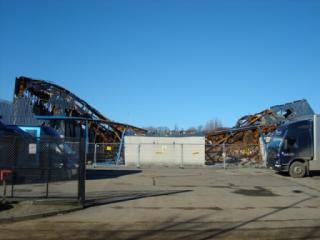
Ok. Here's evidence


Steel frame building brought down by fire. Did you seriously ask for evidence of steel expanding with heat? If so I will quit wasting my time.
 
I'll post at least 10 links explaining this particular phenomenon when you have accepted your problem.


Hello. I appear to have a massive problem.

My massive problem is the disbelief that steel based railroad tracks can be deformed purely "just from the sun" by the amount shown in the picture on the previous page.
 
Hello. I appear to have a massive problem.

My massive problem is the disbelief that steel based railroad tracks can be deformed purely "just from the sun" by the amount shown in the picture on the previous page.
Nope. It's connected with that but that's not the problem. Again, forget the subject because the subject could be anything.
 
Hello. I appear to have a massive problem.

My massive problem is the disbelief that steel based railroad tracks can be deformed purely "just from the sun" by the amount shown in the picture on the previous page.
Railway lines bending due to sun is a very well known phenomenon. And there are many Australian experiences similar to the one shown. If I recall correctly this was something my generation learned in primary school. In those days associated with the question "why do we leave gaps between the ends of sections of rail". Then a few years later I had to come to grips with how it was possible to prevent such twisting out of line problems when laying continuous welded rails with no expansion gaps.

However that is the specific technical example and not the question Sunstealer is urging you to consider.
 
Last edited:
Nope. It's connected with that but that's not the problem. Again, forget the subject because the subject could be anything.


Ok I've taken your advice and completely forgotten the subject in hand. Because, as you said that subject "could be anything"

So. I presume the subject is related to, pancakes.

How many consecutive pancake flip fails does it take to create a face that resembles Margaret Thatcher?
 
My massive problem is the disbelief that steel based railroad tracks can be deformed purely "just from the sun" by the amount shown in the picture on the previous page.

Look up the reason why we use expansion joints.That'll be your homework tonight. Compare your findings and see if the deformation of the railroad tracks becomes clearer.
 
Railway lines bending due to sun is a very well known phenomenon.


I can imagine that if the rails expanded due to heat expansion then the tracks would buckle. That's common sense. But to buckle to the extent that that picture shows implies a severe shortcoming in the design of the tracks in question. Much more so than any responsible train company would allow.
 
Hello. I appear to have a massive problem....
That was what some of us were referring to.

But now it seems you have another problem.

Compare these two recent posts:

My massive problem is the disbelief that steel based railroad tracks can be deformed purely "just from the sun" by the amount shown in the picture on the previous page.

I can imagine that if the rails expanded due to heat expansion then the tracks would buckle. That's common sense. But to buckle to the extent that that picture shows implies a severe shortcoming in the design of the tracks in question. Much more so than any responsible train company would allow.

Hint: Your second problem relates to shifting ground. Clearly illustrated by the conflict between those two quotes.
 
Last edited:
Look up the reason why we use expansion joints.That'll be your homework tonight. Compare your findings and see if the deformation of the railroad tracks becomes clearer.


They clearly did not have any gaps in that track at all to deform by that much.
 
Hello. I appear to have a massive problem.

My massive problem is the disbelief that steel based railroad tracks can be deformed purely "just from the sun" by the amount shown in the picture on the previous page.

Got a better explanation for those bent tracks that you find easier to believe? Giant reptilians maybe? Space lasers? NWO agents with nano-thermite?

Don't you know that all materials expand when heated?
Don't you know concrete and asphalt expand under summer heat?
Have you never noticed how your car runs over gaps near the ends of long-span bridges that are there to account for expansion and deformation of the steel and concrete under summer conditions?
 
They clearly did not have any gaps in that track at all to deform by that much.
Gaps or lack of gaps is probably not the problem.

Modern railway engineering techniques do not rely on expansion gaps as I hinted in my previous post. Well compacted bedding for the sleepers/cross ties to resist the sideways forces.
 
Can somebody ask LSSBB what the evidence is to supprt the official story? Or answer it for him?

Well, here you go.

This NIST reports and studies on the WTC collapses, including 7WTC.

http://www.nist.gov/el/disasterstudies/wtc/

Then there is the political report on the why's and who's WRT 9/11.

http://www.9-11commission.gov/report/911Report.pdf

Then there is the ASCE report for the Pentagon
http://fire.nist.gov/bfrlpubs/build03/PDF/b03017.pdf


Then there are the dozens of peer-reviewed, scientific papers published in respectable journals worldwide.

Here is a small list.
Performance based structural fire engineering for modern building design
Rini, D., Lamont, S. 2008 Proceedings of the 2008 Structures Congress - Structures Congress 2008: Crossing the Borders 314

Engineering perspective of the collapse of WTC-I
Irfanoglu, A., Hoffmann, C.M. 2008 Journal of Performance of Constructed Facilities 22 (1),

Collapse of towers as applied to September 11 events
Cherepanov, G.P. 2008 Materials Science 44 (4), pp. 489-499

Modeling pre-evacuation delay by occupants in World Trade Center Towers 1 and 2 on September 11, 2001
Kuligowski, E.D., Mileti, D.S. 2008 Fire Safety Journal

World Trade Center building disaster: Stimulus for innovations
Kodur, V.K.R. 2008 Indian Concrete Journal 82 (1), pp. 23-31

A collective undergraduate class project reconstructing the September 11, 2001 world trade center fire
Marshall, A., Quintiere, J. 2007 ASEE Annual Conference and Exposition, Conference Proceedings

"A new era": The limits of engineering expertise in a post-9/11 world
Pfatteicher, S.K.A. 2007 International Symposium on Technology and Society, Proceedings, art. no. 4362228

Progressive collapse of the World Trade Center: Simple analysis
Seffen, K.A. 2008 Journal of Engineering Mechanics 134 (2), pp. 125-132

Scale modeling of the 96th floor of world trade center tower 1
Wang, M., Chang, P., Quintiere, J., Marshall, A. 2007 Journal of Performance of Constructed Facilities 21 (6), pp. 414-421

Failure of welded floor truss connections from the exterior wall during collapse of the world trade center towers
Banovic, S.W., Siewert, T.A. 2007 Welding Journal (Miami, Fla) 86 (9), pp. 263-s-272-s

The collapse of the world trade center towers: A metallurgist's view
Gayle, F.W. 2007 MRS Bulletin 32 (9), pp. 710-716

Building code changes reflect world trade center investigation
Hansen, B. 2007 Civil Engineering 77 (9), pp. 22+24-25

Fire load in a steel building design
Razdolsky, L. 2008 Proceedings of the 4th International Structural Engineering and Construction Conference, ISEC-4 - Innovations in Structural Engineering and Construction 2, pp. 1163-1167

The structural steel of the World Trade Center towers
Gayle, F.W., Banovic, S.W., Foecke, T., Fields, R.J., Luecke, W.E., McColskey, J.D., McCown, C., Siewert, T.A. 2006 Journal of Failure Analysis and Prevention 6 (5), pp. 5-8

Progressive collapse of structures: Annotated bibliography and comparison of codes and standards
Mohamed, O.A. 2006 Journal of Performance of Constructed Facilities 20 (4), art. no. 001604QCF, pp. 418-425

A simple model of the World Trade Center fireball dynamics
Baum, H.R., Rehm, R.G., Quintiere, J.G. 2005 Proceedings of the Combustion Institute 30 II, pp. 2247-2254

Impact of the Boeing 767 Aircraft into the World Trade Center
Karim, M.R., Hoo Fatt, M.S. 2005 Journal of Engineering Mechanics 131 (10), pp. 1066-1072

High-fidelity simulation of large-scale structures
Hoffmann, C., Sameh, A., Grama, A. 2005 Lecture Notes in Computer Science 3515 (II), pp. 664-671

Collapses of the world trade center towers
[No author name available] 2005 Indian Concrete Journal 79 (8), pp. 11-16

Industry updates: Fireproofing, staircases cited in World Trade Center report
[No author name available] 2005 Journal of Failure Analysis and Prevention 5 (4), pp. 34

September 11 and fracture mechanics - A retrospective
Cherepanov, G.P. 2005 International Journal of Fracture 132 (2), pp. L25-L26

Structural responses of World Trade Center under aircraft attacks
Omika, Y., Fukuzawa, E., Koshika, N., Morikawa, H., Fukuda, R. 2005 Journal of Structural Engineering 131 (1), pp. 6-15

Impact of the 2001 World Trade Center attack on critical interdependent infrastructures
Mendonça, D., Lee II, E.E., Wallace, W.A. 2004 Conference Proceedings - IEEE International Conference on Systems, Man and Cybernetics 5, pp. 4053-4058

Use of high-efficiency energy absorbing device to arrest progressive collapse of tall building
Zhou, Q., Yu, T.X. 2004 Journal of Engineering Mechanics 130 (10), pp. 1177-1187

Progressive analysis procedure for progressive collapse
Marjanishvili, S.M. 2004 Journal of Performance of Constructed Facilities 18 (2), pp. 79-85

Lessons learned on improving resistance of buildings to terrorist attacks
Corley, W.G. 2004 Journal of Performance of Constructed Facilities 18 (2), pp. 68-78

Anatomy of a disaster: A structural investigation of the World Trade Center collapses
Abboud, N., Levy, M., Tennant, D., Mould, J., Levine, H., King, S., Ekwueme, C., (...), Hart, G. 2003 Forensic Engineering, Proceedings of the Congress, pp. 360-370

World Trade Center disaster: Damage/debris assessment
Thater, G.G., Panariello, G.F., Cuoco, D.A. 2003 Forensic Engineering, Proceedings of the Congress, pp. 383-392

How did the WTC towers collapse: A new theory
Usmani, A.S., Chung, Y.C., Torero, J.L. 2003 Fire Safety Journal 38 (6), pp. 501-533

Microstructural analysis of the steels from Buildings 7, & 1 or 2 from the World Trade Center
Biederman, R.R., Sullivan, E.M., Sisson Jr., R.D., Vander Voort, G.F. 2003 Microscopy and Microanalysis 9 (SUPPL. 2), pp. 550-551

Brannigan, F.L.
"WTC: Lightweight Steel and High-Rise Buildings"
Fire Engineering v.155, no. 4, (2002): 145-150.

Analysis of the thermal exposure in the impact areas of the World Trade Center terrorist attacks
Beyler, C., White, D., Peatross, M., Trellis, J., Li, S., Luers, A., Hopkins, D. 2003 Forensic Engineering, Proceedings of the Congress, pp. 371-382

Clifton, Charles G.
Elaboration on Aspects of the Postulated Collapse of the World Trade Centre Twin Towers
HERA: Innovation in Metals. 2001. 13 December 2001.

"Construction and Collapse Factors"
Fire Engineering v.155, no. 10, (2002): 106-108.

Bazant, Z.P., & Zhou, Y.
"Addendum to 'Why Did the World Trade Center Collapse? - Simple Analysis" (pdf)
Journal of Engineering Mechanics v. 128, no. 3, (2002): 369-370.

Corbett, G.P.
"Learning and Applying the Lessons of the WTC Disaster"
Fire Engineering v.155, no. 10, (2002.): 133-135.

"Dissecting the Collapses"
Civil Engineering ASCE v. 72, no. 5, (2002): 36-46.

Eagar, T.W., & Musso, C.
"Why Did the World Trade Center Collapse? Science, Engineering, and Speculation"
JOM v. 53, no. 12, (2001): 8-12.

Federal Emergency Management Agency, Therese McAllister, report editor.
World Trade Center Building Performance Study: Data Collection, Preliminary Observations, and Recommendations
(also available on-line)

Gabrielson, T.B., Poese, M.E., & Atchley, A.A.
"Acoustic and Vibration Background Noise in the Collapsed Structure of the World Trade Center"
The Journal of Acoustical Society of America v. 113, no. 1, (2003): 45-48.

"Collapse Lessons"
Fire Engineering v. 155, no. 10, (2002): 97-103

Marechaux, T.G.
"TMS Hot Topic Symposium Examines WTC Collapse and Building Engineering"
JOM, v. 54, no. 4, (2002): 13-17.

Monahan, B.
"World Trade Center Collapse-Civil Engineering Considerations"
Practice Periodical on Structural Design and Construction v. 7, no. 3, (2002): 134-135.

Newland, D.E., & Cebon, D.
"Could the World Trade Center Have Been Modified to Prevent Its Collapse?"
Journal of Engineering Mechanics v. 128, no. 7, (2002):795-800.

Pinsker, Lisa, M.
"Applying Geology at the World Trade Center Site"
Geotimes v. 46, no. 11, (2001).
The print copy has 3-D images.

Post, N.M.
"No Code Changes Recommended in World Trade Center Report"
ENR v. 248, no. 14, (2002): 14.

Post, N.M.
"Study Absolves Twin Tower Trusses, Fireproofing"
ENR v. 249, no. 19, (2002): 12-14.

"WTC Engineers Credit Design in Saving Thousands of Lives"
ENR v. 247, no. 16, (2001): 12.

You should read some of them. Especially the ones published in the JOM, or in Fire Engineering, or pretty much anything by Bazant.

See you in a month.
 
Hello. I appear to have a massive problem.

My massive problem is the disbelief that steel based railroad tracks can be deformed purely "just from the sun" by the amount shown in the picture on the previous page.

That's an Argument from Lack of Imagination logical fallacy.

Got a better explanation for those bent tracks that you find easier to believe? Giant reptilians maybe? Space lasers? NWO agents with nano-thermite?

Don't you know that all materials expand when heated?
Don't you know concrete and asphalt expand under summer heat?
Have you never noticed how your car runs over gaps near the ends of long-span bridges that are there to account for expansion and deformation of the steel and concrete under summer conditions? Something like this
Did you ever ride a train and hear the typical "tadack - tadack - tadack..." of the wheel pairs as they run over the gaps between traditional rails?
Read http://en.wikipedia.org/wiki/Rail_tracks#Continuous_welded_rail
CWR rail is laid (including fastening) at a temperature roughly midway between the extremes experienced at that location (this is known as the "rail neutral temperature"). This installation procedure, along with normal track structure strength, is intended to prevent tracks from buckling in summer heat or pulling apart in winter cold. In North America, because broken rails are typically detected by the signaling system; they are seen as less of a problem than heat kinks which are not detected.
The highlighted part implies that rails would frequently buckle in summer heat unless care is taken at construction time to prevent just that; a corrollary of that is that rails may still buckle if summer heat reaches extremes not considered when the rail was constructed.
 
LOL. Wot! I dont think so somehow :boggled:

It's a well-known and commonplace phenomenon that steel rails expand in hot weather, and that if proper measures aren't taken they can buckle enough to derail a train. Any rail enthusiast should be able to tell you that, for example, long continuous welded rails are laid under a considerable amount of tension to accommodate thermal expansion, and need expansion joints at regular intervals. Wikipedia has pages on sun kinks, breather switches and continuous welded rail that can give you some more information.

Dave
 
Guess u learn something new everyday.

I think my response to that post was invoked more due to my previous experience with Noah's posting style than the material he posted. And considering how much Ive drunk today I bid any sort of level headed debate a fair-well for tonight....
 
Hello. I appear to have a massive problem.

My massive problem is the disbelief that steel based railroad tracks can be deformed purely "just from the sun" by the amount shown in the picture on the previous page.

Your belief/disbelief function fails you.

The phenomenon is well known to those who work in the field. It is well understood exactly why it happens. Once one understand what the dominating effects are, one realizes that the rails can do nothing else.

This is the typical truther failure. Thinking that their (and your, apparently) narrowly circumscribed** lives provide them insightful judgment in areas foreign to them.

I'm also going to ask you to help me out, Zeuzzz. I have been getting the distinct feeling for awhile that you are not "undecided on 9/11 issues". That you may be the latest in a long, long line of truthers who decide that appearing balanced & undecided, and then rejecting all attempts to educate, somehow makes a more convincing story.

Please tell me that the above is not true.

I've answer several of your posts & gotten pretty much zero in return. Any reason for that?


What you're not getting is that thermal expansion is measured in "inches / (inch - °F)". That means that the longer the piece, the more the expansion.

And train tracks tend to be pretty damn long.

That is EXACTLY why NIST talked about the extra-long beams & girders being the problem in WTC7.


PS.

** No, I did not just call you Jewish.
 
Last edited:

Back
Top Bottom
