• Quick note - the problem with Youtube videos not embedding on the forum appears to have been fixed, thanks to ZiprHead. If you do still see problems let me know.

Merged nuclear power safe?

Sure it is. The implication is that a lot of people died, which is, so far, wrong, or that a whole lot of people might have died (or might still die).
:confused:

I don't think alot of people died at Fukishima, and I doubt many will. Probably less than the number of people that died today riding a bicycle.
 
So I'm not sure what you're getting at here.

Nor I you. This thread seems to be a lot of rabid pro and anti-nuke rhetoric.

You can't possibly plan for everything. There will always be some unique scenario arise that wasn't part of a contingency plan and when it does people will die and the land will be scorched. That's part of doing business. People need to get over it.

The rhetoric is the worst part of the whole discussion "I'd brush my teeth with spent fuel rods, it's that safe" "If 1 terrorist fly a plane into a reactor the whole Eastern seaboard will be uninhabitable for 10000 years" blah blah blah, it's nauseating.

Nuclear energy isn't safe, but we make it as safe as we can. The benefits outweigh the risks and unless you're willing to severely reduce your children's standard of living and possibly even lifespan the time has come to take the gamble.

Dem da bones.
 
True you are more likely to die in car accident than a nuclear accident, it's just that a nuclear accident is far more devestating to a larger portion of the geography than a car accident.

Or, more accurately, it's far less devastating than the number of car accidents that will occur during the same time frame. 1.2 million deaths, 50 million injuries, $500 billion in cost, and so on. (Data from here.

And I'm not ignoring the geography point here. Where does all that scrap metal go? What happens to all the fuel burnt by emergency services and cleaning things up? What does it cost to repair the road, barriers, and so on? It's the same as the comparison between coal and nuclear - it's not just the direct damage that is worse, the long term large scale impact is there as well. You can't compare the geographic effects of a nuclear accident to car accidents without also considering the land area taken by scrap, the pollution caused by fuel use, and all the other relatively small effects that add up over the decades.
 
I seem to recall a movie by a guy who sort of won a presidential election once that made the case that a helluva lot more land is going to be rendered uninhabitable by the non-accidental effects of coal use than a hundred Chernobyls could do.

Under this worst case scenario, a mass switch to nuclear would result in saving habitable land from destruction.
 
Last edited:
True you are more likely to die in car accident than a nuclear accident, it's just that a nuclear accident is far more devestating to a larger portion of the geography than a car accident.

Not switching to nuclear is far more devastating to a larger portion of the geography that doing what we're doing now.

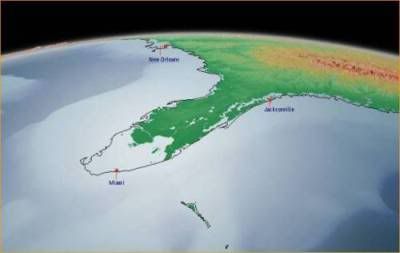
0001.jpg


Is losing 1/3rd of Florida worth your no-nukes stance?
 
I'm pretty sure more towns had to be relocated to mine coal than ever will be because of nuclear power.
 
Or, more accurately, it's far less devastating than the number of car accidents that will occur during the same time frame. 1.2 million deaths, 50 million injuries, $500 billion in cost, and so on. (Data from here.

And I'm not ignoring the geography point here. Where does all that scrap metal go? What happens to all the fuel burnt by emergency services and cleaning things up? What does it cost to repair the road, barriers, and so on? It's the same as the comparison between coal and nuclear - it's not just the direct damage that is worse, the long term large scale impact is there as well. You can't compare the geographic effects of a nuclear accident to car accidents without also considering the land area taken by scrap, the pollution caused by fuel use, and all the other relatively small effects that add up over the decades.

Untill political issues and better methods of dealing with radiactive waste are implimented the number of decommissioned nuclear power plants that are still storing spent fuel and radioactive waste on site will add up too.
http://www.nrc.gov/reading-rm/doc-collections/fact-sheets/decommissioning.html
http://www.nti.org/db/nisprofs/russia/naval/waste/wasteovr.htm


Nuclear power plants may not belch into the atmosphere anywhere near the same amount of carbon as oil or coal but it still is not without it's ecological and politcal hazzards. To believe otherwise is to ignore facts.

Like I said the issue is degrees and acceptable risks.
 
Not switching to nuclear is far more devastating to a larger portion of the geography that doing what we're doing now.

[qimg]http://i30.photobucket.com/albums/c345/Kilstryke/0001.jpg[/qimg]

Is losing 1/3rd of Florida worth your no-nukes stance?

1/3rd of Florida? Your not really making your case with me here. :P

Besides I am not making a no nukes stance. I never said not to use nuclear power, just that it is silly to think that nuclear power is without any danger or risks.

We still have a problem with the disposal of nuclear waste. The majority of the waste is still being stored on site at the facilities. The big hole in the ground under the mountain we were planning to bury it is still being held up in congress.

Here is an excerpt from the link I provided above:
"Several nuclear power plants completed decommissioning in the 1990s without a viable option for disposing of their spent nuclear fuel, because the federal government did not construct a geologic repository as planned."

Nuclear powerplants have a lifespan. The more you build the more decommissioned plants with radioactive waste and spent fuel you accumulate over time.

So you have global warming on one hand or a growing radioactive threat on the other.

But I hear the the number of birth defects due to radiactive contaminaion in the wildlife in Chernobyl have plateaued. Still have to wait and see what Fukushima has in store.

 
1/3rd of Florida? Your not really making your case with me here. :P

Besides I am not making a no nukes stance. I never said not to use nuclear power, just that it is silly to think that nuclear power is without any danger or risks.

We still have a problem with the disposal of nuclear waste. The majority of the waste is still being stored on site at the facilities. The big hole in the ground under the mountain we were planning to bury it is still being held up in congress.

Here is an excerpt from the link I provided above:

Nuclear powerplants have a lifespan. The more you build the more decommissioned plants with radioactive waste and spent fuel you accumulate over time.

So you have global warming on one hand or a growing radioactive threat on the other.

But I hear the the number of birth defects due to radiactive contaminaion in the wildlife in Chernobyl have plateaued. Still have to wait and see what Fukushima has in store.

Well, todays nuclear "waste" could very well be the next generations nuclear fuel. TWR's come to mind. Quite some materials from old reactors can be recycled for new ones, like steel etc.

True, everything has it's risk. But risk alone is only one factor. Overall impact and usefulness have to be taken into account as well. Given the pollution produced by operating coal plants, as well as the environmental impact of actually mining the coal, i think that the waste produced by nuclear plants (including the materials left after decommissioning) are the lesser "evil", even today.

Greetings,

Chris
 
Besides I am not making a no nukes stance. I never said not to use nuclear power, just that it is silly to think that nuclear power is without any danger or risks.

But no one is suggesting the nuclear power is without any danger or risks. What is true is that those dangers and risks are less per kWh than the alternatives.
 
Untill political issues and better methods of dealing with radiactive waste are implimented the number of decommissioned nuclear power plants that are still storing spent fuel and radioactive waste on site will add up too.
http://www.nrc.gov/reading-rm/doc-collections/fact-sheets/decommissioning.html
http://www.nti.org/db/nisprofs/russia/naval/waste/wasteovr.htm

Like I said the issue is degrees and acceptable risks.
So what degree of risk is presented by stored nuclear wastes?

The fact that it exists doesn't tell us how much of a danger it presents. What is the danger?
 
So much for risk assessment at Fukushima.

ALI MOORE: The ABC has obtained documents confirming that the operator of the crippled Fukushima nuclear plant grossly underestimated the size of a potential tsunami that could hit the facility.

It also shows that the Tokyo Electric Power Company, or TEPCO's, initial tsunami plan was contained on just a single page, a scant plan accepted by Japan's nuclear regulators.

Today TEPCO held its annual general meeting, with its newly appointed president vowing an all-out effort to achieve a cold shutdown of the stricken reactors by January.

North Asia correspondent Mark Willacy reports from Tokyo.

http://www.abc.net.au/lateline/content/2011/s3256043.htm
 
Well, todays nuclear "waste" could very well be the next generations nuclear fuel. TWR's come to mind. Quite some materials from old reactors can be recycled for new ones, like steel etc.

True, everything has it's risk. But risk alone is only one factor. Overall impact and usefulness have to be taken into account as well. Given the pollution produced by operating coal plants, as well as the environmental impact of actually mining the coal, i think that the waste produced by nuclear plants (including the materials left after decommissioning) are the lesser "evil", even today.

Greetings,

Chris

Last I checked the energy industry still judged TWRs to be too expensive to impliment. Or so the story goes.

And I agree that, for the time being, nuclear energy is less polluting than coal. We still mine for uranium and we still have no viable method of safely storing nuclear waste.

If things do not change for the better, there will be a looming nuclear "problem" waitng for us in the not too distant future.
 

Back
Top Bottom