
Did you think we were lacking examples of what I was talking about?


What do you mean?Did you think we were lacking examples of what I was talking about?
What do you mean?
Do you wish to say that you can't start by real-line's fundamental research, which is based on the irreducibility of 1-dimensional element into 0-dimensional element, and the non-extendability of 0-dimensional into 1-dimensional element, under co-existence?
No. Oddly enough, and I can understand it if you have difficulty grasping the concept, what I said was what I meant to say.
You are definitely lost to Reason. What do you think that the word "pseudo" means? In the case of the eclipse, the 2-dim viewing space is a pseudo-space to the 3-dim space where the points were actually drawn into.Wrong, the points in 2-dimensional space have two coordinates each, and there is 0 distance between 2 points only of there is actually a one pair of coordinates, or in other words, only a one point.
For example, by set theory {(1,3),(1,3)}={(1,3)} where (1,3) is a single point in a 2-dimensional space.
It is amazing that you can't get such a simple fact.
Since you can't extend 0-dim object into 1-dim object, you can't increase the magnitude of a 1-dim object.What do you mean?
Do you wish to say that you can't start by real-line's fundamental research, which is based on the irreducibility of 1-dimensional element into 0-dimensional element, and the non-extendability of 0-dimensional into 1-dimensional element, under co-existence?

Write that out again in English, and I'll have a go at understanding what you're on about.And what you meant to say if you can't research the real-line as 1-dim;0-dim co-existence (this is a fundamental research, so it can't be odd, such that if you grasp it you can deal with more complex stuff) ?
EDIT:
You still can't have any meaningful thing to say about the considered subject, as clearly can be seen in http://www.internationalskeptics.com/forums/showpost.php?p=7211050&postcount=15493 .

Another typical reply of jsfisher, which avoids detailed replies to:
http://www.internationalskeptics.com/forums/showpost.php?p=7233789&postcount=15527
http://www.internationalskeptics.com/forums/showpost.php?p=7233941&postcount=15529
http://www.internationalskeptics.com/forums/showpost.php?p=7234231&postcount=15530
http://www.internationalskeptics.com/forums/showpost.php?p=7234821&postcount=15531

Let's make it simple for you:
"stretched 0-dim" is "different than 0-dim".
"totally reduced 1-dim" is "different than 1-dim".
The difference is saved under co-existence and prevents homeomorphism between 0-dim and 1-dim spaces.
Therefore under co-existence there is always 1-dimensional space between more than one 0-dimensional element, which prevents the existence of more than one 0-dimensional element in the same 0-dimensional space.
Let's generalize it:
1) 0-dimension is the smallest existing dimensional space.
“0” isn’t “approaching” anything (even 0) it is just, well 0. If you wanted to say that x is value approcing infinity and that “x<y, you could have just said it..2) x = 0 approaching ∞ and x<y, where y approaching ∞.
3) There is always y-dimensional space between more than one x-dimensional element, which prevents the existence of more than one x-dimensional element in the same x-dimensional space.
Since 0-dimensional element (known as a point) is an existing thing, it can't be used as the negation of the existence of Dimension.
In other words, the assertion that a point is the negation of Dimension is equivalent to the assertion that an existing thing is the negation of Existence.
It is a different version of “Hilbert's Hotel”. Do you have some problems to understand the word different?
Actuality is not limited to existing things, for example:
The actuality of nothing can be considered as the negation of Existence.
Since you have problems to get the actuality of nothing, you can't comprehend assertions like "There is nothing between A and B".
You are definitely lost to Reason. What do you think that the word "pseudo" means? In the case of the eclipse, the 2-dim viewing space is a pseudo-space to the 3-dim space where the points were actually drawn into.
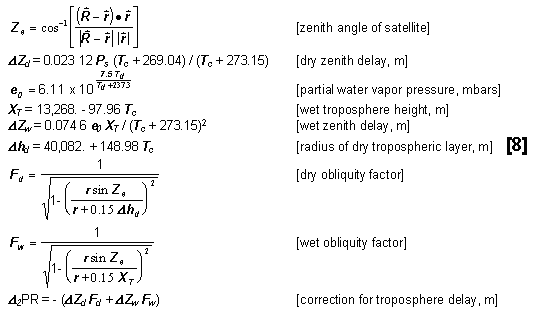
Since you dislike anything "pseudo-" excepting your attempt to run over the math world with your locOMobile, you are free to trash the following computation of the pseudo-range.
[qimg]http://www.metaresearch.org/solar%20system/gps/pseudo-range.gif[/qimg]
In which line does the bug crawl along?
The actuality of nothing? What kind of kitchen talk is that? You're not peeling potatoes; you are in the process of submerging yourself into the deep philosophical waters where existence and non-existence dwells and that requires all the rigor available. Out of my undying kindness and love for OM, I help you this time to reformulate your thought, but then you are on your own.The actuality of nothing can be considered as the negation of Existence.
Actually if you look at the formulae (note the educated plural I useThanks epix, I was wondering how I was going to calculate my wet and dry obliquity factors.
 ), both factors are reciprocal to the unit semi-circle, which is f(x) = Sqr(1 - x2). In those formulae (there is no language like the Latin language) there is a bunch of parameters substituting for x. Maybe the semi-circle is some kind of pseudo-sunset where the visible semicircle is "dry" and the one under the horizon line is "wet," when you watch it from your patio situated west of the Pacific Coast Highway.
Well, this is exactly your problem about this subject.You are definitely lost to Reason.
What do you think that the word "pseudo" means?
is simply avoided, because the used concepts (sameness;difference) are a generalization of concepts like distance and point.points in a pseudometric space need not be distinguishable; that is, one may have d(x,y) = 0 for distinct values x≠y ( http://en.wikipedia.org/wiki/Pseudometric_space )
All you did is to ignore b,c difference, which leads to partial understanding of what is really going on.epix said:Under special circumstances, when both points appear in the local 2-dim viewing frame, the distance between both points can become zero, otherwise there is no eclipse.
1) There exists nothing.
Please give an example of what you call "useful".Please state plainly just one useful thing that has been done with OM.
Nice epix, your "dry" "wet" sun fits to your pseudo metric flat universe.Actually if you look at the formulae (note the educated plural I use
I can develop the mathematical science, such that the term "mathematical branches" gets its actual meaning.Doron, what can you do with OM?
You are incapable of generating one near-rational thought given your natural resistance to do so. Our universe, especially the Milky Way, can be viewed locally as 2-dim space when it is desirable for a purpose and it has been done so. Gravitational lensing can be detected only through 2-dim viewing, for example. In the abstract domain, in order to investigate the nature of a 1-dim object, namely the length, 2-dim arrangement needs to be taken into a consideration, like in the case of the Pythagorean theorem. You can muse over the length of the hypotenuse ad infinitum your style, but unless you expand and include 2-dim objects, you won't figure the length.By following your reasoning, we are living in a flat universe.

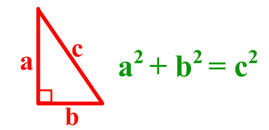
In both cases you have at least two dimensional spaces, where the smaller dimension is local w.r.t the greater dimension and the greater dimension is non-local w.r.t to the smaller dimension.Let me make this simple for you:
That just makes your "stretched 0-dim" not “0-dim”. So how many “dim”s does it have now?
Also it it just makes your "totally reduced 1-dim" not “1-dim”. So how many “dim”s does it have now.
There is no more then one element if there is no co-existence between at least two different dimensional spaces.Nope not in a descrete space.
Yes I know, it is actually a pink snail.Again 0 dimensions isn’t a dimensional space.
What I actually say is that there is a domain starting with 0 and approaching infinity, where there are x and y variables in that domain, such that x<y.“0” isn’t “approaching” anything (even 0) it is just, well 0. If you wanted to say that x is value approcing infinity and that “x<y, you could have just said it..
There is no space between the intervals [3,5) and [5,6) in the reals and the intervals [3,5] and [4,6] overlap each other and the interval [4,5].
In that case "dimension has nothing to do with points", which is a false proposition based on your "reasoning".It isn’t, the lack of dimension is used to define a point.
Only if one can't generalize what he\she reads.Nope, “the negation of Dimension” negates, well, dimension while the “negation of Existence” negates existence
Once again, you demonstrate your inability the understand the proposition "different version".Again its not any “version of “Hilbert's Hotel”” because you just don’t understand and deliberately ignore the details of “Hilbert's Hotel”
If something is considered as the negation of nothing, then without the actuality of nothing, something can't be defined.Since now your claiming your “nothing” does not exist, that would mean that there is always something.
You still do not get the actuality of nothing, and as a result you can't comprehend the difference of the following:Well since you have just asserted your that your “nothing” does not exist, that would mean that there is something “between A and B”. Well what is it?