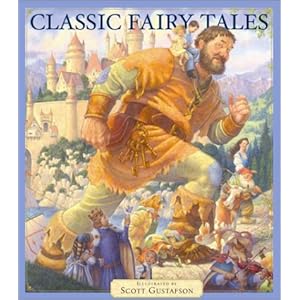
Thanks DOC, that's confirmed then, Harry Potter is real, walks among us and is quite probably the Messiah.
Well... In the world according to DOC he is!
This just demonstrates what I've said before, DOC is terrified to define one speck of evidence and I think that hurts his credibility.
I can see Doc saying, well yes that is some evidence if it is for the bible but it is not enough for another belief, but to just come out and admit that will demonstrate 2,150 posts from a closed mind
Prove me wrong and confirm the following. As ever a simple Yes or No will do.
What utter drivel. Your posts here display not a skerrick of understanding of the rules of logic and debate, and for you to attempt to make up new rules and present them to the very people who have been thrashing you in this debate for more than two years is nothing short of ludicrous.
You can't even express the plurals of yes and no without misspelling them, let alone explain why a simple binary choice is a 'debating trick'. You lose credibility when you do that, DOC.
DOC: Sure, it is some evidence that Matthew was indeed the author of his Gospel, because it doesn't make sense for someone to assign an author who was collecting taxes for the hated Romans as your author if you are trying to attract followers anymore than I would assign a former IRS agent as the author if I invented a religion.
It makes perfect sense, DOC. Do you know absolutely nothing about your own fairytale?
You seem to be completely ignorant of the whole reason that the mythical Matthew-Levi was given the character of the hated tax collector in the first place.
Here's a hint:
Mark 2:17 (King James Version)
17When Jesus heard it, he saith unto them, They that are whole have no need of the physician, but they that are sick: I came not to call the righteous, but sinners to repentance.
In other words, the blokes who made up the gospels purposely gave one of their fictional authors the worst possible job description in order to bolster the point they were trying to make.
Please don't take my word for it though . . .
Thus, in the figure of Matthew, the Gospels present to us a true and proper paradox: those who seem to be the farthest from holiness can even become a model of the acceptance of God's mercy and offer a glimpse of its marvellous effects in their own lives.
- Pope Benedict XVI (Catechesis presented in Paul VI Audience Hall, The Vatican, 30 August 2006)
This Matthew feller was made up specifically to appeal to the ignorant, uneducated and superstitious rabble who thought the source of all their ills was the hated IRS Romans. Sound familiar?
DOC: Sure it is evidence when you had the opportunity to pick apostles like Andrew or Philip, or even a relative of Christ like James as the author of your Gospel. Why pick two relatively unknown non-apostles like Mark or Luke. It doesn't add up unless they are indeed the authors.
Of course it adds up. The whole anonymity bit is a device used by whoever made up the story to help illustrate the point they were trying to make.
Do you have no understanding of allegory at all? Let's see if the famous historian Luke can help you out:
Luke 18:14 (King James Version)
14I tell you, this man went down to his house justified rather than the other: for every one that exalteth himself shall be abased; and he that humbleth himself shall be exalted.
Pope Benny has a few more words about both of the above pieces of non-evidence:
St. John Chrysostom makes an important point in this regard: he notes that only in the account of certain calls is the work of those concerned mentioned. Peter, Andrew, James and John are called while they are fishing and Matthew while he is collecting tithes.
These are unimportant jobs, Chrysostom comments, "because there is nothing more despicable than the tax collector, and nothing more common than fishing" (In Matth. Hom.: PL 57, 363). Jesus' call, therefore, also reaches people of a low social class while they go about their ordinary work.
In other words, DOC, it's not evidence for the story, it's part of it, and all you're engaging in is more circular reasoning. I know you really don't understand it's a logical fallacy, but you lose credibility when you do this.
DOC: If the book was written by someone called one of the world's greatest historians like gospel writer Luke was called by famous academic Sir William M. Ramsay than it surely increases the probability they are telling the truth, and thus it can be considered historical evidence, yes.
That ridiculous mantra of yours about Luke and Ramsay has been demonstrated to be complete bollocks so many times that my post would exceed the page length if I tried to quote them all. Nevertheless, you will continue to chant it as though it had the power to ward off the doubt that riddles your increasingly tenuous faith.
DOC: If those embarrassing details are about your long awaited Messiah, yes it does increase the probability that what is written is true because it doesn't make sense to portray your long awaited Messiah in an embarrassing manner. And anything that increases the probability of something being true can be considered evidence because it affects my conclusions on the matter (see post 13).
DOC: Yes, in the case of the NT it can be considered some evidence that it is more likely to be true because if you are going to make something up in order to attract followers it doesn't make sense to write something that might turn off or confuse your prospective followers. Thus when several things like that were written in the NT it would seem that the writers were telling the truth, warts and all.
Why does this exact same line of 'reasoninig' not apply to the Harry Potter stories, or to Moby Dick, or to The Aeneid (which lesser-known historian DOC claims was never written)?
Why have you refused, point-blank, to answer this question every time it has been asked?
If a collection of short stories, written by numerous people with a variety of points of view at different times and in different places about a plethora of subjects is published as a single work, does this increase its value as evidence for, say, the meaning of life?
DOC: Regarding the NT it is definitely evidence that helps support any oral tradition that the apostles were martyred? If a great historian like Luke is writing that the apostles are thrown in jail and flogged for preaching weeks after seeing their master crucified (Acts Chapter 5: 25-42). And then when they are released and told not to preach Christ anymore, they continue to go around Jerusalem and preach daily, that is definitely evidence that would support any oral tradition that 11 of 12 apostles were martyred. Also when I have evidence that Paul and Peter were in Rome preaching that helps support the oral tradition that they were martyred because at the same time they were there, Nero was impaling Christians, and lighting them on fire to provide light for his parties.
DOC: It's just common sense that information that leads you to believe a passage is not made up increases the likelihood that the passage it is true, and thus that information can be considered evidence supporting the truth of the story.
Please explain, DOC, how the application of common sense may be used to determine the veracity of the following:
I was born in the Year 1632, in the City of York, of a good Family, tho' not of that Country, my Father being a Foreigner of Bremen, who settled first at Hull; He got a good Estate by Merchandise, and leaving off his Trade, lived afterward at York, from whence he had married my Mother, whose Relations were named Robinson, a very good Family in that Country, and from whom I was called Robinson Kreutznaer; but by the usual Corruption of Words in England, we are now called, nay we call our selves, and write our Name Crusoe, and so my Companions always call'd me.
I'm fairly sure that if you claim it can be done you'll find yourself alone.
* Do you accept that including embarrassing details is evidence that the text is true?
DOC: If those embarrassing details are about your long awaited Messiah, yes it does increase the probability that what is written is true because it doesn't make sense to portray your long awaited Messiah in an embarrassing manner. And anything that increases the probability of something being true can be considered evidence because if affects my conclusions on the matter (see post 13).
* Do you accept that passages that seem unlikely to be made up is evidence that the story is true?
DOC: It's just common sense that information that leads you to believe a passage is not made up increases the likelihood that the passage it is true, and thus that information can be considered evidence supporting the truth of the story.
The New Testament contents were decided upon by the First Council Of Nicea,with Emperor Constantine at the helm in 325 A.D.A huge number of manuscripts were submitted .The belief system is based on the Resurrection of the person called Jesus,something I do not believe in.
People have the right under the Freedom of Religion to believe whatever they wish...
Sorry, DOC, but are you actually aware that the Koptic and the Ethiopian Churches have books in their bible which are de facto considered heretical by the western churches?
How do you know these are not true? After all, they were not influrenced by the politically motivated Councils of Nicea.
Sorry, DOC, but are you actually aware that the Koptic and the Ethiopian Churches have books in their bible which are de facto considered heretical by the western churches?
How do you know these are not true? After all, they were not influrenced by the politically motivated Councils of Nicea.
DOC: Sure, it is some evidence that Matthew was indeed the author of his Gospel, because it doesn't make sense for someone to assign an author who was collecting taxes for the hated Romans as your author if you are trying to attract followers anymore than I would assign a former IRS agent as the author if I invented a religion.
It makes perfect sense, DOC. Do you know absolutely nothing about your own fairytale?
You seem to be completely ignorant of the whole reason that the mythical Matthew-Levi was given the character of the hated tax collector in the first place.
Here's a hint:
Mark 2:17 (King James Version)
When Jesus heard it, he saith unto them, They that are whole have no need of the physician, but they that are sick: I came not to call the righteous, but sinners to repentance.
In other words, the blokes who made up the gospels purposely gave one of their fictional authors the worst possible job description in order to bolster the point they were trying to make.
Please don't take my word for it though . . .
Thus, in the figure of Matthew, the Gospels present to us a true and proper paradox: those who seem to be the farthest from holiness can even become a model of the acceptance of God's mercy and offer a glimpse of its marvellous effects in their own lives.
- Pope Benedict XVI (Catechesis presented in Paul VI Audience Hall, The Vatican, 30 August 2006)
This Matthew feller was made up specifically to appeal to the ignorant, uneducated and superstitious rabble who thought the source of all their ills was the hated IRS Romans. Sound familiar?
Mathew was an unpopular tax collector. If you made up a religion would you assign an IRS agent as the author when you are trying to attract the masses.
According to the NT he left his job as a tax collector to follow Jesus. And it is really not so unlikely that someone who formerly had an unpopular occupation would be used as an example. If you don't get this you really don't understand one of the main messages of your own religion.
"They that are whole need not a physician; but they that are sick. I came not to call the righteous, but sinners to repentance." - Luke 5:31-2
Using people who have previously done something unpopular as an example of what their religion can achieve is to this day a fairly common ploy by religions - reformed criminals, whatever.
I am glad you don't believe the questions are debating trick and that a simple yes or no does tell the whole story. For the record I agree, it was not intended to be a trick. I simply want you to put your understanding of evidence out there for all to see. It is therefore a shame you didn't give a simple yes or no but I think I can pick out your answers.
* Do you accept that an author having an unpopular career is evidence that their story is true?
DOC: Sure,....
* Do you accept that an author being unknown prior to publication is evidence that their story is true?
DOC: Sure...
* Do you accept that quoting someone in a book is evidence that they are telling the truth?
DOC: .. yes.
* Do you accept that including embarrassing details is evidence that the text is true?
DOC: .. yes ..
* Do you accept that including embarrassing details and difficult sayings is evidence that the text is true?
DOC: Yes, ..
* Do you accept that, 1000s of years after people started writing, a tale has been passed by oral tradition, is evidence that the story is true?
DOC: [yes]
* Do you accept the fact that a story is included in a re-titled compendium of stories is evidence that the story is true?
DOC: explain.****
* Do you accept that providing writings about danger and difficulty is evidence that the story is true?
DOC: ..definitely ....
* Do you accept that passages that seem unlikely to be made up is evidence that the story is true?
****Quite simple. If someone wrote a book which was later included in a compendium of stories and later renamed for example to "The bible" is that evidence that the story is true?
If a collection of short stories, written by numerous people with a variety of points of view at different times and in different places about a plethora of subjects is published as a single work, does this increase its value as evidence for, say, the meaning of life?
If a collection of short stories, written by numerous people with a variety of points of view at different times and in different places about a plethora of subjects is published as a single work, does this increase its value as evidence for, say, the meaning of life?
I am happy that anthologies of stories can tell you about the meaning of life. Who didn't learn from books like this. What shocks me is to now find out they were true tales. Of course I should have realised. They were passed by oral tradition.
doctor who is currently in his 11th life.
btw...did you know that doctor who is a real person?
he must be true, because he has been involved in many very provable historical incidents.
he fits doc's criteria for truth.
This site uses cookies to help personalise content, tailor your experience and to keep you logged in if you register.
By continuing to use this site, you are consenting to our use of cookies.



 Of course I should have realised. They were passed by oral tradition.