You do not know that to be the case with NCSTAR1. The phoniness claims remains valid and unrefuted precisely because in 10,000pgs, next to nothing is firmly established in that report. For one thing, the report excludes from its context the actual destruction of the towers on the one end; and, the context only begins "at the moment of impact" at the other end, thus excluding from its contents an actual assessment of how on earth a jetliner could do what the observable data requires it to have done.
Thus, the claim that NIST is fraudulent stands and the claim that the words "partial validation' only serve to obscure what was not actually determined also remains valid and unrefuted.
You'd have an investigation of the cause of the collapse start before the moment of impact? What affect could the plane have on the building before that?
Among the many reasons they didn't try to model what happened during the collapse: That's impossible to validate. There isn't enough visibility to know which columns failed at what time and how once the collapse had started, so at best they could waste years modelling a collapse that looked kinda like it. They had a goal, to determine the cause of the collapse
initiation, and that's what they did.
There is nothing fraudulent about what NIST did. They clearly defined what they were doing and they admitted to the limitations they had. You need to actually read the report some time.
The above is rationalization and fails to take into consideration that NCSTAR1 does not even address the time frame of what it refers to as 'collapse.' Your example presupposes a state of facts that does not even apply to the NIST study. Thus, in addition to rationalization, it is also falsely premised.
Your assertions about NIST, are therefore, woefully inadequate.
It's not rationalization, it's reality. The only way to completely validate a model is to know every detail of the event that is being modeled. You can't know every detail in this case, any you know that. By your logic, ANY model of the collapse will be inadequate, since it's impossible to completely validate any of them.
Wait. The deniers have made valid points about the scientific flaws, errors and corrupt assumptions of the proponents. The climate change issue involves misuse of science on both sides of that issue; thus confirming the limitations of science and the dependency of science upon the motivation of those who are seeking to use it.
No, they have not made valid points. The deniers, assuming you're referring to the "climategate scandal", were utterly wrong in their interpretation of the data and the emails. The scientists have been exonerated of any wrongdoing multiple times now, you should try to keep up.
Are you saying you actually are willing to look at video and make a determination as to what it shows? Your claim, by the way, is at odds with NIST's findings. They conclude the buildings fell at near onto free fall speed and nowhere near twice as long as freefall, which, even if true, would still be a matter of <20seconds and still absurd.
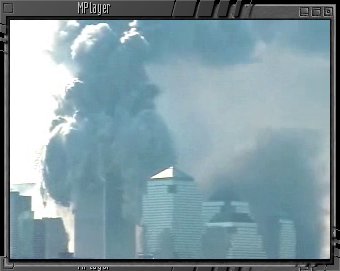
Done, years ago. Way more than freefall time. For example, I took this screenshot in 2005:
That is 8 seconds into the collapse of the north tower, which is about the freefall time from the level of the collapse initiation. Note that collapse front has not even reached halfway down the building.
The foregoing is the worst sort of rationalization. It seeks to establish an excuse for a hollow aluminum jetliner to have the capacity to penetrate structural steel as though structural steel were paper mache. I do wish you would consider placing less relaince upon the process of rationalization.
How is it rationalization to point out that the columns were hollow? You keep saying the plane shouldn't penetrate structural steel as if all that matters is the material. Don't deny that you know the shape of the steel has everything to do with it. A hollow column is only strong in vertical compression, and will provide little resistance to a side impact.
That example is FUBAR. The point is, the jetliner is equally being adversely affected by the impact. If it were real, it would explode, degrade and deposit bits and pieces, large and small, outside the building and would not penetrate as a single entity as was seen to have happened.
The plane did degrade and explode and deposit bits all over the street. It just didn't degrade and explode behind the point of impact. Watch that f4 crash test again, see if you can point out any degradation of the plane behind the part that's impacting the wall. And that is a MUCH stronger wall than the WTC.
Once again, as you did with the NIST example, quoted above, you give an example which completely changes the premise of what is under discussion. That sort of debating tactic is improper and almost always gets noticed by those who are seeking to make a determination as to what position they think is more valid.
It doesn't change the premise at all, it is simply an example of a "weaker" material penetrating a "stronger" one, which you seem to keep objecting to.
Note that phrase: "...AFTER the wings had penetrated..." You really do insist on assuming things that have no valid basis in the first place. Wings of a jetliner cannot penetrate steel. They explode, they degrade, they break apart.
It has a perfectly valid basis. The fuel can't explode before it is mixed with air. It can't be mixed with air before the wing is destroyed. The wing can't be destroyed before it hits the building. Therefore there will be a delay between the wing hitting the building, and the fuel exploding, since there needs to be time for the fuel and air to mix. What do you supposed the fuel is doing during that time? I'd expect it to still be moving foward at nearly 500mph through the building, since the columns are no where near strong enough to decelerate that much mass at that speed.
You appear to intentionally misrepresent my post. No antenna of a jetliner was found, let alone identified. For that matter, of course, no part of a jetliner of any type or variety was identified by part number, was it?
I am? Here's your quote:
you are content with the proposition that a jetliner can glide through a steel building from nose to midsection, including wings, through the aft section, to and including the entire tail with not so much as an antenna breaking off
So no, I most certainly did not misinterpret you. You claimed that small parts did not break off as it penetrated the building, which can not be determined given the resolution and frame rate of the available videos.
The observed fires with respect to the South Tower were negligible. In fact, so much so that the use of the word "several" by you is yet another false assumption, having the same effect as the process of rationalization.
Yet again, the premise here relies on the false claim there was widespread fire in the South Tower. That premise is false.
Liar:
The above is false as a premise for an explanation as to why and how a steel building could annihilate itself from very top to utter bottom in less than 11 seconds. And, there is no validly conducted study, scientifically based, publicly funded and adequately staffed that even purports to claim otherwise.
Stop taking quotes out of context, it makes you look like a liar. It wasn't meant to be a complete explanation of the destruction of the building (which was much more than 11 seconds). It was only a reply to you saying this:
Kerosene does not burn hot enough or long enough to do a darn thing to steel
...
Remember, the NIST study ended at the point where "collapse was initiated" not completed; or, for that matter, not even midway through.
As has been explained before, their study was to determine collapse initiation, not the dynamics of the collapse once it started. No one wants to design a building to collapse a certain way, they want to design them to avoid the initiation in the first place. That was NIST's goal.
In conclusion, while you may have sought to engage in a process of refutation, I am afraid that process placed too much reliance upon unproven assumptions and upon the process of rationalization.
If you're going to call basic physics "unproven assumptions" and logical explanation "rationalization", then there's little point in continuing this.