
-
Security incident: ISF was recently accessed by intruders. Please change your password, and change it anywhere else you used it. Read more
You are using an out of date browser. It may not display this or other websites correctly.
You should upgrade or use an alternative browser.
You should upgrade or use an alternative browser.
Who started both World Wars?
- Thread starter 9/11-investigator
- Start date
- Status
- Not open for further replies.
BaaBaa
Semi-literate hench-person

- Joined
- Feb 15, 2010
- Messages
- 1,466
Firstly, I know that you think the nazzies were super-duper ubermenschen but even time travel was beyond their limits.The Nazis tried to place an ad in the US papers warning the population that ships carrying munitions were subject to attack. The ad was suppressed by the govt.
Secondly, this:
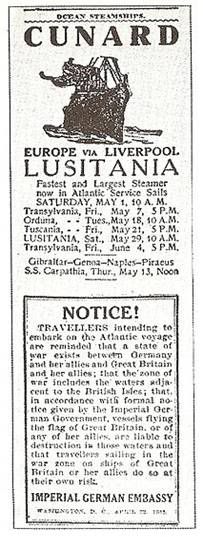
demonstrates the further inaccuracy of your statements. It's appended to a Cunard schedule. Doesn't seem like supression to me...

defaultdotxbe
Drunken Shikigami

- Joined
- Jul 30, 2006
- Messages
- 7,474
the japanese, when they invaded manchuria in 1931 
9/11-investigator
Banned
- Joined
- Nov 9, 2008
- Messages
- 4,032
Firstly, I know that you think the nazzies were super-duper ubermenschen but even time travel was beyond their limits.
Secondly, this: [qimg]http://img.photobucket.com/albums/v681/Geoffiscool/image004.jpg[/qimg]
demonstrates the further inaccuracy of your statements. It's appended to a Cunard schedule. Doesn't seem like supression to me...
OMG, BaaBaa opines that it were the Nazis who sank the Lusitania.
Well I have got news for you: they sank The Maine as well.
And now that we are at it, it was Heinrich Pilatus who nailed Jesus as part of a millenia old German extermination program.
defaultdotxbe
Drunken Shikigami
- Joined
- Jul 30, 2006
- Messages
- 7,474
i had to read his post 4 times before my mind was able to comprehend how little his mind comprehendsYou need to brush up your reading skills. Or you're willfully ignoring the quote box.
Either way, you really give fascism a bad name.
Damien Evans
Up The Irons

what evidence is there that the armaments placed on the Lusitania was part of a "Zionist" conspiracy"??
did the Zionists force Germany to attack this ship?
did the Zionists force Germany to attack two more American ships after this.....finally forcing Woodrow Wilson into the war?
give me a break.
provide evidence or zip it.
oh...and btw....what evidence is there that the "Zionists" forced the Brits and the French to be soo cruel against Germany in the Treaty of Versaille? Woodrow Wilson wanted to be fair to the Germans, in order to prevent another was. But the French and Britist would have none of it. They wanted to punish Germany for the war..and they did.
The Treaty of Versaille caused WW1..and caused the Holocaust.
Those would be laughable claims if it weren't so sad.
Corsair 115
Penultimate Amazing

- Joined
- Apr 18, 2007
- Messages
- 14,519
Is 9/11 guy really once again bringing up the 'Britain started area bombing first' canard? The one repeatedly shot down like the Luftwaffe over Dover? Do we have to bring up Wielun, Frampol and Rotterdam again?
Heck, we can go back further than that. How about the bombing of Guernica in April of 1937?
Normal Dude
Space Shuttle Door Gunner

- Joined
- Jul 22, 2007
- Messages
- 3,966
I just reviewed E. Griffin's chapter on the sinking of the Lusitania. Briefly, the media empire controlled by J.P. Morgan was agitating for war. Churchill had revised the rules of engagement for intercepting merchant vessels which disposed the U boats to submerged attack as opposed to inspections, surface attacks, etc. The Lusitania was registered as an armed auxilliary cruiser and was used to ship weapons. On the voyage in question it carried six million rounds of ammo among other things. The Nazis tried to place an ad in the US papers warning the population that ships carrying munitions were subject to attack. The ad was suppressed by the govt. The Lusitania was required to sail at slow speed into an area where a U boat was active. A supporting British destroyer called back by the British. This is just the barest outline, the book provides more info with quotes from some of the players. It was a set up orchestrated by the Brits and the US to galvanize public opinion in the US to allow Wilson to reverse the promise of his campaign to avoid war and to enter the war to save the US financial class.
The Lusitania was sunk in 1915. The Nazi party wasn't even founded until 1919.
I believe this image is appropriate.
http://yfrog.com/28fail128405956742471461j
Last edited:
Dave Rogers
Bandaged ice that stampedes inexpensively through

i had to read his post 4 times before my mind was able to comprehend how little his mind comprehends
It's impressive how many glaringly obvious errors in basic comprehension 9/11-investigator has committed in this thread alone. Could it be that it's the same inability to comprehend what's obvious to anyone of reasonable intelligence that leads him to the belief that Germany was the pinnacle of moral rectitude throughout the first half of the twentieth century? Or could it be that the cognitive dissonance required to hold that view has rendered him incapable of seeing any other meaning in any text than the one he's chosen to see there?
Stupidity and neo-Nazism - which is the cause, and which the effect?
Dave
9/11-investigator
Banned
- Joined
- Nov 9, 2008
- Messages
- 4,032
We leave all the moral self-gratulations for what they are and continue with Buchanans revisionist Walhalla. I had to use at least 3 text liner pencils to highlight all the marvellous new insights this book has to offer.
My Anglo opponents will be delighted to learn that Buchanan discerned a few weaknesses in German policies as well in the decades before WW1. The largest in the eyes of Buchanan was Germany's naval policy. The Germans who had obtained national unity as late as 1871 and in the decades after had no idea where to spend their abundant strength on, in their provincial 'me too' attitude, decided to build an enormous fleet, for which they had no need: die Hochseeflotte or High Seas Fleet. The British who needed their fleet to maintain their Lebensraum to the tune of 25% of the planet (it is the typical Anglo hypocrisy to constantly lie about the non-existing drive of the Germans to conquer ze wurld and at the same time grab every square meter they could lay their hands on themselves, even deep into Afghanistan, this graveyard of empires, be it British, Soviet or American) now needed to reserve a large part of their fleet to keep the German fleet in check. Buchanan deplores that it was this Hochseeflotte that made any natural alliance between see power Britain and landpower Germany impossible.
p.18 - The German Naval Laws of 1898 and 1900 that laid the foundation of the High Seas Fleet had historic consequences. By constructing a great navy, 400 nautical miles from the English coast, the Kaiser (not Beckenbauer) forced the Royal Navy to bring its most powerful warships home from distant waters to build up the Home and Channel Fleets. "In 1896 there had been 74 ships stationed in home waters and 140 overseas", writes James, "14 years later these totals were 480 and 83 respectively". With the British empire stripped of its shield, Britain was forced to resolve conflicts with imperial Russia and France - the 2 powers that most threatened Germany.
Rather than enhance German security, the High Seas Fleet sank all hope of detente with Britain and pushed her into de facto alliances with France and Russia. The Kaiser's decision to challenge the Royal Navy would prove a principal factor in Germany's defeat and his own dethronement. For it was the arrival of a British Expeditionary Force in France in August 1914 that blunted the German drive into France, leading to four years of stalemate war that ended with Wilhelm's abdication and flight to Holland.
Translation: Germany had become a hindrance for Britain in its drive to conquer the world. Not that Germany had any intention of being a hindrance. Characteristic for Germany was its slimy need to get recognition from Britain as a great power, which they potentially were indeed, as far as populations numbers, land mass, talent, skill and discipline were concerned, but not mentally.They were no match for the British arrogance who had nothing but contempt for these provincials, an attitude that continued under Hitler and even endures until today (read between the lines here on this forum of the Anglo posters), where Britain has great trouble of even holding Wales and Scotland within the sorry remains of its 'empire'.
p.19 - But the fault lies not with the Germans alone. The British were never willing to pay the Kaiser's price for calling off Tirpitz's challenge. During the 1912 Haldane mission to Germany, Britain could have gotten limits on the High Seas Fleet in return for a British pledge of neutrality in a Franco-German war.
Translation: The British were not interested in avoiding a European war, but wanted to continue their centuries old splendid isolation (effectively: divide and conquer) policy of targetting the most powerful country in Europe, be it Spain, France or now Germany.
My Anglo opponents will be delighted to learn that Buchanan discerned a few weaknesses in German policies as well in the decades before WW1. The largest in the eyes of Buchanan was Germany's naval policy. The Germans who had obtained national unity as late as 1871 and in the decades after had no idea where to spend their abundant strength on, in their provincial 'me too' attitude, decided to build an enormous fleet, for which they had no need: die Hochseeflotte or High Seas Fleet. The British who needed their fleet to maintain their Lebensraum to the tune of 25% of the planet (it is the typical Anglo hypocrisy to constantly lie about the non-existing drive of the Germans to conquer ze wurld and at the same time grab every square meter they could lay their hands on themselves, even deep into Afghanistan, this graveyard of empires, be it British, Soviet or American) now needed to reserve a large part of their fleet to keep the German fleet in check. Buchanan deplores that it was this Hochseeflotte that made any natural alliance between see power Britain and landpower Germany impossible.
p.18 - The German Naval Laws of 1898 and 1900 that laid the foundation of the High Seas Fleet had historic consequences. By constructing a great navy, 400 nautical miles from the English coast, the Kaiser (not Beckenbauer) forced the Royal Navy to bring its most powerful warships home from distant waters to build up the Home and Channel Fleets. "In 1896 there had been 74 ships stationed in home waters and 140 overseas", writes James, "14 years later these totals were 480 and 83 respectively". With the British empire stripped of its shield, Britain was forced to resolve conflicts with imperial Russia and France - the 2 powers that most threatened Germany.
Rather than enhance German security, the High Seas Fleet sank all hope of detente with Britain and pushed her into de facto alliances with France and Russia. The Kaiser's decision to challenge the Royal Navy would prove a principal factor in Germany's defeat and his own dethronement. For it was the arrival of a British Expeditionary Force in France in August 1914 that blunted the German drive into France, leading to four years of stalemate war that ended with Wilhelm's abdication and flight to Holland.
Translation: Germany had become a hindrance for Britain in its drive to conquer the world. Not that Germany had any intention of being a hindrance. Characteristic for Germany was its slimy need to get recognition from Britain as a great power, which they potentially were indeed, as far as populations numbers, land mass, talent, skill and discipline were concerned, but not mentally.They were no match for the British arrogance who had nothing but contempt for these provincials, an attitude that continued under Hitler and even endures until today (read between the lines here on this forum of the Anglo posters), where Britain has great trouble of even holding Wales and Scotland within the sorry remains of its 'empire'.
p.19 - But the fault lies not with the Germans alone. The British were never willing to pay the Kaiser's price for calling off Tirpitz's challenge. During the 1912 Haldane mission to Germany, Britain could have gotten limits on the High Seas Fleet in return for a British pledge of neutrality in a Franco-German war.
Translation: The British were not interested in avoiding a European war, but wanted to continue their centuries old splendid isolation (effectively: divide and conquer) policy of targetting the most powerful country in Europe, be it Spain, France or now Germany.
Last edited:
9/11-investigator
Banned
- Joined
- Nov 9, 2008
- Messages
- 4,032
Ever hear of a place called "Auschwitz" or a dude called "Mengele"?
You mean the place where due to Anglo saturation bombing and resulting deteriorating conditions 100k people got killed?
Sure I did. Wrong thread though.
You are aware that according to Buchanan and Paul Craig Roberts 1,000,000 German soldiers where killed in captivity after the war? And that this amounts to 5 times the number of people killed in all German concentration camps combined (also the result of Anglo actions, although indirect)?
Of course not.
Dave Rogers
Bandaged ice that stampedes inexpensively through
You are aware that according to Buchanan and Paul Craig Roberts 1,000,000 German soldiers where killed in captivity after the war? And that this amounts to 5 times the number of people killed in all German concentration camps combined (also the result of Anglo actions, although indirect)?
Ah, all it needed was an oblique reference to James Bacque for the perfect storm of incompetent historiography. The August 1945 Report of the Military Governor states that the column "Other Losses" refers to boys and old men of the Volkssturm released without documentation after the war. Bacque, for reasons best known to himself, chose instead to believe that this number represented deaths in captivity, and then made up some additional numbers to bring the total from about two-thirds of a million to the ropund million. Buchanan appears to have chosen to believe Bacque's long-discredited canard, again for reasons best known to himself; Roberts, who wouldn't know sound reasoning from a hole in the ground, appears to have been nicely fooled. And, of course, many millions are known to have been deliberately killed by the Nazi regime, by everyone except neo-Nazi liars.
Dave
defaultdotxbe
Drunken Shikigami
- Joined
- Jul 30, 2006
- Messages
- 7,474
actually auschwitz wasnt bombed, but nice try thoughYou mean the place where due to Anglo saturation bombing and resulting deteriorating conditions 100k people got killed?
actually its closer to 250,000 after war, almost all in soviet hands, are the russians angles now?You are aware that according to Buchanan and Paul Craig Roberts 1,000,000 German soldiers where killed in captivity after the war? And that this amounts to 5 times the number of people killed in all German concentration camps combined (also the result of Anglo actions, although indirect)?
9/11-investigator
Banned
- Joined
- Nov 9, 2008
- Messages
- 4,032
That's Pat Buchanan, extreme right wing anti-seminite ID believing hitler apologist author? That's your reference point?
Yep, that's him. The representative of America's Old Right, now completely dead and replaced by neo-trotskyite neo-'conservatism'. He still believes that muslims carried out 911. And against better knowledge hopes that The West (under Anglo ledership) is not dead. I in contrast cannot wait to destroy (meaning dissolve) the West as soon as possible and let Anglosphere do the dying all by itself. I am completely uninterested in Duke's phantasy that America can be saved, I will dance on it's grave and wish the NWO croud here success in bringing it's demise about. It's disintegration is inevitable after the Euro's will constitute 10% of the population at the end of this century. I am interested though in 10% of the best of the current Euro-population and help them escape to Europe (Euro-Siberia rather).
But be honest SanityGap.... you will call everybody a 'right wing anti-seminite' (sic) who is not willing to hand over his civilization to Islam on a silver platter, won't you.
Happy that I am not in your club.
Last edited:
Dave Rogers
Bandaged ice that stampedes inexpensively through
Yep, that's him. The representative of America's Old Right, now completely dead and replaced by neo-trotzkiyte neo-'conservatism'. He still believes that muslims carried out 911.
As they say, even a stopped clock is right twice a day.
Your mileage may vary.
Dave
ETA: "Anti-seminite"? I really don't want to think what that means. I realise you're only repeating a typo, but I'd have thought you'd correct that particular term to show your reverence for it.
Last edited:
SanityGap
Critical Thinker

- Joined
- Jun 2, 2010
- Messages
- 346
But be honest SanityGap.... you will call everybody a 'right wing anti-seminite' who is not willing to hand over his civilization to Islam on a silver platter, won't you.
Happy that I am not in your club.
You presume a lot about me when in actual fact you know nothing of my views and opinions or personal history.
My club would not accept you.
ETA It was my typo. Apologies.
Last edited:
Evolved Wookie
A rigidly defined area of doubt and uncertainty

- Joined
- Aug 25, 2008
- Messages
- 601
So who started WW1 and WW2?
I dunno. It wasn't me! Who told you it was me?!
It was Geoff Jenkins, sir! I saw him round the back of the bike-sheds with a rifle and a bottle of hair-bleach. Anyway, it couldn't have been me 'cause I was shopping with my mum and we were in Sainsbury's and I was dead at the time!
Last edited:
- Status
- Not open for further replies.