Vortigern99
Sorcerer Supreme
Mr. Yeti, I'm glad you asked!
The simple answer to your question, now that we all seem to be on the same page with regard to the rules of perspective and the action of the human arm, is that in the overlay onto sports-jacket Bob, the humerus/arm bone is extending toward the camera.
It's just that simple. Foreshortening is occurring. No one has artificially shortened the arm-bone to squash it into the needed space. The upper arm-bone is simply angling toward the viewer/camera, resulting in the phenomenon of foreshortening, according to the rules of perspective which we've discussed at length.
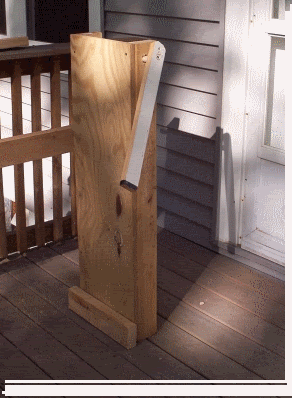
The reason that your slat-pegged-to-a-post does not work in this context is that: 1) The human arm (minus the hand) is made of two sections, the upper and lower arm bones (humerus and radius/ulna, respectively), whereas your slat consists of only one straight segment; and 2) There is no ball-and-socket joint permitting a full range of motion out and away from the body in a rotational arc.
Taking both flaws at once, then, the slat-pegged-to-a-post does not allow an upper segment to angle toward the camera while the lower segment bends to a less severe angle.
I hope this clarifies!
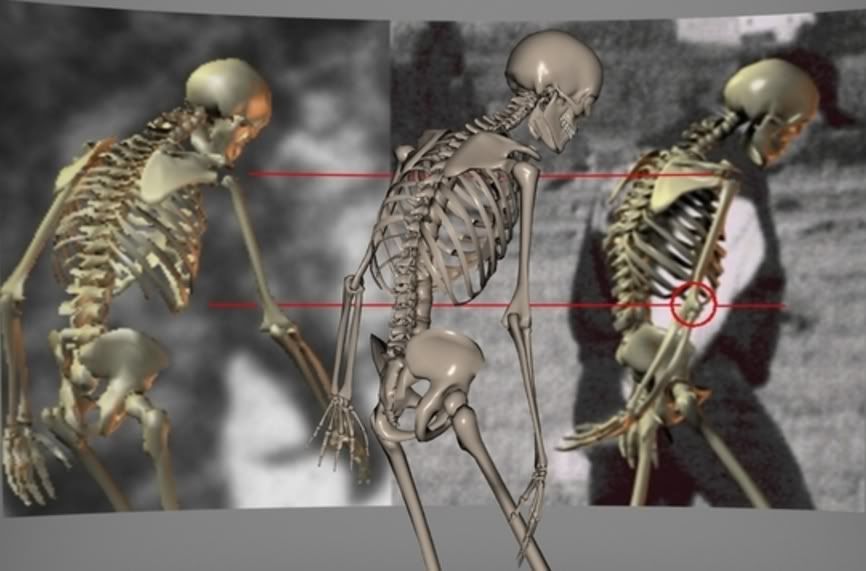
The simple answer to your question, now that we all seem to be on the same page with regard to the rules of perspective and the action of the human arm, is that in the overlay onto sports-jacket Bob, the humerus/arm bone is extending toward the camera.
It's just that simple. Foreshortening is occurring. No one has artificially shortened the arm-bone to squash it into the needed space. The upper arm-bone is simply angling toward the viewer/camera, resulting in the phenomenon of foreshortening, according to the rules of perspective which we've discussed at length.
The reason that your slat-pegged-to-a-post does not work in this context is that: 1) The human arm (minus the hand) is made of two sections, the upper and lower arm bones (humerus and radius/ulna, respectively), whereas your slat consists of only one straight segment; and 2) There is no ball-and-socket joint permitting a full range of motion out and away from the body in a rotational arc.
Taking both flaws at once, then, the slat-pegged-to-a-post does not allow an upper segment to angle toward the camera while the lower segment bends to a less severe angle.
I hope this clarifies!
Last edited:



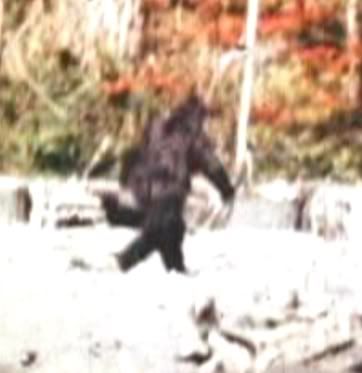


 ...as an example of Patty's.....