10 story hole in WTC 7 - Part II

Your delusion gets worse. The metal in this photo, from your colour chart, is below the melting point of steel. It cannot therefore be molten steel. "Steel beams dripping" is also evidence against molten steel; the fact that the steel is still in the form of a beam is proof that it isn't molten. And the idea that the metal can't be molten aluminium because it's above the melting point of aluminium - well, I simply don't have words to describe the absurdity of it. It's your lack of self-awareness, though, that I find truly worrying. You make absolute statements, then when they're shown to be absurd you act as though they were qualified. You don't seem capable of understanding your own arguments. There seem to be no points of contact with reality here. I seriously worry that you are genuinely ill.

Dave
It's hilarious. He obviously doesn't understand that you are going to get showers of sparks and oxidised material that is not liquid, therefore not molten, but solid when removing large chunks of hot steel that have eroded through high temperature corrosion mechanisms.

That photo does not show anything dripping.

Amazing how someone with zero experience in steels can claim such nonsense and think they are right. Watching a blacksmith or iron foundry work for 3 minutes would show what that photograph shows.
 
It's hilarious. He obviously doesn't understand that you are going to get showers of sparks and oxidised material that is not liquid, therefore not molten, but solid when removing large chunks of hot steel that have eroded through high temperature corrosion mechanisms.
What are you talking about? You just put a lot of words together.

The metal glob in the photo is 2200-2500[FONT=&quot]°[/FONT]F and up.
It is not aluminum, nickel or cobalt. That leaves steel and iron as the only possibilities.

That photo does not show anything dripping.
Yes it does.
 
CrazyChris:
What are you talking about? You just put a lot of words together.

It must be very complicated for you. There, there. have a sit down and a cup of tea. You'll feel better in a minute.

Bananaman (who doesn't like to see cruelty to dumb beasts.)
 
He also doesn't understand that the chart that he produces is supposed to be used with the naked eye under normal lighting conditions. A photograph is not going to give you the same characteristics and therefore you can't match one with the other. Secondly if the material was hot enough for some of it to be molten (liquid) then the steel would droop under it's own weight. Steel close to it's melting point has very little strength.
 
For those confused by the above attribution, I'd just like to mention that Chris said all that, not me.

Dave
My apologies. I'll go back and edit the post so it quotes correctly.

Edit. Seems this can't be done due to a time limit on edits. The problem was with Christopher 7s original quote of Dave Rogers. Oops. :blush:
 
Last edited:
What are you talking about? You just put a lot of words together.

The metal glob in the photo is 2200-2500[FONT=&quot]°[/FONT]F and up.
It is not aluminum, nickel or cobalt. That leaves steel and iron as the only possibilities.

Yes it does.
Was that picture taken a night? ( I think it was)

How did you verify that the color (balance / Hue) is accurate?

I bet you have no idea. You just accept it as fact.
 
Was that picture taken a night? ( I think it was)

How did you verify that the color (balance / Hue) is accurate?

I bet you have no idea. You just accept it as fact.

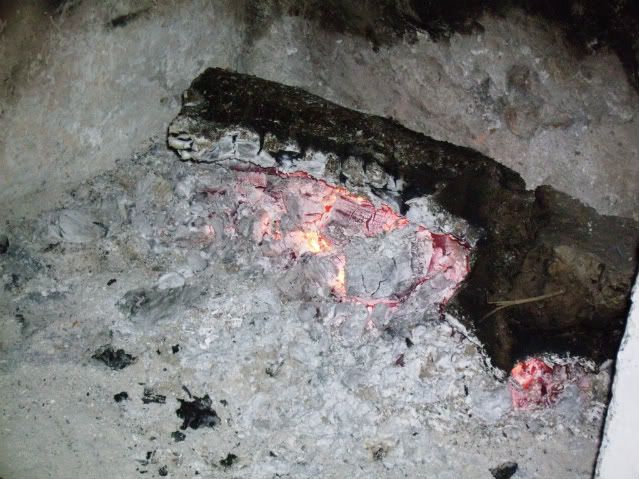
He can't These are two photos of the same fire taken about 30 seconds apart, just long enough to adjust the camera settings.

IMGP0115.jpg


IMGP0117.jpg
 
So aluminium would still be a liquid at that temperature. It doesn't solidify again if it gets too hot.

Dave

Not wanting to add to Chris's delusions but, there's the remote chance that it can't be aluminum because it's too hot. According to wikipedia (http://en.wikipedia.org/wiki/Aluminum), the boiling point is 2519 C (4566 F). Now it's fair to say that temp is off the chart in the picture he posted, so for any temp on the chart, Al would be a liquid.

How long do you give the twoofers to vandalize the entry and reduce Al's boiling point to below 2000 F?
 
What are you talking about? You just put a lot of words together.

The metal glob in the photo is 2200-2500[FONT=&quot]°[/FONT]F and up.
It is not aluminum, nickel or cobalt. That leaves steel and iron as the only possibilities.

Yes it does.

OK, I'll bite. What is dripping? Have tests been performed that conclusively show it to be iron? Is there no possibility of it being Aluminum (even if there was 0 grams in WTC 1, 2 or 7 before 9/11, there were a few tonnes of the stuff after the planes hit the buildings)?
 
He also doesn't understand that the chart that he produces is supposed to be used with the naked eye under normal lighting conditions. A photograph is not going to give you the same characteristics and therefore you can't match one with the other.
The chart is a guide to the approximate temperature of steel. The photo was taken at night and was lit with work lights. This will produce a reasonably accurate colors.

Secondly if the material was hot enough for some of it to be molten (liquid) then the steel would droop under it's own weight. Steel close to it's melting point has very little strength.
The glob is light orange [2100[FONT=&quot]°[/FONT]F] at the top where the crab claw is grasping it. It is not only drooping, there is metal dripping off the bottom.
 
The photo was taken at night and was lit with work lights. This will produce a reasonably accurate colors.
The accuracy compared to what the human eye sees, and what the camera sees is entirely determined by not only the amount of light available, but also the exposure time, and the aperture. In effect, it's not a reliable indicator if you're trying to determine something that is contingent upon color as a function.

Glenns' post a few up from this one illustrates the kinds of discrepancies one can expect, from different camera settings
 
Last edited:
The accuracy compared to what the human eye sees, and what the camera sees is entirely determined by not only the amount of light available, but also the exposure time, and the aperture. In effect, it's not a reliable indicator if you're trying to determine something that is contingent upon color as a function.

Glenns' post a few up from this one illustrates the kinds of discrepancies one can expect, from different camera settings

Stop with your big scientificy sounding words.
 
Rhetorical dodge. As you well know, there are no other examples of this occurring. That is why FEMA said "A detailed study into the mechanism of this phenomenon is needed . . ."
NIST ignored this.
Thermite is one explanation.
There are no other known explanations.
Your devout denial wont even let you acknowledge this fact.
It's interesting how you claim that thermite is the only explanation of something that has never happened before. The only way you can state that thermite is the only explanation it to provide proof that thermite could cause the phenomenon. Since you can't, thermite cannot be uses at all as an explanation. So, I ask again, please provide examples of thermite causing pools of molten anything for months. Shouldn't be hard. Thermite has been used as an incendiary for many decades and used quite extensively in WWII. I await your non-9/11 related example.
 
The accuracy compared to what the human eye sees, and what the camera sees is entirely determined by not only the amount of light available, but also the exposure time, and the aperture. In effect, it's not a reliable indicator if you're trying to determine something that is contingent upon color as a function.

Glenns' post a few up from this one illustrates the kinds of discrepancies one can expect, from different camera settings
You are trying to imply that the colors are way off. Give it up. The color change in Glenn's photos is not that severe. Only the brightness has changed significantly.
The first photo is obviously not set properly. It doesn't look real.


The photo of the glob in the crab claw is clear. The light setting is correct.
 

Back
Top Bottom