Split Thread The validity of classical physics (split from: DWFTTW)

Status
Not open for further replies.
Seems we have both been digging around the net at the same time Michael. I've just come back from my latest explorations and have found your latest post above. Thanks. You might be interested in reading another thread starting with this post, with the topic "Weight and reference frame".

Michael_C said:
This illustrates exactly my point: the term "real weight" has no clear definition. If we are to talk of weight at all, the only really clear definition I can imagine must include the frame of reference.
I would say that "weight" has no clear definition, rather than "real weight".

Also, more from John Denker in another interesting post:

John S. Denker at carnot.physics.buffalo.edu/archives/2000/09_2000/msg00189.html said:
I agree with your observation that there is an element of arbitrariness
here. The arbitrariness is real. Some of the arbitrariness is inescapable.
In mathematics the situation is more clear:
-- there are undefined (and undefinable) terms such as points, lines,
and planes
-- there are axioms that assign (with considerably arbitrariness) the
properties of the above, and then
-- there are theorems which are derived from the axioms.
To return to the world of physics, the term "force" starts out as an
abstraction, essentially as abstract as a mathematician's "point", until it
is given meaning -- implicitly -- by being used in the laws of motion.
Alas the physics situation is messier than the math situation, because
physicists have not been careful to distinguish what are the terms, the
axioms, and the theorems. Many of the things that you would need to say in
order to axiomatize the notion of "force" are left unsaid in the usual
formulation of Newton's laws -- notably the fact that forces are vectors,
and obey the vector laws when you superpose them, rotate them, et cetera.
and
John S. Denker at carnot.physics.buffalo.edu/archives/2000/09_2000/msg00189.html said:
As far as I can tell, of all the laws of physics, there is not a single one
that means anything _by itself_. It's like a big geodesic dome; any
single strut, out of context, is structurally unsound and would fall down
immediately.
I read that and thought, yep, this thread here (with humber, etc) is a bit like the wreckage of a big geodesic dome...
 
I see it quite differently, Michael. I see that Clive has given a more technical reply and some links. I haven't followed them, and I can't hope to give as much technical information, but here's my take on it. It's logic is almost the other way round. Yes, velocities are relative to a frame of reference. But what that means is that your absolute velocity (as if nothing else existed anywhere, or you refused to look for it) is meaningless. You have to consider two objects (or the object you are trying to give the velocity of and a sort of nominal-object as frame if you like to think of it that way). With gravity, it does not seem to be the same. At a particular point there just is whatever gravitational field there is. Why I asked you to say what it was you mean by a frame of reference for gravity is because the term suggests a velocity, but you might also mean something like a particular acceleration or a particular gravitation, or a position. It seems from your reply that you are thinking of it as a position, but that seems untenable to me.

Since all this hinges on frames of reference, and this thread came into being largely because of disputes about frames of reference, it wouldn't be a bad idea to go into the definition of such frames in a bit more detail. A frame of reference is not "a velocity" or "a position". It is a system of coordinates for defining events in space and time.

You're certainly familiar with Cartesian coordinate systems for defining a place in a two dimensional plane. You can create an (x,y) coordinate system to suit your purposes: you can choose the origin (0,0) wherever it is most convenient, you can choose the directions of the x and y axes, you can even choose to use a different system of units for the two axes. Depending on your chosen system, a point will have different coordinates. An (x,y,z) coordinate system is used to define positions of points in three-dimensional space, and and (x,y,z,t) system is used to define positions of events in three-dimensional space and time.

Here's how we were taught this in our physics class: imagine a cubical latticework of one-meter sticks. That represents a three-dimensional coordinate system for defining the positions of objects, but the time component is missing. Put a clock at each intersection. Synchronise the clocks (I won't go into how that's done for now: maybe later). Now you have the makings of a four-dimensional coordinate system for defining the positions of events in space-time. You'll need to choose an origin for x, y, z and t, and directions for the four axes. That's easy enough for the x, y and z axes, but what's the direction of a time axis? You can think of that as the way the lattice of clocks moves over time. In the case of the DDWFTTW cart, we have (for instance) a coordinate system that stays with the road. We have seen that it is also useful to look at the cart from a coordinate system that stays with the air. If you imagine the two lattices, they slide through one another as time progresses.

That is a very simple relation between two reference frames: the motion is at a constant velocity. If we compare a free-falling reference frame to one stationary at the surface of the earth, the relation is more complex: one frame is accelerating relative to the other one. It's important to understand that all frames are equally valid for observing and analysing a series of events: there's no "right" frame, or "absolute" frame. Depending on the frame we choose, the gravitational forces measured in it will be different. If we choose a free-falling ("inertial") frame, we will measure no gravitational force at all: projectiles will follow straight lines and objects will have no weight. In any frame accelerating with respect to this free-falling frame, gravitational force will exist.
 
Friction is a loss. You need only the enough friction to meet the force required for motion. All else is a waste. So, it cannot be true that increasing friction always produces improved performance.

I nominate this fine piece. Again Mr Humber reiterates that "force is required for motion". Yet elsewhere he states that he respects Mr Newtons Laws. Yet Humber cannot understand why he is seen as an ingnoramus. We cannot determine if it is a genuine concept and understanding issue, or if he just can't construct a context with terms and conditions.
 
What is your definition of "real weight" then?
I guess my sentence was a bit ambiguous. I simply meant that the whole notion of "weight" seems to have multiple definitions, and there isn't (as far as I can see) a single widely accepted formal definition even in the "upper echelons" of physicists. You may disagree of course. But at the end of the day "weight" is a matter of definition. You can define it to be close to our normal intuitions. You can define it in other ways. Some definitions are supersets of others, and some are completely incompatible in at least some sense.

You keep on throwing "real weight" back at me (even though I've already pointed out earlier that I used that terminology originally simply to make a distinction from the "apparent weight" which I was also talking about at the same time). I could just have said "weight" originally (as per the wikipedia definition I was referring to at the time). So, my 'rather than "real weight"', was emphasising the contrast with your earlier statement where you said that you thought "real weight" had no clear definition. That to me sounded like you were intent on implying some other "weight" (e.g. perhaps John Denkers definition) is AOK, and that only "real weight" was a problem. I don't have a problem with John Denker's definition as such (now that I think I understand it). I'm just saying it's one definition, you may want to argue that it's "the best" in some sense, but there are still other ways of defining "weight" (and they are used), and there is still plenty of room for confusion around the whole area. Is this any clearer? :)

Perhaps you should edit the wikipedia article for "weight" to make it "more stringent"?
 
Then you didn't look at the videos I posted. Those video show that with wind at the tail, the device self-starts.

It doesn't take a lot of CPU cycles to realize that on a long treadmill, there would be increasing wind at the devices tail as the speed of the treadmill is increased.

JB

You're not reading the question correctly:

"...could the cart go forward without someone holding it down against the belt to get it started?"

Using a fan doesn't count.
 
You're certainly familiar with Cartesian coordinate systems for defining a place in a two dimensional plane. You can create an (x,y) coordinate system to suit your purposes: you can choose the origin (0,0) wherever it is most convenient, you can choose the directions of the x and y axes, you can even choose to use a different system of units for the two axes. Depending on your chosen system, a point will have different coordinates. An (x,y,z) coordinate system is used to define positions of points in three-dimensional space, and and (x,y,z,t) system is used to define positions of events in three-dimensional space and time.

Instaneous events in flat spacetime. As soon as you accelerate x your dealing with curved spacetime and x is no longer a vector.
 
Friction is a loss.

No. Friction is not a loss -- friction is a force.

http://en.wikipedia.org/wiki/Friction

In cornering a race car I can actually *reduce* my losses through *increasing* my friction: An improperly shod car will scrub off more speed through the corner (a loss to heat) than will a car provided with enough friction to roll through the corner with minimal slipping.

I'm sure that considering his field, Mender can also explain this us (but not to you of course).

JB
 
You're not reading the question correctly:

"...could the cart go forward without someone holding it down against the belt to get it started?"

All the question asks is "can the cart self start?" -- and asked another way "is the force of the wind alone enough to start the cart?"

I'm reading the question perfectly, but you're displaying an astonishing lack of imagination -- the treadmill creates the same wind as the fan and the sun. If it self starts with a fan, if it self starts in a breeze, it self starts on a long enough treadmill.

From the videos presented it's very clear to see that "No, someone does not have to hold it down against the belt to get it started" -- the force of the wind alone is sufficient.

This was demonstrated both indoors and out -- solar wind and fan wind.

Using a fan doesn't count.

Well, I guess all wind tunnel research will need to be moved outside. I'll let you send that memo to NASA -- "Using a fan doesn't count". ROFLAO!!

JB
 
All the question asks is "can the cart self start?" -- and asked another way "is the force of the wind alone enough to start the cart?"

I'm reading the question perfectly, but you're displaying an astonishing lack of imagination -- the treadmill creates the same wind as the fan and the sun. If it self starts with a fan, if it self starts in a breeze, it self starts on a long enough treadmill.

From the videos presented it's very clear to see that "No, someone does not have to hold it down against the belt to get it started" -- the force of the wind alone is sufficient.

This was demonstrated both indoors and out -- solar wind and fan wind.


Well, I guess all wind tunnel research will need to be moved outside. I'll let you send that memo to NASA -- "Using a fan doesn't count". ROFLAO!!

JB


It's kinda strange how you are deliberately avoiding the question. He clearly asked if the cart can self start without being held in place. Not if you could put a fan behind and then get it to move on the treadmill.
Self start, on the treadmill, no fan. Get it???
 
Last edited:
Non sequitur.
But not a flat refutation. How do you equate increased friction to say a reduction of power consumption?

Been there done that. When looking for the best advance ratio of the cart, we used many different diameter wheels. "Many different diameters" meant many different designs -- some with hard and shiny surfaces and some with soft and sticky surfaces. The soft tires weren't slipping, but the harder one's did so we had to add weight to get them to drive the prop.
Yes, but that still says that the friction is between two simple bounds. Not enough, and the cart will become unstable, too much and it goes back with the belt.

We went through this with you about 5 thousand posts ago Humber -- you're just cracked on this one. Performance goes up on the cart as the slip against the belt goes down.
It is not simply slip. That word has a definite meaning when related to wheels and tires. The wheel and belt have equal surface velocities when the cart is stable on the belt. That is not found on a real road, because it simply cannot happen.

For the same reason that McClaren doesn't glue their cars tires to their starting grid spot. (you Moron!).
That is right, but then they do not publicly claim that increased friction improves performance.
Also, it means that you agree that moving back with the belt (same velocity as the belt) is like being on the grid. Can we see that? It presents a conundrum for the friction argument, don't you agree?
 
I nominate this fine piece. Again Mr Humber reiterates that "force is required for motion". Yet elsewhere he states that he respects Mr Newtons Laws. Yet Humber cannot understand why he is seen as an ingnoramus. We cannot determine if it is a genuine concept and understanding issue, or if he just can't construct a context with terms and conditions.

I would not be so willing to show yourself to be so simple-minded, Semper.
If static, friction it is like every other force, no work is done, so you expect no loss. Dynamic frictions; rolling friction, aerodynamic drag, work of fracture etc, are all dissipative. That is loss.
Force is required for motion Semper. (Unless you want to include the case of some object already traveling in an environment where there are no opposing forces, but that would be silly wouldn't it?)
 
It's kinda strange how you are deliberately avoiding the question.

It's kinda strange how the guy who asked the question, rather than accusing me of "deliberately avoiding" it, thanks me for answering it (see #3417). Seems it's not me who doesn't understand the question/answer.

He clearly asked if the cart can self start without being held in place.

And the videos clearly answer that question. The guy who asked the question gets that ... when will you?

Not if you could put a fan behind and then get it to move on the treadmill.

Notice the treadmill wasn't moving when the fan was used? Get it? -- wind is the same whether moving the air or the tread.

Self start, on the treadmill, no fan. Get it???

What I get is that you don't understand simple inertial frames of reference. No shame in that alone, but you might want to brush up on them before accusing me of deliberately avoiding a question that I've addressed and answered directly and truthfully multiple times in the last few posts.

JB
 
All the question asks is "can the cart self start?" -- and asked another way "is the force of the wind alone enough to start the cart?"
I'm reading the question perfectly, but you're displaying an astonishing lack of imagination -- the treadmill creates the same wind as the fan and the sun. If it self starts with a fan, if it self starts in a breeze, it self starts on a long enough treadmill.

From the videos presented it's very clear to see that "No, someone does not have to hold it down against the belt to get it started" -- the force of the wind alone is sufficient.

Well, I guess all wind tunnel research will need to be moved outside. I'll let you send that memo to NASA -- "Using a fan doesn't count". ROFLAO!!
They will certainly laugh when you tell them about the windtunnel with no wind.

This was demonstrated both indoors and out -- solar wind and fan wind.

In both cases, solar wind and fan, there is real moving air mass. Why wouldn't a propeller-driven device move?

The cart in real wind will start because all that is needed is an average force driving the propellor more in direction than the other. Wait long enough in the natural wind, and gusts or shears (plentiful in an urban environment because of buildings and so forth), will ensure that happens.
I provided a more detailed description much earlier on, where the torsion of the propellor shaft elastically stores some energy should the wind turn the propellor so that the wheels turn in opposition to forward motion. When returned, that energy is enough tip the balance in favour of forward motion.

There has been no video of the cart starting on the belt. The only possible exemption, is if the cart can spin up quickly enough to get to "windspeed" balance before being ejected from the belt. However, that is less likely to occur than being placed by hand, but no different in principle.

You will not see the cart make true progress up the belt from moving with the belt (zero velocity w.r.t the belt), because is impossible under the proscribed circumstances
 
But not a flat refutation.

Your point was irrelevant -- and thus any agreement/disagreement the same.

How do you equate increased friction to say a reduction of power consumption?

Easy, see my corning example in my above post.

Not enough[friction], and the cart will become unstable, too much and it goes back with the belt.

No, the opposite. Too *little* friction and it goes back with the belt -- I know ... I have one.

The wheel and belt have equal surface velocities when the cart is stable on the belt.

Depends on your definition of "stable" and your definition of "equal surface velocities".

That is not found on a real road, because it simply cannot happen.

A very cute little assertion, but just plain wrong.

Humber:
If friction increases performance, then why not glue it to the belt?

Me:
For the same reason that McClaren doesn't glue their cars tires to their starting grid spot.

Humber:
That is right, but then they do not publicly claim that increased friction improves performance.

LOL -- they don't need to "publicly claim that increased friction improves performance" -- it's self evident in the racing world where everyone scratches and claws and spends millions in an attempt to increase their performance through the increase of friction between the tire and the ground.

Take a properly installed wing producing downforce on the race car -- three things increase: 1: drag. 2: friction between tire and pavement. 3: performance ( reduced lap times, etc). Drag and friction sound like very bad things -- but when used properly, they clearly increase performance.

Also, it means that you agree that moving back with the belt (same velocity as the belt) is like being on the grid.

Well, you haven't given me enough information to agree or not ... in a room with still air, moving back with the belt (same velocity as the belt) is definitely just like being stationary on the grid with a wind blowing down the grid equal to the velocity of the belt. With those stipulations in place, I can agree.

Can we see that?

Define: "that".

It presents a conundrum for the friction argument, don't you agree?

You haven't defined "that" ... how could I agree?

JB
 
JB, I think 3bodyproblem is requesting to have the cart start itself on the treadmill from a dead stop. He does not realize that to do this you would need a much longer treadmill. It cannot start itself with your everyday treadmill since when the treadmill is not moving it is the same as a zero wind speed and it takes a minimum wind speed for your cart to start up. It will probably be off of the end of the treadmill by the time the treadmill gets to that speed. His question shows that he does not know how it works or how the treadmill is a equivalent to already running at wind speed.
 
No. Friction is not a loss -- friction is a force.
http://en.wikipedia.org/wiki/Friction
Only when static is it simply a "force", Are you willing to state that friction does not generate heat?

In cornering a race car I can actually *reduce* my losses through *increasing* my friction: An improperly shod car will scrub off more speed through the corner (a loss to heat) than will a car provided with enough friction to roll through the corner with minimal slipping.
That is not a simple matter. In the first case, the "cornering force" is greater that of the opposing friction, so the tyre is scrubbed against the road. That is loss.
Another case is when a car skids or does a burn-out. Here, the initial friction is so great, that the tyre melts, and that lubricates the road/tyre interface.
Friction is dynamic and complex, as the wikki you did not read, shows.e.g..

"Work of friction
In the reference frame of the interface between two surfaces, static friction does no work, because there is never displacement between the surfaces."

I'm sure that considering his field, Mender can also explain this us (but not to you of course).
JB
Wikki not enough?
 
I would not be so willing to show yourself to be so simple-minded, Semper.
If static, friction it is like every other force, no work is done, so you expect no loss. Dynamic frictions; rolling friction, aerodynamic drag, work of fracture etc, are all dissipative. That is loss.
Force is required for motion Semper. (Unless you want to include the case of some object already traveling in an environment where there are no opposing forces, but that would be silly wouldn't it?)

Everything you say here is trivial, except your reiteration that;
"Force is required for motion"

Is Mass required for motion too? Maybe, depends what motion you are trying to describe. Your usual lack of definition and condition in statements. You really need to note the distinction between Kinematics and Kinetics.

In both cases, solar wind and fan, there is real moving air mass. Why wouldn't a propeller-driven device move?

The cart in real wind will start because all that is needed is an average force driving the propellor more in direction than the other.

There has been no video of the cart starting on the belt. The only possible exemption, is if the cart can spin up quickly enough to get to "windspeed" balance before being ejected from the belt. However, that is less likely to occur than being placed by hand, but no different in principle.

You will not see the cart make true progress up the belt from moving with the belt (zero velocity w.r.t the belt), because is impossible under the proscribed circumstances

Humber, I'm sure it is completely obvious to nearly everyone reading this that if a sufficiently long treadmill were available, the cart would self start just as it does on a "real" road in "real" wind. That Spork and JB have published a video of the outdoor events satisfies me that their cart will start on a long enough treadmill indoors. You still contend that there is a mechanical or temporal or some other fundamental difference between the two situations. Classical Physics theory as most here know it seems to be in conflict with your statements. And you cannot properly explain why.
 
They will certainly laugh when you tell them about the windtunnel with no wind.

Strawman.

In both cases, solar wind and fan, there is real moving air mass. Why wouldn't a propeller-driven device move?

I just love this one ... "real moving air mass". ROFLAO!!

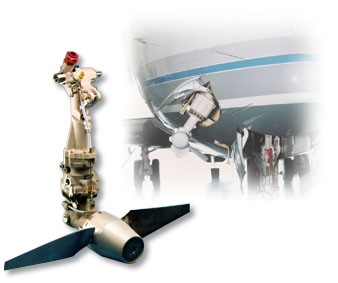
Question Humber: How does the prop on a Boeing ram air turbine generator know if the "real air mass" is moving or not? I guess if the pilot lowers the RAT in an emergency the passengers better freakin' hope that the "real air mass" is moving or they will likely all wind up dead.

rat.jpg


-
You will not see the cart make true progress up the belt from moving with the belt (zero velocity w.r.t the belt), because is impossible under the proscribed circumstances

I wish I could understand the above sentence, but in this particular case I'm quite sure I'm safe in just saying "WRONG!".

JB
 
JB, I think 3bodyproblem is requesting to have the cart start itself on the treadmill from a dead stop.

For the record Sub, he's not requesting anything (go check it out for yourself). He's telling me that I'm deliberately avoiding a question asked by Recursive Prophet -- even though RP thanked me for my answer.

His question shows that he does not know how it works or how the treadmill is a equivalent to already running at wind speed.

Yes. Thank you. Exactly what I've been trying to explain to him.

JB
 
Status
Not open for further replies.

Back
Top Bottom