FEMA did report in appendix C:
Evidence of a severe high temperature corrosion attack on the steel, including oxidation and sulfidation with subsequent intergranular melting . . . . . . The eutectic temperature for this mixture strongly suggests that the temperatures in this region of the steel beam approached 1,000 °C (1,800 °F)
The only known explanation for these results is Thermate.
Given that you freely agree with adoucette's points about the sulphidated steel sample, are you now dropping the thermate claim?
If not, all I can see for you to believe is that the thermate had this effect on the steel in the debris pile. That is, it ignited after collapse. This would require the detonation system to survive the collapse and somehow be triggered while in a huge burning debris pile.
Then we can move on to the fact that there's no known mechanism for applying large quantities of therm?te in a horizontal manner.
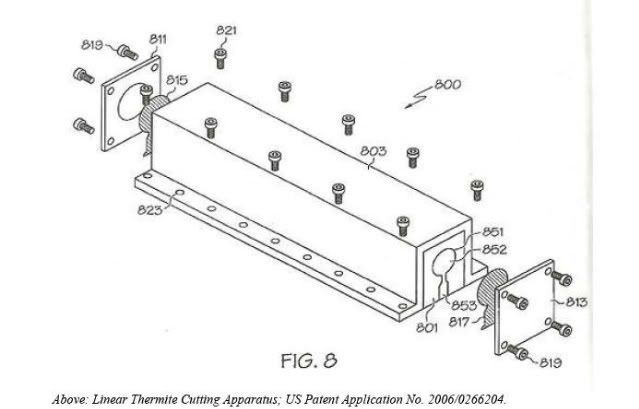
You then counter with diagrams from that thermite cutter patent.
We point out that the containing vessel in that patent is much bulkier than the volume of thermite and that gangs of such cutters would be impossibly large, even when ignoring problems of scale.
An actual physicist then steps in with real calculations for melting a given box column to collapse point, and deduces that it would take devices the size of several small refrigerators to bring down even a single column (and that's without the attachment mechanism).
You then change the subject.
There ... that saved a lot of time didn't it?