• Quick note - the problem with Youtube videos not embedding on the forum appears to have been fixed, thanks to ZiprHead. If you do still see problems let me know.

Has Anyone Seen A Realistice Explanation For Free Fall Of The Towers?

Status
Not open for further replies.
Last edited:
The air is forced into the BOTTOM of the FUEL, not the flames.

The wind was hardly blowing at all. The building was built 6 times stronger than it needed to be. Loose 1/2 the strength in a few columns over a few feet, no problem.

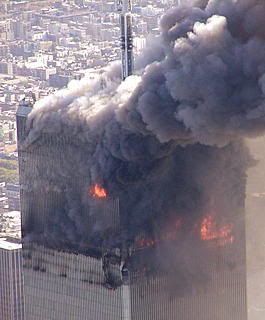
Riiiight. The winds were hardly blowing. That's why the column of smoke was billowing straight up rather than sideways.
http://www.maxho.com/wtc/images/WTC-SmokeOverChelseaPiers.jpg
Ooops! wrong Chris.

You also forget that metal expands when heated adding to the stress on the steel.
 
I gues you do not realize how optimized their conditions were compared to the WTC. No comparison.

KEYWORDS:

Charcoal

Over

Blower

And they bent it where it was cherry, not in the 300 to 600 c areas.

You need myth busters to be able to post this?

Guess you missed the part where they took the temp of the barrel, approx 1600 F or 871 C
 
Guess you missed the part where they took the temp of the barrel, approx 1600 F or 871 C

I've had Cristophanut on ignore for a long time--
The temp was taken when they took it off the heat--they then moved it to the vise, clamped it, then got in the bunker, then activated the swing arm.
Took some time, that did.--and the barrel was loosing heat all the time. temp at smack was probably in te range of 650-750C
 
I've had Cristophanut on ignore for a long time--
The temp was taken when they took it off the heat--they then moved it to the vise, clamped it, then got in the bunker, then activated the swing arm.
Took some time, that did.--and the barrel was loosing heat all the time. temp at smack was probably in te range of 650-750C

True, looking back on the original statement, I see I misread what was said. However, Chris did shoot himself in the foot. The barrel, by his admission was below the critical stage of weakness in steel, approx 1000 f - And they bent it where it was cherry, not in the 300 to 600 c areas. So Chris has just admitted that steel can bend pretty easily when cherry red. Hmm wonders how he weasels out of that?
 
Whoa................ (can hardly believe this is coming from you)

Yes truth does seem to be a problem to you.

I've said I control the direction of fall in a demo by damaging the support on the side I want it to fall. This S.O.P in the business, everyone knows it.

They don't damage a single side of a single floor, though. They break everything that needs to be broken in order for the collapse to occur as needed. If you just ram a jet plane into a building, it doesn't garantee that the collapse will occur on the same side as the jet entered. In fact, there is no way to know, a priori, the extent of the damage on the opposite side.

Common sense.

Useless.

Bell said there was significant buckling and you said what about the planes ramming the towers.

There WAS significant buckling. You can see it in the pictures and videos. EVEN low-resolution ones, which you should like. That indicates that the building's structure was compromised.

Taller structures are MORE prone to toppling.

Can you provide evidence for this ?

In all it means that the tops of the towers would definitely fall the in the directions of the side they were damaged.

I guess you can't. You just make an assertion and stick to it as though just saying it was proof enough.

"and there won't be any significant amount of toppling."

you are anti logical PARTICUARLY with structures the size of the WTC towers.

You might need to build a scale model of the tower in order to understand how this works.

As I've said, there won't be significant toppling before the top section crashes through the rest of the building, loses the rest of its support and comes straight down.

Oh, the buckling seen was the aluminum facade.

Oh, you can tell that the steel it was covering was NOT bent ?
 
HUGE FRIKKING fires do not equate to weakened columns. The flames can only effectively get to one face.

You might have missed the fact that a certain portion of the planes came out on the opposite side of the building. Plenty of air to feed the fires.

Evenl then only a small piece of that face is going to get vey hot, and that is not going to e hot enough. The temperature of carbon fires just is not hot enough to do this to columns of that size even under optimum conditions of exposure with forced air.

Are you just saying that, or do you have actual numbers ?

If the top of the towers was going to fall anywhere it would be where 1/2 the perimeter columns were cut by an airplane travelling about the speed of a 45 caliber pistol round. But it didn't, it fell the other way where all of the columns were intact and probably hot enough to cook burgers on, for part of their surfaces.

That is in direct contradiction with the official report. How do you know better than the experts how hot the fires got ?

And how do you know how much damage there was to the opposite side ? In fact, one might argue that the fires on the side that was hit were less intense, allowing the remaining columns to stand, and that those on the other side caused enough damage to get that side to fail.

Now, there are pictures of white hot areas near the corners of a tower. That, I believe is the C4 in the floors which has ignited and can burn in excess of 3000 degrees C, melting steel.

Of course, this is just based on your speculation that there WAS C4.
 
Sorry Bell, it is way too easy to fake diagrams and information such as this. There may have been a few areas that reached 675c but I cannot imagine that more than a few feet of any column ever got to that temperature.

Argument from personnal incredulity.

Jet fuel and office furnishings just do not burn that hot.

The experts disagree.

The wind was hardly blowing at all.

Perhaps, but you might know that fire actually creates air movement...
 
<snip>
Have you ever used an oxy/acetlence rosebud and tried to heat a significant amount of a structural member to make a bend? Have you ever tried to make a forge for bending an forming stee? Have you ever taken a campfire and tried to make steel tools, knives?

I have and it it very difficult to get any amount of steel hot enough to lose any significant amount of steel to a temperature where you can bend it.

<snip>

I can't believe I'm replying to him again.

You are making a common error in thinking that there is enough heat in a gas torch to simulate what happens in a building fire. Although the temperature MAY be higher than a building fire (but not necessarily) there is far less heat.

I have seen people who should have known better be very surprised by the fire exposure of their test specimens in a fire resistance test.

Dave
 
I can't believe I'm replying to him again.

You are making a common error in thinking that there is enough heat in a gas torch to simulate what happens in a building fire. Although the temperature MAY be higher than a building fire (but not necessarily) there is far less heat.

I have seen people who should have known better be very surprised by the fire exposure of their test specimens in a fire resistance test.

Dave

Dave, I think I tend to agree, the focus being Total heat energy being absorbed by the structure over x time...

wow! busy busy thread...Although on the one hand I would not be suprised of anything man would do to cover lies and create a healthy shot in the arm to any industrial military complex... I also tend to agree that the TOTAL BTU'S of energy in all the burning wreckage, the initial force damage, other misc. fuel and burning aircraft material for that length of time "could have" caused thermal stresses and structural weakening of both cement and steel.

I may "lean" to one explanation that fits well. I still am not completely sure one way or ther other...some day we may or may not know...? who knows!
I just know it got pretty hot in there...over time. refer to AW's post http://www.internationalskeptics.com/forums/showthread.php?p=2033977#post2033977
 
That figure is way too low. In my experience a fully developed (flashed over) room fire will be at least 800C (1500F) (round figures)

Dave

Yep

"Of interest, however, is the peak fire temperature normally associated with room fires. The peak value is governed by ventilation and fuel supply characteristics [12] and so such values will form a wide frequency distribution. Of interest is the maximum value which is fairly regularly found. This value turns out to be around 1200°C, although a typical post-flashover room fire will more commonly be 900~1000°C. "

from : http://www.doctorfire.com/flametmp.html

There are many other sources out there, all in rough agreement.


WTC1latefires.jpg
 
That figure is way too low. In my experience a fully developed (flashed over) room fire will be at least 800C (1500F) (round figures)

Dave

Dave, I agree... and also: (although I could be wrong)..!

1. What are the chances of someone planting(in advance) then detonating explosives at the exact location (at the right time) where the aircraft actually hit the building? I don't know but WTC1 seems to go down starting at those floors first...

Yes, CT is possible but...well, they did a good cover up if it is true.
I'm not yet leaning that way on face evaul.

2. It appears (in some video) assuming its accurate, that the WTC1 actually started to fall at or around the impact point. This is in allignment with what a structure would do with this collapse occuring in the structurally weakened area. (both core and perimeter).

3. WT7 collapse looks "strange/suspicious" on video at first glance, but given all the structurally transferred low to mid frequency stresses moving through and into its foundational + structure faults from the surrounding collapse's it is possible for it to also collapse.

If CT's were right here it would not suprise me either. (nothing much does suprise me anymore)

I tend to lean the other way (away from CT) now, but have learned its easy to be fooled!

lh

 
Status
Not open for further replies.

Back
Top Bottom