• Quick note - the problem with Youtube videos not embedding on the forum appears to have been fixed, thanks to ZiprHead. If you do still see problems let me know.

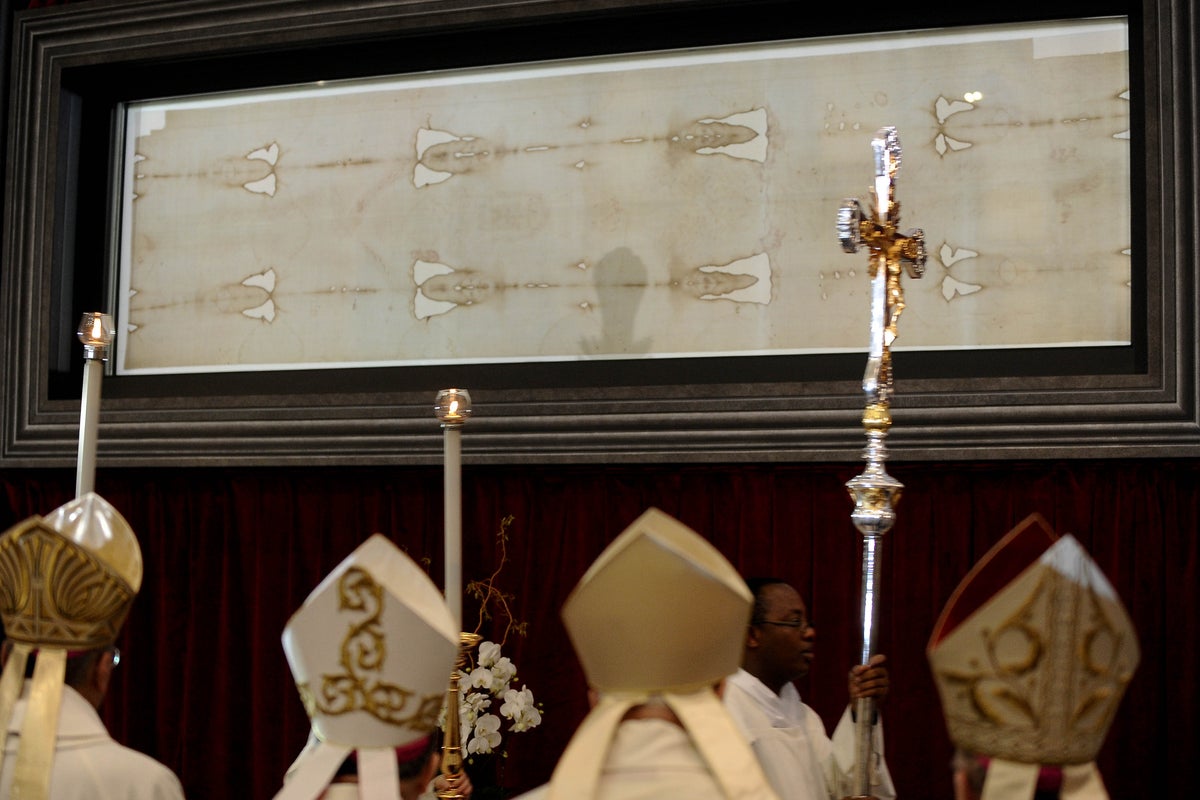
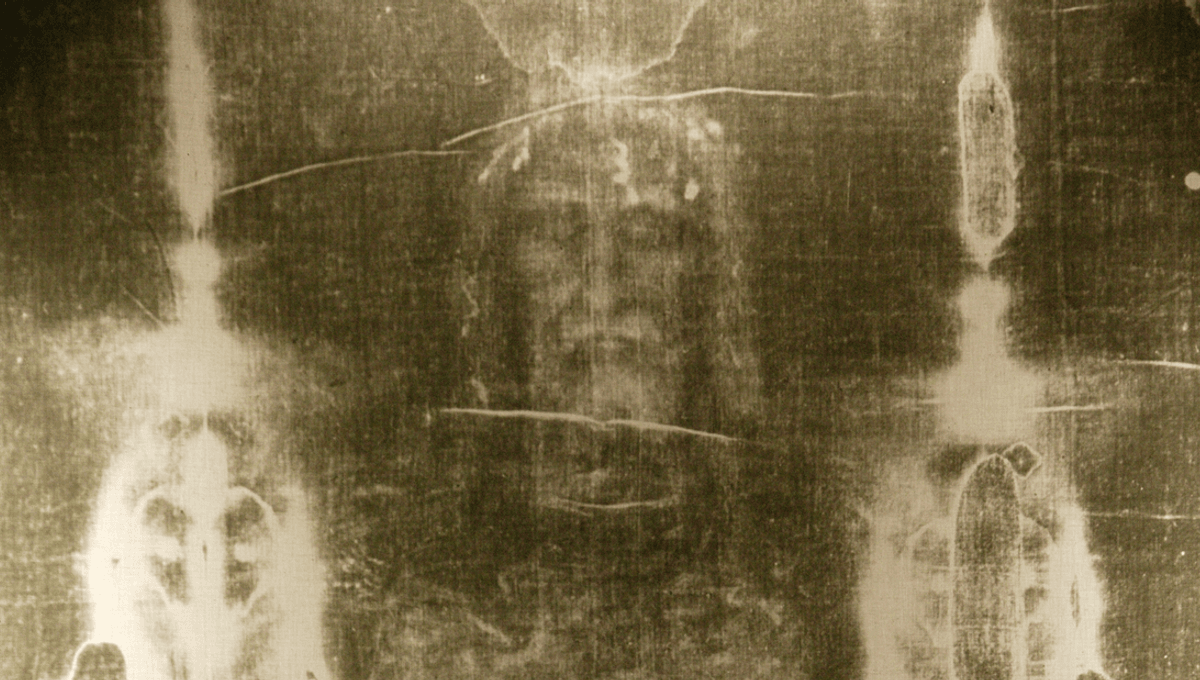
Does the Shroud of Turin Show Expected Elongation of the Head in 2D?"

Why not Davis. I'm sure there's just as much evidence for a secret radiocarbon test there.
I suspect that @bobdroege7 did some googling, stumbled over the history of UCI regarding radiocarbon dating, and singularly failed to understand the types of dating technique and their history. Of course his invocation of Irvine contradicts his earlier claims regarding the secret radiocarbon test......
 
Untrue. The Lirey cloth was examined by several experts none of whom expressed any concerns regarding hidden patches.
Further, the cloth has been examined subsequently, also without evidence of you amazingly hidden repairs.

Give it up, you're wrong.

:rolleyes:
Citation please, and do try to show that they had any input into the location of the sample.
 
I suspect that @bobdroege7 did some googling, stumbled over the history of UCI regarding radiocarbon dating, and singularly failed to understand the types of dating technique and their history. Of course his invocation of Irvine contradicts his earlier claims regarding the secret radiocarbon test......

Oh dear, I made a mistake. Try the University of California Riverside.

They started radiocarbon dating in 1973

History of University of California Radiocarbon Dating​

The University of California has played a pivotal role in the development of radiocarbon dating. The discovery of carbon-14 in the atmosphere by Samuel Ruben and Martin Kamen in 1940 marked the beginning of radiocarbon dating. This discovery was followed by Willard Libby's work at the University of Chicago, which led to the establishment of radiocarbon dating as a reliable method for determining the age of organic materials. The University of California, Riverside Radiocarbon Laboratory, founded in 1973, was responsible for dating thousands of specimens from various universities and cultural heritage organizations worldwide. The lab's CO2 counting system was modeled on concepts developed at the UCLA and New Zealand's Institute of Nuclear Science Laboratories. The UCR Radiocarbon Lab operated for over thirty years before closing in 2006.
https://www.bing.com/ck/a?!&&p=1da7...XRkZXdlYi9zZXJ2bGV0cy9wdXJsLzIwODk1MzAx&ntb=1
OSTI.GOV
https://www.bing.com/ck/a?!&&p=1da7...XRkZXdlYi9zZXJ2bGV0cy9wdXJsLzIwODk1MzAx&ntb=1
Is that early enough for you. Also the guy who did the test wasn't going to admit he did it, because it did it secretly.
 
Because it was the prevailing model in 1988. I mentioned the other models to show two things: first, that more refined statistical methods confirm Damon et al. and refute Casabianca, and second to instill the notion that while the Ward & Wilson test is useful, it is not some magical One True Method for assessing homogeneity. You have expended considerable handwaving trying to argue that the χ²-value computed in Damon et al. is a singular slam-dunk that dooms any confidence in the result. The first rule of statistics remains to know your data. That means assessing what kind of statistical model is most likely to reveal what you want to know about it, based on how you know it will behave, and what the meaning should be of any computed statistic.


No, of course you don't.


I never suggested otherwise.


No. Again, you're trying to simplify the question down to some sort of binary slam-dunk. As I explained at length a couple of days ago, there are a number of ways to estimate the probability that one's radiocarbon date dataset contains outliers. They work in different ways and consequently do not produce exactly the same answer. This is common in statistics. Once an estimate suggests the presence of outliers, there are a number of ways to accommodate them statistically. The answer is not to reject the whole dating in slam-dunk fashion. It is certainly not to suggest that the true date can be 1,300 years off. The tests Damon et al. applied and the accommodations they provided are statistically valid, were commonly used in related fields in 1988, and have only been strengthened and confirmed by subsequent work using what we now consider to be better methods.
Two points,

One, Casabianca also did more advanced methods as well. Anova and OxCal2018.

Two, you can talk all you want about outliers, but with only twelve data points, you have a difficult task to do.

The problem is that heterogeneity has be shown by the statistical tests, not just the Ward and Wilson test, but others as documented in Casabianca. And observation of foreign, non-linen material in the samples.

Failure of a statistical test has always required an investigation and determination of the cause, followed by reperforming the test, in my experience.
 
One, Casabianca also did more advanced methods as well. Anova and OxCal2018.
Oh, brother. Analysis of variance (ANOVA) is not a "more advanced" method. It's far older than Ward & Wilson. It's merely a different method. As I said, there is no one true model here. I cited to the principal scientist and principal developer of OxCal's combination function, who disagrees with your interpretation of the shroud data.

Once again you're trying to slam-dunk rather than learn and understand. The various methods agree fairly closely with each other regarding the likely presence of outliers in the Damon et al. data. However, statistical analysis is not a matter of dumping numbers into the top of some algorithm, pulling the lever, and reading the God's-truth answer at the bottom. The rebuttal against Casabianca has always been that he doesn't know what to do with outliers and he rigidly and naively proposes to do something that the qualified practitioners in the field (and many other fields) don't do. Months later, you still don't get it.

Two, you can talk all you want about outliers, but with only twelve data points, you have a difficult task to do.
According to whom?

The problem is that heterogeneity has be shown by the statistical tests, not just the Ward and Wilson test, but others as documented in Casabianca. And observation of foreign, non-linen material in the samples.
No, the problem is that you want the discussion to stop at the mere finding of a probable outlier without understanding what the practitioners of the science (and many other related sciences) do when that happens. Piling on more and more statistical tests may confirm that the Ward & Wilson test was substantially correct about the presence of outlying data, but piling on more tests doesn't add any evidence to the charges of fraud you and your unqualified authors level because the qualified practitioners did something your authors don't understand or agree with.

Failure of a statistical test has always required an investigation and determination of the cause, followed by reperforming the test, in my experience.
Your experience is incomplete and inapplicable. Experimental science is not industrial quality assurance. The "doesn't meet specifications" mindset is entirely wrong here, as I've tried for months to explain to you.
 
Last edited:
Oh, brother. Analysis of variance (ANOVA) is not a "more advanced" method. It's far older than Ward & Wilson. It's merely a different method. As I said, there is no one true model here. I cited to the principal scientist and principal developer of OxCal's combination function, who disagrees with your interpretation of the shroud data.

Once again you're trying to slam-dunk rather than learn and understand. The various methods agree fairly closely with each other regarding the likely presence of outliers in the Damon et al. data. However, statistical analysis is not a matter of dumping numbers into the top of some algorithm, pulling the lever, and reading the God's-truth answer at the bottom. The rebuttal against Casabianca has always been that he doesn't know what to do with outliers and he rigidly and naively proposes to do something that the qualified practitioners in the field (and many other fields) don't do. Months later, you still don't get it.


According to whom?


No, the problem is that you want the discussion to stop at the mere finding of a probable outlier without understanding what the practitioners of the science (and many other related sciences) do when that happens. Piling on more and more statistical tests may confirm that the Ward & Wilson test was substantially correct about the presence of outlying data, but piling on more tests doesn't add any evidence to the charges of fraud you and your unqualified authors level because the qualified practitioners did something your authors don't understand or agree with.


Your experience is incomplete and inapplicable. Experimental science is not industrial quality assurance.
What's the probable outlier?

Is it in the data that they hid for almost 30 years, or in the data they published?

Practitioners of science start over when they get bad data. They don't change their error numbers to get better results.

My claim is that it is not an outlier, or one bad measurement, but that the three groups of data can't be combined because of the failure of the Ward and Wilson test. So, it is not a slam dunk, but a turnover before Damon et al get to the basket.

Maybe experimental science should meet the requirements of industrial quality assurance.
 
What's the probable outlier?

Is it in the data that they hid for almost 30 years, or in the data they published?
Stop trying to slam-dunk.

Practitioners of science start over when they get bad data. They don't change their error numbers to get better results.
That's not what happened, and you're not an authority on how to do science.

My claim is that it is not an outlier, or one bad measurement, but that the three groups of data can't be combined because of the failure of the Ward and Wilson test.
Your claim is wrong for reasons I've explained at length.

Maybe experimental science should meet the requirements of industrial quality assurance.
Or maybe you don't know what you're talking about. How many more times are you going to try to hype your ignorance as if it were a strength?
 
:rolleyes: Sigh. Seriously? Oh well I suppose random binging might be better than random googling...

But it's more of your pathetic nonsense.

You seem to be unaware of the difference between the techniques used in radioistope dating, beta counting,
gas proportional counting and (of course ) AMS. Radiocarbon dating techniques date back to the late '40s. But your claimed secret radiocarbon test on an (alleged) shroud thread were performed (supposedly) via AMS. Perhaps you should examine the history of AMS?

And, while you're at it, you could address how the secret test happened, who was involved(universities didn't generally allow people to play with expensive equipment), maybe contact the university? (They've very helpful). And then move on to addressing the size of the alleged sample, far to small for even today's AMS techniques.
 
Two points,

One, Casabianca also did more advanced methods as well. Anova and OxCal2018.
Oh good grief. :covereyes :rolleyes:

You really didn't have the slightest clue about stats,do you?
Two, you can talk all you want about outliers, but with only twelve data points, you have a difficult task to do.

The problem is that heterogeneity has be shown by the statistical tests, not just the Ward and Wilson test, but others as documented in Casabianca. And observation of foreign, non-linen material in the samples.

Failure of a statistical test has always required an investigation and determination of the cause, followed by reperforming the test, in my experience.
 

Researchers find oldest written claim that the Shroud of Turin is fake​

Now, researchers have found new evidence that the authenticity of the cloth was disputed in writing earlier than once thought: medieval texts from a respected and influential French philosopher, Nicole Oresme, who alleged around 1370 that the Shroud was faked for the purpose of the church.

Shortly after, the documents noted, the bishop of Troyes, Henri de Poitiers, announced that the cloth was fraudulent, adding he had met the artist who created the image.

About 30 years later, when the cloth began to attract popular attention once more, the following bishop, Pierre d'Arcis, also stated in his letter that the cloth was artwork, and the pope decided soon after that it could continue being on display only as a representation of the true Shroud of Christ.

 

Researchers find oldest written claim that the Shroud of Turin is fake​

Well we've known about d'Arcis before. I wasn't aware that Oresme had weighed in on the matter.

For those living in more civilised countries, these links should work:
 
Given that my employers have provided access to the Journal of Medieval History, I shall be perusing Sarzeaud's paper over the next few days and posting a commentary in this thread.
 
Mmmm, sort-of. @bobdroege7, whom I note hasn't responded to the thread on his last Forum visit, claims to believe that the Lirey cloth disproves xianity, because it was created from a living body.
How would that disprove xianity? Isn't the whole point that there was a living body again by the time the Shroud image was made?
 
How would that disprove xianity? Isn't the whole point that there was a living body again by the time the Shroud image was made?
Since resurrection is not a scientifically described phenomenon, there is no basis for determining whether a resurrected organism would possess any of the same properties as an ordinary organism for the purpose of residual markers.
 
How would that disprove xianity? Isn't the whole point that there was a living body again by the time the Shroud image was made?
Well the shroud was, according to what little I understand of @bobdroege7's crankery, wrapped around a living body so xianity is false. You'll heave to ask him, on one of his infrequent seagull visits, to explain his nonsense.
 
Well the shroud was, according to what little I understand of @bobdroege7's crankery, wrapped around a living body so xianity is false. You'll heave to ask him, on one of his infrequent seagull visits, to explain his nonsense.
Trying to interpret what he says coherently, I think he believes Shroudy Boy to be the Islamic version of Jesus, like a holy man or minor prophet, who didn't die and get resurrected, and was never killed in the first place and got better so he could go be all Islamic somewhere else.

That's why bob argues that the shroud image is not the Christian God, but it's super important that the date puts him in the Islamic Jesus' timeline, which is about the same.
 

Back
Top Bottom