Cont: The One Covid-19 Science and Medicine Thread Part 5

There is a stage in drug discovery/drug development called "target engagement." Presumably one has previously been performing binding assays on a purified macromolecule, often a protein. In target engagement, one tries to determine if the same macromolecule is being inhibited, or is some other macromolecule being inhibited. The paper at the first link said in part, "These examples highlight the fact that demonstration of compound binding to a given target in a biophysical or biochemical assay using recombinantly expressed protein (or domain thereof) is in no way a guarantee of the same outcome being achieved when the drug is administered to a cell, much less a patient." The paper at the second link said in part, "An ideal assay would also measure: 1) the extent of target engagement, which can help to determine drug doses that produce efficacy at fractional target occupancy, while limiting side effects that might be caused by complete target occupancy; and 2) the potential for drug interactions with off-target proteins, such that efficacy and toxicity can be correlated with drug selectivity in vivo."

My questions regarding ivermectin and hydroxychloroquine with respect to Covid-19 are as follows: One, what is the proposed macromolecular target of each compound? Two, has someone attempted experiments regarding target engagement for either compound, and if so, what were the results?
 
Last edited:
Well, they seem to be effective when treating scabies and malaria, respectively, but I don't know which macromolecules they target. :)
 
There may not (yet?) be a way to distinguish between C19-related cases of many of these diseases and cases that are unrelated to C19.
I just saw this:
Study uncovers distinct blood protein signature in children with Long COVID (News-Medical, Jan 28, 2025)
Pediatric long COVID marked by heightened inflammation, mirroring adult cases. Proteomic profiling achieved 93% accuracy in identifying affected children, paving the way for future diagnostic advancements.
(...)
The present study analyzed blood plasma proteins in children aged between 2 and 18 years from Rome, Italy, to identify unique inflammatory markers in Long COVID cases compared to healthy controls, MIS-C patients, and children with acute COVID-19.(...)
The study used Principal Component Analysis (PCA) to visualize protein expression patterns and highlight distinct profiles for Long COVID compared to other groups.
 
Well, they seem to be effective when treating scabies and malaria, respectively, but I don't know which macromolecules they target. :)
Here is paper on the molecular targets of ivermectin. Here is some information regarding the targets of hydroxychloroquine. On the one hand, I would not care to make a blanket statement to the effect that one must always know the molecular target of drug before using it. On the other hand, I would say from both my reading and my personal experience that a contemporary program to find a new candidate drug will not go very far without this question being addressed and eventually answered in a satisfactory manner, as I hope that my previously linked articles made clear. Several years have elapsed since these two compounds were proposed as treatments for Covid-19. That should be enough time for such studies to have been started at the very least.
 
Last edited:
A badly designed RCT might suggest that a drug has efficacy when it does not. But every drug has a target and a mechanism of action, even when that mechanism is unexpected. People who advocate for the use of either ivermectin or hydroxychloroquine for Covid-19 should be able to provide a hypothesis at the very least, but preferably should be able to produce data on how each compound works. For example, the active ingredient in Paxlovid targets the main protease of the virus. There is a structure showing the covalent bond between the two molecules.
 
Last edited:
Here is paper on the molecular targets of ivermectin. Here is some information regarding the targets of hydroxychloroquine. On the one hand, I would not care to make a blanket statement to the effect that one must always know the molecular target of drug before using it. On the other hand, I would say from both my reading and my personal experience that a contemporary program to find a new candidate drug will not go very far without this question being addressed and eventually answered in a satisfactory manner, as I hope that my previously linked articles made clear. Several years have elapsed since these two compounds were proposed as treatments for Covid-19. That should be enough time for such studies to have been started at the very least.
Historically drugs were used because empirically they worked. Penicillin was observed to kill bacteria, trials showed it reduced deaths from infection, subsequently people discovered how it worked. Likewise (hydroxy)chloroquine. However nowadays screening does tend to be at the molecular level where drugs are screened for activity at a particular site or increasingly designed to be active at that site.

Most drugs aren't clean, they often have more than one site of action, although hydroxychloroquine was discovered as an anti-malarial drug its main use nowadays is as an anti-arthritis drug. Macrolide antibiotics like azithromycin or erythromycin are not only antibiotics but potent anti-reflux drugs, and have anti-inflammatory activity, particularly on the lungs, sometimes being used to treat asthma.
 
Meeting (1 of 2) of the Advisory Committee on Immunization Practices. Note, it's almost 8 hours long.

This is the new committee after RFK Jr. "retired" the prior group. There are 7 members.

The first segment provides intros by each of the members. backgrounds, Quals, etc.

The second segment is by the CDC going over C19 and Vax impact. It's very extensive. I watched this. A huge number of charts and tables providing great detail on the impact of C19. Filled in a few gaps in my knowledge.

The second segment by the CDC goes over Vax safety. I've only watched half of it. VAERs and V-Safe was Interesting. I was in the V-Safe program. Annoying to get texts every few days checking on your symptoms. Over time they reduced to every week then every month. For background, I had zero vax effects.
 
Interesting video on Long Covid. One of the best summaries of what's known/not known I've run across.
 
L.C. Barbarian on X, July 10, 2025
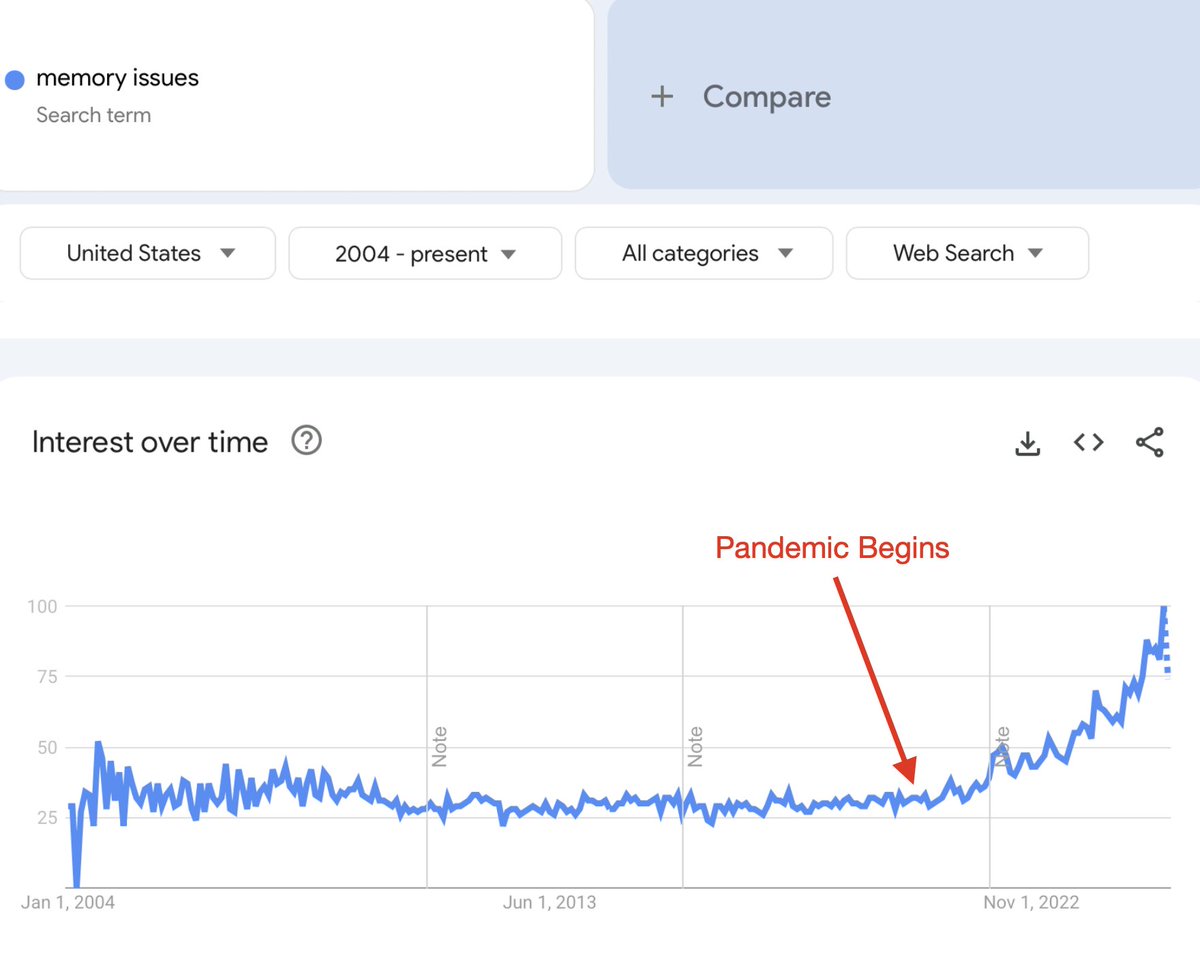
I had to see this with my own eyes.
@GoogleTrends search-term "memory issues" since 2004.
- We are in trouble.


Image

Nah, it's probably nothing to worry about. It was probably just the lockdowns ... or the vaccines ... or smartphones. It'll be over soon.
Or maybe not:
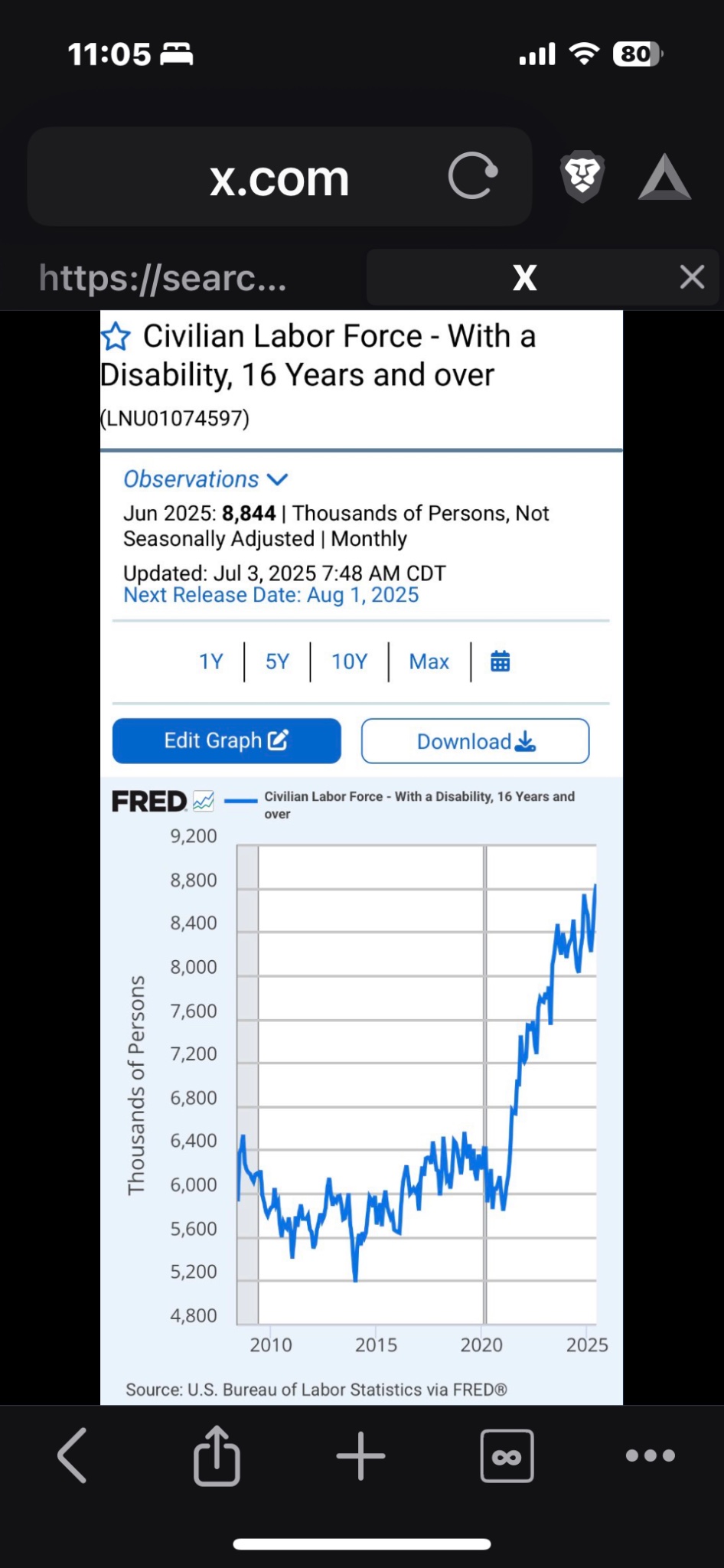
Adam Van Bavel on X, July 11, 2025
Looks like #Disability, but not quite as bad

Image
 
Denmark:
I don't know if the same pattern can be found in other Nordic countries, but in Denmark there has only been one really big summer wave, in 2022 when there was not one single day without C19 deaths: Covid-19 - Danmark
Look at the right-hand corner at the bottom of the page, "Nye indlæggelser pr. dag" (New hospitalizations per day) or go to "Dødsfald pr. dag" (C19 deaths per day).
The winter peak in 2022 coincided with the point when masking in indoor public places and all restrictions were abandoned. The next three peaks that year coincided with summer holidays and the return to work/school, October holidays, and Christmas holidays.
I think the summer waves in many other countries may be due to air conditioning and the tendency to stay indoors in insufficiently ventilated rooms during heat waves. The Nimbus variant appears to have come and gone in Denmark.
The level of SARS-CoV-2 in sewer water July 9 is "Very low".
 
(Very small) Brazilian study, Jan '21 to March '22 "18 SARS-CoV-2 positive pregnant women at 35–37 weeks’ gestation, 15 umbilical cord blood samples, and blood samples from 15 children at 6 months and 14 at 24 months."
Cord blood cytokines/chemokines linked to delays in toddlers exposed to SARS-CoV-2 prenatally (Nature, June 11, 2025)

Results

At 6 months, 33.3% of infants exhibited cognitive delays, 20% communication delays, and 40% motor delays, increasing to 35.71%, 64.29%, and 57.14% at 24 months, respectively.
(...)

Impact

  • Prenatal SARS-COV-2 infection in pregnant women is linked to developmental delays in toddlers, with cytokine and chemokine changes associated with neurodevelopmental outcomes at 24 months.
 
Denmark:
The Nimbus variant appears to have come and gone in Denmark.

Nimbus (NB.1.8.1) still to be found in the UK, but it has been overtaken by Stratus (XFG), which is still on the rise:
Mike Honey on X, July 13, 2025
Here's the latest variant picture for the United Kingdom, to late June.
The XFG.* "Stratus" variant remained dominant, growing strongly to 40%.
NB.1.8.1 "Nimbus" fell to 21%.

Image
 
What Cats May Teach Us About Long COVID (ucdavis.edu, July 14, 2025)
Feline infectious peritonitis, or FIP, is a serious and historically fatal disease in cats caused by a coronavirus. It behaves in many ways like severe coronavirus infections in humans, causing widespread inflammation, T cell exhaustion and chronic immune dysfunction. Scientists at the University of California, Davis, have found that mesenchymal stromal cells, or MSC therapy, in combination with antiviral drugs, helped cats’ immune systems recover and reduced systemic inflammation. The study was published in STEM CELLS Translational Medicine.

Well, I blame it on Fauci! And the lockdowns! And the vaccines!
Don't be such scaredy-cats, cats!
 
Last edited:
🧠🧠🧠
Scientists Find Shocking Link Between COVID and Alzheimer's (BestLife, July 16, 2025)
The brain fog that can linger after a bout with COVID is not a new discovery. In fact, much research has linked this Long-COVID symptom to the neuroinflammation that often accompanies an infection. However, scientists are now finding that this brain damage might be much more permanent, even leading to an increased risk of Alzheimer's.

Infections with Chlamydia pneumoniae and SARS-CoV-2 and Alzheimer’s disease pathogenesis (Frontiers in Aging Neuroscience, June 13, 2025)
Two infectious agents correlated to AD pathogenesis are Chlamydia pneumoniae (Cpn), a respiratory obligate intracellular bacterium, and severe acute respiratory syndrome coronavirus 2 (SARS-CoV-2), the coronavirus responsible for the COVID-19 pandemic. Both organisms may predispose susceptible populations to disease manifestations, such as AD.

SARS-CoV-2 induces Alzheimer’s disease–related amyloid-β pathology in ex vivo human retinal explants and retinal organoids (ScienceAdvances, July 4, 2024)
Here, we demonstrate that severe acute respiratory syndrome coronavirus 2 (SARS-CoV-2) induces amyloid-β extracellular protein aggregates in human retinal explants and retinal organoids. Last, pharmacological inhibition of neuropilin-1 resulted in reduced amyloid-β deposition in human retinal explants treated with SARS-CoV-2 Spike 1 protein. These results suggest that Spike 1 protein, during infection with SARS-CoV-2, can induce amyloid-β aggregation, which may be associated with the neurological symptoms experienced in COVID-19.
 
Last edited:
The problem has existed for a few years. Vax rates had declined huge amounts for the young and middle aged. It's only 10% for people < 18 Y/O and 5% for kids 0-4 Y/O. Not sure what the rates have been for pregnant women but it's clearly beneficial for women and their pregnancy, to get boosted in the 3rd trimester. Not sure why this isn't better known.
 
It is not better known because right-wing 'think tanks' and disinformation bots are busy warning people against the allegedly dangerous vaccines, and algorithms increasingly make this the only stuff people see on social media. It is not as if the idea that children are immune to the virus and don't spread it hasn't been promoted in this thread, and now the whole top level of the U.S. medical establishment, i.e. RFK Jr., Marty Makary, Jay Bhattacharya and others (Vinay Prasad, Martin Kulldorff) recently hired contrarian 'experts', can appear to be merely accommodating the sentiment that they themselves have been busy promoting (and been paid by guys like Jeffrey Tucker to promote) for years.

People would at least get their kids vaccinated if they knew about the protection that vaccines offer and understood how much COVID-19 impacts the health of even their children, but they don't.
Will the mainstream media report stuff like this?
Infants and preschoolers show unique signs of long COVID (NewsMedical, July 23, 2025)
The COVID pandemic began with a myth – that children are spared its ill effects. In contrast, many children were sick with COVID, and we now have a new chronic illness emerging. We are working hard to characterize long COVID in children and it will be critical for policymakers to assure that we have adequate resources to support and manage these children now and in the future."
Lawrence Kleinman, professor and vice chair of the Department of Pediatrics, Rutgers Robert Wood Johnson Medical SchoolOf the total 1,011 children included in the study, 472 were infants and toddlers (children 2 years old or younger) and 539 were preschoolers (children 3 to 5 years old). Overall, 101 (15%) of the 677 children with previous SARS-CoV-2 infection were identified as likely having long COVID.
(...)
"This study is the largest systematic look at long COVID in younger children in the United States," said Sunanda Gaur, a professor of pediatrics and director of the Adult and Pediatric Clinical Research Centers at Robert Wood Johnson University Hospital. "It suggests that this is an illness that children, families, pediatricians and the health care and educational system will be dealing with for a generation."

Characterizing Long COVID Symptoms During Early Childhood (JAMA Pediatrics, May 27, 2025)
The index is calculated by summing scores assigned to each prolonged symptom that was present, where higher scores indicate greater magnitude of association with history of SARS-CoV-2 infection: poor appetite (5 points), trouble sleeping (3.5 points), wet cough (3.5 points), dry cough (3 points), and stuffy nose (0.5 points) for infants/toddlers, and daytime tiredness/sleepiness/low energy (6.5 points) and dry cough (3 points) for preschool-aged children. Among infants/toddlers with infection, 40 of 278 (14%) were classified as having probable LC by having an index of at least 4 points. Among preschool-aged children, 61 of 399 (15%) were classified as having probable LC by having an index of at least 3 points. Participants with higher indices often had poorer overall health, lower quality of life, and perceived delays in developmental milestones.

And at the other end of the age spectrum:
tern on X, July 23, 2025
I'm a few months from entering this age group.
By my reckoning, there have been 14,000 more deaths in it than there should have been during the last five years.
That's 19% excess.
And you can see, it's still going on.
Wish me luck.

Image
GrayD on X, July 24, 2025
How is it beyond 65?
Just curious.
tern on X, July 24, 2025
When I've got time, I'll post the rest.
This one stuck out.
Image

There are also a couple of grahs of "Rolling annual mortality rate" in the thread.
The antivaxxers haven't discovered the thread - maybe because it's British and not American - so there are no "It's the vaccines, stupid!" posts yet.
 
Last edited:

Back
Top Bottom