Vixen
Penultimate Amazing

Was Sollecito's DNA actually on the bra at all? I thought it was just a random collection of mixed alleles that could be interpreted to be practically anyone.


Was Sollecito's DNA actually on the bra at all? I thought it was just a random collection of mixed alleles that could be interpreted to be practically anyone.
Analysis of the DNA profile results by Conti and Vecchiotti showed that the scientific police (Stefanoni) analysis was flawed; it dismissed several alleles present above the threshold and not in a stutter position. These dismissed alleles are indicative of the presence of the DNA on the bra clasp from other individuals besides Sollecito and Kercher for the autosomal STRs (short-tandem-repeats). Furthermore, for the Y Chromosome DNA profile analysis, there are a number of dismissed allele peaks which indicate the presence in the sample tested of DNA from several males.Was Sollecito's DNA actually on the bra at all? I thought it was just a random collection of mixed alleles that could be interpreted to be practically anyone.

 knoxdnareport.wordpress.com
 pmc.ncbi.nlm.nih.gov
DNA mixtures produce complex profiles that are ambiguous. That is what happened with the bra clasps. Furthermore, there is no way to be sure how the DNA entered the sample that was analyzed, especially if, as in the forensic DNA collection and testing for the Knox - Sollecito case, the proper, internationally recognized quality control and assurance procedures were not followed.We analyze the soup and find that all the letters in the suspect’s name are present. Does that mean someone named JOHN Q SUSPECT contributed to the soup?
Not necessarily. There could have been two contributors named PATRICK QUEEN and JUSTIN OHR. In that case, the soup would have all the letters needed to spell JOHN Q SUSPECT, even though no person with that name contributed to the soup.
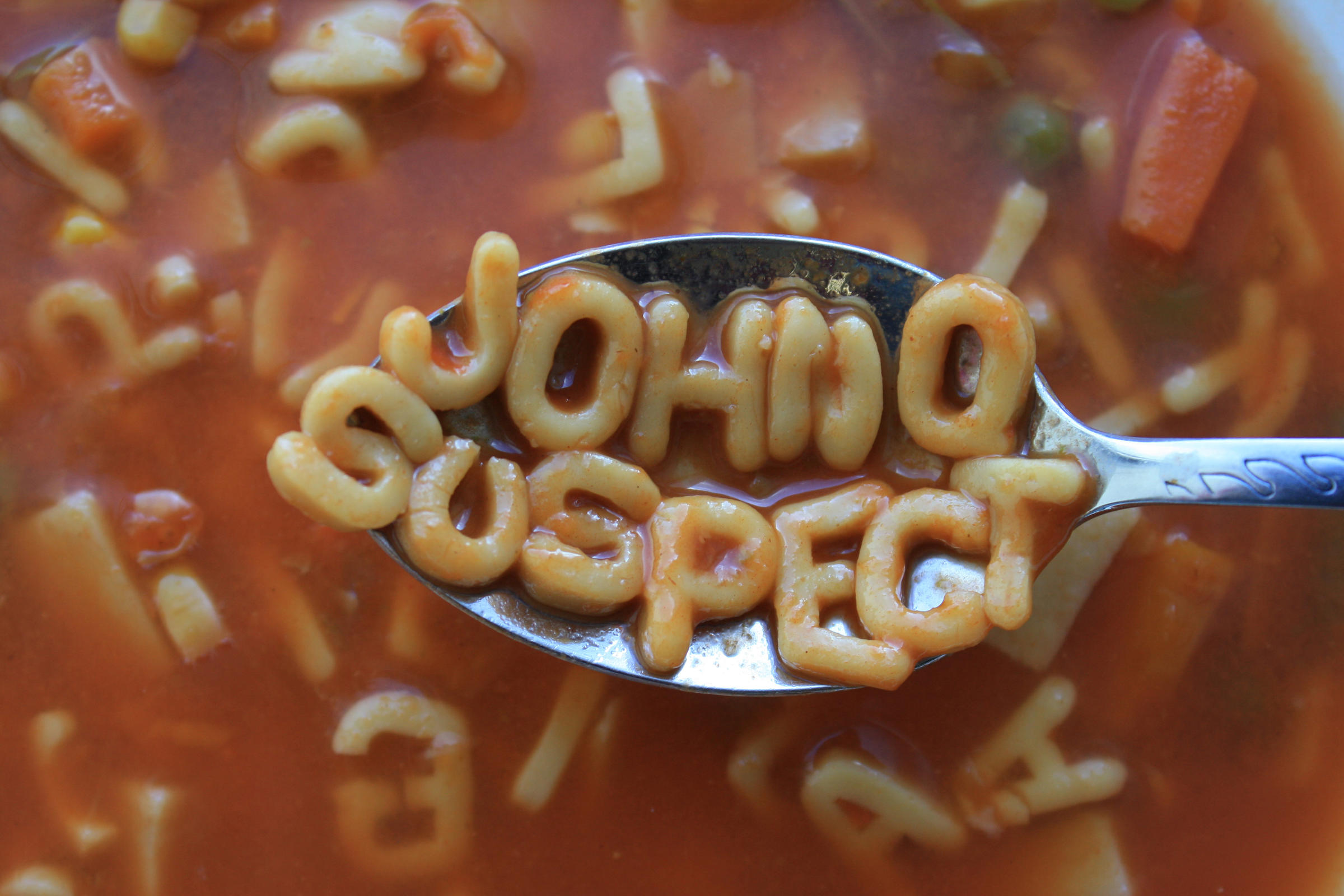
It probably was. But that was not the issue, according to Dr. Peter Gill, the forensic DNA expert who wrote extensively about this:Was Sollecito's DNA actually on the bra at all? I thought it was just a random collection of mixed alleles that could be interpreted to be practically anyone.
...... the distributions of DNA profiles were a critical feature. Contrast the widespread presence of Rudy Guede’s DNA in the murder room, bearing in mind he had no legitimate access to the premises. In stark contrast, the DNA of both Knox and Sollecito was absent from the murder room (apart from the discredited bra-clasp DNA profile that matched Sollecito). This contrast is even more poignant given that Knox lived in the apartment with Kercher, and Sollecito had legitimate access. There is an a priori expectation that their DNA should be present at the crime scene.
And how do we know this, considering there was a mixture of male (Y chromosome) DNA found on the clasp, as noted by C & V, but not declared by Steffanoni?It probably was. But that was not the issue, according to Dr. Peter Gill, the forensic DNA expert who wrote extensively about this:
See:
https://www.fsigenetics.com/article/s1872-4973(16)30033-3/fulltext
Please also note, that the statement Vixen makes from the convicting Nencini court (2014) omits that Nencini thought that the three additional profiles on the clasp as noted by Stefanoni's original work, theorized that those three were from Kercher's 'amiga', or girlfriends.
Finally, the manner of collection of that clasp, 46 days following the murder, casts all sorts of doubt on its usefulness to begin with. I'll post it again if you wish, but the Forensic police photographed themselves collecting that from the floor with obviously dirty forensic gloves. Forensically, the bra-clasp was useless as evidence. They could have just as easily charged one of those three 'amiga' with murder, or perhaps all three of them. If the Nencini court had done more to i.d. who those women were, rather than just to hand-wave them away......
There is a difference between "it perhaps could have been" and "it probably was": the last phrasing indicates a high degree of probability, while the first phrasing is neutral. Is there evidence to support a high degree of probability? In a complex DNA mixture, it is not necessarily true that a perceived "match" is indeed real evidence of the DNA of a subject. What is not excluded in this case is that all the DNA on the clasp, except probably Kercher's, is a result of contamination. If the DNA profile alleged to match Sollecito is indeed from Sollecito, no evidence excludes its presence as a result of contamination. There is positive evidence that the clasp was collected under circumstances that would almost certainly have contaminated it. Those circumstances include that the clasp lay on the floor unprotected for 46 days and was collected by a police officer using dirty gloves.And how do we know this, considering there was a mixture of male (Y chromosome) DNA found on the clasp, as noted by C & V, but not declared by Steffanoni?
There is a difference between "it perhaps could have been" and "it probably was": the last phrasing indicates a high degree of probability, while the first phrasing is neutral. Is there evidence to support a high degree of probability?

This was the problem with Nencini and one of the reasons Marasca annulled their verdict.

Oh dear. DNA is not 'an alphabet soup'. It is structured as a double helix. It is simply not possible to obtain anyone's full DNA profile - for forensic criminal purposes, this is the full 17-alleles, as was found of Sollecito's, by stirring it in an alphabet soup; and as expert witness to the court, Professor Novelli testified under cross-examination, the chances of the profile being for anyone other than Sollecito is over 3.4billion to one against. No, they didn't throw it in the air and it landed in the exact order of Sollecito's. Oh dear. Oh dear, oh dear, oh dear.Thanks for all that, everyone. I realise it's entirely possible for Sollecito's DNA to have got there by contamination, considering that he touched the door (rather a lot I think) and then the forensic officers touched the door. Plus all the lying-on-the-floor-for-six-weeks and the dirty-gloves stuff. However, having been quite persuaded by the alphabet soup analogy, I question whether all this theorising is really needed.

Lessee...."Vixen" vs the National Institute of Standards and Technology.Oh dear. DNA is not 'an alphabet soup'. It is structured as a double helix. It is simply not possible to obtain anyone's full DNA profile - for forensic criminal purposes, this is the full 17-alleles, as was found of Sollecito's, by stirring it in an alphabet soup; and as expert witness to the court, Professor Novelli testified under cross-examination, the chances of the profile being for anyone other than Sollecito is over 3.4billion to one against. No, they didn't throw it in the air and it landed in the exact order of Sollecito's. Oh dear. Oh dear, oh dear, oh dear.
View attachment 58504
a
Hmmmm....whom to believe?What we do
NIST has played a key role in the historical development of forensic DNA analysis. Today, our forensic DNA program has three major components.
- We conduct research to advance forensic DNA methods, including laying the groundwork for using next generation DNA sequencing for human identification.
- We conduct scientific foundation reviews in the forensic sciences, including for DNA mixture interpretation.
- We develop and manufacture physical reference standards that DNA labs across the country and the world use to help ensure reliable results.
It is simply not possible to obtain anyone's full DNA profile -
A DNA profile is made of a set of specific points on a DNA molecule. Points of data, or loci, are examined to create a complete DNA profile, unique to the contributor.
Some evidence may not produce a full DNA profile if the DNA is degraded, and there isn’ t information present at all loci. Some DNA evidence may be too degraded for any testing. Under some circumstances, a partial profile, or a profile that includes fewer than the full number of loci detected by a particular kit, can still be compared against a suspect’ s profile.
Not just the door but probably the outside door handle since they knew it was locked. The door handle that the police, in their infinite professionalism, didn't bother to test for anything.Thanks for all that, everyone. I realise it's entirely possible for Sollecito's DNA to have got there by contamination, considering that he touched the door (rather a lot I think) and then the forensic officers touched the door. Plus all the lying-on-the-floor-for-six-weeks and the dirty-gloves stuff. However, having been quite persuaded by the alphabet soup analogy, I question whether all this theorising is really needed.
Your post above shows considerable confusion in the methodology of how DNA profiles are obtained from forensic samples. The method requires the extraction of the DNA - which may have been left behind by several, even many, contributors - into a single solution. The complete DNA chains of the chromosomes are not of interest for forensic purposes, since about 99.9% of each person's DNA is the same as another's. What is evaluated (in current technology) are the small segments of DNA that are called STRs (short tandem repeats). A known preselected group of these repeats - 20 in current US practice; fewer were in the forensic group in previous years, and the numbers and members of the group may vary among the various countries - are selected to provide a DNA profile. Except in the case of identical (homozygotic) twins (or other multiples), the forensic group of STRs is considered relatively unique to each person. Each STR group member is a "locus" and each locus, for autosomal and X chromosomes, has two alleles, while the Y (male) chromosome STRs will only display a single allele. Each allele of each locus displays a number of repeats, which will vary, within a certain known range, from one person to the next. However, many persons share some number of common alleles, with the same number of repeats, at certain loci. That is why a relatively large number of loci - such as 20 - are selected for the DNA profile test, to help assure that a relatively unique DNA profile "fingerprint" will be found for any one person. Since a mixture of DNAs from several persons are contained in a sample will all go into one solution during sampling and extraction, and for the final DNA profiling, the "alphabet soup" analogy used by NIST is appropriate. DNA profile analysis of complex mixtures (for example, from 3 or 4 contributors) therefore is a challenging task, and misleading conclusions can be inferred by incautious interpretation of the DNA profile results of DNA mixtures.Oh dear. DNA is not 'an alphabet soup'. It is structured as a double helix. It is simply not possible to obtain anyone's full DNA profile - for forensic criminal purposes, this is the full 17-alleles, as was found of Sollecito's, by stirring it in an alphabet soup; and as expert witness to the court, Professor Novelli testified under cross-examination, the chances of the profile being for anyone other than Sollecito is over 3.4billion to one against. No, they didn't throw it in the air and it landed in the exact order of Sollecito's. Oh dear. Oh dear, oh dear, oh dear.
View attachment 58504
a
DNA can be transferred from one surface or person to another, and this can potentially occur multiple times. Therefore, the relevance of the DNA to the crime being
investigated should be considered when evaluating the evidence.
Highly sensitive DNA methods increase the likelihood of detecting DNA mixtures that may or may not be related to the crime being investigated. In cases that involve
very small quantities of DNA, it is especially important for the users of the information to consider context when determining the utility of the evidence.
Contamination avoidance procedures should be robust both at the crime scene and in the laboratory. ....
DNA statistical results such as a likelihood ratio given sub-source propositions do not provide information about how or when DNA was transferred, or whether it is relevant to circumstances of a case.
The fact that DNA can transfer between objects does not negate the value of DNA evidence. However, the value of DNA evidence depends on the circumstances
of the case.
DNA mixtures vary in complexity. Factors that contribute to complexity include the number of contributors, the quantity of DNA from each contributor, contributor mixture ratios, sample quality, and the degree of allele sharing. These factors will impact the degree of variation in interpretation.


Chris, do you have any comments on these two issues that I recall that may be relevant to the bra clasp DNA profile analysis:In a 2013 article in the Proceedings of the National Academy of Science David Balding wrote, "I reran the analysis excluding Knox from bothand, and obtained an LR in favor ofof 42 million (WoE = 7.6 bans). Thus, although the additional alleles have, by providing evidence for an additional contributor, weakened the evidence implicating Sollecito by a massive 8 bans, this evidence nevertheless remains strong." Hp and Hd are the presumed prosecution and defense hypotheses, and LR is the likelihood ratio. My informal analysis of the Y-STR profile also suggested that Raffaele Sollecito's DNA was present (Professor Balding's program is not suitable for Y-STR profiles). Other computer programs, such as TrueAllele and STRmix also attempt to deconvolute autosomal mixtures, but there are legal controversies which exist around their use.
One major problem for the prosecution is that in both the autosomal profile and the YSTR profile, there are other alleles. IIRC there were three people who contributed to the Y-STR profile. If the prosecution concedes that these other profiles arose from some form of contamination, then there is no reason to say that Mr cmeaning that she analyzed it with Mr Sollecito's reference profile in hand. This type of analysis is strongly discouraged in the sources I have consulted.
Hi, did you deliberately misquote me? It is poor netiquette to do so.Lessee...."Vixen" vs the National Institute of Standards and Technology.
Hmmmm....whom to believe?
Really? You might want to inform forensic experts. They're under the misguided opinion that it is.
The others were fragments of DNA of less than 6 alleles (legal standard 10 or 11) which is found in normal every day dust. Sollecito's full DNA of 17 allele-pairs was found on the bra hook UNDER the body and can only have been so strong by Sollecito pressing down hard on it.In a 2013 article in the Proceedings of the National Academy of Science David Balding wrote, "I reran the analysis excluding Knox from bothand, and obtained an LR in favor ofof 42 million (WoE = 7.6 bans). Thus, although the additional alleles have, by providing evidence for an additional contributor, weakened the evidence implicating Sollecito by a massive 8 bans, this evidence nevertheless remains strong." Hp and Hd are the presumed prosecution and defense hypotheses, and LR is the likelihood ratio. My informal analysis of the Y-STR profile also suggested that Raffaele Sollecito's DNA was present (Professor Balding's program is not suitable for Y-STR profiles). Other computer programs, such as TrueAllele and STRmix also attempt to deconvolute autosomal mixtures, but there are legal controversies which exist around their use.
One major problem for the prosecution is that in both the autosomal profile and the YSTR profile, there are other alleles. IIRC there were three people who contributed to the Y-STR profile. If the prosecution concedes that these other profiles arose from some form of contamination, then there is no reason to say that Mr Sollecito's profile might also have arisen this way. And that is before we bring in other valid points that the defense and others made, many of which have come up here in the last day or two. I will mention one more. It is possible that Stefanoni used a suspect-centered analysis in her interpretation of the bra clasp profile, meaning that she analyzed it with Mr Sollecito's reference profile in hand. This type of analysis is strongly discouraged in the sources I have consulted.

I don't know of any reference to suggest that memoriale 1 was the "fruit of a poisoned tree" only that it was a retraction. I've also yet to discover any reference of memoriale 2 (written on the 7th Nov) in the current proceedings. Maybe it wasn't submitted to the ECHR as part of Amanda's appeal. If that's the case it might be unusable as evidence at this late stage, yet it appears to be a more emphatic retraction.Some additional thoughts:
The Italian courts, including the Florence Court of Appeal in the calunnia retrial, have taken no measures to redress the violation of Convention Article 3 (procedural limb ), so there has never been an independent and effective investigation of Knox's claims of mistreatment during the interrogations and that her statement against Lumumba was a result of a violation of her rights under CPP Article 188 (violation of the right of self-determination in giving evidence) and other Italian law, including the revised (2017) CPP Article 191 (prohibits the use of evidence obtained by mistreatment or torture against the person mistreated or tortured). Thus, use against her of her original statement(s) against Lumumba would be unlawful under CPP Articles 191 and 188.
As stated in the ECHR final judgment Knox v. Italy, the violations of either of Convention Articles 6.3c and 6.3e rendered the whole of the trial for calunnia unfair (violation of Convention Article 6.1). The ECHR judgment identified Memoriale 1 as a retraction (even with any ambiguity, Memoriale 1 cannot establish guilt of calunnia beyond a reasonable doubt). Since the ECHR judgment finds the the proceedings as a whole unfair, it suggests that any ambiguity in
Memoriale 1 must be regarded, in US legal terminology, as "fruit of the poisoned tree" and a residue of the alleged violation of CPP Article 188, which cannot be used against Knox, especially since she makes a clearer retraction in Memoriale 2 as well as in her statements to her lawyers.
The "fruit of the poisoned tree" was my comment based on US law, and not a statement in the ECHR final judgment Knox v. Italy. However, Italy does have procedural law (CPP Article 191) prohibiting the use of evidence obtained contrary to Italian law. Whether such law is applied in practice, and to what extent, is another question.I don't know of any reference to suggest that memoriale 1 was the "fruit of a poisoned tree" only that it was a retraction. I've also yet to discover any reference of memoriale 2 (written on the 7th Nov) in the current proceedings. Maybe it wasn't submitted to the ECHR as part of Amanda's appeal. If that's the case it might be unusable as evidence at this late stage, yet it appears to be a more emphatic retraction.
I am myself a bit confused about the relevant text in the ECHR judgment because I don't have the texts of Knox's Memoriales 1 and 2 before me.I don't know of any reference to suggest that memoriale 1 was the "fruit of a poisoned tree" only that it was a retraction. I've also yet to discover any reference of memoriale 2 (written on the 7th Nov) in the current proceedings. Maybe it wasn't submitted to the ECHR as part of Amanda's appeal. If that's the case it might be unusable as evidence at this late stage, yet it appears to be a more emphatic retraction.
Let me comment on 1 for now and come back to 2 later, time permitting. The timing of the collection with respect to the shoe prints, the late collection relative to other pieces of evidence, and the damage to the clasp afterward are legitimate points against the clasp. In my opinion, it bears on how much weight the trier of fact should assign this piece of evidence. Based on Peter Gill's book, I think it falls to the forensic scientist to provide an unbiased discussion of the alternative ways in which DNA might arrive on an item of evidence, both innocent and as part of the crime. My present view is that the number of profiles is something that the forensic scientist should discuss in the context of these alternative ways.Chris, do you have any comments on these two issues that I recall that may be relevant to the bra clasp DNA profile analysis:
1. The bra clasp collection occurred 46 days after the murder of Kercher was discovered, and the clasp DNA profile analysis occurred soon after that discovery. In what some may view as a miraculous stroke for the prosecution, the results came out on the same day of the announcement that the shoe sole pattern ridges (was blood or semen residue a constituent of the pattern?) found in the murder room (on the pillow? elsewhere?) did not match Sollecito's shoes, contrary to claims of the police and prosecutor. Sollecito's father made this discovery by counting ridges, IIRC. Thus the only physical evidence alleged to link Sollecito to the murder room, the shoe sole pattern, was immediately replaced by the alleged DNA profile evidence on the bra clasps, previously left to lie uncollected by the police on the murder room floor, and there was therefore no risk to the prosecution case that Sollecito could be immediately cleared or released from detention.