• Quick note - the problem with Youtube videos not embedding on the forum appears to have been fixed, thanks to ZiprHead. If you do still see problems let me know.

Cont: The One Covid-19 Science and Medicine Thread Part 5

Science reported, "A 2020 paper that sparked widespread enthusiasm for hydroxychloroquine as a COVID-19 treatment was retracted today, following years of campaigning by scientists who alleged the research contained major scientific flaws and may have breached ethics regulations...To date, 32 papers published by IHU authors have been retracted, 28 of them co-authored by [IHU Director Didier] Raoult, and 243 have expressions of concern."

How is it even possible for one institution or one coauthor to have so many retractions? Wikipedia wrote, "Of the 1,836 articles published by Raoult between 1995 and 2020 (amounting to over 120 a year, or approximately one article every three days), 230 were published in two journals edited by Michel Drancourt, who was his right-hand man at the IHU and a close collaborator for over 35 years. Staff members have editorial positions at almost half the journals that have published Raoult's work."

An archived article at Retraction Watch stated, "As we and others have reported, Raoult’s work during the COVID-19 pandemic drew intense scrutiny from data sleuths, most notably Elisabeth Bik – whose critiques, which extended beyond his COVID studies, were met with vicious online trolling and a legal complaint filed by Raoult himself." This business boggles the mind.
 
Last edited:
Science reported, "A 2020 paper that sparked widespread enthusiasm for hydroxychloroquine as a COVID-19 treatment was retracted today, following years of campaigning by scientists who alleged the research contained major scientific flaws and may have breached ethics regulations...To date, 32 papers published by IHU authors have been retracted, 28 of them co-authored by [IHU Director Didier] Raoult, and 243 have expressions of concern."

How is it even possible for one institution or one coauthor to have so many retractions? Wikipedia wrote, "Of the 1,836 articles published by Raoult between 1995 and 2020 (amounting to over 120 a year, or approximately one article every three days), 230 were published in two journals edited by Michel Drancourt, who was his right-hand man at the IHU and a close collaborator for over 35 years. Staff members have editorial positions at almost half the journals that have published Raoult's work."

An archived article at Retraction Watch stated, "As we and others have reported, Raoult’s work during the COVID-19 pandemic drew intense scrutiny from data sleuths, most notably Elisabeth Bik – whose critiques, which extended beyond his COVID studies, were met with vicious online trolling and a legal complaint filed by Raoult himself." This business boggles the mind.
The volume of research is a clue to quality. Good units publish relatively few but key papers, (OK sometimes a series of papers with a key theme). Andrew Wakefield had an unbelievable publication record for a junior researcher in an essentially unsupported position. He could never have actually done the research he published in the time he had available. Raoult had a relatively small department, it was clear his output was disproportionate to his resources. Clinical research is particularly time consuming, Rats don't require recruiting and consent.

Ivermectin is a similar example early dubious research was publicised with dramatic (unbelievable) results.

The consequence is a large amount of research had to be done using resources that could have been more positively utilised to demonstrate that neither hydroxychloroquine nor Ivermectin are effective treatments for Covid. The time effort and resources that needed to be used to disprove useless therapies meant potentially useful therapies were never studied.

These people did a huge amount of harm. People taking at best useless drugs, anti-vaxxers justifying their position by arguing that people were being denied access to 'miracle' drugs that made vaccination unnecessary etc.
 
Australia:
Mortality in First Eight Months of 2024 2% higher Than Predicted (Actuaries Digtital, Dec 17, 2024)
In their latest article, the Mortality Working Group shares excess mortality analysis for the first eight months of 2024
In summary
  • For the first eight months of 2024, against a baseline that includes anticipated COVID-19 deaths:
    • total mortality was 2% higher than predicted;
    • COVID-19 mortality was 70% higher than predicted;
    • Non-COVID respiratory mortality was 8% higher than predicted, with pneumonia deaths 14% higher; and
    • these outcomes are all statistically significant.
  • There have been five deaths from COVID-19 for every death from influenza.
  • Mortality from non-respiratory causes has been close to predicted.
I doubt that this news will put a stop to the many attempts to make the flu seem worse than C19 - on this forum or in the mainstream media.
Minimizers gonna minimize.

As for the total mortality being "2% higher than predicted," from X, Dec 18. 2024:
now_grace
When they say excess mortality for 2023 was 5%, and for 2024 it was 2% higher than expected, is that 2% of the 5% (meaning a total excess mortality ~5.1%) or 2% of the total population (= excess mortality was 7% instead of 5%)?
@KarenCutter4
2023 was 5% higher than pre-pandemic trend. 2024 was 2% higher than 2023 mortality, but after 2023 was adjusted to allow for substantially fewer Covid deaths.
2024 is roughly also about 5% higher than pre-pandemic trend.
 
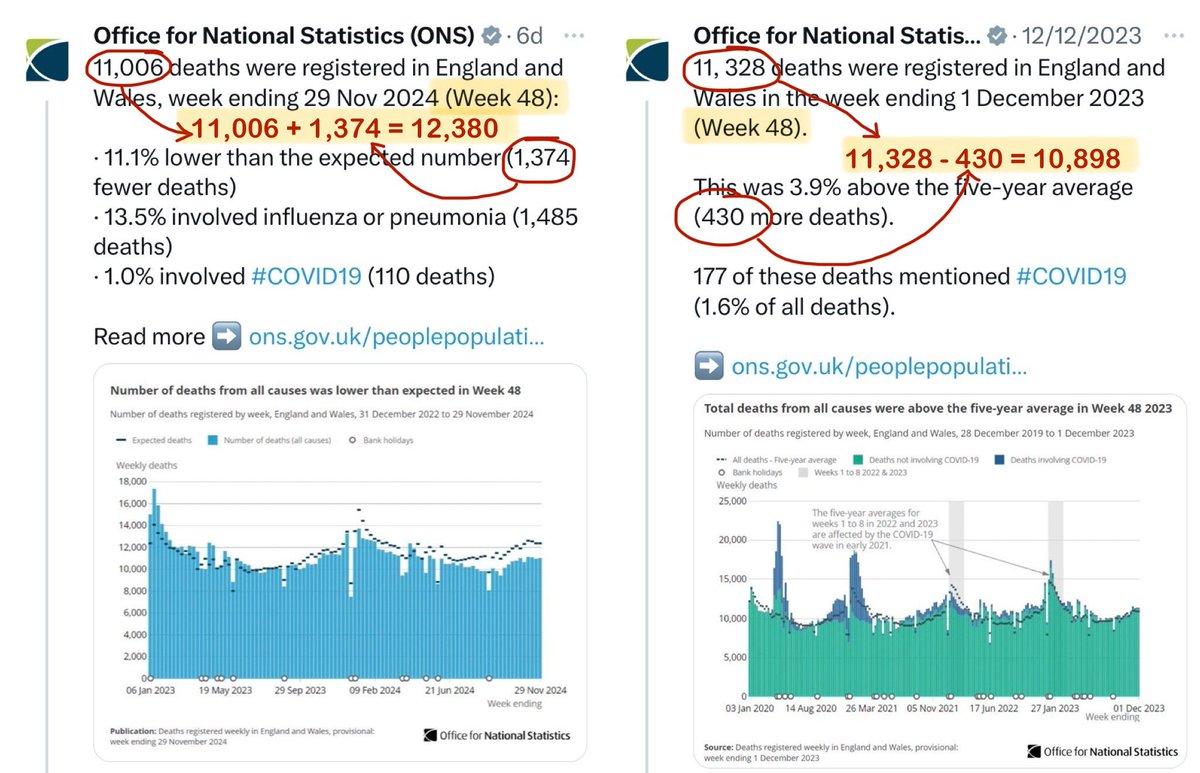
Meanwhile, excess deaths in England and Wales
Cat in the Hat on X, Dec 17, 2024:
EXCESS DEATHS
In week 48 2024:
Expected deaths: 12,380
Actual deaths: 11,006

In week 48 2023:
Expected deaths: 10,898
Actual deaths: 11,328
They’ve raised the baseline of expected deaths by 14% since this time last year!
No wonder there’s no excess…
Image


Square profile picture


Office for National Statistics (ONS)

@ONS
·
 
So materially fewer all-cause deaths than expected. Me thinks the ONS's "expected death" numbers are not very usable since they are based on recent years during high pandemic mortality. Would be nice if they extrapolated from before 2020 like the USA's CDC does. Too bad really because the ONS and NHS does a better job at gathering stats than the fractured USA health care system.

USA shows excess deaths are gradually approaching the predicted numbers from prior to 2020. Here in San Diego, Covid-19 deaths have dropped to about 0.5% of all deaths from just over 3.0% this summer. Probably won't stay that low as the winter wave approaches. Osterholm (CIDRAP) predicts a lower wave than last winter based on the recent, larger than expected summer wave. We'll see.
 
It's a good idea to get your children C19 vaccinated. Too few people do. (In some countries, Denmark being one of them, it isn't even possible anymore, and anybody younger than 65 who is not in a risk group has to pay for the vaccination.)
Pfizer Vaccine Reduces Risk of Long COVID in Pediatric Patients (DrugTopics, Dec 20, 2024)
The study found that the estimated effectiveness of the BNT162b2 vaccine against long COVID among adolescents was 95.4% during the Delta period. During the Omicron period, the estimated effectiveness was 60.2% among children and 75.1% among adolescents. During both Delta and Omicron, vaccination prior to infection did not significantly modify the risk of long COVID. The authors concluded that the benefit of the vaccine in preventing long COVID is due mainly to the fact it mitigates the risk of infection.
Study limitations include potential bias from undocumented infections, that vaccine authorization timing may reduce the generalizability of the findings, that vaccine records may be incomplete for some patients, and that identifying long COVID in children by electronic health records may have introduced potential bias from inaccurate capturing of outcomes.
“Our findings demonstrate the effectiveness of BNT162b2 vaccines on long COVID in US pediatric population,” the authors concluded. “Given that the causal pathways for developing long COVID are still not fully understood, our findings underscore the importance of continually prioritizing the prevention of SARS-CoV-2 infections and using vaccination as a key focus of public health policy to mitigate the risk of long COVID.”

Real-world effectiveness and causal mediation study of BNT162b2 on long COVID risks in children and adolescents (Clinical Medicine, The Lancet, Jan 2025)

BNT162b2 was the first Pfizer-BioNTech C19 vaccine used in late 2020 and most of 2021, which may explain why it wasn't as effective during Omicron.
 
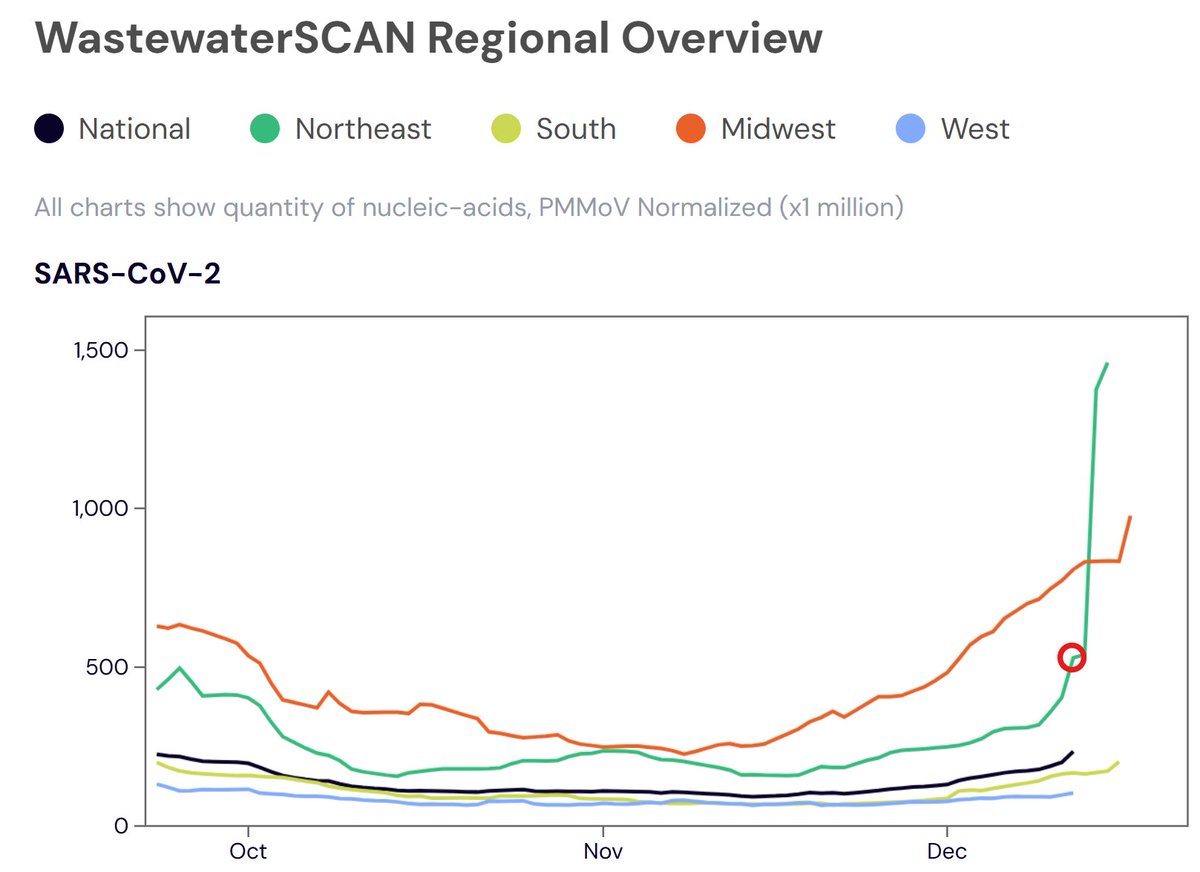
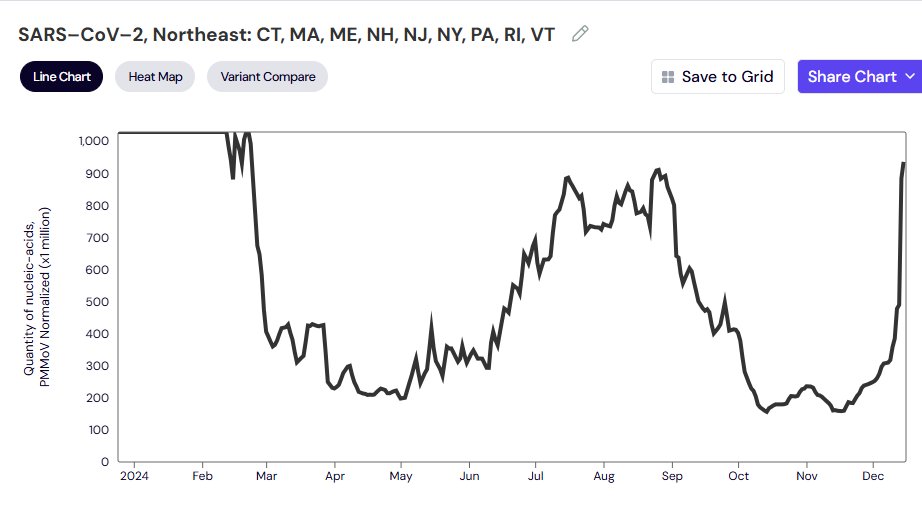
Mike Hoerger on X, Dec 22, 2024
It is easy to ignore the Northeast's spike (green line).
Often WastewaterSCAN corrects the most recent 2-3 data points considerably.
But go back 4 data points (circled). Transmission that day was 78% higher than the week prior.

WWS regional map.
 
Last edited:
It's a good idea to get your children C19 vaccinated. Too few people do. (In some countries, Denmark being one of them, it isn't even possible anymore, and anybody younger than 65 who is not in a risk group has to pay for the vaccination.)


Real-world effectiveness and causal mediation study of BNT162b2 on long COVID risks in children and adolescents (Clinical Medicine, The Lancet, Jan 2025)

BNT162b2 was the first Pfizer-BioNTech C19 vaccine used in late 2020 and most of 2021, which may explain why it wasn't as effective during Omicron.
Talk about burying the lede. What the study showed was no statistically significant effect of vaccination in reducing long covid after a covid infection. Rather, it showed the vaccine was very effective in reducing risk of infection, and hence long covid after that since you have to get covid to get long covid. Effectiveness varied from 95% for older children during Delta to about 60-75% during Omicron including younger children. The 95% efficacy during Delta is similar to the original phase 3 study and is likely due to Delta occurring immediately after the EAU was amended for kids 12-15 so during maximum immune response window.
 
Burying the lede?! The lede is that it's a good idea to get your children vaccinated!
Unlike you, I don't confuse the results of a study with what the study writes about previous studies!
Maybe you didn't notice this part of the quotation:
Study limitations include potential bias from undocumented infections, that vaccine authorization timing may reduce the generalizability of the findings, that vaccine records may be incomplete for some patients, and that identifying long COVID in children by electronic health records may have introduced potential bias from inaccurate capturing of outcomes.
It means that the worse people are impacted by the (acute) infection, the more likely they are to get tested. Thus people who are infected but asymptomatic are more likely to be registered and counted as uninfected.
 
Last edited:
Diabetes & cardiovascular dysfunction:
SARS.CoV.2 Spike S1 subunit triggers pericyte and microvascular dysfunction in human pancreatic islets (DiabetesJournals, Dec 23, 2024)
The COVID-19 pandemic has profoundly affected human health, yet the mechanisms underlying its impact on metabolic and vascular systems remain incompletely understood. Clinical evidence suggests that SARS-CoV-2 directly disrupts vascular homeostasis, with perfusion abnormalities observed in various tissues. The pancreatic islet, a key endocrine mini-organ reliant on its microvasculature for optimal function, may be particularly vulnerable. Studies have proposed a link between SARS-CoV-2 infection and islet dysfunction, but the mechanisms remain unclear. Here, we investigated how SARS-CoV-2 spike S1 protein affects human islet microvascular function. Using confocal microscopy and living pancreas slices from non-diabetic organ donors, we show that a SARS-CoV-2 spike S1 recombinant protein activates pericytes — key regulators of islet capillary diameter and beta cell function—and induces capillary constriction. These effects are driven by a loss of angiotensin converting enzyme 2 (ACE2) from pericytes’ plasma membrane, impairing ACE2 activity and increasing local angiotensin II levels. Our findings highlight islet pericyte dysfunction as a potential contributor to the diabetogenic effects of SARS-CoV-2 and offer new insights into the mechanisms linking COVID-19, vascular dysfunction and diabetes.
 
Dementia
England:
NHS dementia diagnosis rates at three-year high (NHS.UK, Nov 15, 2023)
The NHS is diagnosing tens of thousands more people with dementia since the start of the pandemic, thanks to NHS recovery efforts.
NHS staff have diagnosed 475,573 people with dementia in September – up more than 52,000 than the same time last year, with diagnosis rates now at a three year high.
Dementia diagnoses in England at record high (NHS.UK, July 22, 2024)
Record numbers of people are being diagnosed with dementia in England, NHS figures show.
Latest data shows a record 487,432 people in England in June had a diagnosis.
Xmas fun and games for the whole family:
NHS highlights dementia symptoms to look out for over Christmas as numbers diagnosed soar (NHS.uk, Dec 23, 2024)
As family and friends gather for the festive period, the NHS is highlighting the signs and symptoms of dementia to look out for in loved ones.
Common early symptoms of dementia that may appear some time before an official medical diagnosis include:
  • emotional changes such as irritability
  • forgetfulness
  • struggling to follow a conversation or find the right word
  • being confused about time and place
US study, 2022:
COVID-19 increases risk of developing Alzheimer's by 50-80% in older adults (NewsMedical, Sep 18, 2022)
Overall, the study findings showed that SARS-CoV-2-positive female adults aged ≥ 85 years were at a significantly higher risk for new-onset AD within 360 days of SARS-CoV-2 infection diagnosis. However, future studies are required with data validation from multiple sources and longer follow-up periods to elucidate the mechanisms of and for continued surveillance of the impact of SARS-CoV-2 infections on AD.
Association of COVID-19 with New-Onset Alzheimer’s Disease (IOS Press, July 18/Sep 13. 2022)
Older adults with COVID-19 were at significantly increased risk for new diagnosis of Alzheimer’s disease with highest risk in people age ≥85 and in women. Study limitations include potential biases introduced by the observational and retrospective nature of this study and inaccuracy in Alzheimer’s disease diagnosis, which should not substantially affect the relative risk analyses since all cohorts were drawn from the same dataset.
Danish study, 2022:
Frequency of Neurological Diseases After COVID-19, Influenza A/B and Bacterial Pneumonia (Frontiers, June 23, 2022)
Compared to COVID-negative outpatients, COVID-19 positive outpatients had an increased RR of Alzheimer's disease (RR = 3.5; 95%CI: 2.2–5.5) and Parkinson's disease (RR = 2.6; 95%CI: 1.7–4.0), ischemic stroke (RR = 2.7; 95%CI: 2.3–3.2) and intracerebral hemorrhage (RR = 4.8; 95%CI: 1.8–12.9). However, when comparing to other respiratory tract infections, only the RR for ischemic stroke was increased among inpatients with COVID-19 when comparing to inpatients with influenza (RR = 1.7; 95%CI: 1.2–2.4) and only for those >80 years of age when comparing to inpatients with bacterial pneumonia (RR = 2.7; 95%CI: 1.2–6.2).

Cat in the Hat on X, June 13, 2023
COVID & the BRAIN… a thread
 
Dementia
England:


Xmas fun and games for the whole family:

US study, 2022:


Danish study, 2022:
Frequency of Neurological Diseases After COVID-19, Influenza A/B and Bacterial Pneumonia (Frontiers, June 23, 2022)
Compared to COVID-negative outpatients, COVID-19 positive outpatients had an increased RR of Alzheimer's disease (RR = 3.5; 95%CI: 2.2–5.5) and Parkinson's disease (RR = 2.6; 95%CI: 1.7–4.0), ischemic stroke (RR = 2.7; 95%CI: 2.3–3.2) and intracerebral hemorrhage (RR = 4.8; 95%CI: 1.8–12.9).
However, when comparing to other respiratory tract infections, only the RR for ischemic stroke was increased among inpatients with COVID-19 when comparing to inpatients with influenza (RR = 1.7; 95%CI: 1.2–2.4) and only for those >80 years of age when comparing to inpatients with bacterial pneumonia (RR = 2.7; 95%CI: 1.2–6.2
The highlighted is important. Covid isn't particularly different from other respiratory infections in this. It just was a new infection that infected many people in a short space of time so any impact is more noticeable than the chronic repeated infections of 'traditional' respiratory infections. The biggest cause of deaths attributable to e.g. flu or pneumonia isn't the direct infection, but the increased risk of heart attack and stroke. Flu vaccination decreases risk of heart attack and stroke.
 
Yes, COVID-19 is indeed "a new infection that [not only] infected many people in a short space of time" but also continues to infect many more people than the flu, not just in a short space of time but all year round. This is one of the things that make it different from other respiratory infections.
Do you have a quantification of "the increased risk of heart attack and stroke" in connection with the two infectious diseases, flu and C19?
 
Covid's impact has continued to decline. The dominant cause of death in 2024 for ILI (which includes C19, Flu and Pneumonia) in the USA has been Pneumonia/Flu. which was >3X higher than Covid-19 at 207,381 of which 45,447 was Covid-19.

 
Yes, COVID-19 is indeed "a new infection that [not only] infected many people in a short space of time" but also continues to infect many more people than the flu, not just in a short space of time but all year round. This is one of the things that make it different from other respiratory infections.
Do you have a quantification of "the increased risk of heart attack and stroke" in connection with the two infectious diseases, flu and C19?
Yes there is a lot of evidence. The magnitude of effect for covid is similar to that for flu and pneumonia. To repeat; the number of people who die because of the increased cardiovascular risk following pneumonia is greater than the number who die directly from pneumonia.
A 2018 study found that people were six times more likely to have a heart attack in the week after being diagnosed with flu. A CDC study published in 2020 in the Annals of Internal Medicine reported that sudden, serious cardiac events are common in adults hospitalized with flu. The study, which looked at more than 80,000 adult patients hospitalized with flu over eight flu seasons, found that almost 12% of patients, or 1 in 8, had an acute cardiac event, such as acute heart failure or acute ischemic heart disease. Of these, 30% were admitted to the ICU and 7% died while in the hospital. And a study published this month in the Journal of Infectious Diseases finds that even mild illness caused by influenza virus infections are associated with a twofold increase in the risk of acute cardiovascular events in older patients.

This study explores the relationship between influenza infection, both clinically diagnosed in primary care and laboratory confirmed in hospital, and atherothrombotic events (acute myocardial infarction and ischemic stroke) in Spain. A population-based self-controlled case series design was used with individual-level data from electronic registries (n = 2 230 015). The risk of atherothrombotic events in subjects ≥50 years old increased more than 2-fold during the 14 days after the mildest influenza cases in patients with fewer risk factors and more than 4-fold after severe cases in the most vulnerable patients, remaining in them more than 2-fold for 2 months. The transient increase of the association, its gradient after influenza infection, and the demonstration by 4 different sensitivity analyses provide further evidence supporting causality. This work reinforces the official recommendations for influenza prevention in at-risk groups and should also increase the awareness of even milder influenza infection and its possible complications in the general population.
Question Is seasonal influenza vaccination associated with lower rates of adverse cardiovascular events?
Findings In this meta-analysis of 6 randomized clinical trials including 9001 adults who were randomized to influenza vaccination vs matching placebo or standard care, 3.6% of vaccinated patients developed a major adverse cardiovascular event within 12 months compared with 5.4% of those who received placebo or control, a 1.8% significant difference translating into a number needed to vaccinate of 56 patients to prevent 1 event. Higher-risk patients with recent acute coronary syndrome had 45% reduced risk.

Meaning These results suggest that clinicians and policy makers should continue to counsel high-risk patients on the cardiovascular benefits of seasonal influenza vaccination.

Community-acquired pneumonia (CAP) is an important cause of death around the globe. Up to 30% of patients admitted to hospital for CAP develop cardiovascular complications (i.e. new/worsening heart failure, new/worsening arrhythmias, myocardial infarctions and/or strokes), acutely and up to 10 years thereafter. Cardiac complications result from complex interactions between preexisting conditions, relative ischaemia, upregulation of the sympathetic system, systemic inflammation and direct pathogen-mediated damage to the cardiovascular system. The exact mechanisms underlying the direct host-pathogen interactions are of great interest to identify potential therapeutic and preventative targets for CAP. In this review, we summarize the epidemiological data, risk factors and the pathogen-driven cardiovascular damage affecting patients with CAP.

Hospitalization for pneumonia was associated with increased short-term and long-term risk of CVD, suggesting that pneumonia may be a risk factor for CVD.

Similar risk for SARS-CoV-2 (MACE = major adverse cardiovascular event).
The risk of MACE was elevated in COVID-19 cases at all levels of severity (HR, 2.09 [95% CI, 1.94–2.25]; P<0.0005) and to a greater extent in cases hospitalized for COVID-19 (HR, 3.85 [95% CI, 3.51–4.24]; P<0.0005). Hospitalization for COVID-19 represented a coronary artery disease risk equivalent since incident MACE risk among cases without history of cardiovascular disease was even higher than that observed in patients with cardiovascular disease without COVID-19 (HR, 1.21 [95% CI, 1.08–1.37]; P<0.005).
 
Last edited:
Covid's impact has continued to decline. The dominant cause of death in 2024 for ILI (which includes C19, Flu and Pneumonia) in the USA has been Pneumonia/Flu. which was >3X higher than Covid-19 at 207,381 of which 45,447 was Covid-19.

San Diego County Respiratory Virus Surveillance Report, June 30 to Dec 21, 2024 (SanDiegoCounty.gov, Dec 26, 2024)
COVID-19: Cases 20,500; Deaths 178
Influenza: Cases 6,546; Deaths 14
RSV: Cases 1,005; Deaths 0
So far, the number of C19 deaths has been about 13 times higher than that of flu deaths this season, and the number of C19 cases three times higher than the number of flu cases, which seems to imply that C19 is not only more infectious, its virulence (i.e. the CFR) is also much higher.
Strange, isn't it?

This may have something to do with it:
Excess Deaths Associated with COVID-19 (CDC, Sep 27, 2023)
As some deaths due to COVID-19 may be assigned to other causes of death (for example, if COVID-19 was not diagnosed or not mentioned on the death certificate) tracking all-cause mortality can provide information about whether an excess number of deaths is observed, even when COVID-19 mortality may be undercounted. Additionally, deaths from all causes excluding COViD-19 were also estimated. Comparing these two sets of estimates - excess deaths with and without COVID-19 - can provide insight about how many excess deaths are identified as due to COVID-19, and how many excess deaths are reported as due to other causes of death. These deaths could represent misdiagnosed COVID-19 deaths, or potentially could be indirectly related to the COVID-19 pandemic (e.g., deaths from other causes occurring in the context of health shortages or overburdened health care systems).
 
Last edited:
San Diego County Respiratory Virus Surveillance Report, June 30 to Dec 21, 2024 (SanDiegoCounty.gov, Dec 26, 2024)
COVID-19: Cases 20,500; Deaths 178
Influenza: Cases 6,546; Deaths 14
RSV: Cases 1,005; Deaths 0
So far, the number of C19 deaths has been about 13 times higher than that of flu deaths this season, and the number of C19 cases three times higher than the number of flu cases, which seems to imply that C19 is not only more infectious, its virulence (i.e. the CFR) is also much higher.
Strange, isn't it?
Not really. C19 is more contagious and has waves outside of the winter season as well, while Flu rarely has a peak outside of the winter season.

Did you notice that in the last two weeks there were 9 Covid deaths and 7 Flu deaths? Half of the season's 14 Flu deaths were in the last 2 weeks. We just started getting into Flu season and it's starting to ramp strongly. Flu is already accounting for almost 4x more hospitalizations than C19. Deaths, a lagging indicator will follow. Flu was close to non-existent before Dec. C19 was pretty high in the late summer. C19 seems to be growing much slower tahn Flu. Might be due to somewhat higher population immunity from the high summer surge.
 

Back
Top Bottom