• Quick note - the problem with Youtube videos not embedding on the forum appears to have been fixed, thanks to ZiprHead. If you do still see problems let me know.

Ed Self-Driving Cars: Pros, Cons, and Predictions

Evaluate Self-Driving Cars on a scale of 1-5 (1 = Terrible, 3 = Meh, 5 = Great)

  • 1

    Votes: 10 6.6%
  • 2

    Votes: 11 7.2%
  • 3

    Votes: 24 15.8%
  • 4

    Votes: 28 18.4%
  • 5

    Votes: 79 52.0%

  • Total voters
    152
  • Poll closed .
It's a rational answer. It's not an answer that will persuade people who don't have entirely rational reasons for opposing autonomous vehicles.

I mean, most of us here know the reasons why nuclear power is preferable to coal, but that has not led ineluctably to the success of nuclear power.

You ◊◊◊◊ one goat....
Yes it is a rational answer. But you had to throw nuclear power into the equation. Nuclear IS SAFER than coal. It was safer in 1970 before the government piled on a lot of needless regulations which made it so expensive that it effectively killed it.

All that matters is value/cost/price. Everything else doesn't make a dent. I put solar panels on my property not because it pollutes less. But because it makes financial sense. And I plan on adding more when I buy an EV which I expect to do within 5 years. I'm very sure that new EVs will have a larger market share than new ICE vehicles a decade from now. And not because they pollute less or other such noble ideas. But because it makes financial sense. I live around a bunch of red necks who have been badmouthing electric vehicles as long as I can remember. And now they are buying the cyber truck. (Which I think is hideous.)

Frankly, the additional price that Tesla charges for autonomous driving is too expensive of an add on for me. (Last I checked) it has to make financial sense for me to do it. Less for insurance or the add on price is nominal. Definitely cool though.
 
Yes it is a rational answer. But you had to throw nuclear power into the equation. Nuclear IS SAFER than coal. It was safer in 1970 before the government piled on a lot of needless regulations which made it so expensive that it effectively killed it.
Well, that was the point. It's safer, but it seldom gained widespread adoption, and that wasn't just about price. A couple of high-profile disasters have proved to be unshakeable PR problems.

And now they are buying the cyber truck. (Which I think is hideous.)
Not just hideous, but in my view it sucks as a work vehicle. I don't think many of the people buying those things are doing real work with them. Never seen a contractor who drives one, but then they have relatively little presence in New York in general.
 

The studies suggest they are. But with caveats.
If you are using caveats to get the evidence to support your view, you don't have evidence.
 
I wouldn't say outright "don't have", but yes the "But Not All" situations is the problem.

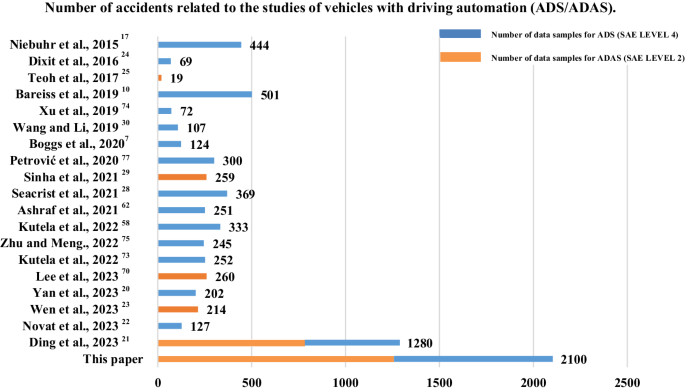
E.g., having read the articles, I find some pretty interesting caveats. I'll just take the second one for now.

1. A lot of those vehicles who did perform better are Google's cars, not Teslas. In fact, the factors credited with doing better in certain conditions like rain or fog are "the combined use of cameras, LIDAR, GNSS, and RADAR sensors". Which doesn't exactly describe Teslas, innit? So, yeah, not all are created equal.

2. "ADS-equipped vehicles in work zones have a higher probability of being involved in minor and moderate/severe injury accidents". So yeah there's a difference between yeah, they're technically better at getting you over the highway, and when humans enter the equation.

3. For some reason, ADS vehicles get rear-ended TWICE as much as other vehicles. Absent some conspiracy to rear-end them, I can only conclude that their braking must be the problem.

4. If you just scroll down to that graph with the wavy coloured lines you get one pretty big caveat. ADS vehicles rear-end other cars just as often, but the consequences are more severe when they do. E.g., the chance for moderate damage increases from 16% for a human driven vehicle, to 30% for an AI car.

5. "Interestingly, the dawn/dusk odds ratio indicates a 5.250 higher probability of ADS accident than HDV accident. This could be attributed to the sensors and cameras used by AVs may not be able to quickly adapt to changes in lighting conditions, which could affect their ability to detect obstacles, pedestrians, and other vehicles" I'd say that's a pretty frikken huge caveat.

6. "turning [...] increases the likelihood of an accident by 1.988 times compared to HDVs. One possible reason is a lack of situational awareness." Just to emphasize it: they have TWICE the chance of an accident when turning.

Etc.

So basically at the end of the day, yeah, they're safer on the highway, unless it's dusk/dawn and unless there's a traffic event, cf the same article. When you're in a city and you have lots of turns and humans around and braking at streetlights, yeeaah, no, things ain't so great any more. And it's worse if it's a Tesla, I guess.
 
Last edited:
I would also add this simple observation, which skews the results a fair bit: about 32% of all traffic crash fatalities in the United States involve drunk drivers (with BACs of .08 or higher). Furthermore, unlicensed drivers cause 20% of all vehicular accidents, or 18.4% of fatal motor vehicle accidents. (Even though they are just 3% of the drivers on the road.)

NOW, there is some overlap between the two, so you can't just add 32+20=52, but still it must be fairly close to half. (Given that those unlicensed are only 3% of the total drivers. which limits the size of the overlap somewhat.)

So statistical comparisons of ALL accidents between HDV and ADV is cute, but don't actually say what some people think they do. If you're not driving drunk and have your license, actually it's not the 100% point in that comparison where you'd be just as safe in an ADV. You'd need more like 200% for your kind of driver to be just as safe.

I find that to be a sobering thought :p
 
Last edited:
Well, that was the point. It's safer, but it seldom gained widespread adoption, and that wasn't just about price. A couple of high-profile disasters have proved to be unshakeable PR problems.
Not true. What was true is the Sierra Club ran an effective negative campaign. Lots of Nuclear Power plants were built in the 1960s. They effectively frightened politicians to add all the regulations. Then the movie China Syndrome and Three Mile Island happened. And that was the ballgame.
Not just hideous, but in my view it sucks as a work vehicle. I don't think many of the people buying those things are doing real work with them. Never seen a contractor who drives one, but then they have relatively little presence in New York in general.
I agree.
 
Until Nuclear Power is set up from mining to decommissioning and long-term storage, it is incorrect to call it a mature technology.
 
Until Nuclear Power is set up from mining to decommissioning and long-term storage, it is incorrect to call it a mature technology.
Nonsense. Nuclear energy is safer than any form of energy. It pollutes less and mining and storage isn't a problem.
 
That is a stupid thing to say: if storage was no problem, why hasn't it happened Yet?
So obviously it's a Huge problem.

Additionally, uranium mines in the US are an ecological disaster the industry refuses to clean up - and because mostly tribal land is affected no one cares that it harms people.
You are the case in point.
 
That is a stupid thing to say: if storage was no problem, why hasn't it happened Yet?
So obviously it's a Huge problem.

Additionally, uranium mines in the US are an ecological disaster the industry refuses to clean up - and because mostly tribal land is affected no one cares that it harms people.
You are the case in point.
We store nuclear waste safely today and have for more than a half century. What we don't have is a national storage facility. And we don't have that because the public and politicians are morons. There is actually nothing wrong with Yucca Mountain.

And Uranium mines are not an ecological disaster. They do create problems. However, it is almost a microscopic problem compared to coal mining.
 
My own car has sufficient rudimentary self-driving capability that I could wish it had more. For example, when in Traffic Jam Assist mode it continually nags me to operate the steering wheel, even though it's doing that just fine by itself. It would be nice if I felt I could trust it to go on doing that at somewhat higher speeds too. I can see the attraction of limited self-driving on a motorway where traffic behaviour is uncomplicated and fairly predictable, with the driver having the ability to take over if necessary. I gather that's what Tesla drivers have at the moment. Actual driverless cars, though? I suppose we'll just have to see how these things develop.
 
May I point out why that nuclear power or whatnot is NOT a valid analogy? Quoth Carl Sagan, "They laughed at Columbus, they laughed at Fulton, they laughed at the Wright brothers. But they also laughed at Bozo the Clown." If all you've got is that people also laughed at X, you literally have no case.
 
Last edited:
May I point out why that nuclear power or whatnot is NOT a valid analogy? Quoth Carl Sagan, "They laughed at Columbus, they laughed at Fulton, they laughed at the Wright brothers. But they also laughed at Bozo the Clown." If all you've got is that people also laughed at X, you literally have no case.
I made a mistake earlier. Zag is right. Nuclear energy is not mature. Lots of improvements can be made. But perfection need not be the enemy of good. And nuclear power is good and preferable to fossil fuels if it can be done economically. And it was being done safely and economically in the 1960s. Before they killed it with burdensome regulations.

Self driving vehicles are not perfect either. The technology is not mature. But part of the process of maturing the technology is expanded use. This should lead to improvement of the software and making the sensors more economical.
 
Not just hideous, but in my view it sucks as a work vehicle. I don't think many of the people buying those things are doing real work with them. Never seen a contractor who drives one, but then they have relatively little presence in New York in general.

they've had a number of pretty serious problems since their release. particularly, the gigacast frame cracking after shock loads. and now, it's their first winter. have to see how they hold up in the cold and snow
 
they've had a number of pretty serious problems since their release. particularly, the gigacast frame cracking after shock loads. and now, it's their first winter. have to see how they hold up in the cold and snow
I think the sharp edges on them are inherently dangerous. But what really makes them terrible is they are neither a good car, or a good truck. They are the 2024 electric version of the 1970 Chevrolet El Camino or Ford Ranchero. Both lacked good passenger or good cargo space.
 
oh, i forgot too the way the headlights are mounted. it's a little light bar basically right above the front bumper, right where the snow piles up. pretty serious safety concerns imo
 
We store nuclear waste safely today and have for more than a half century. What we don't have is a national storage facility. And we don't have that because the public and politicians are morons. There is actually nothing wrong with Yucca Mountain.

And Uranium mines are not an ecological disaster. They do create problems. However, it is almost a microscopic problem compared to coal mining.
as I said: you are saying this out of ignorance because it doesn't impact YOU.
And none of the current storage is going to be safe for tens of thousands of years - local storage on site is limited, and moving it is getting more difficult each year as the original containers errored. Who is going to pay for full decommissioning?

It is utterly irresponsible to invest in a process that will create waste you don't have a place to put.
you would not accept this from a chemical plant - but because it's nuclear, you just look away instead of investigating the issue for fear that it will tarnish the image you have of the industry.

Of course, it doesn't really matter, as The Market has spoken: renewables will always be cheaper, more flexible, fast to produce and install and easy to update - it will take a lot of government money to make investors bind themselves to a project that will take at least a decade to build, probably 2 decades if you include planning, and another decade to start making a profit.
 
as I said: you are saying this out of ignorance because it doesn't impact YOU.
And none of the current storage is going to be safe for tens of thousands of years - local storage on site is limited, and moving it is getting more difficult each year as the original containers errored. Who is going to pay for full decommissioning?

It is utterly irresponsible to invest in a process that will create waste you don't have a place to put.
you would not accept this from a chemical plant - but because it's nuclear, you just look away instead of investigating the issue for fear that it will tarnish the image you have of the industry.

Of course, it doesn't really matter, as The Market has spoken: renewables will always be cheaper, more flexible, fast to produce and install and easy to update - it will take a lot of government money to make investors bind themselves to a project that will take at least a decade to build, probably 2 decades if you include planning, and another decade to start making a profit.
Really?

Why aren't you concerned with the many millions times more waste from coal mining and coal fire reactors? The lead, the cyanide, arsenic etc. They are significantly more a threat. 99.9% more deaths result from the mining of coal and it's use. 99.8% more from oil. And I'm not including the problem of global warming. And when breeder reactors are developed they will be able to reduce not only the amount of nuclear waste by 90% they will reduce the radioactivity of transuranic waste from hundreds of thousands of years to a few hundred.
 
Last edited:

Back
Top Bottom