• Quick note - the problem with Youtube videos not embedding on the forum appears to have been fixed, thanks to ZiprHead. If you do still see problems let me know.

Bad ideas in military history

Speaking of bad ideas, infantry weapons that might as well have never been tested, such as the Nambu Type 94 pistol. It had an exposed lever on the left side that would cause the weapon to discharge without pulling the trigger if anything pressed on it, be it snagging in on a branch in the jungle, or dropping it, or just trying to holster it without the utmost caution. Or just carrying it around, since after '44 most holsters were just made of fabric, and didn't really protect it from bangs on either side. It doesn't even take an unreasonable amount of force, you can just push it with your thumb to make it discharge. Worse yet, it caused the weapon to shoot and cycle even when the safety is on. (But not if decocked.)

Allied troops gave it the nickname of "suicide special." :p

Over 70,000 were produced, so it doesn't even have the excuse of being experimental or anything.

(Fun trivia, the Japanese officers had to buy their own pistols, same as, say, the UK officers bought their own swords. So you got to pay for the weapon that shot you in the leg:p)
 
Last edited:
There were several pistol options.
British Officers up to WW2 had to buy their own pistol. They could have anything as long as it was in the service cartridge.
Colt made 1911s for the British .455 cartridge and Webley made a very good automatic pistol.

The Nambu 94 was designed to be small and compact for aircrews.

Here's Forgotten Weapons dealing with myths and misconceptions about the Nambu 94, he explains the exposed sear bar and demonstrates the problem.

They are ok with the safety engaged

It can't cycle or shoot with the safety on.

His verdict, not nearly as bad or unsafe as people say.

Not a typical Forgotten Weapons thumbnail for some reason.

 
Last edited:
A good look at Armour De-capping Plates as used on the Littorio class Battleships and why they probably wouldn't work as expected.
Also why other navies never bothered.

 
Something seems to be missing about this idea of it being impossible to get around in the desert without getting lost. Before GPS, and even if we imagine a place with no landmarks of any kind at all so it's essentially like an ocean with sand instead of water, and even if we throw compasses out because there's so much other metal sitting around in a military environment, they still had reliable speedometers, odometers, clocks, the sun, and understanding of geometry (for using the sun to determine direction based on time of day & time of year). And that's without making people learn to use the stars.


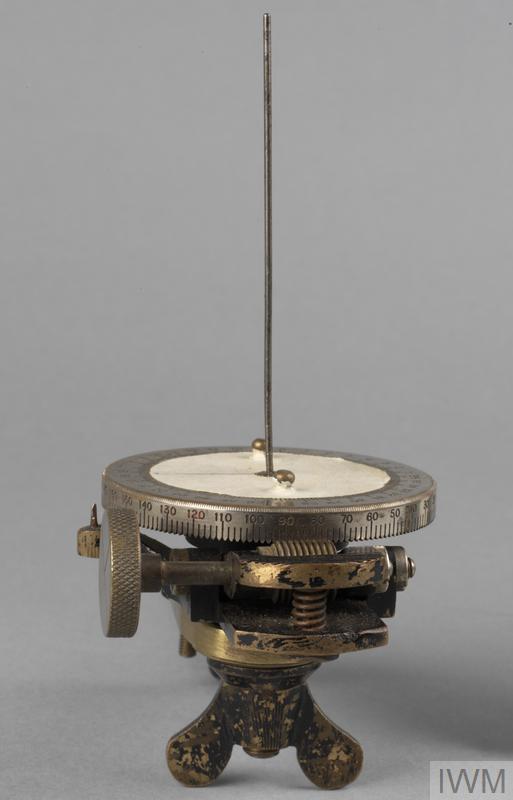
British Forces used a Sextant to fix a position and a device called the Bagnold Sun Compass to give direction in the desert


Back when the History channel was doing actual history…. One of the commentators referred to the thing as “the stupidest weapon ever devised”.

When I was a medic in Germany back in the mid-60s, I was assigned to support the Davy Crockett platoon. (You’re not allowed to shoot or blow anything up without a medic present)

Most of the time, we went out in the woods and blew things up with explosives. This because the DC was so secret that the guys had to know how to blow it up if they were over-run. Like kids with C4 and TNT instead of firecrackers.

We did one practice shot. The weapon had a 20mm “spotter” gun slung under the barrel. The round from this matched the trajectory of the bomb. So…. Your forward observer (not the best job in the army….) would be downrange and would “walk” the spotter rounds in on the enemy column or formation. Then (presumably) he’d get out of Dodge.

Back at the gun, the launcher, a modified recoilless rifle, would be set up with the bomb and the propellant charge, and everyone would get into the armored personnel carriers and “button up”. The gun would be fired remotely.
The idea was to shoot over a handy hill or whatever to avoid the worst of the blast.

The whole point of the Davy Crockett was it had had a nuke warhead, if memory serves.
WHich makesi really dumb, since it unlikety the team firing it could get out of range of the nuke impact in time....
Using outdated bombs seems to be a perennial favorite, it was a significant contribution to the 1967 fire on the USS Forrestal.

The Forrestal and the Enterprise both experienced significant fire cause by the unplanned firing of Zuni rockets. The bad idea there was probably just an over-reliance on a sketchy weapon.
Well, in 1967 most missile technology was pretty sketchy.
 
Speaking of bad ideas, infantry weapons that might as well have never been tested, such as the Nambu Type 94 pistol. It had an exposed lever on the left side that would cause the weapon to discharge without pulling the trigger if anything pressed on it, be it snagging in on a branch in the jungle, or dropping it, or just trying to holster it without the utmost caution. Or just carrying it around, since after '44 most holsters were just made of fabric, and didn't really protect it from bangs on either side. It doesn't even take an unreasonable amount of force, you can just push it with your thumb to make it discharge. Worse yet, it caused the weapon to shoot and cycle even when the safety is on. (But not if decocked.)

Allied troops gave it the nickname of "suicide special." :p

Over 70,000 were produced, so it doesn't even have the excuse of being experimental or anything.

(Fun trivia, the Japanese officers had to buy their own pistols, same as, say, the UK officers bought their own swords. So you got to pay for the weapon that shot you in the leg:p)
Speaking of bad infanty weapons, let us not forget the French.Chauchat Light Machine Gun, which has been called the worst piece of junk ever issued to the US Army.It was almost guarantted to fail after a couple minutes of firing.
And lest people think this is just a case of "Not Invented Here" the French Poilus who had t use the Chauchat has exactly the same opinion of it: It was a piece of trash.
 
The Chauchat was a great idea. It's no surprise that one of the very first light machine guns left a lot of room for improvement. But it was an important step in the right direction, and armies were absolutely right to field it and learn from it.

I'm so sorry that not every LMG in history can be the M249. /s
 
The Chauchat was a great idea. It's no surprise that one of the very first light machine guns left a lot of room for improvement. But it was an important step in the right direction, and armies were absolutely right to field it and learn from it.

I'm so sorry that not every LMG in history can be the M249. /s


Don't forget the US had already rejected the Lewis Gun, the best LMG of the war, and rejected it again when offered by the British when they finally joined the war.

The Chauchat was was designed to be quick and cheap to produce. It's major drawback was the terrible French cartridge.
 
The equivalent of the Chauchat wasn't really the Lewis, but the later BAR. The Lewis gun still weighed 28 pounds or 12.7 kilos, and was rather bulky, which made it less than ideal for firing on the move. The Chauchat was "only" 20 pounds, and the BAR shaved off another half a pound or so. It doesn't seem like a herculean task for the Lewis, but bear in mind that soldiers were rather encumbered already for most of WW1.

As for the Chauchat, yeah, the idea was great, the execution was lacking. The version chambered for the Lebel cartridge, yeah, it sorta worked except for being inaccurate. The version chambered for the American .30-06, you'd be lucky to fire more than a couple of rounds before it failed to feed or failed to extract. Because, yeah, while the failure to extract is better known, the first ones delivered also often failed to fully ream the next cartridge.
 
Also, speaking of bad ideas, let's touch on the intersection of ideas of making it cheaper, and safety. Enter the TT-33 pistol. It's still machined steel, so (other than being slimmer than, say, an M1911) it's not much cheaper to mill, so how DO you make it cheaper? Let's make a pistol without a safety at all. No decocker either, so literally the only way to make it really safe was to not have a round in the chamber. I.e., pull the mag out, eject the round, put it back into the mag, insert mag back. (The slide didn't stay back when empty, so once you let it go forward and reinserted the magazine, it was as safe as it reasonably can get.) There are reports of officers shooting themselves with it even when their car hit a bump in the road.

AFAIK it was never really corrected until they switched to the Makarov much later.
 
The equivalent of the Chauchat wasn't really the Lewis, but the later BAR. The Lewis gun still weighed 28 pounds or 12.7 kilos, and was rather bulky, which made it less than ideal for firing on the move. The Chauchat was "only" 20 pounds, and the BAR shaved off another half a pound or so. It doesn't seem like a herculean task for the Lewis, but bear in mind that soldiers were rather encumbered already for most of WW1.

As for the Chauchat, yeah, the idea was great, the execution was lacking. The version chambered for the Lebel cartridge, yeah, it sorta worked except for being inaccurate. The version chambered for the American .30-06, you'd be lucky to fire more than a couple of rounds before it failed to feed or failed to extract. Because, yeah, while the failure to extract is better known, the first ones delivered also often failed to fully ream the next cartridge.
C&Rsenal have a series of videos made in cooperation with Forgotten Weapons where they put all the sin WW1 machine guns through a series of exhaustive and comparative tests.
Lewis comes out top.

zto go with the two deep dive C& Rsenal videos on the Chauchat there's a good video on Mark Novak's gunsmith channel 'Anvil' showing how he repaired one of the guns used. He does all the repairs on antique weapons for C& Rsenal and Forgotten Weapons.
 
I'm not badmouthing the Lewis per se. It was an absolutely great gun. Just... I'm also considering the doctrine use. The Chauchat or BAR were not supposed to be as much replacements for, for example, the Maxim gun. The French already had a perfectly good replacement for that in the form of the Hotchkiss Mle 1914. The Chauchat and later BAR were supposed to be usable on the move, carried and fired by just one man. Essentially the doctrinal goal was to also have SOME way to bring extra firepower to an infantry section, including in the offense, rather than just a defensive line of heavy machineguns.

Which is why I called it a great idea (albeit poor execution). Giving each infantry section that kind of firepower was an idea WAY ahead of its time, especially when you consider it was first proposed in 1903.

The Lewis could KINDA fit that role today, if you really wanted to, but in WW1 doctrines and soldier equipment were different. You can see plenty of pictures of soldiers going over the top with their backpacks on, and waddling across the mud with that kind of load. Some even had to carry buckets of paint to mark captured artillery pieces, or even more ridiculous stuff if you compare it to modern infantry doctrine. Everything you had, and everything the unit needed, you'd lug around the no man's land under fire. So 8 pounds less for a LMG made a HUGE difference.
 
We know all this. Did you watch the C&R videos? they go in to great detail on use and 'doctrine' which didn't really exist at the time, they were making it up as they went along. Doctrine came later.

I recommend the C&R 'Lightning' series of videos with Ian from Forgotten Weapons, they are specifically conducting comparative and practical testing the effectiveness of the various light machine guns of WW1 and the way they were used.

They are probably the only example of all the guns brought together and used in one place under controlled conditions.
 
C&Rsenal have a series of videos made in cooperation with Forgotten Weapons where they put all the sin WW1 machine guns through a series of exhaustive and comparative tests.
Lewis comes out top.

zto go with the two deep dive C& Rsenal videos on the Chauchat there's a good video on Mark Novak's gunsmith channel 'Anvil' showing how he repaired one of the guns used. He does all the repairs on antique weapons for C& Rsenal and Forgotten Weapons.
I watched that series of videos. The Lewis came out top but it was also the best maintained of the guns they were able to get hold of (they were all around 100 years old, obviously).
 
Don't forget the US had already rejected the Lewis Gun, the best LMG of the war, and rejected it again when offered by the British when they finally joined the war.

The Chauchat was was designed to be quick and cheap to produce. It's major drawback was the terrible French cartridge.
Crozier rejected the Lewis gun for personal reasons, the US Navy kept it.
 
Not really, it was \OK but had an awkward cartridge feed and magazine arrangement.

It works nonetheless. There's some virtue in controlling each cartridge through the entire feeding-firing-extraction-ejection odyssey.

There's more virtue in fielding something simpler and cheaper, of course, given how war devours equipment.
 

Back
Top Bottom