The Great Zaganza
Maledictorian

- Joined
- Aug 14, 2016
- Messages
- 32,976
Looks like the guy was under investigation for Insider trading and the company for fraud.


If this were a TV mystery then it would turn out to have been a suicide he arranged to look like a murder. Or a rival executive to stop him spilling the beans on some crime they were doing. But real life is seldom so interesting; the simplest explanation really is "upset customer" and the lack of professionalism in the murder, plus (if true as being reported) words being carved on the bullets, do point toward that explanation so far.Looks like the guy was under investigation for Insider trading and the company for fraud.

According to the BBC:
"Deny, defend, depose': Words on shell casings confirmedpublished at 13:06
13:06Breaking
Earlier, we mentioned that US media said police have found three shell casings with words on them.
Our US partner CBS News has just confirmed with law enforcement officials that the words "deny," "defend," and "depose" were written on the shell casings recovered at the scene of the attack.
Officials say they are examining whether the words point to a motive related to insurance companies' responses to claims.
That the words were written on the shell casings, according to officials, was first reported by ABC News"
The motive remains a mystery...
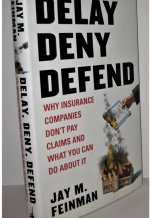 to this maybe?

By definition, an insurance company that regularly makes big profits is overcharging its customers. If there was actual market competition, this would not be possible.

With a market as complex as health care, there's probably multiple reasons. One contributing factor is that there are massive barriers to entry into the market. Health care regulations are sufficiently onerous that you need to invest a LOT of money into just complying with the law before you can even start to do anything.So - genuine question:
Why has an insurance company not arisen that makes limited profit and provides good coverage without stress arisen?

Ok, but that doesn't negate any of my propositions; it just muddied the waters and actually makes it worse.No. The anesthesiologist's pay, the assistants, the equipment, the supplies, all the rest are other charges. Anesthesia TIME is a separate charge. You are paying for the time you are under anesthesia, for the process that is being-kept-unconscious-per-second. In increments of 10 or 15 minutes. All the other stuff? That's separate. Anthem wants to blow off responsibility for covering anesthesia time charges if they exceed the length Anthem assumes each particular procedure should take.

I would liken it to a car insurance company setting a policy that a repair shop can only use a torque wrench 8 times per head gasket replacement. If the mechanic uses it 9 or more times, the repair is not covered.Can we al lagree an insurance executive shouldn't be the one to decide when or how much anesthesia is needed?

We're derailing this thread. But you're not getting what I'm saying. The time charge is NOT the anesthesiologist's pay. The act of being under anesthesia is itself a billable charge. You're paying for being kept in the state of unconsciousness. And no, god no, the first fifteen minutes of anesthesia time doesn't "pay a day rates". Operating rooms are sometimes called the most expensive real estate on earth. Every second you're in there is costing money. A lot of money. Time charges are more like rent than like buying a product. Renting something very expensive. Instead of your analogies of building contractors you should be thinking of renting time on the Hubble Space Telescope, or reserving some hadron collider usage.Ok, but that doesn't negate any of my propositions; it just muddied the waters and actually makes it worse.
I mean, I get that the billing has to bankroll all the hospital's carry costs, from property taxes and a rather substantial electric bill to the guys cleaning the joint. But when you have the anesthesiologist billing their half day rate four times over in the same two hour procedure (I posit), the insurer says "Enough already. You physically can't do two days work in two hours. Knock it the ◊◊◊◊ off".
What I'm saying is that the insurers, who cover treatments day and night with a smile, are saying that some factions are dipping their beaks a little too much and they are drawing a line? I really don't think many anesthesiologists are on food stamps. They seem.to be pulling some staggeringly good money, on the insurer's dime.
What I'm saying is that maybe these providers aren't Dr Evil, and are not trying to be fleeced by paying two days rates for two hours? I mean, plausibly? My wife's last time going under was billed at something close to $20 large, IIRC (I like looking at the staggering sums the insurance is paying, from a sausage making standpoint). That was not the surgeon himself or any of the other things. That was the knockout crew with their hopped up roofies.
Well, it's not quite that bad. Anthem's still going to pay for the first 8 times, they just won't pay for the 9th or subsequent.I would liken it to a car insurance company setting a policy that a repair shop can only use a torque wrench 8 times per head gasket replacement. If the mechanic uses it 9 or more times, the repair is not covered.
Agreed. But if an interesting sidebar comes up, Imma go fishing around.We're derailing this thread.
I am. You seem to think I'm arguing something entirely else.But you're not getting what I'm saying.
Right, and not only do I get that, I spelled it the ◊◊◊◊ out in my last post. It's expensive as hell.The time charge is NOT the anesthesiologist's pay. The act of being under anesthesia is itself a billable charge. You're paying for being kept in the state of unconsciousness. And no, god no, the first fifteen minutes of anesthesia time doesn't "pay a day rates". Operating rooms are sometimes called the most expensive real estate on earth. Every second you're in there is costing money. A lot of money. Time charges are more like rent than like buying a product. Renting something very expensive. Instead of your analogies of building contractors you should be thinking of renting time on the Hubble Space Telescope, or reserving some hadron collider usage.
And it is well known that operations only take longer than needed when the hospital wants to scam the insurance company.Well, it's not quite that bad. Anthem's still going to pay for the first 8 times, they just won't pay for the 9th or subsequent.

New York State has has a bill sitting in committee called the New York Health Act. It is essentially Medicrare4All for anyone who lives or works in New York State. I've been trying to get information from my assemblyman and state senator, but no one seems to have an answer on when its going to go anywhere.Yeah, that was my point. Insurance holds way too much power it shouldn't in medicine, and people are not happy with them. Hence the reaction to this UHC CEO getting murdered. Every day things get worse. More and more money is paid in, less and less to show for it, as those at the top heap up their personal fortunes. Something's gotta give eventually, and the longer it takes the bigger the explosion will be.
A steady, sensible unwinding of the current system, restraining the worst excesses of capitalism, would make things smooth and peaceful. But this, what we got going on now? We're headed for a revolution.

But at the cost of their fortune, really keeping the money flowing properly is worth the odd death.New York State has has a bill sitting in committee called the New York Health Act. It is essentially Medicrare4All for anyone who lives or works in New York State. I've been trying to get information from my assemblyman and state senator, but no one seems to have an answer on when its going to go anywhere.
Stuff like that might save a few isnurance executives' lives

My point is the nature of billables, that an anesthesiologist would not be immune from. It's is again my layest of lay understanding that the insurer pays the justifiably astronomical bills, but at the same time, as a functioning business, is watching for double dipping. They are not Dr Evil. They have to be solvent or they can't cover anyone.
Again, we are begging for a rule 11 ding, but: from the insurers standpoint, they get hit with these bills. Supposed to be covered by them per the insurance agreement. What I'm wondering is if they detect a specific abuse here along the lines I am posing.Then they need to take that up with the anesthesiologist, not pass that cost on to the insured. The insured literally have no recourse or input on how long they're under and can do nothing to alter the process once it begins. The insured can't decline more anesthesia or stop the surgery. Anthem should have to work it out, it's a them problem.


 bsky.app