Continuation Part 22: Amanda Knox/Raffaele Sollecito

Status
Not open for further replies.
If only a DNA profile meant a guilty person we could save the money and time of trials altogether lol

Under that system by my count there would be about at least a half dozen people in prison for Meredith's murder right now.

Ah. I didn't say DNA = guilty. That's for the court to decide. But the science is sound.
 
Ask NEW. The dog is obviously mentally ill, superstitious and gazes at the moon. It's bent. The corrupt pigs have trained it to pick on people they don't like. Bastards!

What the hell are you talking about? <snip>


Edited by Loss Leader: 
Edited for Rule 0
 
Last edited by a moderator:
Ah. I didn't say DNA = guilty. That's for the court to decide. But the science is sound.

But the court did decide. In fact the court was very careful with the science of DNA, bringing in two professors from Italy's top university to thoroughly analyze the DNA evidence and give a report on it. The result of that court was acquittals, which is why Amanda has been free back home in the US for five years now while we needlessly indulge ourselves with our posting.
 
But the court did decide. In fact the court was very careful with the science of DNA, bringing in two professors from Italy's top university to thoroughly analyze the DNA evidence and give a report on it. The result of that court was acquittals, which is why Amanda has been free back home in the US for five years now while we needlessly indulge ourselves with our posting.

No. The trial courts found the pair guilty as charged on the evidence presented.

It was ruled there was no contamination.

There appears to be no precedent in case law where a defendant found guilty of murder an a trial and appeal court to be acquitted without referral back to a lower court - which contravenes the Italian Penal Code in itself - so we can be sure the Marasca court is perverse, as well as acting outwith its remit, as there was no new evidence brought to light, it ruled on issues already settled and made findings that were never pleaded.
 
No. The trial courts found the pair guilty as charged on the evidence presented.

It was ruled there was no contamination.

There appears to be no precedent in case law where a defendant found guilty of murder an a trial and appeal court to be acquitted without referral back to a lower court - which contravenes the Italian Penal Code in itself - so we can be sure the Marasca court is perverse, as well as acting outwith its remit, as there was no new evidence brought to light, it ruled on issues already settled and made findings that were never pleaded.

You misunderstand the Italian system. There are two tiers of "trial" courts, the first tier is procedurally almost closer to the grand jury system in the US since its decision is always re-tried at the next level. The second tier is where the actual final verdict will be reached and sent for approval to the Supreme Court. The Amanda Knox case was a rare instance where that Supreme Court overstepped their authority and made numerous grievous errors not confirming the second tier verdict for really bizarre reasons demonstrating they didn't do their job and study the case. This was later corrected by the final Supreme Court decision. That's why the Marasca court was almost without precedent - because Chieffi's decision was without precedent.

If Chieffi had done the job the Supreme Court is supposed to do in the first place the trial wouldn't have been pointlessly extended 5 years after it was already over.
 
You misunderstand the Italian system. There are two tiers of "trial" courts, the first tier is procedurally almost closer to the grand jury system in the US since its decision is always re-tried at the next level. The second tier is where the actual final verdict will be reached and sent for approval to the Supreme Court. The Amanda Knox case was a rare instance where that Supreme Court overstepped their authority and made numerous grievous errors not confirming the second tier verdict for really bizarre reasons demonstrating they didn't do their job and study the case. This was later corrected by the final Supreme Court decision. That's why the Marasca court was almost without precedent - because Chieffi's decision was without precedent.

If Chieffi had done the job the Supreme Court is supposed to do in the first place the trial wouldn't have been pointlessly extended 5 years after it was already over.

It is still case precedent. Even when Section 230 para II was used to acquit Andreotti of mafia charges, at least he had been found not guilty at first instance trial level.
 
No. The trial courts found the pair guilty as charged on the evidence presented.

It was ruled there was no contamination. There appears to be no precedent in case law where a defendant found guilty of murder an a trial and appeal court to be acquitted without referral back to a lower court - which contravenes the Italian Penal Code in itself - so we can be sure the Marasca court is perverse, as well as acting outwith its remit, as there was no new evidence brought to light, it ruled on issues already settled and made findings that were never pleaded.

Wrong again, Vixen. The lack of anti-contamination protocols was demonstrated in the Conti-Vecchiotti report. The Chieffi ISC panel in 2013 said Judge Hellmann erred, in acquitting the pair, in not requiring the defence to prove a source of contamination, effectively reversing the burden of proof - putting it onto the defence.

Chieffi also repeated Novelli's line that protocols exist, but if one is bound by modern ones, then all DNA trials since 1986 are in question.

Chieffi in 2013 said:
Prof. Novelli had agreed that protocols and recommendations exist, but added that, first and foremost, the skill and common sense of the technician must be applied (hearing on 6.9.2011, page 59 of the transcript), otherwise all DNA tests done from 1986 onward would be open to question.​
That concept does not fill one with confidence that there existed other DNA-centred trials in Italy where someone was in prison unjustly.

There was neither a ruling that contamination did not exist, nor was there the science behind it all to show that contamination did or did not exist - that would require the negative controls; which no one said the saw - except for Novelli, who told the Hellmann court he had seen them.

Otherwise, they were not in the court record, or else the subsequent judge, Nencini, would not have had to wrongly censure Vecchiotti for not asking for them. Why should someone ask for something already available to them in the record?

Finally what the Marasca court ruled was the Nencini should never have convicted on the evidence in front of him.

Marasca in 2015 said:
10. The intrinsic contradictory nature of the evidence, emerging from the text of
the appealed verdict, in essence undermines the connective tissue of the same,
leading to its annulment.
In fact, in the presence of a scenario marked by many contradictions, the
referral judge should not have come to a verdict of guilt, but - as previously
observed – should have reached a verdict of not guilty, given Article 530, section 2,
Italian Code of Criminal Procedure​
Marasca patently did not "make findings on matters never pleaded". Marasca said that Nencini should not have convicted based on what was in front of him.

Courts subsequent to Marasca in Italy are NOT making the assessment of Marasca's definitive decision that you are. They are calling it a lawful exoneration, which is now a judicial truth.
 
Wrong again, Vixen. The lack of anti-contamination protocols was demonstrated in the Conti-Vecchiotti report. The Chieffi ISC panel in 2013 said Judge Hellmann erred, in acquitting the pair, in not requiring the defence to prove a source of contamination, effectively reversing the burden of proof - putting it onto the defence.

Chieffi also repeated Novelli's line that protocols exist, but if one is bound by modern ones, then all DNA trials since 1986 are in question.

That concept does not fill one with confidence that there existed other DNA-centred trials in Italy where someone was in prison unjustly.

There was neither a ruling that contamination did not exist, nor was there the science behind it all to show that contamination did or did not exist - that would require the negative controls; which no one said the saw - except for Novelli, who told the Hellmann court he had seen them.

Otherwise, they were not in the court record, or else the subsequent judge, Nencini, would not have had to wrongly censure Vecchiotti for not asking for them. Why should someone ask for something already available to them in the record?

Finally what the Marasca court ruled was the Nencini should never have convicted on the evidence in front of him.

Marasca patently did not "make findings on matters never pleaded". Marasca said that Nencini should not have convicted based on what was in front of him.

Courts subsequent to Marasca in Italy are NOT making the assessment of Marasca's definitive decision that you are. They are calling it a lawful exoneration, which is now a judicial truth.


The quoted stuff in para 10 about 'intrinsic contradiction' is simply Marasca quoting one of the grounds for appeal - one of the most common grounds, actually.

If it had a quibble about wrongful treatment of evidence, as the charges are classed as 'serious crime', under Italian Penal Code, it does not have the power to acquit, without sending the issue back down to the second instance court.

In addition, it found that the kids were at the crime scene but there was not enough evidence they were involved. This was never pleaded.

ETA As it is not possible to prove a negative, the onus is surely on those pleading 'contamination' to show just cause. The defence failed to do so and it was within Nencini's range of power to rule so.
 
Last edited:
The quoted stuff in para 10 about 'intrinsic contradiction' is simply Marasca quoting one of the grounds for appeal - one of the most common grounds, actually.

If it had a quibble about wrongful treatment of evidence, as the charges are classed as 'serious crime', under Italian Penal Code, it does not have the power to acquit, without sending the issue back down to the second instance court.
Every Italian judge who has made subsequent mention of the Marasca acquittals though the definitive acquittal was legal. Meaning, they did not see it as inappropriate to not refer back. So you can either cite a source, or quit with this factoid.

In addition, it found that the kids were at the crime scene but there was not enough evidence they were involved. This was never pleaded.
This is a change of tune for you. It did not "find" anything. It reviewed the various theories put forward by the various prosecutors and the defence and said that, yes, they were at the crime scene, but that being "at the crime scene" includd the time when Amanda admitted being there for her mid-morning shower, as well as when she and Raffaele returned after alerting everyone they thought of.

Yes, they were at the crime scene, no one disputes that.

ETA As it is not possible to prove a negative, the onus is surely on those pleading 'contamination' to show just cause. The defence failed to do so and it was within Nencini's range of power to rule so.
It is standard for police agencies dealing with DNA evidence to follow protocol. If they do not follow protocol, then the evidence is useless. Contamination does not need to be proven.

However, as Chieffi noted, if that is followed, then every DNA case in Italy since 1986 would need to be reviewed. That makes me suspicious that courts and police agencies in Italy are doing something wrong.
 
They gonna screen Mignini's cartoon?

Mignini's cartoon was part of Winterbottom's film from 2014. It's unclear whether or not it was the real thing - for which Comodi and Migini were cited for overspending - or one specially made for the film.
 
Evidence? Dogs' sense of smell is incredible. These dogs are trained from puphood to seek out all sorts of things, human blood, cadavers, drugs.

If an airport dog sniffs out drugs, it sniffs out drugs. Full stop.

Likewise, the DNA on the bra clasp belongs to Raff. There is no doubt.


Fundamental misunderstanding of science, particularly scientific interpretation.

If an airport dog sniffs out drugs, it sniffs out drugs. Yes, in a sense (no pun intended). Just as if I sniff lavender, I sniff lavender. But whereas I can verbally tell someone - or write down - that I sniff lavender, a dog obviously cannot. So people have to train dogs by conditioning them, in classic Pavlovian conditioning, to react in a certain way to their handlers when they sniff drugs.

And here comes the problem. The dogs give false positives quite often. It's thought that the dogs do this either out of a desire to please their handlers, or out of a desire for the reward (usually food) that they are given. Fortunately, in the case of drug sniffer dogs, it's extremely easy to discern false positives from true positives - if a dog reacts to a particular suitcase, for instance, that suitcase will then be searched thoroughly, and the presence of drugs will be confirmed or denied conclusively. But immediately anyone (anyone with intelligence....) can see the problem when the scenario changes to so-called cadaver dogs.

All of these caveats and shortcomings apply (albeit with obviously different mechanisms) to DNA testing. All that can ever be said at a fundamental level with DNA testing is whether or not peaks appear (and at what heights) on the data run. But whether or not an analysis of these data lead to a "match" with a certain individual, and whether or not one can say that a certain individual was physically present at the place from where the tested sample was collected - well, these are often highly subjective and imprecise questions. And those questions become increasingly subjective and imprecise as testing technology evolves to allow the analysis of smaller and smaller quantities of recovered DNA. "True" peaks and peaks from background noise become increasingly difficult to tell apart, and the ultimate source of any DNA becomes increasingly difficult to discern with any certainty.

Courts - all across the world - have undoubtedly lagged in their understanding of the increasing issues around DNA identification, as low-template analysis becomes more and more commonplace. Unfortunately, courts became somewhat conditioned to thinking that DNA matches were a gold-standard identification; indeed, where one is dealing with standard PCR analysis of something like a significant quantity of semen in a rape (or sexual murder) case, it's possible to match to a suspect with almost total certainty, and it's also possible to be highly certain that this suspect was physically present at the place of the deposit. But this level of certainty is simply not possible (for the reasons outlined above) when only minuscule amounts of DNA are recovered and analysed. Even fingerprint identification - which courts have long regarded as an inviolable method of identification - have recently come under increasing scrutiny regarding their accuracy and reliability, especially where partial prints have been lifted with modern techniques.

Going back to our case and the relevance of all of this, it's completely incorrect to state blithely that "...the DNA on the bra clasp belongs to Raff. There is no doubt." All that it's possible to state is that certain peaks on the data run from that clasp correspond with peaks of Sollecito's reference DNA. But there are many, many peaks on that data run which do NOT correspond with Sollecito, and the low-template levels involved also mean that it's difficult to know which peak is a "true" peak (i.e. from DNA) and which is nothing more than amplified noise. Unfortunately, because the incompetent and mendacious Stefanoni was either unable or unwilling to supply the source electronic data, it's impossible for anyone else to scrutinise her necessarily highly-subjective interpretation of those data (which is especially problematic in this case because we know that Stefanoni had specific reference profiles in front of her which she was seeking to match).
 
Will anybody here be attending the Toronto International film festival?


One would have to be a slightly obsessive nutter to travel any significant distance to Toronto to watch the new documentary - it's on worldwide release via Netflix in a few weeks. No doubt the PMFs and TJMK will send delegations to hand out flyers and make a bit of noise.......... :p
 
ETA As it is not possible to prove a negative, the onus is surely on those pleading 'contamination' to show just cause. The defence failed to do so and it was within Nencini's range of power to rule so.


More fundamental misunderstanding. The generally-accepted principle here is that it is absolutely incumbent upon the state authorities (here, the police) to take all reasonable steps to minimise the chance of contamination. In the collection, transportation, storage and analysis of most of the forensic samples in the Knox/Sollecito case, the state not only failed miserably to take those reasonable steps - the state actually rode a coach and horses through those steps in ways that would be laughable if they weren't so serious and impactful. Samples were collected in grossly improper ways (the bra clasp that had moved around undocumented in the sweepings for six weeks; the incredible "pass the parcel" handing round of the bra clasp once it was eventually collected (with visibly dirty gloves) and its placement back on another part of the floor of the murder room for photography; the grotesque smears that collected evidence from the bathroom sink and bidet; the mop that was bizarrely wrapped in gift-wrapping paper belonging to the very house in which the crime occurred; and so on and so on....), transported and stored in grossly improper ways (the ridiculous "inspection" of the knife at the police station and its placement in the calendar box for onward transportation; the storage of the metallic bra clasp in liquid, causing it to rust to uselessness; the storage of potentially-important blood-soaked towels from the murder scene in a damp clump, causing them to rot with mould and become untestable; and so on and so on), and analysed/tested in grossly improper ways (shocking lack of adherence to virtually every single important protocol for handling and analysing low-template DNA (specialised and intensive cleaning of equipment, surfaces and instruments, positive pressure hoods, etc); utterly improper application of luminol and Kastle-Meyer tests at the crime scene; failure to conduct proper confirmatory testing of alleged blood samples; use of long-debunked pseudoscience in the "analysis" of foot prints at the scene; embarrassing mistakes in incorrectly matching shoe prints from the scene to Sollecito's trainers instead of Guede's (a mistake picked up by a pre-teen....); and so on and so on).

Frankly, there were so many wide open doors for contamination, owing to the extraordinary catalogue of gross errors made by the "crack" forensics team at every single stage of the collection/storage/transportation/testing process, that no competent court should have accepted the forensic evidence in this case. And this also has to do with the nature of the evidence, particularly the alleged DNA evidence. Had there been, say, a large deposit of semen in or in the victim, then even with all the enormous police mistakes, it would be potentially very hard for the defence to argue against the evidence (the sheer quantity of DNA and the question of its source would be so conclusive as to make the possibility of contamination extremely low). But in this case, the DNA evidence in respect of Knox and Sollecito was so low that contamination was clearly a very real possibility. Therefore it was paramount for the police to take every reasonable step to minimise the chance of any such contamination. The police failed to do so, to a jaw-dropping degree of ineptitude and incompetence.
 
Frankly, there were so many wide open doors for contamination, owing to the extraordinary catalogue of gross errors made by the "crack" forensics team at every single stage of the collection/storage/transportation/testing process, that no competent court should have accepted the forensic evidence in this case.
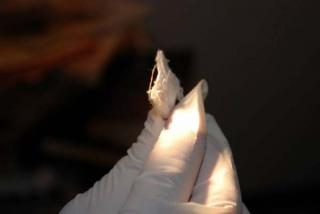
All anyone needs to see is:


When the Scientific Police's own video of the collection was shown in the Hellmann court in 2011, laughter broke out.
 
Things that make you go, hmmmmmmmmmmmmmmmmmmmmmmm.

When Stacyhs and me make a mistake about whether or not Nencini thought Rudy a world-class burglar, Vixen is there with a cite from Nencini showing definitively that he was merely quoting from what the defence argued.

But when Vixen is asked to provide ONE forensic-DNA expert who supports Stefanoni's lab work, what we get are hilarious (but all the same ad hominem) quips in return.

Hmmmmmmmmmmmmmmmmmmmmmmmmmmmm.
 
Status
Not open for further replies.

Back
Top Bottom
