The Forensic Science Sins of Stefanoni: A Summary
There was a pattern of misconduct and malpractice in Stefanoni's lab, treatment of evidence, and in her court testimony. The are violations of Convention Article 6 by Italy: failure to provide facilities to defense, and failure to provide equality of arms.
Here is a summary.
1. Stefanoni's failed - indeed, refused - to turn over a copy of the EDFs to the defense;
2. She suppressed numerous results, including potential exculpatory findings;
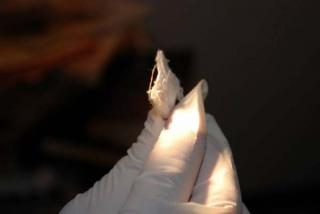
3. She destroyed evidence, in particular the bra clasp;
4. She entered false reports of data into her reports (RTIGF #1 & #2);
5. She committed perjury, for example, regarding the amount of DNA in the knife blade sample and that RT-PCR was used to quantify that DNA;
6. She delayed providing the minimal DNA data that was given to the defense until late in the trial;
7. She did not reveal in a timely manner to the defense and the court that TMB tests were done and precluded the presence of blood in the luminol foot print hits attributed to Amanda Knox;
8. She and her forensic police team mishandled specimen collection;
9. She repeated tests that were conducted in secret (based on test numbering), to obtain false inculpatory results;
10. She apparently manipulated positive control samples in the RT-PCR quantification to obtain high intercept levels probably in order to make unknown DNA samples appear more highly concentrated than they truly were.
11. She used the Qubit fluorometer to quantify DNA concentration in samples without having validated the equipment and procedure;
12. She arbitrarily used certain specimens registering "too low" for DNA concentration on the Qubit fluorometer for DNA profiling, and apparently not others, in a suspect-centered manner, violating good forensic practice. A reading of "too low" with the Qubit may mean there is actually no DNA present;
13. She attempted to conduct LCN DNA profiling in a method she had "invented" without validating the method;
14. She attempted to conduct LCN DNA profiling in a lab not adequately set up to prevent contamination, and thus inherently unsuited for LCN DNA profiling;
15. She stated in court testimony that she had never been told of a contamination incident in her lab, however, the data she gave to the defense shows several incidents of contamination;
16. She did not supply records of methodology and quality control (such as rate of contamination and corrective measures) to the defense, such records are ordinarily part of a report from a forensic DNA profiling lab;
17. She did not call out all the DNA alleles and profiles detectable on the bra clasp, instead only identifying the victim and one of the suspects (Sollecito), while DNA from several other males was detectable (indicating that the bra clasp had been contaminated).